
These four medieval European cities without crowds are Gdansk, Rouen, Brno and Vilnius, ideal for a spring city break.
These medieval European cities have their own special charm and unique history.
Old Europe has its own special charm. You must admit that there is nothing better than having a cup of coffee in the square, surrounded by ancient buildings that have a centuries-old history, walking along the narrow streets or getting lost in the secret passages of the castle.
With spring approaching, it’s time to think about where to go when the weather gets warm again. If you want to enjoy the city without the crowds on the streets, there are several destinations worth visiting, writes Travel Off Path.
Gdansk, Poland
Situated on the Polish Baltic Sea coast, Gdansk is a colorful port city best known for its northern Mannerist facades. These buildings with ornate motifs, a monumental red-brick cathedral, carry a rich history-in some places from the Middle Ages.
The Old Town with its many attractions scattered through its streets will definitely not leave you indifferent. The streets of Gdansk with cozy coffee shops, a Fahrenheit thermometer (in case you didn’t know, the inventor of the Fahrenheit scale comes from Gdansk) and the best-preserved medieval crane in Europe will remain in your heart for a long time.
Since the weather is likely to improve by then, spring is the perfect time for a boat trip around Motlava. This river cuts through the heart of Gdansk, all the way to Westerplatte, where World War II officially began.
Rouen is about an hour and a half north-west of Paris. It is easily accessible thanks to a variety of trains. Rouen is not as lively as the French capital.
Imagine half-timbered buildings in every possible color, walkways so narrow that you can’t believe they were once a bustling shopping center, and a towering Gothic cathedral that dwarfs the world-famous Duomo of Milan. In addition, Rouen has an incredibly beautiful astronomical clock.
By the way, the local Place du Vieux-Marché is exactly the place where Joan of Arc was burned at the stake.
Prague is a popular tourist destination, so why not visit the much more unusual, but no less attractive city of Brno?
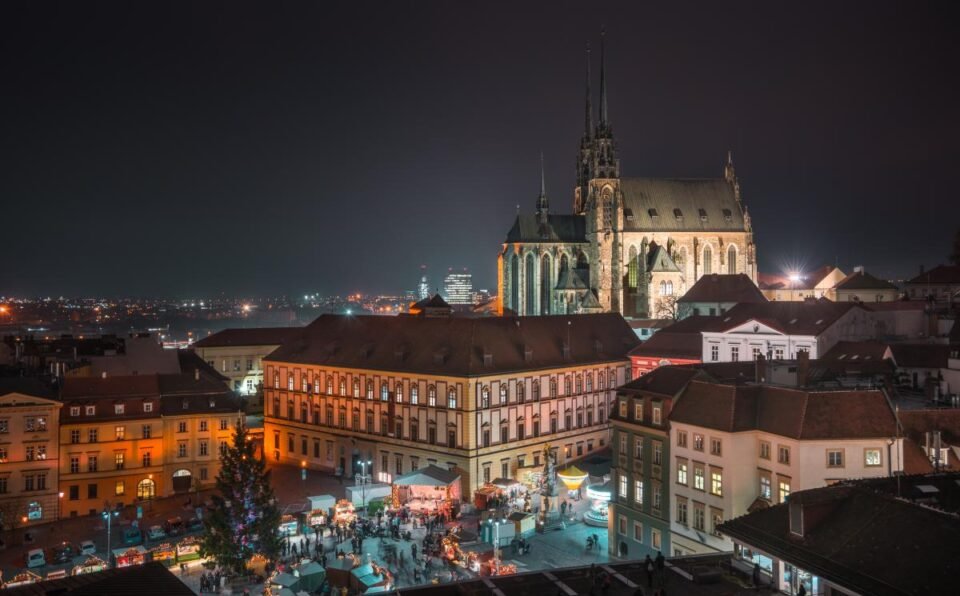
It is the second largest city in the Czech Republic, and it has a majestic historical center filled with Medieval and Renaissance monuments: from the 13th-century Špilberk Castle, proudly perched on a strategic mountain top, to the twin-spired Cathedral of Saints Peter and Paul.
And the Church of St. James, which lies beneath the city, is Brno’s answer to the Parisian catacombs, where the carefully ordered remains of more than 50,000 people are stored in a maze.
Vilnius, Lithuania
Lithuania’s capital, Vilnius – is a quiet, medium-sized city that looks like it was cut out of a children’s fairy tale.
But this is not the only “highlight” of Lithuania. You might think that the Vatican is the only state in Europe located inside a capital city, but that’s because you’ve never heard of Uzhupis. This is a district that declared its independence from the rest of Vilnius in 1997 – they did it as a joke, and it has no practical effect. However, Uzhupis really lives in his own way.
There is a thriving hippie scene-much more liberal than in other parts of mostly conservative Vilnius. There are many pubs that are frequented by young people. Moreover, Uzhupis even has a constitution of 38 articles, with such clauses as” a person has the right to be lazy or do nothing”, and”a dog has the right to be a dog”.
Love medieval European cities without crowds? See our Gdansk city guide and the ultimate Brno one-day guide. Official planning starts at Visit Europe.
Medieval European cities at a glance
- Gdansk, Poland: Mannerist facades and a medieval crane
- Rouen, France: half-timbered houses and a Gothic cathedral
- Brno, Czech Republic: Špilberk Castle and the ossuary under the Church of St. James
- Vilnius, Lithuania: the Uzhupis district
Medieval European cities: frequently asked questions
Which medieval European cities without crowds are recommended for spring?
Travel Off Path named Gdansk in Poland, Rouen in France, Brno in the Czech Republic and Vilnius in Lithuania.
What is Gdansk known for?
The Polish Baltic port is known for its colorful Mannerist facades, a monumental red-brick cathedral and the best-preserved medieval crane in Europe. It is also the birthplace of the inventor of the Fahrenheit scale.
What is special about Uzhupis in Vilnius?
The district declared its independence from the rest of Vilnius in 1997 as a joke. It has a thriving bohemian scene and its own constitution of 38 articles, including “a dog has the right to be a dog.”
Which of these medieval cities is closest to Paris?
Rouen, which is easy to reach from Paris by train.
Related guides on Enjoy The Trip: After visiting more than 100 cities in Europe, an experienced tourist chose the best alternatives to the capitals, European Christmas Markets: 5 Magical Towns You Will Love, Little-Known Budget Cities in Europe You’ll Love Visiting.

Konstantin is an acclaimed travel writer, celebrated for transforming ordinary journeys into extraordinary narratives. With years of experience exploring diverse destinations across the globe, his work blends vivid storytelling, cultural insights, and practical advice to inspire wanderlust and guide readers toward unforgettable adventures.
As a key contributor to enjoythetrip.org website, Konstantin has built a loyal readership through their expertise in uncovering both iconic landmarks and off-the-beaten-path treasures. He specializes in providing travelers with honest, actionable tips, whether it’s finding the best resorts in Maldives, exploring cultural hubs like Paris, or diving into the natural wonders of Croatia.