
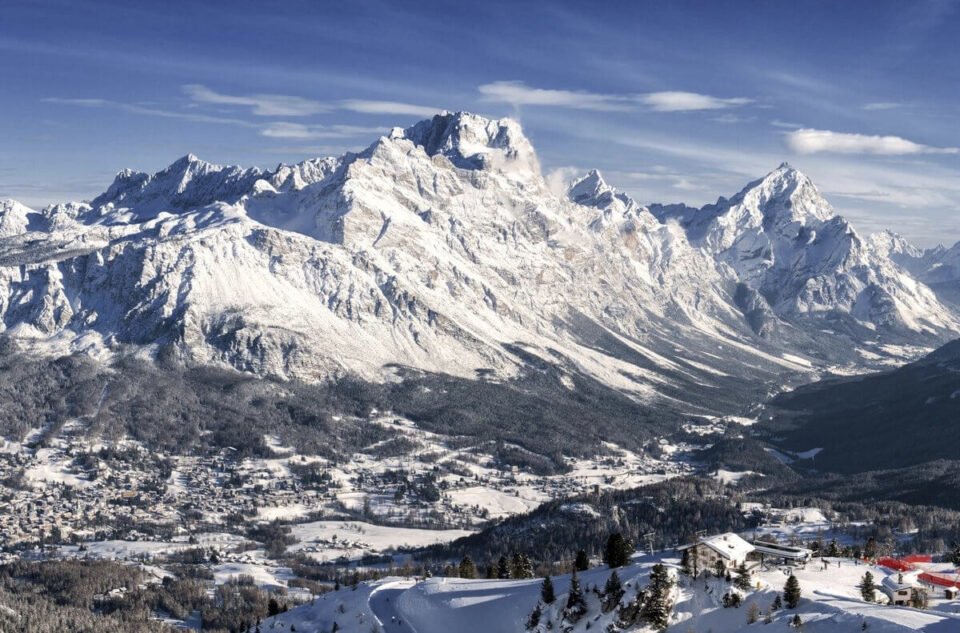
Few mountain towns wear their reputation as easily as Cortina d’Ampezzo. Set in a broad green basin in the heart of the Dolomites, this small town in the Veneto has been a magnet for skiers, climbers, artists and the Italian jet set for more than a century. Pale limestone giants rise on every side, the evening light turns them pink, and the main street fills with people strolling between cafés, galleries and boutiques. In 2026 Cortina was back on the world stage as co-host of the Milano Cortina Winter Olympics, seventy years after it first welcomed the Games.
But Cortina is far more than a winter resort. In summer it is one of the best bases in the Alps for hiking, cycling and road trips to icons such as Lago di Sorapis and the Tre Cime di Lavaredo. Here is what makes it special, when to go, what to do, how to get there, where to stay, what to eat and what it all costs.
Cortina d’Ampezzo at a glance
- Location: Ampezzo valley, province of Belluno, Veneto region, northeastern Italy
- Altitude: about 1,224 m
- Nickname: the “Queen of the Dolomites”
- Surrounding peaks: Tofane, Cristallo, Sorapiss, Faloria, Pomagagnon and the Cinque Torri
- Olympic host: 1956 Winter Olympics and the Milano Cortina 2026 Olympic and Paralympic Winter Games
- Distance from Venice: about 160 km by road
- Best for: mountain scenery, hiking and skiing, food and a lively, stylish town
Why Cortina is different
Cortina sits inside the Dolomites UNESCO World Heritage Site, listed in 2009, and few resorts have such a complete ring of mountains around them. Much of the land around the town is still owned and managed by the Regole d’Ampezzo, an ancient community institution of local families that also looks after the Parco Naturale delle Dolomiti d’Ampezzo, one reason the valley still feels green and open despite its fame.
Cortina belonged to the Austrian Tyrol until the end of the First World War, when the front line between the Italian and Austro-Hungarian armies ran across the peaks just west of town. Ladin, the old language of the central Dolomites, is still part of local identity.
The flip side of the glamour is cost: Cortina is one of the most expensive places to stay in the Dolomites. Its ski and hiking areas are also spread out rather than linked into one circuit, so choose your base with care.
When to visit Cortina d’Ampezzo
Winter (December to March)
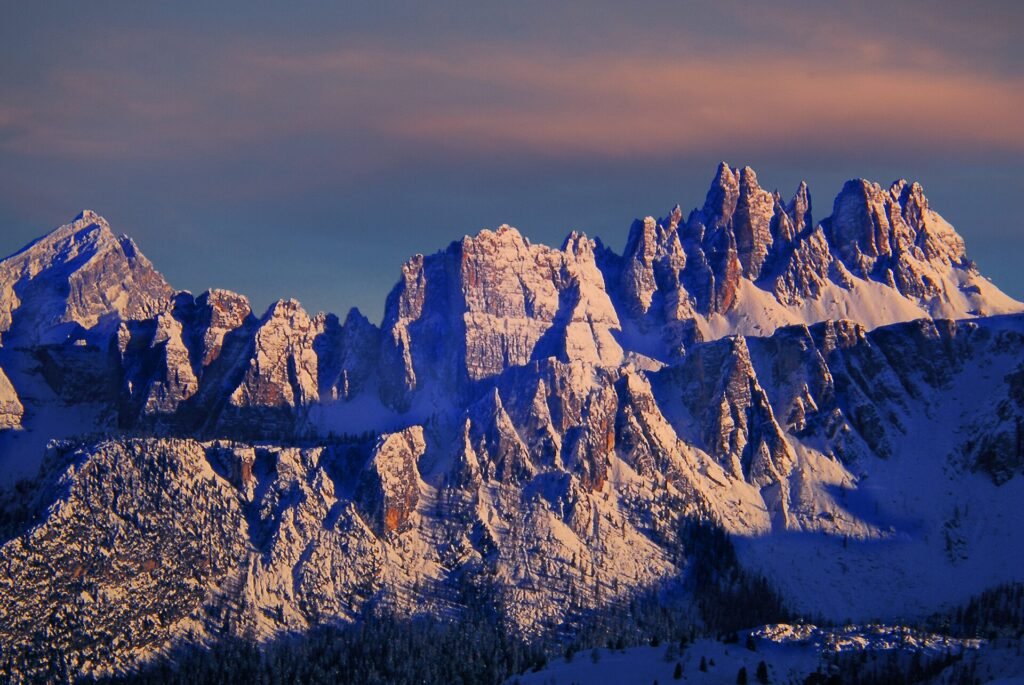

The ski season usually runs from early December to early April, with the most reliable snow from January to March. Beyond the slopes, winter means snowshoeing, cross-country trails around Fiames, skating at the Olympic Ice Stadium and cosy evenings in town. For slopes, lift passes and ski areas, see our detailed guide to skiing in Cortina d’Ampezzo.
Summer (June to September)
Summer is the season for hiking, climbing and mountain huts. Cortina’s lifts generally reopen in June and run into September or October (in 2026 the area’s summer lift season was scheduled from 6 June to 18 October, with individual lifts keeping shorter dates). July and August bring the most open huts and the biggest crowds; late June and September are often the sweet spot, with quieter trails and easier bookings. Expect frequent afternoon thunderstorms in midsummer.
Shoulder seasons
From mid-April to early June and from mid-October to late November, many lifts, huts and some hotels close. It is quiet and good value for valley walks, but high trails may be snowbound or shut.
Top things to do in Cortina d’Ampezzo
Stroll Corso Italia and the old centre
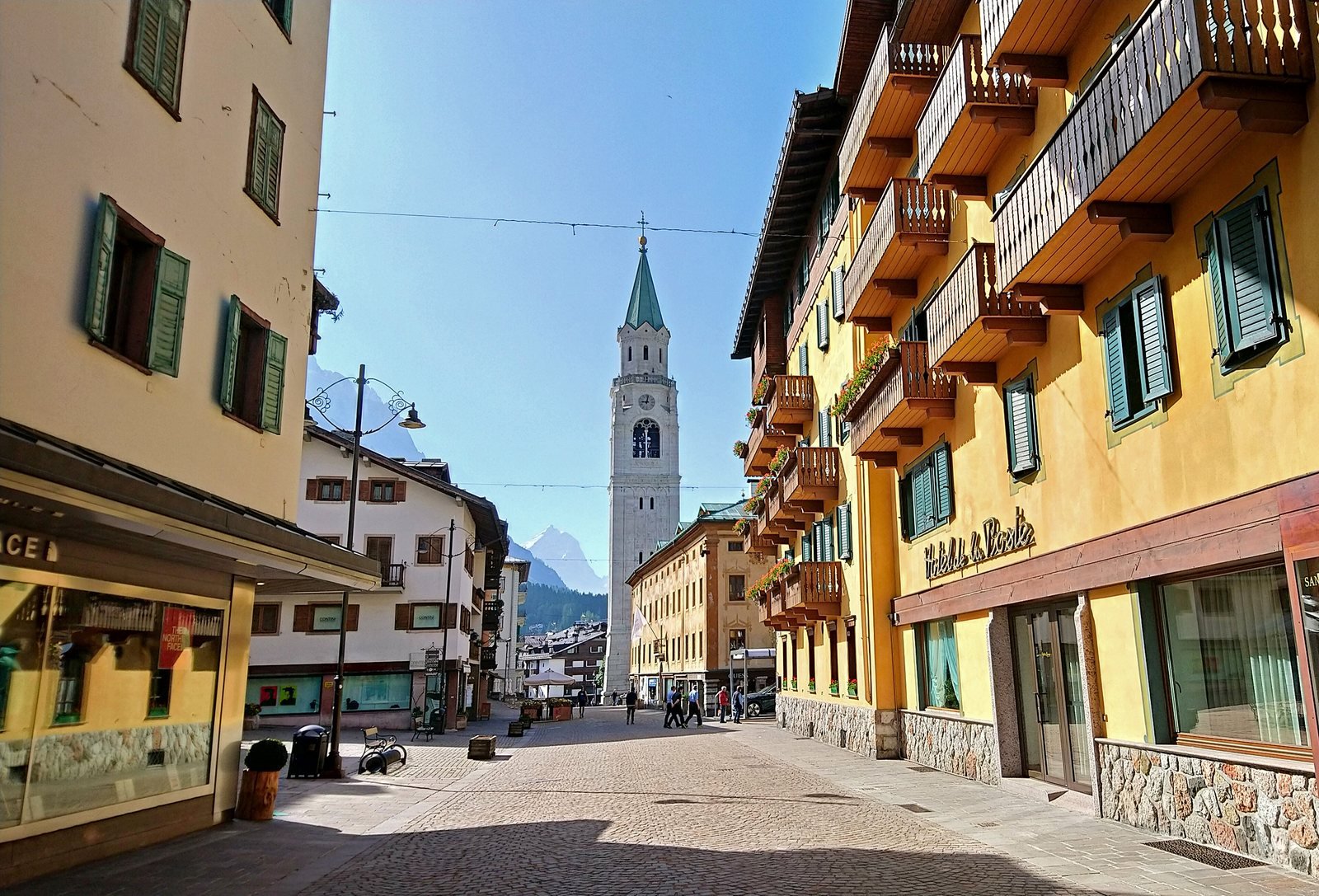

Cortina’s pedestrian main street, Corso Italia, is the place for the evening passeggiata. It runs past the Basilica of Saints Philip and James, built between 1769 and 1775, and its slender bell tower, which first rang out on Christmas Day 1858 and is the town’s best-known landmark. Along the street you will find art galleries, traditional Ampezzo craft shops, cafés and the historic Cooperativa di Cortina department store.
Next to the church, the Ciasa de ra Regoles houses the Mario Rimoldi Modern Art Museum, a major collection of 20th-century Italian painting, while the Rinaldo Zardini Palaeontology Museum displays fossils from the time when a warm sea covered the area. Check the Regole museums’ website for current opening hours.
Ride the Freccia nel Cielo to the top of Tofana
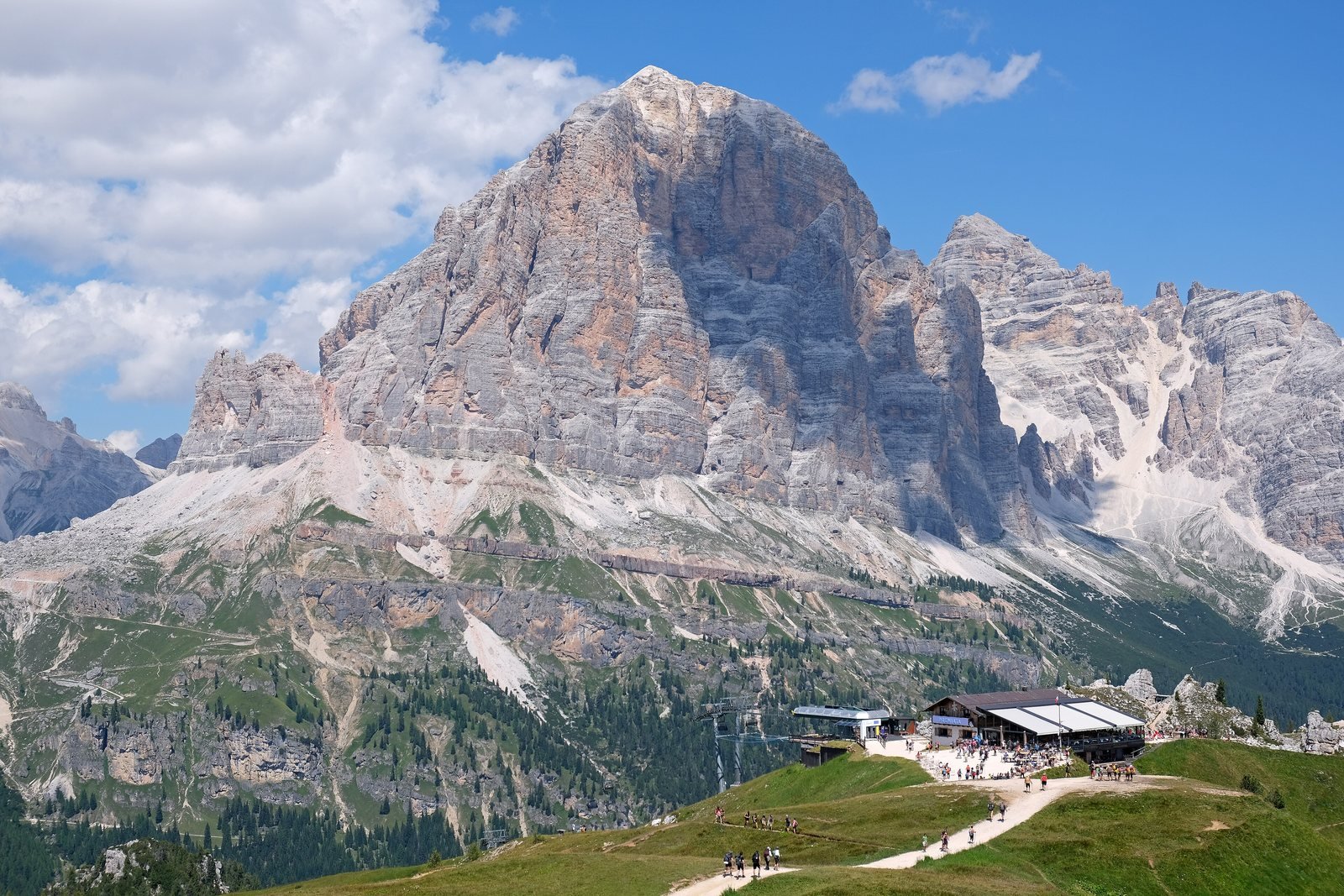

The Freccia nel Cielo (“Arrow in the Sky”) climbs from the edge of town at about 1,217 m to Cima Tofana, the 3,244 m summit of Tofana di Mezzo, in roughly 30 minutes. It stops at Col Druscié (1,778 m), with forest walks, and Ra Valles (2,470 m), a lunar world of rock and scree. The summit panorama stretches across the Dolomites. In summer 2026 the full line ran from 13 June to 27 September; bring a warm layer, as the top can be near freezing even in July.
Walk through history at Cinque Torri and Lagazuoi
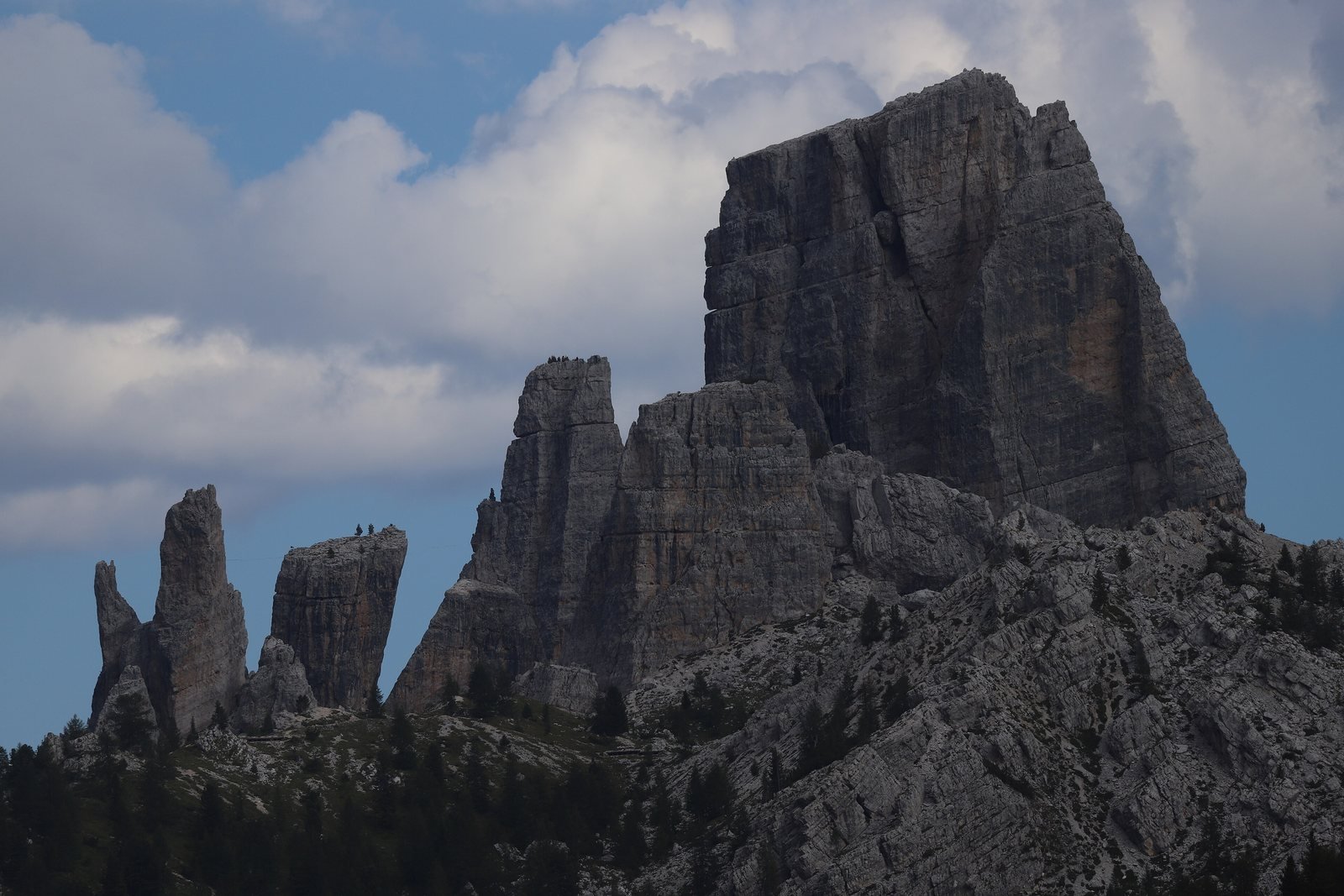

About 15 minutes’ drive west of town, on the road to Passo Falzarego, the five rock towers of the Cinque Torri are among the most recognisable sights in the Dolomites. A chairlift from Bai de Dones rises to Rifugio Scoiattoli (2,255 m), a short walk from a free open-air museum of restored First World War trenches and gun positions. Easy trails continue to Rifugio Averau and Rifugio Nuvolau, a superb viewpoint.
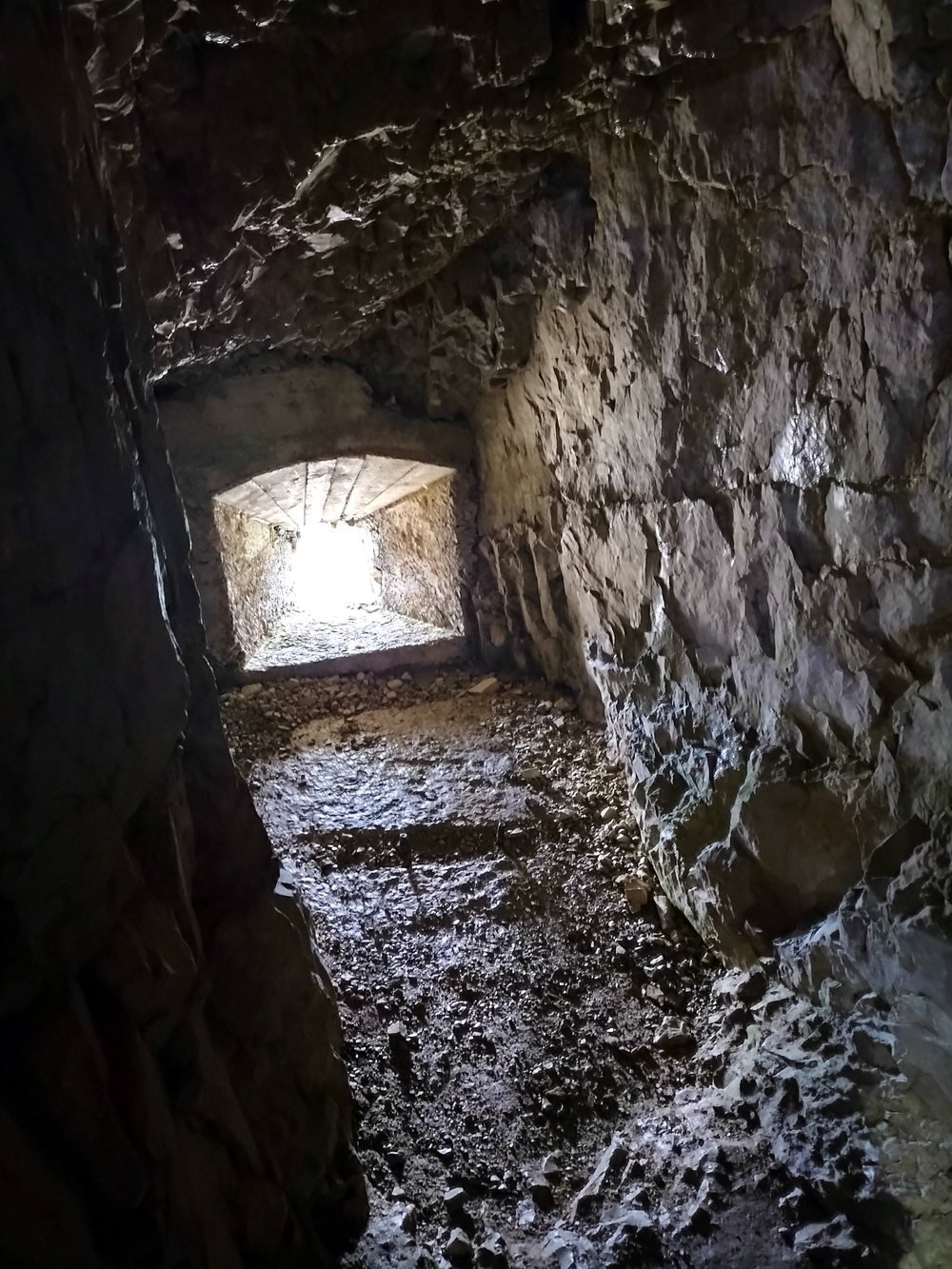

A little further on, at Passo Falzarego, a cable car rises in about three minutes to the Lagazuoi. Rifugio Lagazuoi, at 2,752 m, has a sun terrace with a famous view over the surrounding peaks. Inside the mountain, soldiers carved long tunnels and galleries during the war; today the restored galleries and positions form another open-air museum. Experienced hikers can descend through the tunnels with a helmet and head torch.
Hike to Lago di Sorapis
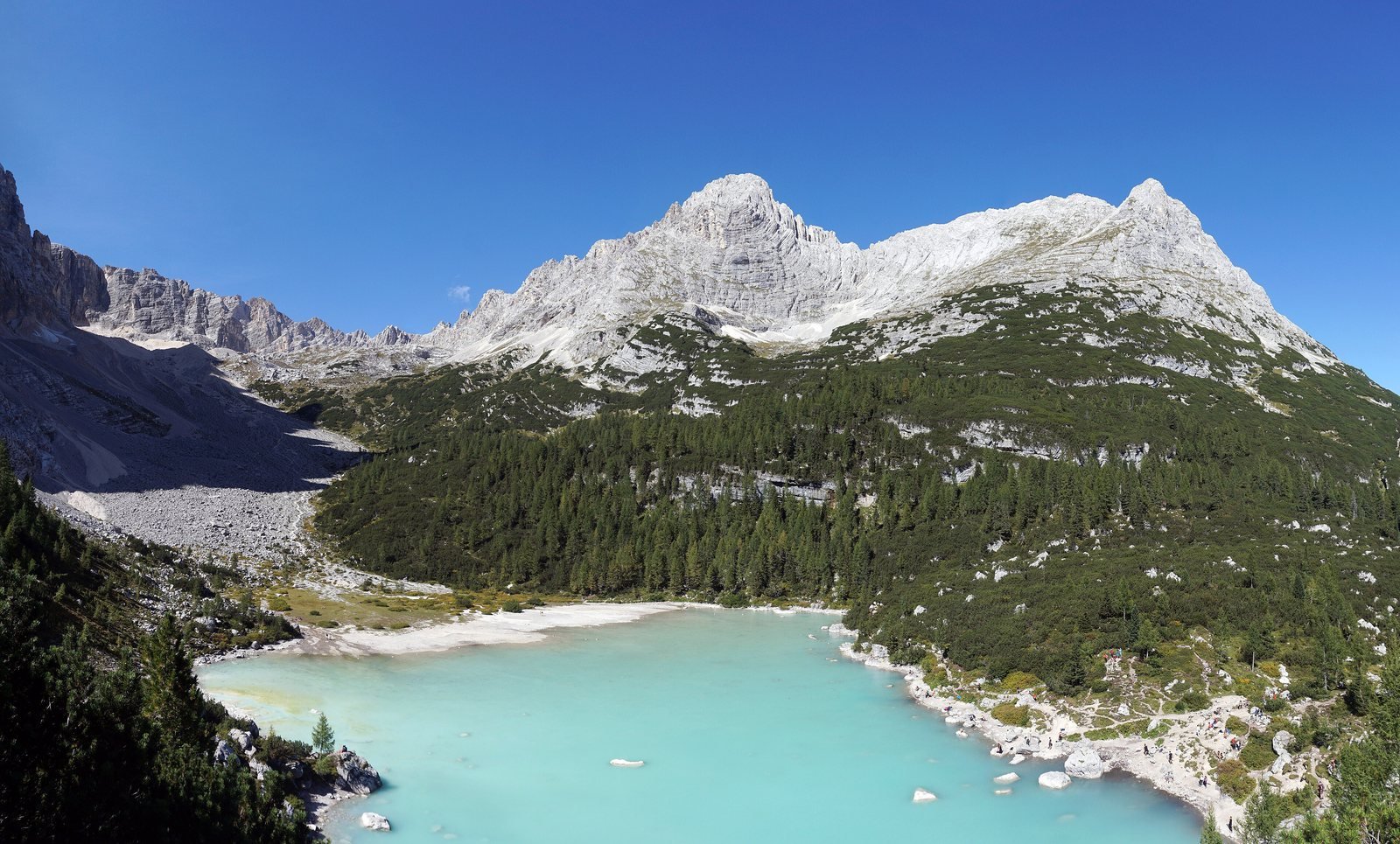

The milky turquoise Lago di Sorapis, beneath the Sorapiss massif, is one of the most popular hikes in the Dolomites. Trail 215 starts at Passo Tre Croci (about 1,805 m), around 15 minutes’ drive east of Cortina, and takes about two to two and a half hours each way. The path is mostly easy forest walking, but the last section crosses narrow, exposed ledges with cables and a metal ladder, so you need good boots, a head for heights and dry conditions. Rifugio Vandelli near the lake usually opens from late June to late September. Swimming and camping are not allowed.
Parking at the pass is very limited in July and August, so arrive before 8 am, take the summer bus from Cortina, or go on a weekday.
Find quieter lakes: Federa, Pianozes and Misurina
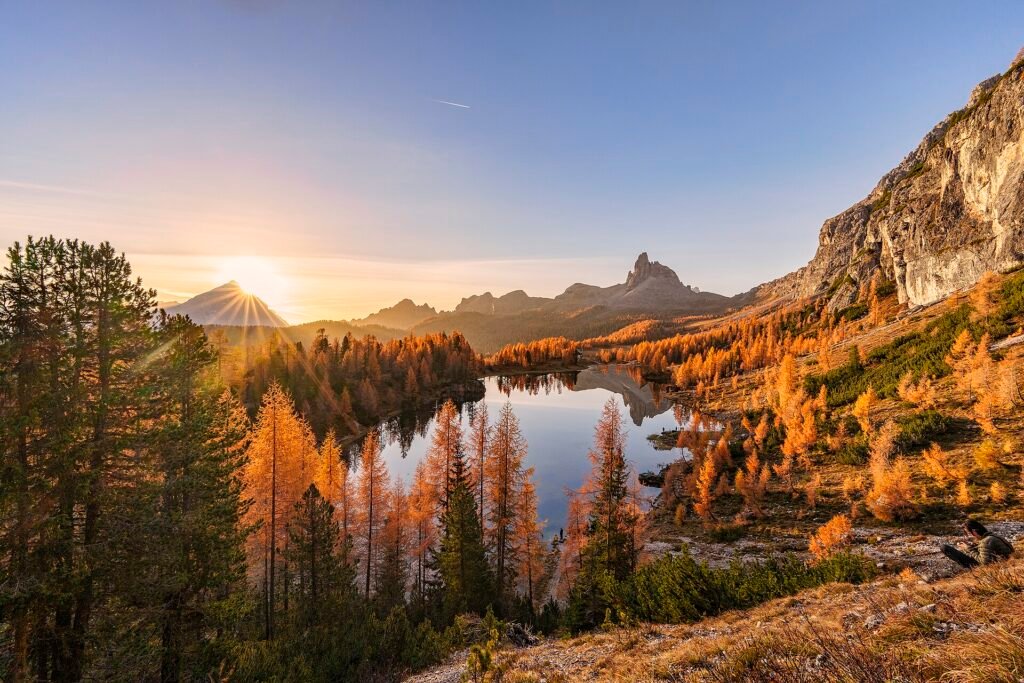

If Sorapis sounds too busy, Lago di Federa is a superb alternative. From the road to Passo Giau, a forest trail climbs about 640 m in roughly two hours to the lake at 2,046 m, where Rifugio Croda da Lago sits right on the shore beneath the jagged Croda da Lago ridge. Closer to town, Lago Pianozes and Lago Ghedina are easy walks for families, while Lago di Misurina, about half an hour’s drive away, is a classic stop on the way to the Tre Cime.
Circle the Tre Cime di Lavaredo
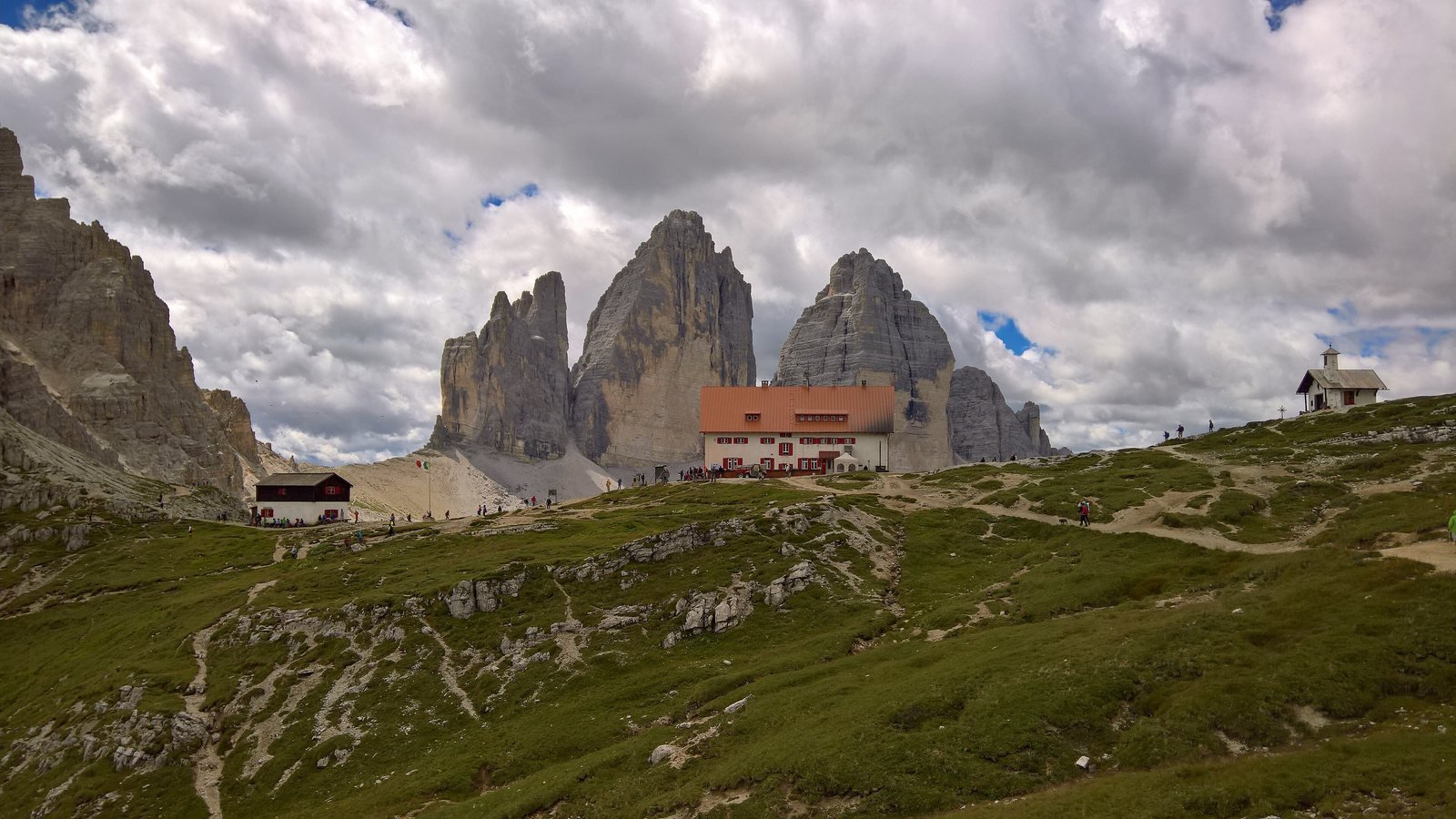

The three rock towers of the Tre Cime di Lavaredo are one of the great symbols of the Dolomites. A 6 km toll road climbs from near Lake Antorno, above Misurina, to Rifugio Auronzo at 2,333 m. From there a loop of about 10 km circles the peaks via Rifugio Lavaredo, Forcella Lavaredo and Rifugio Locatelli, with the classic view of the north faces. Allow three to four hours.
Driving up now requires an online booking: in 2026 the fee was €40 per car for up to 12 hours, and the road usually opens from late May to late October.
Drive the great passes and day-trip around the Dolomites
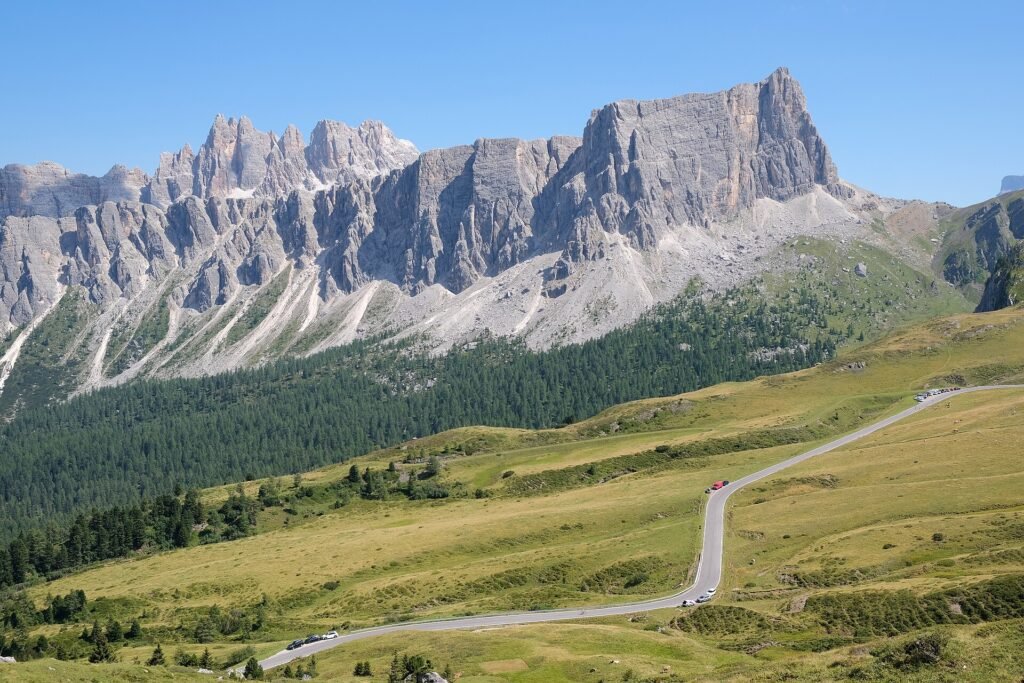

Cortina is a natural base for scenic drives and road cycling over Passo Giau, Passo Falzarego and Passo Tre Croci. Lago di Braies is about an hour away, but between 1 July and 15 September driving there between 9 am and 4 pm requires an advance reservation. For a gentler ride, the Lunga Via delle Dolomiti cycle path follows the old railway line that once linked Calalzo, Cortina and Dobbiaco.
Follow the Olympic story
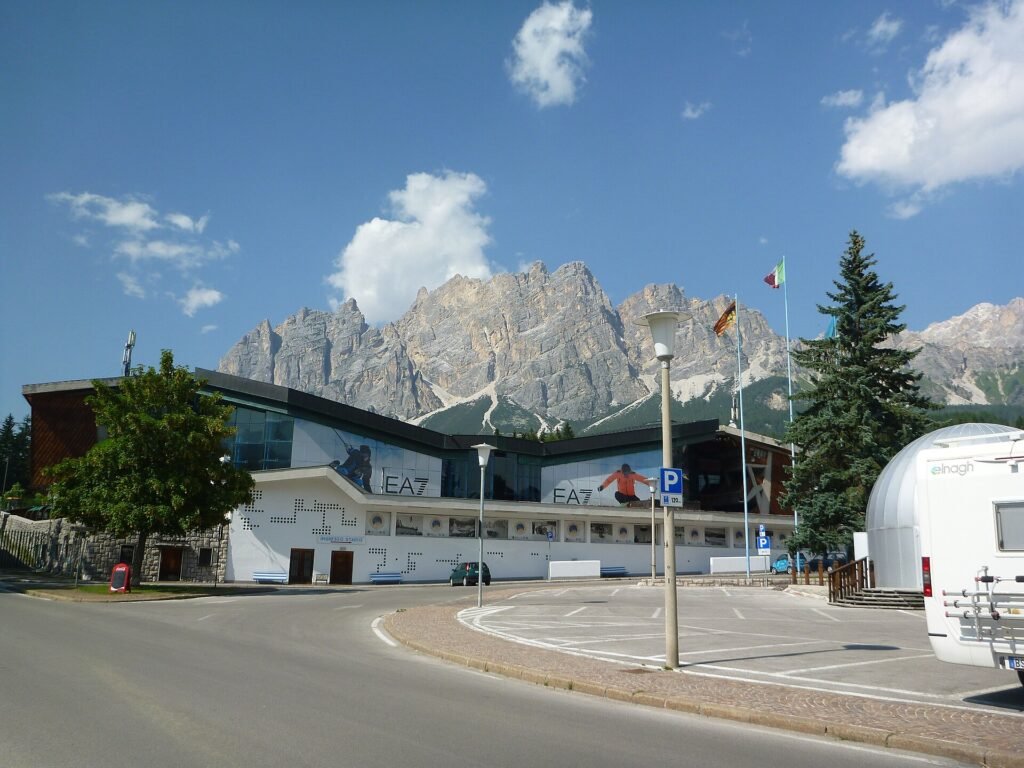

Cortina hosted Italy’s first Winter Olympics in 1956, when the Olympic Ice Stadium staged the opening ceremony. At Milano Cortina 2026 (6–22 February) the town hosted the women’s alpine skiing on the Olimpia delle Tofane, curling at the renovated ice stadium, and bobsleigh, luge and skeleton at the new Cortina Sliding Centre on the site of the historic Eugenio Monti track. In March it also staged Para alpine skiing, wheelchair curling and the Paralympic closing ceremony. Outside race days, the Olimpia delle Tofane is part of the regular ski area, so you can ski the Olympic slope yourself.
How to get to Cortina d’Ampezzo
Cortina has no train station of its own, so the last stretch is always by road.
- By car: from Venice, take the A27 towards Belluno, then the SS51 Alemagna road from near Longarone. Cortina is about 162 km from Venice, 156 km from Innsbruck and 432 km from Milan.
- By bus: ATVO, Cortina Express, Dolomiti Bus and FlixBus run from Venice Marco Polo Airport and Venice Mestre station, usually in two to two and a half hours.
- By train and bus: the nearest stations are Calalzo di Cadore (35 km), with buses on to Cortina, and Dobbiaco/Toblach (32 km) in the Val Pusteria.
- By plane: Venice Marco Polo and Treviso are closest; Innsbruck, Verona and Milan are alternatives.
In town, local buses link the centre with the main lifts and hamlets, and in summer extra lines serve popular trailheads. Timetables change with the season, so always check before you travel.
Where to buy bus tickets
Most visitors without a car arrive by coach from Venice, and in busy periods seats really do sell out. Book online a few days ahead, and as early as possible for Saturdays, Christmas and New Year, February and August. Fares on the private lines change with demand, so the earlier you book, the cheaper it tends to be.
- Cortina Express: book on the Cortina Express website or app, by phone or at partner agencies. Booking is strongly recommended; passengers without one are only taken if there is space. Fares from Venice have started at around €12.50 when booked early and rise closer to the date.
- ATVO (line 29): runs from Venice Piazzale Roma, Mestre station, Marco Polo Airport and Treviso. A seat reservation is compulsory and comes with the ticket, which you can buy on the ATVO website, at ATVO ticket offices or from authorised resellers. From September 2026 a single from Venice, Mestre or the airport costs around €25.
- FlixBus: online or in the app only, with dynamic fares that can start in the low teens of euros if you book early.
- Dolomiti Bus: the regional company for the province of Belluno, which runs the buses from Calalzo station, the seasonal lines to the passes and trailheads, and Cortina’s town buses. Buy in the Dolomiti Bus app, online, at newsagents, tobacconists and bars displaying the sign, or at the ticket office. Buying from the driver costs €0.50 extra, and you must validate your ticket when you board.
In town, the bus ticket office at Via Marconi 5, by the old bus station, sells Cortina Express and Dolomiti Bus tickets and can help with timetables. It has generally opened Monday to Saturday, morning and late afternoon, and closed on Sundays, so check the current hours. One thing to watch: the stop for long-distance coaches in Cortina has moved several times recently (the Ice Stadium, then Piazza Roma, and from 1 October 2026 Piazzale Revis for Cortina Express), so always check the departure point on your ticket.
Renting a car: where, how much and winter rules
A car is the easiest way to combine the passes, lakes and trailheads, especially in summer. Most people pick one up at Venice Marco Polo Airport, which has the widest choice of international and local companies, or at Treviso Airport, Venice Mestre or Piazzale Roma. Cortina itself and the Cadore area have only a few small local rental agencies, with limited choice and higher prices, so book well ahead if you want to rent locally. You can also leave the car until you reach the mountains: take the coach up and rent only for the days you need it.
- Rough costs: a small car from Venice airport typically costs around €25–50 a day in low season and €60–100 or more in peak periods. Automatics, SUVs and 4x4s cost more, and one-way drop-offs and young-driver fees add up quickly, so compare the total price including insurance.
- Winter tyres and chains: on the SS51 Alemagna road to Cortina, winter tyres or chains on board are compulsory from 15 November to 15 April, and at any time of year when there is snow or ice. Check that your rental includes winter tyres; some companies charge roughly €10–25 a day extra for them.
- Fuel and tolls: the A27 motorway from Venice is tolled, and it is worth filling up in the valley before heading over the passes.
Getting around town and parking
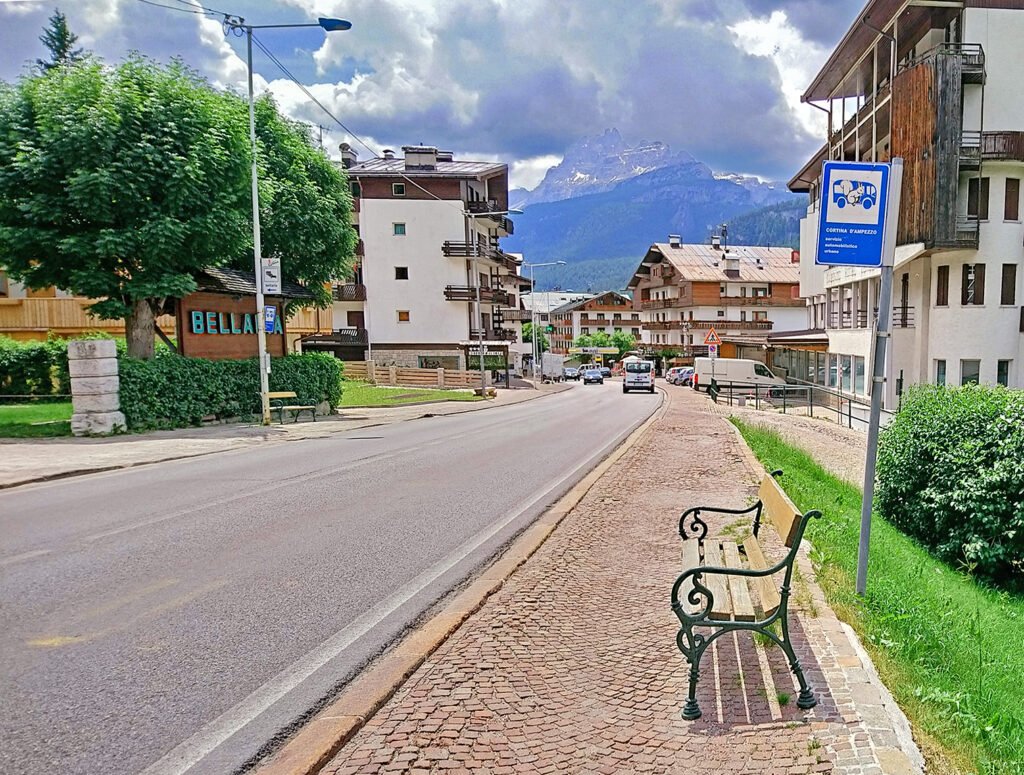

The centre of Cortina is compact and largely pedestrian, and the Faloria cable car and the Freccia nel Cielo are both within walking distance of Corso Italia. For everything else, Dolomiti Bus runs a network of town lines, most of them starting from Piazza Roma, to the hamlets and lift stations. A town ticket is valid for 75 minutes with unlimited changes, and since August 2026 there has also been a €5 day ticket for town buses. In winter, the ski buses linking the town with the ski areas have in recent seasons been free with a valid ski pass. In summer, extra seasonal lines serve passes and trailheads such as Passo Giau, Falzarego and Tre Croci; see the Dolomiti Bus website for current timetables and fares.
If you drive, expect to pay for parking in the centre. Municipal car parks run by Servizi Ampezzo charge from 9 am to 8 pm, with higher rates in the main seasons (June to September and December to April) than in spring and autumn. In 2026 the open central car parks cost roughly €1–2 an hour in high season, and the Pontechiesa multi-storey charged €2 an hour for the first three hours and less after that. Several central car parks were closed for building works in 2026, so check the Servizi Ampezzo parking page before you go, and if possible choose a hotel with its own parking. At popular trailheads, arrive early: Passo Tre Croci and the passes fill up by mid-morning in July and August, and the Tre Cime toll road and Lago di Braies need advance bookings in summer (see above).
Where to stay in Cortina d’Ampezzo
- Town centre: best for a first visit, with restaurants, shops, the bus station and both the Faloria cable car and the Freccia nel Cielo within walking distance.
- Pocol and the Falzarego road: quieter, with big views and quick access to Tofana, Cinque Torri and Lagazuoi. Best with a car.
- Fiames and the north of the valley: peaceful, close to the cross-country trails and cycle path, and handy for trips towards Dobbiaco and Braies.
- San Vito di Cadore: about 10 km south and often noticeably cheaper, with easy access to Cortina by car or bus.
Book early for Christmas, New Year, February and August.
How much does accommodation cost in Cortina?
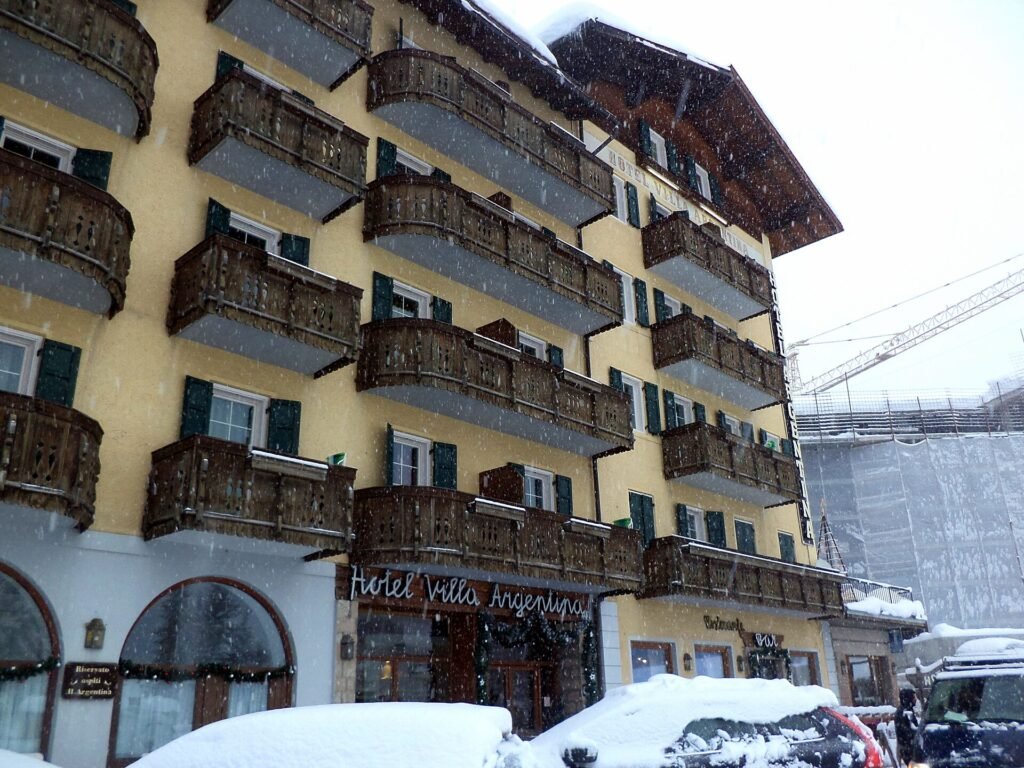

Cortina is the priciest base in the Dolomites, and prices swing hugely with the season. These are rough ranges for a double room or a small apartment per night, compiled from booking sites and local listings in 2025–2026. Treat them as a guide only and check live prices for your dates.
| Type of accommodation | Low and shoulder season (approx.) | High season (approx.) |
|---|---|---|
| Guesthouse room or B&B | €70–120 | €120–200 |
| 3-star hotel | €100–180 | €180–300 |
| 4-star hotel | €180–300 | €300–600 |
| 5-star and luxury hotels | €300–600 | €700–1,500+ |
| Apartment for 2–4 people | €90–150 | €150–300, often with a 3–7 night minimum |
- High season means Christmas to early January, February, Easter and August. Rates are lowest in late spring, late autumn and parts of March, June and September.
- Half board (breakfast and dinner) is common in 3- and 4-star hotels and can be good value given restaurant prices in town.
- Stay outside town to save: in San Vito, Borca, Valle or Tai di Cadore, rooms often start at around €60–100 a night, with free parking and bus links to Cortina.
- Tourist tax: Cortina adds a tax per person per night, paid at your accommodation. Under the rates in force since 2025, it ranges from €1.50 (mountain huts and guest rooms) to €5 (5-star hotels), for a maximum of five consecutive nights; children under 12 are exempt.
What to eat in Cortina
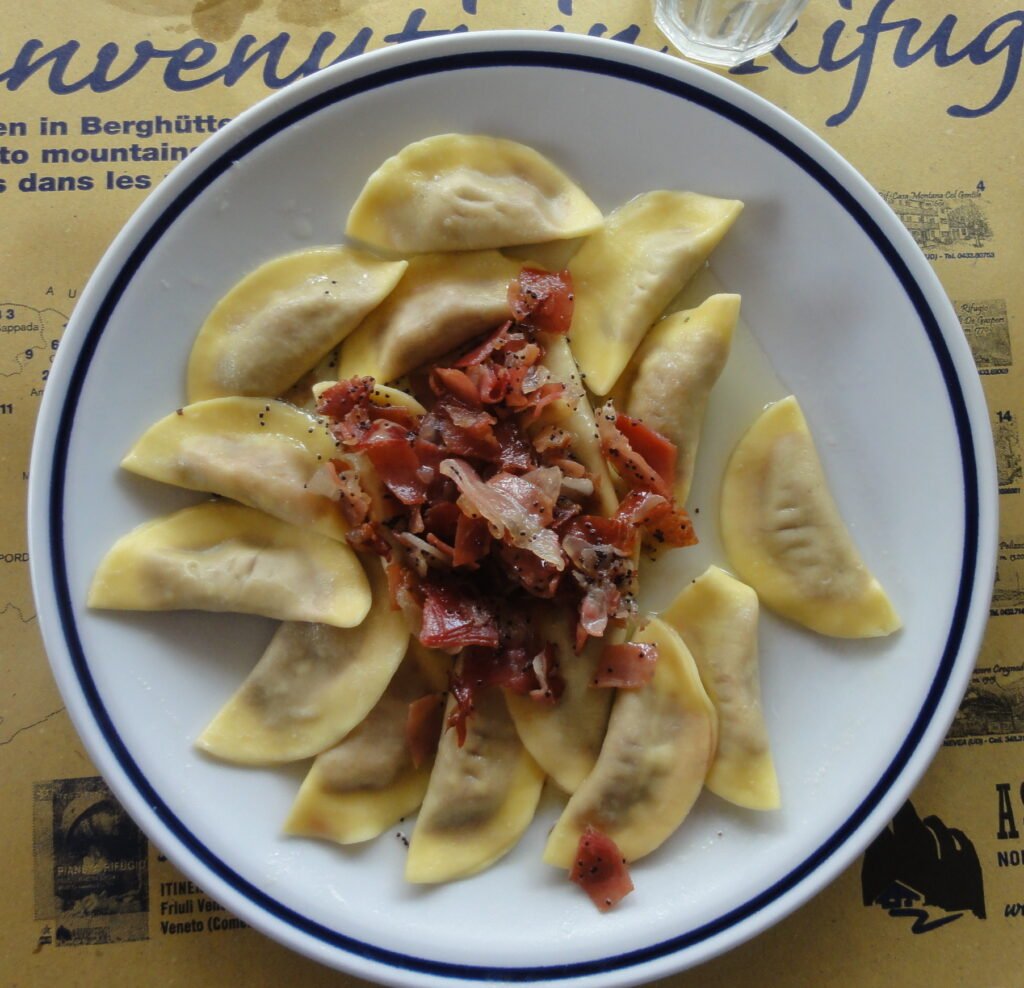

Cortina’s cooking mixes Venetian, Tyrolean and Ladin influences. The local signature dish is casunziei all’ampezzana, half-moon ravioli filled with beetroot and served with melted butter, grated cheese and poppy seeds. Look out also for canederli (bread dumplings), polenta with mushrooms or game, speck and apple strudel. Lunch at a mountain hut with a view of the peaks is one of the great pleasures of a day out, and in the evening the bars along Corso Italia are the place for an aperitivo.
Restaurant and food prices in Cortina
Eating out in Cortina costs more than in most Dolomite valleys, though a coffee at the bar or a pizza is still reasonable. These are typical 2025–2026 prices per person; smart places on Corso Italia and the best-known mountain huts charge more.
| What | Typical price (approx.) |
|---|---|
| Espresso at the bar | €1.50–2.50 |
| Cappuccino | €2.50–4 |
| Spritz or glass of wine at an aperitivo bar | €6–15 |
| Pizza at a pizzeria | €8–15 (a margherita from about €7–10) |
| Plate of casunziei or another pasta dish | €14–24 |
| Lunch at a rifugio (main course and a drink) | €25–40; a full sit-down meal €30–50 |
| Dinner at a mid-range restaurant with house wine | €45–70 |
| Fine dining or tasting menu | from about €100, often much more |
- Many restaurants add a coperto (cover charge), often €2–4 per person; it should be shown on the menu.
- Mountain-hut kitchens usually serve hot food from about 12 noon to 2:30 pm, and the best dishes go first. Aim to sit down by 1 pm, and call ahead for a terrace table on summer weekends.
- Card machines at altitude can fail when the signal is weak, so carry some cash.
- To save money, make lunch your main meal, buy picnic supplies at the town supermarkets and bakeries, and book dinner in advance in high season.
Practical tips for visiting Cortina
- Start early: in summer, trailheads fill up by mid-morning and thunderstorms often build in the afternoon.
- Book mountain huts ahead for overnight stays, especially in July and August.
- Check lift dates, which vary from lift to lift.
- Dress in layers: it can be more than 10°C colder at 3,000 m than in town.
- Wear proper boots: even popular hikes like Sorapis include exposed sections.
- Stay on marked trails, take your rubbish home and respect bans on swimming in mountain lakes.
- Carry some cash: mountain huts and small cafés do not always have a reliable card signal.
How much does a trip to Cortina cost?
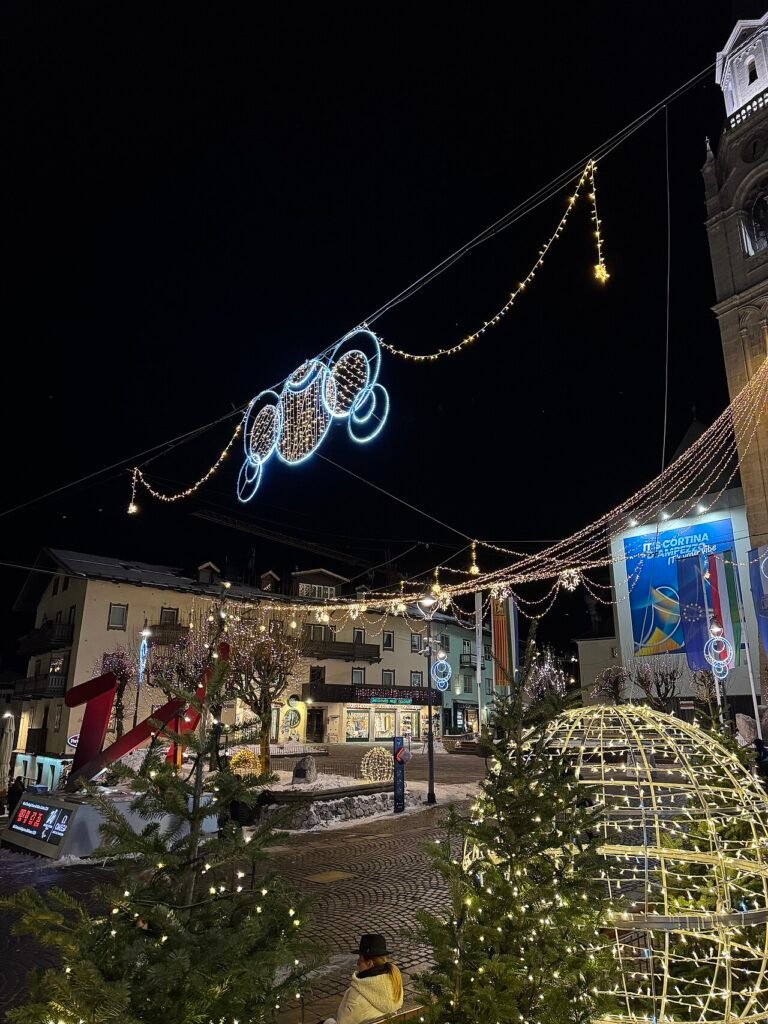

Here is a rough daily budget per person, assuming two people share a room and not counting travel to Cortina. Use it as a starting point only, since prices depend heavily on the season and how far ahead you book.
| Travel style | Approx. per person per day | What it covers |
|---|---|---|
| Budget | €90–150 | A room in a nearby village or a simple guesthouse, picnic lunches, pizza or a simple dinner, buses |
| Mid-range | €190–300 | A 3-star hotel in or near town, a rifugio lunch, dinner out, a cable car ride or car hire |
| Comfort and luxury | €400+ | 4- and 5-star hotels, restaurant meals, lifts, car hire and spa |
Lifts are a big extra. In summer 2026 an adult return on the Freccia nel Cielo to the top of Tofana cost €45, and in winter add the price of a ski pass (see our Cortina skiing guide for 2026/27 prices).
Ways to save money in Cortina
- Travel in June, September or March rather than at Christmas, in February or in August.
- Stay in San Vito di Cadore or another nearby village and drive or take the bus into Cortina.
- Choose half board, or an apartment where you can cook some meals.
- Book coaches and hire cars early, since fares rise as departure gets closer.
- Make lunch your main meal out; it is usually better value than dinner in town.
- Use the town and ski buses instead of paying to park in the centre.
Frequently asked questions
How many days do you need in Cortina?
Three days are enough to see the town and ride up Tofana or Lagazuoi and visit the Cinque Torri. With five to seven days you can add Sorapis, the Tre Cime, Lago di Federa and a drive over the passes.
Can you visit Cortina without a car?
Yes. Buses run from Venice and from the stations at Calalzo and Dobbiaco, and local and seasonal lines reach the main lifts and several trailheads. A car does make day trips much more flexible.
Is Cortina d’Ampezzo expensive?
Yes, it is one of the most expensive resorts in the Alps, especially at Christmas, in February and in August. You can keep costs down by visiting in shoulder season, staying in a neighbouring village, choosing half board and eating your main meal at lunchtime.
Where can I buy bus tickets in Cortina?
Book Cortina Express, ATVO and FlixBus tickets online or in their apps. For Dolomiti Bus regional and town buses, use the app, a newsagent or tobacconist, or the ticket office at Via Marconi 5. Buying from the driver costs a little more.
Is Cortina d’Ampezzo right for you?
If you want dramatic mountains, an elegant and lively town, great food and famous hikes on your doorstep, Cortina d’Ampezzo is hard to beat in any season. On a tight budget, consider staying in a neighbouring village and visiting on day trips.
Konstantin is an acclaimed travel writer, celebrated for transforming ordinary journeys into extraordinary narratives. With years of experience exploring diverse destinations across the globe, his work blends vivid storytelling, cultural insights, and practical advice to inspire wanderlust and guide readers toward unforgettable adventures.
As a key contributor to enjoythetrip.org website, Konstantin has built a loyal readership through their expertise in uncovering both iconic landmarks and off-the-beaten-path treasures. He specializes in providing travelers with honest, actionable tips, whether it’s finding the best resorts in Maldives, exploring cultural hubs like Paris, or diving into the natural wonders of Croatia.