
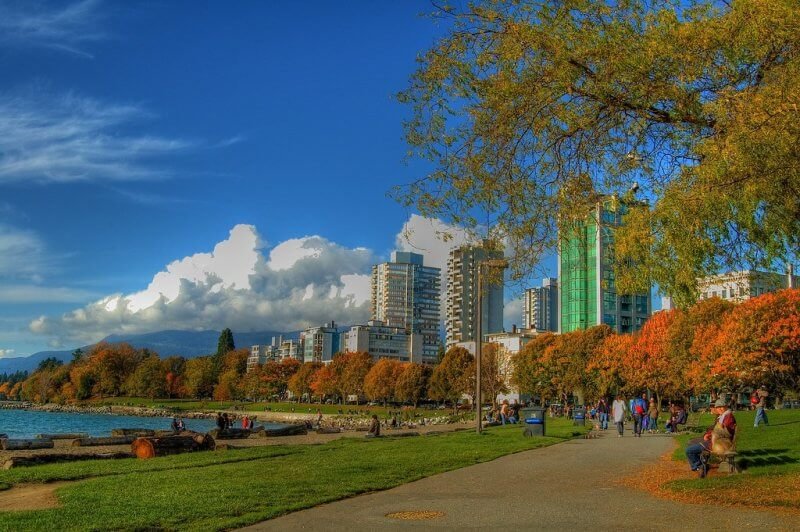
Vancouver is a large and beautiful city on Canada’s Pacific coast. It has many attractions, but locals always tell visitors to start with Stanley Park.
In this guide, you will find the best ways to explore it, from the Seawall and the aquarium to beaches, the mini train and cafés. For more of the country, see our list of top attractions in Canada.
Stanley Park: General Information
Stanley Park covers a 405-hectare peninsula. A narrow strip of land links it to downtown Vancouver. A stone seawall runs around the edge of the whole peninsula.
The park opened in 1888. It takes its name from Lord Stanley, who dedicated it.

Some trees here reach about 40 meters, and some spruces and cedars are 1,000 years old. The local squirrels and raccoons are not shy at all and will even take food from your hand. In addition, the park has lovely natural and man-made lakes.
Over time, the park gained plenty of attractions. For example, there are cricket and golf grounds, a large aquarium, many beaches and playgrounds, and a children’s railway. You will also find a Shakespeare garden and a site with First Nations totem poles.

In short, Stanley Park offers endless options for a great day out.
Walking, Cycling or Rollerblading in Stanley Park
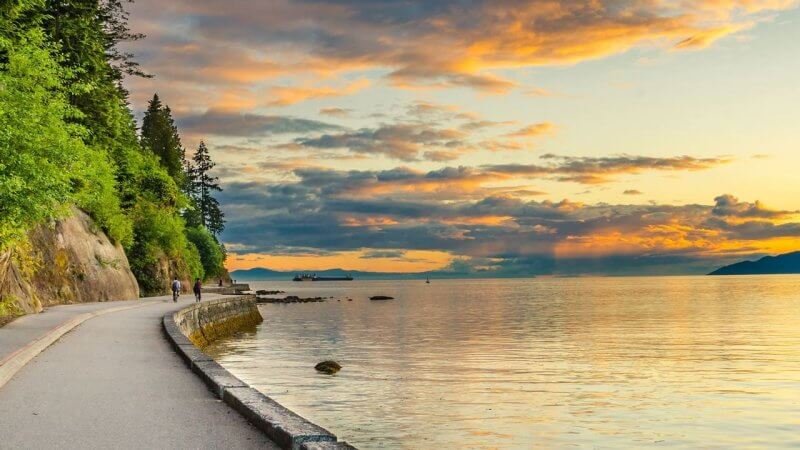
Paths cross the whole park, with a total length of about 27 km. The longest is the Seawall, which follows the stone wall around the park for 8.8 km.
It is a favourite route for walking, cycling, skating and running. From the park, you can follow the waterfront to the Vancouver Convention Centre. Alternatively, head the other way to False Creek and beyond.
At the turn to Third Beach, look out for a tree with unusual roots. This ancient cedar is 5 meters across, and some of its roots grow above the ground in striking patterns.
Also, don’t miss the site with brightly painted totem poles.
Vancouver Aquarium
The Vancouver Aquarium is also a science centre. It studies, protects and rescues marine life. It is home to many creatures:
- more than 300 species of fish;
- representatives of 56 species of amphibians and reptiles;
- almost 30,000 invertebrates;
- Representatives of about 60 species of mammals and birds.
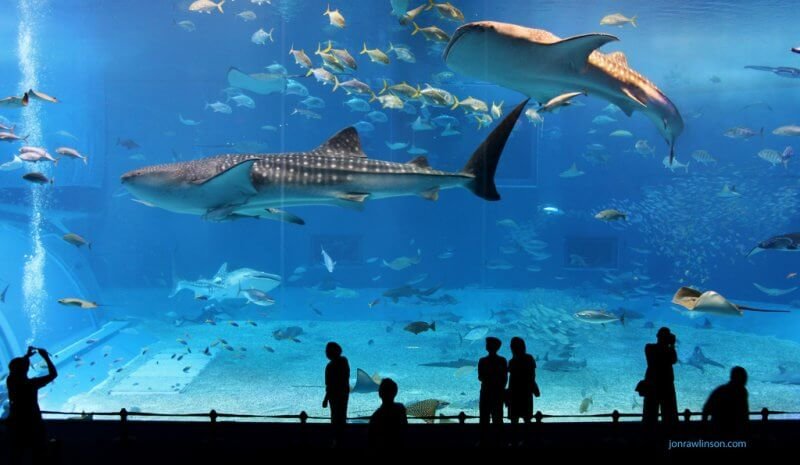
It is the largest aquarium in Canada. Some galleries date from its opening in 1956, while others came later. Overall, it covers 9,000 square meters and has 116 tanks holding 9,500,000 liters of water.
The aquarium also has a 4D cinema, a playground for toddlers, and classrooms and labs for school-age children.
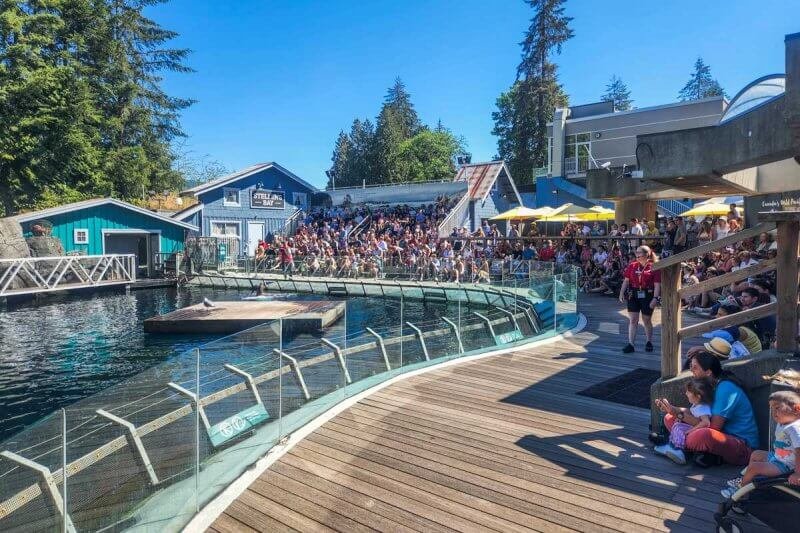
- Opening hours: 10:00 to 17:00.
- Visitor numbers are limited, so book a date and time slot on the website in advance. Prices can change daily, but an early booking locks in the lowest fixed price. You can also buy tickets at the entrance, though they may sell out. The regular rate is \$39.95 to \$51.95.
- Official website: www.vanaqua.org.
Beaches and Picnics in Stanley Park
Vancouver has 9 beaches with a total length of almost 18 km, and several of them are in Stanley Park.
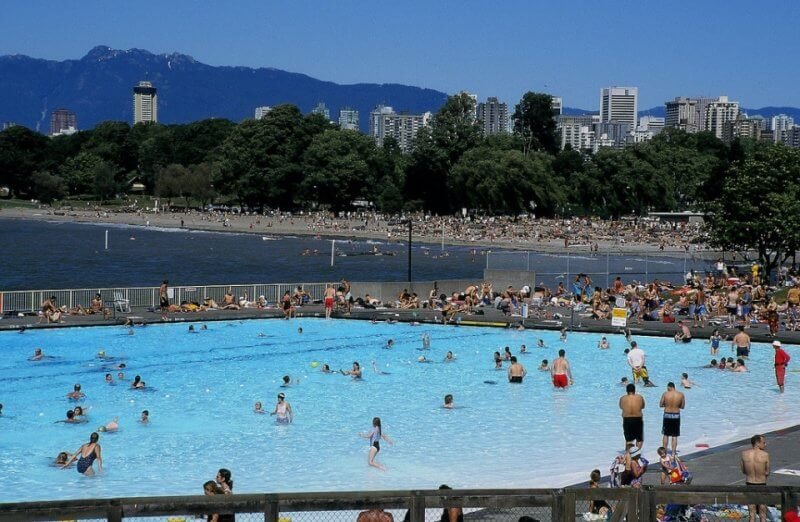
Second Beach is great for families, and many people stop here while walking the Seawall. It has a wide stretch of clean, warm sand, a large outdoor pool, a picnic area and public toilets.
Next to the beach lies a big field called Ceperley Meadow, with several playgrounds. On summer Tuesday evenings, weather permitting, free films play on the beach.
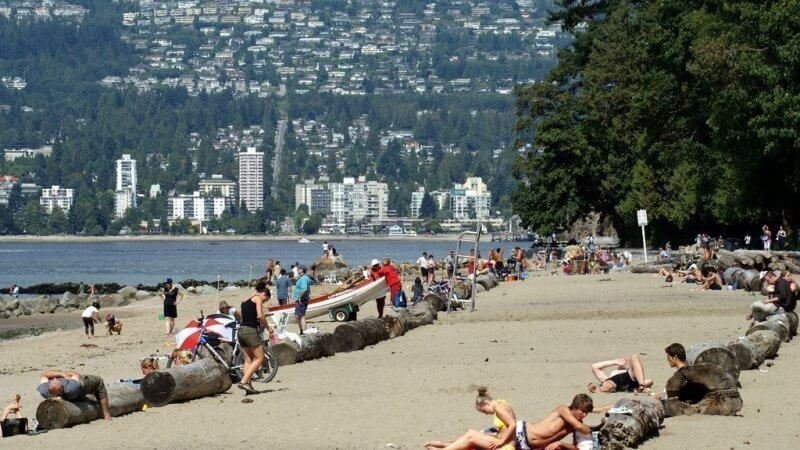
In the west of the park, you will find Third Beach, one of the best in Vancouver. Its wide sandy shore is perfect for swimming, sunbathing or simply resting after a walk.
Miniature Railway Ride
The Stanley Park Train runs for 15 minutes along a 2.5-km track. It passes through the most interesting parts of the park. Along the way, it makes several stops, so you can hop off, explore and then carry on.
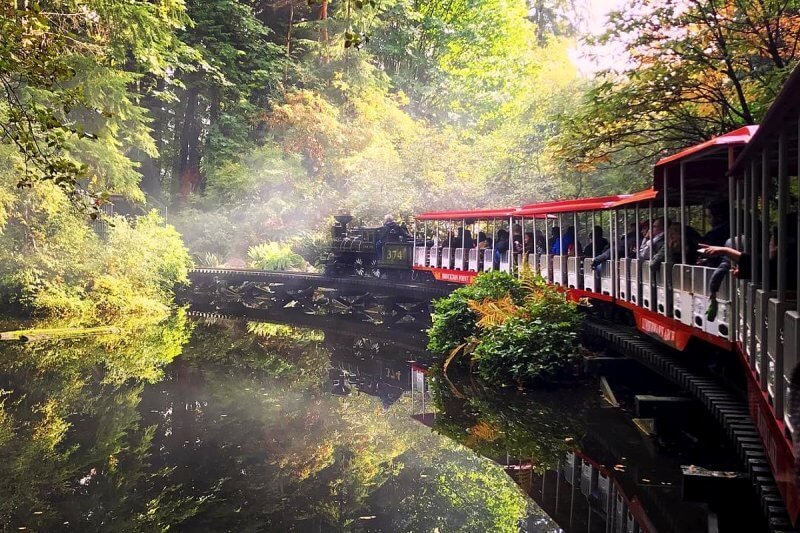
The station is on Pipeline Road, near the West Georgia Street entrance. Here, passengers can get close to the vintage engine and take photos.
The railway runs in spring and summer. It also opens for Christmas, Easter and Halloween.
Stanley Park Restaurants
After a walk, enjoy a meal at one of the park’s restaurants. Besides good food, they offer great views of the forest and the ocean.
- Prospect Point Cafe. It sits on the edge of the park near a lookout. From here, you can see the mountains, the harbour and the Lions Gate Bridge, and watch ships pass under it. The menu offers light snacks, sandwiches, salads and homemade pastries.
- The Pavilion. This early 20th-century building houses Stanley’s Bar and Grill, a casual spot. The menu includes burgers, salads, fish and chips, soups and desserts, and local breweries supply the beer.
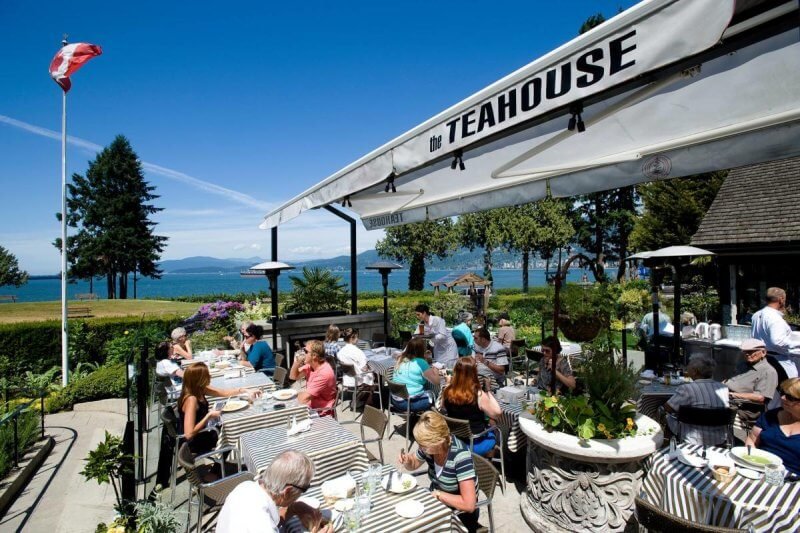
- The Teahouse. This restaurant stands on the west coast of the park. The North Shore mountains and English Bay make a calm backdrop, and it is a perfect place to watch the sunset. The menu changes with the seasons and mixes West Coast dishes with international ones.
- The Waterfall Cafe. Its sunny patio sits next to the park information kiosk. It is a great place for a meal near the Vancouver Aquarium and a 300-year-old red cedar.
- The Fish House. Located in the park near the railway, it serves fine food with a focus on fresh seafood, such as oysters, mussels and salmon. It also has a wide choice of wines and cocktails.
Interesting Facts and Useful Tips

- The park covers an area of 405 hectares, which is 10% larger than Central Park in New York and 50% larger than Richmond Park in London.
- The wall surrounding Stanley Park is an amazing long-term construction project. It was built from 1918 to 1971.
- The steam train that runs on the railway in Stanley Park is an exact replica of the Canadian Pacific Railway Engine No. 374. The original is known for running Canada’s first transcontinental passenger train to Vancouver in 1887.
- The Vancouver Aquarium was one of the first to hire professional naturalists to educate visitors about animal behavior.
- The Vancouver Aquarium operates on its own funds and does not receive any government subsidies.
- Since 2001, the Vancouver Aquarium has not kept orcas in captivity. One of the rules that its management follows is not to capture wild animals, and to rely only on breeding captive animals to replenish its inhabitants.
- In 2006, Canada Post issued a 51-cent domestic stamp to celebrate the 50th anniversary of the Vancouver Aquarium.
- The Rock Garden was recognized as a Vancouver Historic Site in 2011.
- It is better to plan a trip to the park on a weekday. On weekends, there are a lot of people there, and there are even traffic jams on the bike paths.
- Every year, 8,000,000 people visit Stanley Park.
Exploring more of Canada? Check out our 13-day Canada itinerary, our guide to Hamilton, Ontario, and tips for camping in Canada.
For official visitor tips, maps and seasonal events around the city, start with Destination Vancouver.
Frequently asked questions
How long for the Seawall?
The Seawall loop around Stanley Park is about 8.8 km. Most walkers take a few unhurried hours, with stops for views, totem poles and beaches; cyclists and skaters finish faster. The wider path network in the park stretches about 27 km if you want a longer day.
Is the aquarium worth it?
Yes if you like marine life and have school-age kids. Vancouver Aquarium sits in the park, opens 10:00–17:00, and limits visitor numbers — so book a date and time slot ahead. Early booking can lock in a lower fixed price; check vanaqua.org for current tickets.
Best beach in the park?
Second Beach is a favourite for families: clean sand, an outdoor pool, picnic space and toilets, right on the Seawall. Third Beach is another popular stop with sunset views over English Bay. Pick based on whether you want the pool and facilities or a quieter shoreline stretch.

Konstantin is an acclaimed travel writer, celebrated for transforming ordinary journeys into extraordinary narratives. With years of experience exploring diverse destinations across the globe, his work blends vivid storytelling, cultural insights, and practical advice to inspire wanderlust and guide readers toward unforgettable adventures.
As a key contributor to enjoythetrip.org website, Konstantin has built a loyal readership through their expertise in uncovering both iconic landmarks and off-the-beaten-path treasures. He specializes in providing travelers with honest, actionable tips, whether it’s finding the best resorts in Maldives, exploring cultural hubs like Paris, or diving into the natural wonders of Croatia.