
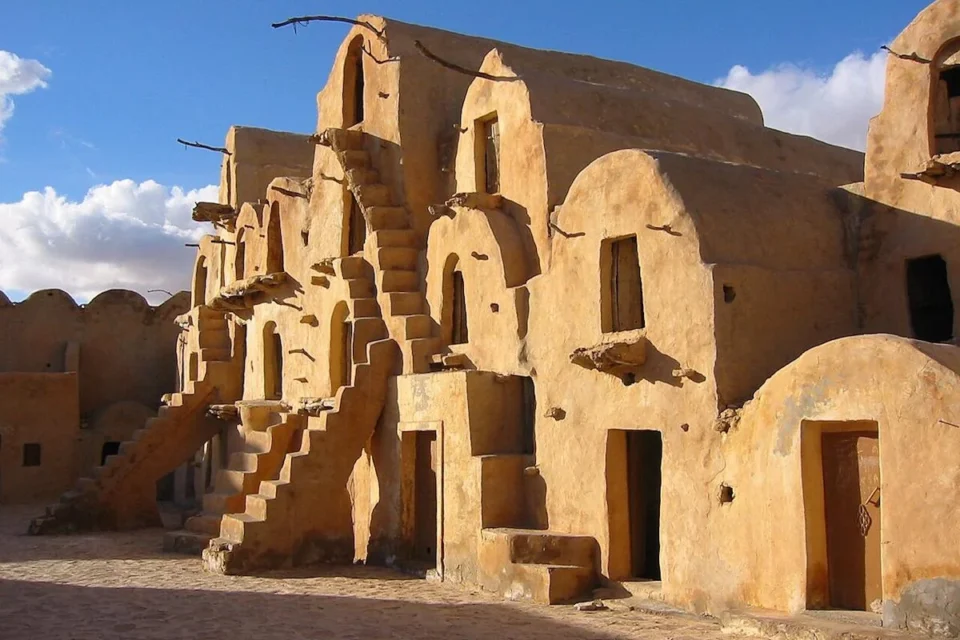
The island of Djerba will be of interest both to lovers of beach holidays and to admirers of absorbing excursions, while the south of the country hides famous Star Wars locations in Tunisia.
The island of Djerba, and the southern coast of Tunisia in general, can become an alternative to the popular winter destinations of Spain. As The Independent writes, there are fewer tourists here, ancient settlements and unusual architecture have been preserved, and in one of the local hotels you can see the house that, in the Star Wars films, became the childhood home of Luke Skywalker.
The journey around the island of Djerba begins with its main town, Houmt Souk, the author of the publication relates — travel journalist Phil Thomas, who explored this route in person. In the local market, traders switch easily from one language to another, joke and greet each other, while tourists and locals fill the narrow streets of the medina. Among the trading stalls, pyramids of spices draw the eye — cumin, paprika and the tabii mix.
Local people speak the Tunisian dialect, Tunsi, which combines Arabic and French elements with the influence of Amazigh, Italian and Maltese. It differs noticeably from literary Arabic and is a characteristic feature of Tunisia.
Such linguistic diversity reflects the history of Djerba itself. The island, off the south-eastern coast of Tunisia, spent millennia under the influence of various Mediterranean cultures. Jewish, Muslim and Christian communities have left their mark on the island’s architecture and traditions. At the same time, what unites them is hospitality and a readiness to receive travelers.
Cultural diversity is noticeable even in small things. In a local minibus, for example, you can see at once the symbol of the all-seeing eye, meant to ward off evil, and a bright green clover — another talisman for good luck.
Djerba is often compared with the south of Spain, in particular with Andalusia, known for its Moorish architecture. The island also has whitewashed houses, winding streets and sights reflecting various historical epochs. However, there are far fewer tourists here than at Spain’s most popular attractions, where you often have to book tickets in advance and put up with crowds.
In 2023, Djerba was added to the UNESCO World Heritage List. An important role in this was played not only by the historic buildings, but also by the traditional way of life. Over generations, local people adapted to a shortage of fresh water and limited natural resources, creating self-sufficient settlements.
You can get acquainted with traditional architecture at the Explore Djerba park. The guide Mounsef shows a recreated menzel — a family estate where several generations grew crops, collected rainwater and lived around inner courtyards. Behind the high white walls grow pomegranates, chilli peppers, dates and aubergines. In separate rooms local craftsmen demonstrate traditional weaving and pottery.
In the past, menzels had separate guest rooms where travelers from other parts of the Mediterranean could stay. These rooms were located apart from the family part of the house. Today the tradition of hospitality remains an important part of local culture.
If you drive about an hour and a half inland from Djerba, Mediterranean landscapes give way to the arid hills and valleys of the Dahar region. This territory is part of a UNESCO Global Geopark. Its geological layers preserve a history going back roughly 250 million years, to the time when there was a sea here.
In the Matmata area, instead of the usual desert dunes you can see rocky hills and valleys covered with low bushes. Some dark patches on the slopes look like vegetation from a distance, but up close turn out to be the entrances to dwellings carved straight into the rock, the author notes.
These are the traditional underground houses of the Amazigh, the indigenous people of North Africa, also known as Berbers. Many Amazigh prefer their own name, which translates roughly as “free people”. The underground architecture helps maintain a comfortable temperature inside the dwellings even in intense desert heat.
Some of these houses still serve as homes for local families, but some owners receive tourists. Behind a whitewashed entrance decorated with symbols of good fortune — a fish and the hand of Fatima — an inner courtyard opens up, from which rooms deepened into the hill lead off.
Guests here are treated to fresh tabuna bread, olive oil, honey and homemade spicy harissa. The ingredients are usually prepared nearby. Such hospitality has a centuries-old history: unexpected guests here have always tried to be received as well as possible. Some families even offer travelers the chance to stay the night. This gives tourists an opportunity to get better acquainted with Amazigh culture, and local people an additional income.
It is precisely in Matmata that Hotel Sidi Driss is located, well known to fans of the Star Wars film saga. The former residential house was used for the filming of two of the films, in which it portrayed the childhood home of Luke Skywalker. Thanks to this, millions of viewers saw elements of traditional Amazigh architecture on screen. Among the tourist attractions of this establishment there is even a Darth Vader figure.
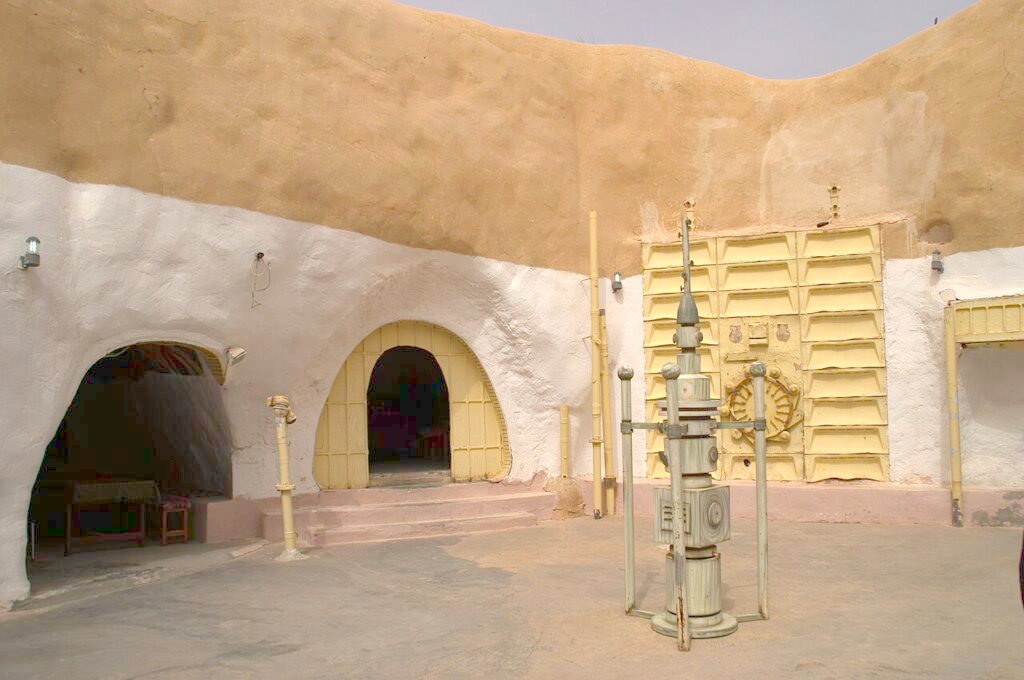

Another place connected with George Lucas’s cinematic world is the town of Tataouine. Its name recalls the planet Tatooine from Star Wars, for the creation of which the filmmakers were inspired by this region, the media write.
In Dahar you can also see other examples of ancient Amazigh architecture — fortified ksars that were used as granaries. They were built along ancient trade routes in order to protect supplies. Inside are vaulted storage chambers — ghorfas — forming multi-storey structures of mud brick and stone.
Many ksars are now in ruins, though some have received a new purpose. For example, Ksar Ouled Debbab, built in the 13th century, now operates as a hotel, restaurant and museum. Behind arched passageways are rooms with low beds and colorful Amazigh carpets. Despite its ancient appearance, you can stay here comfortably. Guests are even provided with a hammam with rooms for hot and cold bathing.
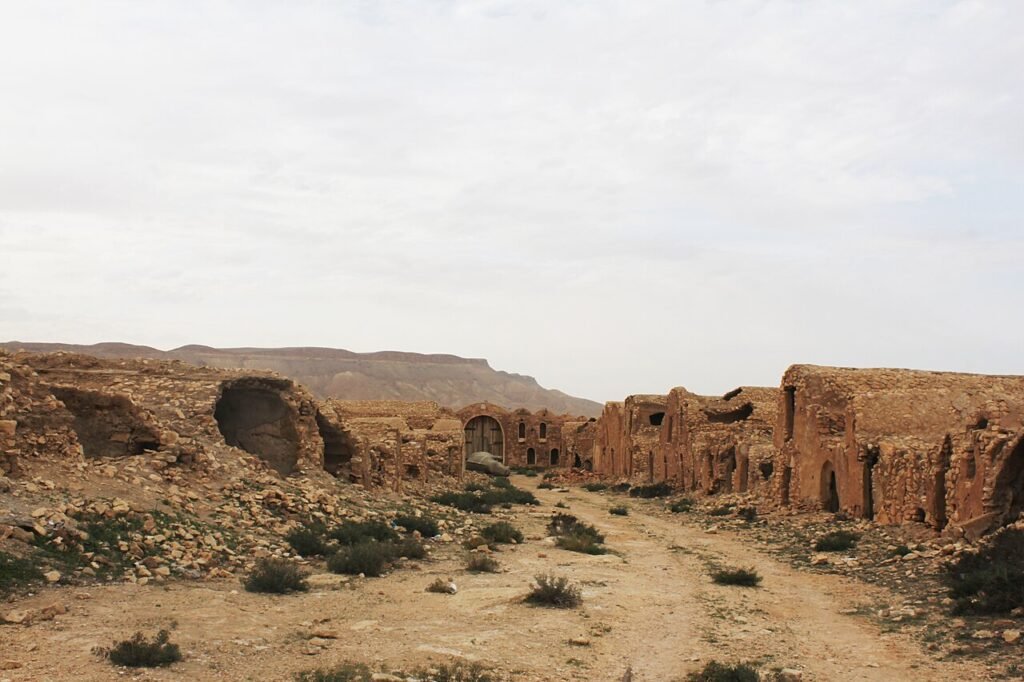

At the same time, preserving the historical heritage remains a problem for some settlements. In the village of Chenini, the old stone houses are located on a steep mountain slope and resemble the ruins of a medieval monastery. Despite the half-ruined walls and crooked doors, the village continues to live.
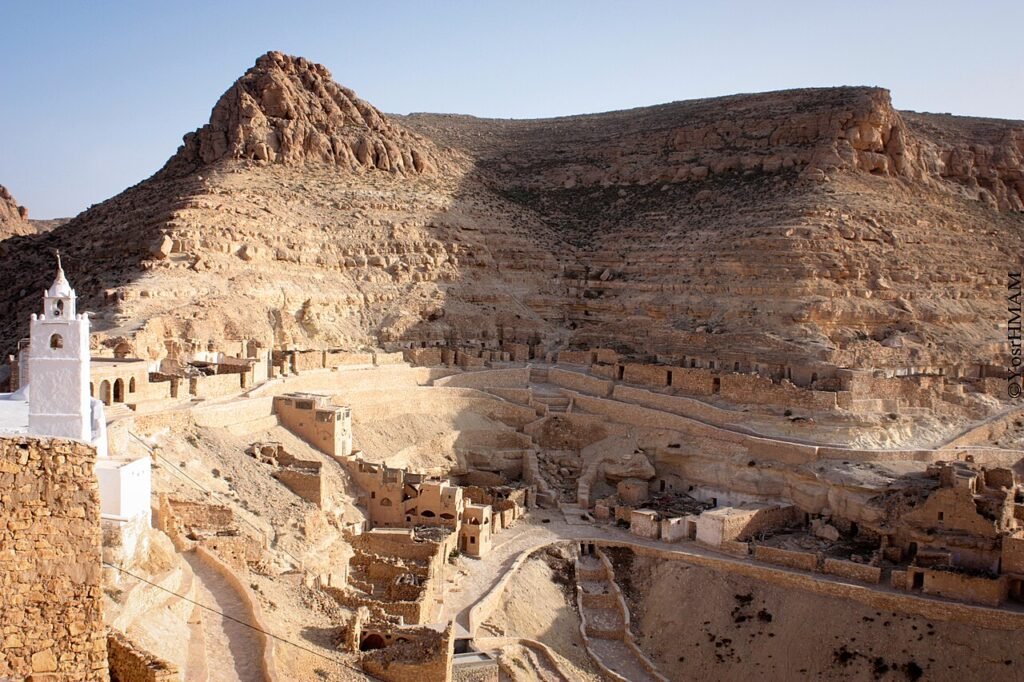

Many families have moved lower down the slope or left Chenini in search of work. However, local guides, guesthouses and cafes help make use of the old buildings and sustain the community’s economy. Amazigh ornaments decorate the carpets and ceramics sold to tourists.
Above the village rises the whitewashed Mosque of the Seven Sleepers with its slender white minaret. According to local legend, it is connected with seven youths who hid in a cave to escape religious persecution and woke several centuries later in a completely different world. Similar stories are found in both Christian and Muslim traditions.
Near the mosque are the supposed graves of the Seven Sleepers and their dog Qitmir. Today’s Chenini, with its guesthouses, hookahs and tourists from different countries, would probably have surprised the legendary heroes. But local hospitality would probably have remained understandable to them.
How to get there
The airline easyJet flies to Djerba twice a week from London Luton airport and from Manchester. The flight lasts about three and a half hours, and return tickets cost from 105 pounds sterling. On the other days you can use Tunisair flights from London Heathrow or Gatwick airports with a connection in Tunisia.
To visit Matmata, Tataouine and Chenini it is more convenient to use the services of a local guide. The company Grand Sahara Adventures organizes long day trips from 70 euros (59 pounds sterling) for a group of four, and also offers overnight stays. Lunch is usually included in the price.
Tunisian dinars cannot be purchased outside the country, but there are many ATMs on Djerba. In most large hotels you can exchange euros, US dollars or pounds sterling. Bank cards are often accepted on the island, but for trips to the mainland it is worth having cash, preferably in small notes.
Where to stay
Ksar Ouled Debbab, Tataouine. The hotel is located in a 13th-century ksar. The rooms are simple but cosy; the price includes a buffet breakfast, and the Wi-Fi works well. The price is from 90 pounds sterling per night.
Hotel Sidi Driss, Matmata. A hotel in the house known as Luke Skywalker’s home. The rooms are named after Star Wars characters. Breakfast and dinner are included in the price of the stay. During the day there are often tour groups here. The price is from 65 pounds sterling per night.
Kenza, Chenini. A traditional underground house built into the hillside. Guests are offered sunset views and freshly prepared dishes. In summer the rooms stay cool. The price is from 40 pounds sterling per night.
Frequently asked questions about Star Wars locations in Tunisia
Where are the main Star Wars locations in Tunisia?
In the south: Hotel Sidi Driss in Matmata portrayed Luke Skywalker’s childhood home, and the town of Tataouine gave its name to the planet Tatooine.
How do I get to Djerba from the UK?
easyJet flies to Djerba twice a week from London Luton and Manchester. The flight takes about three and a half hours, with return tickets from 105 pounds.
Can I stay overnight at Luke Skywalker’s home?
Yes. The hotel in Matmata has rooms named after Star Wars characters, with breakfast and dinner included, from 65 pounds per night.
For more trips like this, see affordable twins of expensive destinations and the warmest places in Spain for winter sun. You can also read about Djerba on the UNESCO World Heritage Centre website.
Konstantin is an acclaimed travel writer, celebrated for transforming ordinary journeys into extraordinary narratives. With years of experience exploring diverse destinations across the globe, his work blends vivid storytelling, cultural insights, and practical advice to inspire wanderlust and guide readers toward unforgettable adventures.
As a key contributor to enjoythetrip.org website, Konstantin has built a loyal readership through their expertise in uncovering both iconic landmarks and off-the-beaten-path treasures. He specializes in providing travelers with honest, actionable tips, whether it’s finding the best resorts in Maldives, exploring cultural hubs like Paris, or diving into the natural wonders of Croatia.