
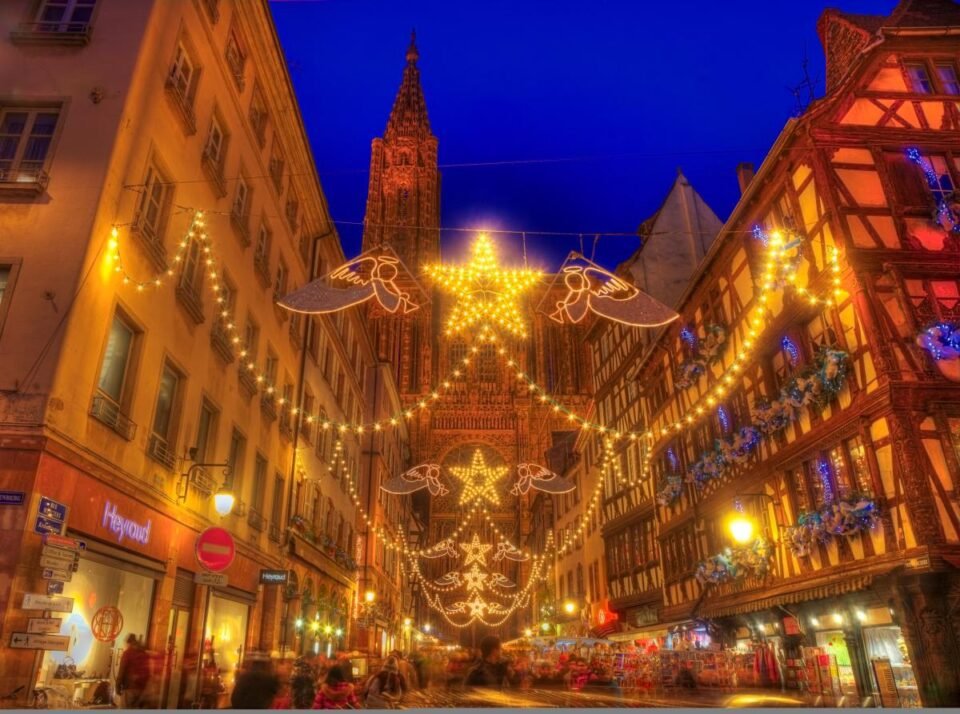
An experienced traveler named the best places for a winter holiday among European Christmas markets.
There are still a few weeks left before most Christmas markets in Europe open — hotels are filling up fast, tickets for special festive events are snapped up in advance, and prices are rising rapidly.
As the lead author at Travel Off Path, Vinicius Costa, who has been to more than 40 Christmas markets, notes, his advice for this year is to abandon traditional tourist centers like Strasbourg, Cologne and Vienna and choose smaller, cosier markets. There the risk of running into huge crowds, endless security queues and inflated tourist prices is far lower.
Costa named his five favorite Christmas destinations in Europe, where you can immerse yourself in the atmosphere of the Old World, drink mulled wine for 4 dollars and rest without unnecessary fuss.
Zagreb, Croatia
Festive season dates: from 28 November 2026 to 7 January 2027.
Among the Croatian cities that can be called underrated, a special place is held by the country’s capital — Zagreb. According to the author, it is an alternative to Cologne, but on a somewhat smaller scale. Zagreb’s Advent is a genuine celebration that has repeatedly received international recognition. In particular, three times it won the title of the best Christmas market in Europe. The city’s parks turn into fairy-tale Christmas towns, the pedestrian zones shine with thousands of lights, and even the tunnels from the Second World War become winter fairy-tale locations. On King Tomislav Square a huge open-air ice rink is set up, and a weekend in Zagreb can be combined with skiing or sledding on the local mount Sljeme.
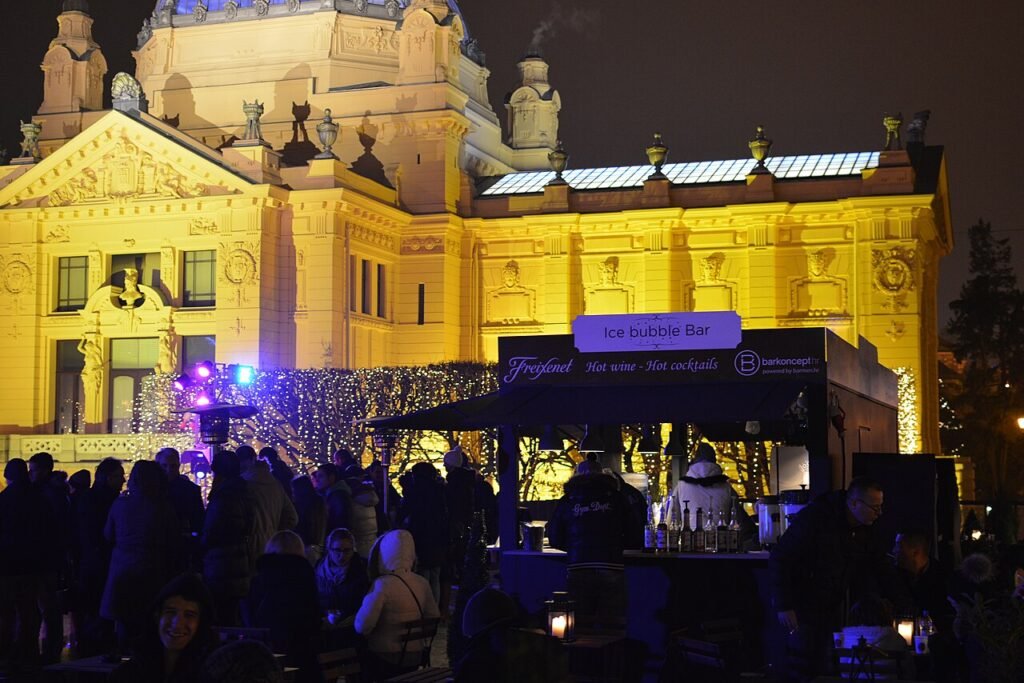

Average prices: a cup of mulled wine — $4.50, traditional fritule — from $5.60, a grilled sausage in a bun or Germknödel — $6.70–11, a large portion of goulash — $10. A ticket to the open-air ice rink costs $4–5.60, a restaurant lunch — from $13.50 for a main course to $33.50 for a three-course menu. A night in a simple guesthouse will cost $75–85, and in a four-star hotel $120–140.
Turckheim, France
Festive season dates: from 27 November to 30 December 2026.
In Turckheim there is a magical atmosphere of half-timbered houses, bright facades and unusual markets with an elven theme, founded on centuries-old traditions. The Alsatian market — the local Marché des Lutins — is a fairy-tale Christmas town with wooden houses where handmade goods and regional delicacies are sold. The market is located right in front of the town’s 16th-century town hall.
If you come on 23 or 24 December, you can see a giant Christmas calendar. Each day a new little window opens in it, behind which hides a brightly painted festive picture. The opening of each window is accompanied by a small ceremony at 17:00 — children carry lanterns and the traditional lamplighter opens the image of the day.
Every evening at 21:00 a night watchman in medieval dress walks through the cobbled streets. He patrols the town with a lantern, a hunting horn and a long halberd, singing traditional Alsatian songs.
Average prices: a cup of mulled wine — $3.90–4.50, an Alsatian bretzel — $3.50, a grilled sausage or traditional flammekueche — $6.70–14. A main course in a restaurant will cost about $18, and a three-course lunch about $39. A room in a simple guesthouse will cost $100–140 per night, and in a four-star hotel in neighboring Colmar $175–240.
Tallinn, Estonia
Festive season dates: from 20 November 2026 to 6 January 2027.
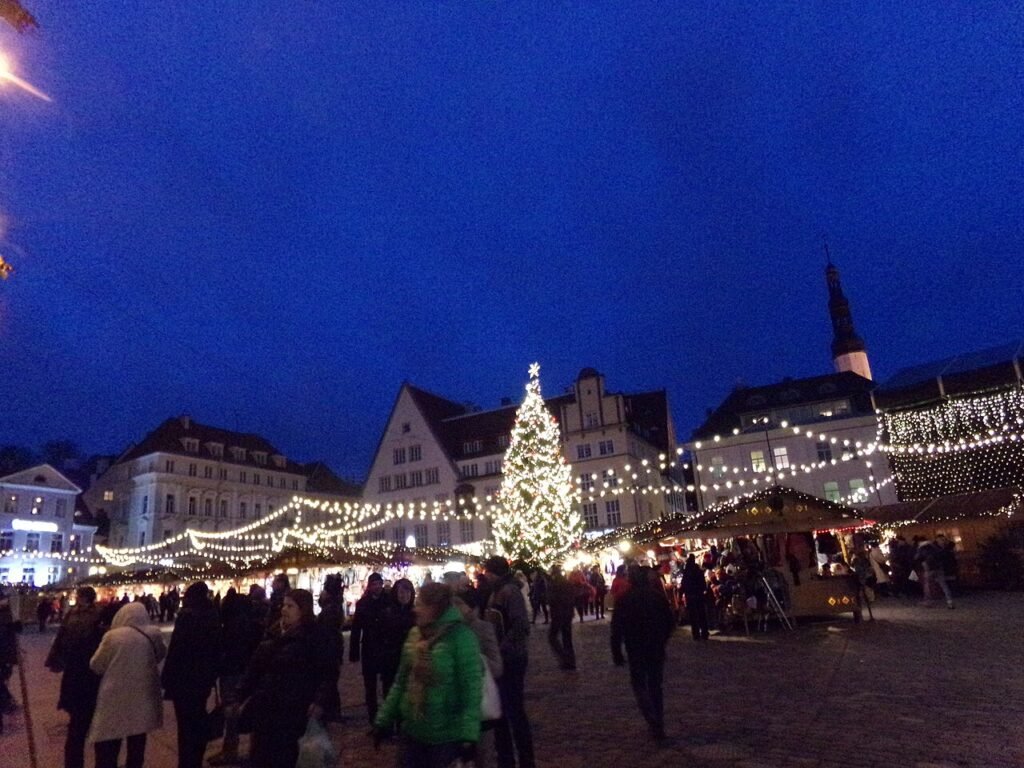
According to legend, the first public Christmas tree in history was set up on the town square precisely in Tallinn — the medieval capital of Estonia — as early as 1441. Every year on the day the Christmas market opens, Tallinn’s residents gather on the medieval square of the Old Town, where one of the oldest town halls in Europe is located. Here they watch the ceremonial switching on of the Christmas illuminations. When the square is lit up with festive lights, you can set off to look around the wooden trading houses.
The market sells Estonian handmade souvenirs and offers glögi — a local, spicier variety of mulled wine, which costs about 8 dollars. The medieval architecture, lit by thousands of lights, creates the impression of a genuine European fairy tale. Tallinn’s Old Town is surrounded by fortress walls and adorned with numerous spires.

“Be sure to try the local spicy gingerbread piparkoogid, the traditional blood sausage verivorst, which is usually served with lingonberry jam and a large portion of sauerkraut, and also the warm cinnamon pastry,” the journalist advises.
Average prices: a cup of traditional glögi — $7.80 (with liqueur $9–10), pastry and gingerbread — $3–5, a hearty portion of verivorst blood sausage with a side dish — $16–20. A main course in an inexpensive restaurant will cost about $15, and a three-course lunch about $32 per person. A room in a simple guesthouse will cost $60–90 per night, and in a four-star hotel $90–140.
Do not miss Helsinki — it is on the other shore of the strait
From Tallinn you can reach Helsinki (the capital of Finland) by ferry in 2–2.5 hours, where cosy Scandinavian Christmas markets await travelers. Helsinki is famous for its unusual festive dishes, among them cream of salmon soup and traditional Finnish Christmas pastry. In winter the Finnish capital also hosts beautiful light shows and festive concerts.
The main Christmas market will operate from 27 November to 22 December on Senate Square.
Brixen (Italy)
Festivities run from 27 November 2026 to 6 January 2027.
Brixen (or Bressanone) is a charming alpine town located near the Dolomites — a mountain range in northern Italy. Until 1919 Brixen was part of Austrian Tyrol. Now the town belongs to Italy, but local residents have preserved Tyrolean traditions. One of them is holding a genuine old alpine celebration every December.
The Christmas events begin on the town square, right beneath the majestic baroque cathedral with two tall towers. In the wooden trading houses they sell traditional sausages for 7 dollars and hot apple punch. From there the festive atmosphere spreads toward the Hofburg palace — the former residence of the prince-bishops — where a light show is staged.
Last year the musical accompaniment to this spectacle was even provided by the Oscar-winning producer Giorgio Moroder, who was born nearby — in the neighboring Val Gardena valley.
Average prices: a ticket to the light show at the Hofburg palace — $14.50–17, a cup of mulled wine or apple punch — $4.50–5.60, a Tyrolean sausage in a bun — $5.60–7.80, traditional pastry or strudel — $3.50–6, hearty hot dishes (dumplings, canederli, polenta) — $14–20. A restaurant lunch costs from $20 for a main course to $40 for a three-course menu. A room in a simple guesthouse will cost $140–190 per night, and in a four-star hotel $250–360.
Seefeld, Austria
Festive season dates: from 20 November 2026 to 6 January 2027.
Seefeld is a small settlement in the Austrian Tyrolean Alps, located about an hour and a half’s drive from Brixen. As the author notes, Tyrol is one of the centers of the Krampus tradition — a horned demonic creature which, according to legend, punishes disobedient children. It is precisely here that one of the most original Christmas traditions in Europe has survived: hundreds of local residents in frightening fur costumes take to the streets and brandish birch switches called rutten.
“On 4 December one of the largest Krampus parades in Tyrol takes place here. About 40 groups take part in it, coming from various corners of the Alps. I can give only one friendly piece of advice: keep away from the main route of the procession and watch the performance from a safe distance. Otherwise you risk getting your face smeared with soot, or even becoming a participant in the parade and experiencing the traditional ‘punishment’ of the switch from Krampus,” the article says.
At the same time the local Christmas market, the Weihnachtsmarkt, turns the usually quiet and sleepy center of the settlement into a genuine winter fairy tale. Here there are wooden trading houses with Tyrolean dishes and hot pastry, hot punch for a few dollars and traditional light installations.
Average prices: a cup of mulled wine — $5–6, roasted chestnuts or savoury cheese pastry — $5–9, the hearty meat dish Gröstl — $17–21. A main course in a restaurant will cost about $20, and a three-course lunch about $45 per person. A room in a simple guesthouse will cost $140–200 per night, and in a four-star hotel from $240.
Frequently asked questions about European Christmas markets
Which European Christmas markets does Vinicius Costa recommend?
Zagreb in Croatia, Turckheim in France, Tallinn in Estonia, Brixen in Italy and Seefeld in Austria, as smaller alternatives to Strasbourg, Cologne and Vienna.
How much does mulled wine cost at these markets?
Prices start at about $3.90–4.50 a cup in Turckheim and $4.50 in Zagreb, while Tallinn’s spicier glögi costs about $7.80.
When does Advent in Zagreb take place?
The festive season in Zagreb runs from 28 November 2026 to 7 January 2027.
Planning more festive trips? See the most beautiful Christmas markets in Europe for 2026, Christmas in Tallinn and Colmar, the fairy-tale town near Turckheim. For Zagreb dates and events, check the official Advent Zagreb website.
Konstantin is an acclaimed travel writer, celebrated for transforming ordinary journeys into extraordinary narratives. With years of experience exploring diverse destinations across the globe, his work blends vivid storytelling, cultural insights, and practical advice to inspire wanderlust and guide readers toward unforgettable adventures.
As a key contributor to enjoythetrip.org website, Konstantin has built a loyal readership through their expertise in uncovering both iconic landmarks and off-the-beaten-path treasures. He specializes in providing travelers with honest, actionable tips, whether it’s finding the best resorts in Maldives, exploring cultural hubs like Paris, or diving into the natural wonders of Croatia.