
Among the “forgeries” is the famous balcony of Juliet in Italy.
For some, the real pleasure of traveling is to see with their own eyes ancient Roman arenas, original paintings by Van Gogh, or even world‑famous pubs like Temple Bar, but some of them may turn out to be fakes. As Daily Mail writes, there’s something particularly exciting about finally being at a historical site that has long been on your bucket list.
“There’s much less joy when reality turns out to be a disappointment. Some tourist attractions are simply smaller than you expect — for example, the Mona Lisa at the Louvre. Others, like Venice, are so crowded with tourists that the experience may turn out to be nothing like you imagined. But there are attractions where the situation is even more interesting: they’re not quite what people think they are,” the article says.
Here are a few well‑known tourist attractions that have their own “unofficial” side.
Checkpoint Charlie, Berlin, Germany
Checkpoint Charlie is a famous checkpoint from the Cold War era, which is on the list of must‑see places in Berlin and is considered by many tourists to be almost the city’s main attraction. There are souvenir kiosks here, and the former checkpoint is always crowded with visitors. The place is especially popular among those who want to take a photo with the “soldier” standing guard.
However, there is one nuance: the booth, which tourists today line up near to take photos, is not actually the original one. After the fall of the Berlin Wall, the real checkpoint was dismantled. The current booth is just a replica, installed for tourists. The original metal booth can be seen in Berlin, in the exhibition at the Allied Museum in the Zähringen district.
Plymouth Rock, Massachusetts, USA
The Plymouth Rock is widely believed to be the place where William Bradford and other pilgrims arrived in what is now the United States in 1620. However, there is some controversy surrounding this landmark. Not only the authenticity of the rock itself is in question, but also the location where it was originally found. It is likely that the rock has been moved several times since 1620.
“Undoubtedly, it no longer lies exactly in the same place it was 402 years ago,” said Donna D. Curtin, executive director of the Pilgrim Hall Museum in Plymouth.
Juliet’s balcony, Verona, Italy
Casa di Giulietta, or “Juliet’s House,” is a 13th‑century medieval building in Verona. Every year, tourists from all over the world flock here to immerse themselves in the atmosphere of Shakespeare’s romantic story. Many believe that the events described in the play have a real historical basis.
In fact, the house once belonged to the Dal Cappello family. Its surname is reminiscent of the name of the fictional Capulet family, to which Juliet belonged in Shakespeare’s play. In the 20th century, in 1939–1940, the authorities in Verona decided to support the popular myth and rebuilt the house in accordance with the setting described by Shakespeare. It was then that the famous balcony appeared, from which the lovers supposedly confessed their love to each other.
King Arthur’s Round Table, Winchester, United Kingdom
The round table associated with the legend of King Arthur can be seen in the Great Hall of Winchester. It would seem that Arthur and his knights could have gathered around it. But there is a problem: according to traditional legends, King Arthur lived in the 5th or 6th century, whereas this table dates back to the 13th century.
As Atlas Obscura notes, although the table is an imitation of the legendary gathering place of Arthur and the Knights of the Round Table, the exhibit itself in the Great Hall of Winchester Castle dates back to the late Middle Ages. It is believed that it could have been created around 1290 to celebrate an engagement or to host a tournament.
“The Village of Peace,” the demilitarized zone of Korea
“”Kijon-dong, which North Korea officially calls the “Peace Village”, is much more often referred to as the “propaganda village” outside of this country. It was built in the 1950s on the North Korean side of the demilitarized zone to demonstrate how people supposedly live in the DPRK. However, this settlement is widely considered to be a virtual sham. From a distance, it looks like an ordinary settlement, but according to numerous reports, a significant part of the visible activity there is staged.
The facades of the houses create the impression that people live inside, and at night the lights are turned on. At the same time, there are serious doubts that anyone is regularly present there, the authors note.
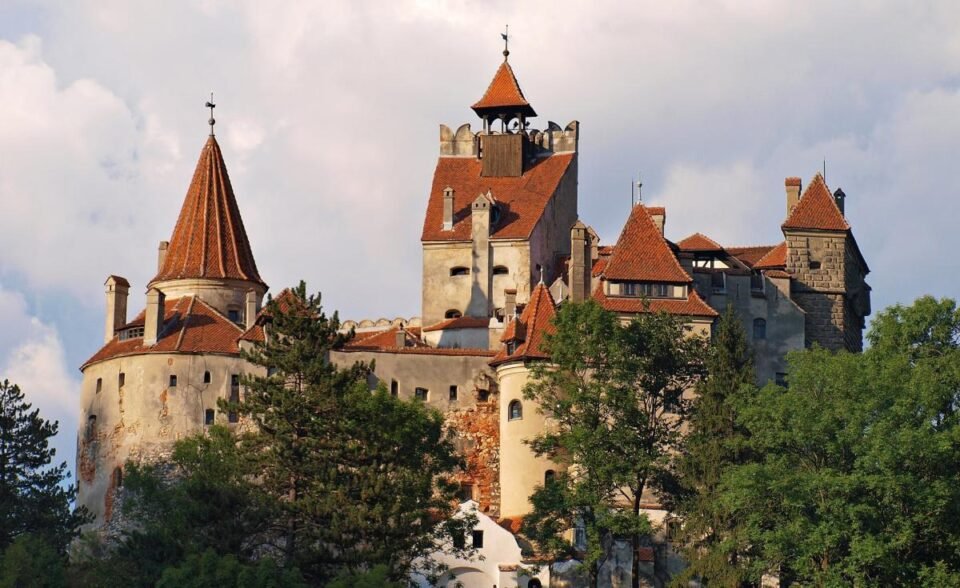
Dracula’s Castle, Bran, Romania
Tourists visiting Brașov can visit the legendary Dracula Castle and at the same time admire the landscapes of Transylvania.
Bran Castle, as it is officially known, is increasingly attracting history enthusiasts, literature lovers, and travelers seeking unusual places.
“But is this really Dracula’s castle, as tourists imagine it? The castle itself is a вполне real historical structure dating back to the 14th century. However, its connection to Dracula is far more reminiscent of a successful marketing ploy than a historical fact. The castle has only a tenuous connection to Vlad the Impaler — a real historical figure who became one of the prototypes of Dracula. Moreover, the author of the novel *Dracula*, Bram Stoker, never even visited Romania,” the media write.
Knossos Palace, Crete, Greece
The part of Knossos associated with the Minoan civilization and the legend of the Minotaur is authentic. However, not all elements of the complex are authentic. The famous English archaeologist Sir Arthur Evans participated in the restoration of the palace in the early 20th century.
“Perhaps the most controversial aspect of his work was the decision to restore a Bronze Age palace that was used from around 1900 to 1350 BC using modern construction materials,” the Ashmolean Museum notes.
Therefore, the bright walls and columns that visitors to Knossos see today are far from being entirely original.

Konstantin is an acclaimed travel writer, celebrated for transforming ordinary journeys into extraordinary narratives. With years of experience exploring diverse destinations across the globe, his work blends vivid storytelling, cultural insights, and practical advice to inspire wanderlust and guide readers toward unforgettable adventures.
As a key contributor to enjoythetrip.org website, Konstantin has built a loyal readership through their expertise in uncovering both iconic landmarks and off-the-beaten-path treasures. He specializes in providing travelers with honest, actionable tips, whether it’s finding the best resorts in Maldives, exploring cultural hubs like Paris, or diving into the natural wonders of Croatia.