
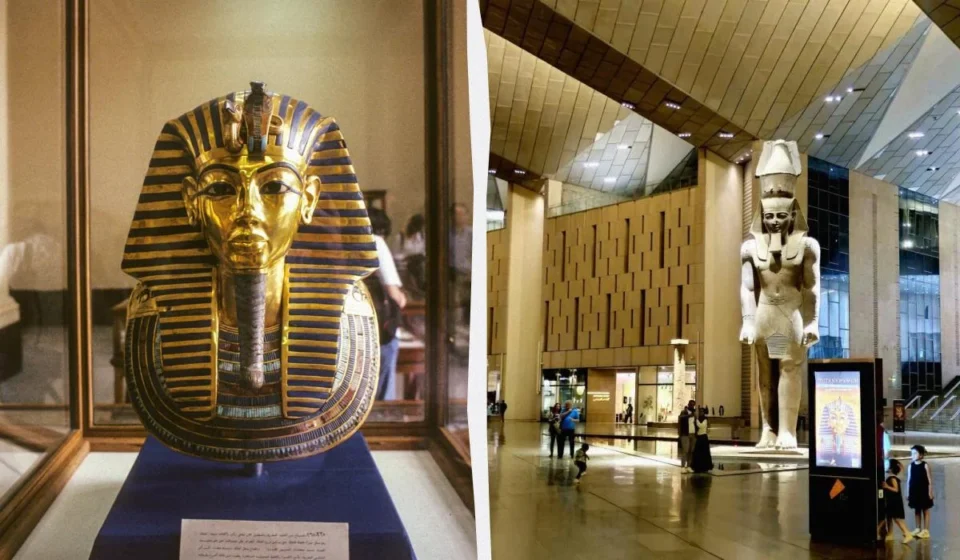
The Grand Egyptian Museum opened last autumn after more than 20 years of construction.
The history of ancient Egyptian civilization is one of the greatest mysteries of humanity, still attracting hundreds of scholars and millions of tourists.
Since the fall of last year, travelers have had the opportunity to get even better acquainted with the history of Ancient Egypt, as the Grand Egyptian Museum finally opened in Giza.
The National Geographic publication has selected five main exhibits that tourists should definitely seek out in the museum.
1. The statue of Ramesses II
When visitors pass through the museum’s facade, decorated with hieroglyphs, into the echoing lobby, they are greeted by a colossal figure of one of Egypt’s most powerful pharaohs, Ramses II, created 2,200 years ago and reaching 11 meters in height. Discovered in 1820, split into six parts, it was restored and displayed for decades in the center of Cairo. When construction of the Grand Egyptian Museum began, it became the first exhibit delivered there — in fact, the museum was built around it.
2. Tutankhamun’s mask
The discovery of Tutankhamun’s tomb in 1922 sparked an incredible surge of interest in Ancient Egypt around the world. The museum displays more than 5,000 items from the young king’s tomb, but the main gem of the collection is the solid gold funerary mask found alongside Tutankhamun’s mummy. After the mask’s woven beard was accidentally damaged in 2014, it was carefully restored, and now it shines in a glass display case in front of a long line of visitors.
3. The Sun Boat of Cheops
This boat of King Cheops, made of cedar around 2500 BCE, was discovered in 1954 near the Great Pyramid of Cheops in the form of 1,200 separate fragments. Now it is on display in a huge two‑story gallery with raised observation decks — the vessel was painstakingly reassembled based on archaeological records. And since the ancient Egyptians believed that after death the pharaoh would join the sun god Ra on his cosmic journey through the heavens, archaeologists called this vessel the “solar boat.”
4. The statue of Hatshepsut
Hatshepsut was one of the few women who assumed the full power of a pharaoh in an era when royal power was considered exclusively a male prerogative (approximately 1470 BCE). To legitimize her rule, Hatshepsut appeared in official art and inscriptions in the image of a male ruler: she adopted male titles and even wore a false beard, which is reflected in this granite statue.
5. Ostracists
Although public attention is usually focused on Egypt’s celebrated rulers, the stories of ordinary workers who toiled in the shadow of the great pyramids are often overlooked. However, in the halls dedicated to the New Kingdom era, the display cases are filled with ostraca – ceramic shards with inscriptions resembling graffiti. As a much cheaper alternative to papyrus, ostraca served to record events of everyday life. Many of these artifacts, found near Luxor and now kept in the Grand Egyptian Museum, are over 3,000 years old. The collection includes records of ongoing administrative matters – for example, lists of workers who were absent due to illness. There is even a fragment containing a complaint about the mother‑in‑law.

Konstantin is an acclaimed travel writer, celebrated for transforming ordinary journeys into extraordinary narratives. With years of experience exploring diverse destinations across the globe, his work blends vivid storytelling, cultural insights, and practical advice to inspire wanderlust and guide readers toward unforgettable adventures.
As a key contributor to enjoythetrip.org website, Konstantin has built a loyal readership through their expertise in uncovering both iconic landmarks and off-the-beaten-path treasures. He specializes in providing travelers with honest, actionable tips, whether it’s finding the best resorts in Maldives, exploring cultural hubs like Paris, or diving into the natural wonders of Croatia.