
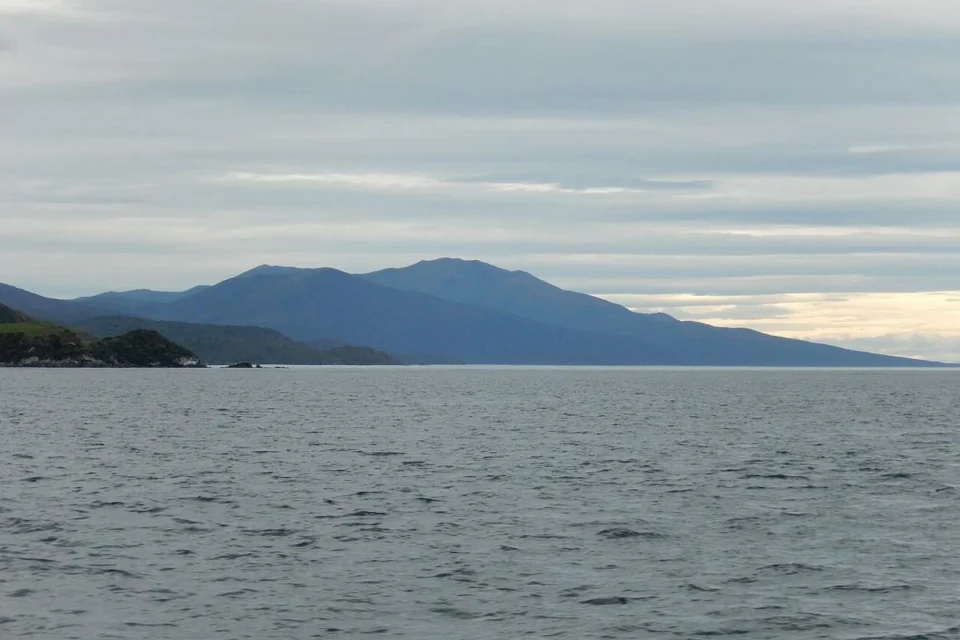
The islands were evaluated based on six parameters that have the greatest impact on creating a quiet sound environment.
If, for an ideal vacation, you don’t need noisy beach clubs but rather silence, the sound of the waves, and the opportunity to completely disconnect from the hustle and bustle, you should pay attention to the new ranking of the calmest islands in the world. According to TimeOut, the list is topped by one of the islands in New Zealand, where there are about 40 times fewer people than rare kiwi birds.
“We all love traveling, but sometimes the real luxury is precisely the absolute silence. Without the noise of traffic, loud music from beach clubs, or the constant hum of the city — just the rustle of the waves and the opportunity to step away from the digital world for at least a few days. It seems that this is exactly the kind of vacation that travelers are increasingly seeking,” the authors note.
According to Google Trends, analyzed by BookRetreats, the number of search queries for the phrase “quiet destinations” has increased by 1,268% over the past year.
The demand for a vacation whose main goal is a complete reset and a break from noise even has its own name – quietcation, or “quiet vacation.”
BookRetreats has created a new Unspoilt Index, within which it analysed 100 islands around the world. Satellite images and data from open mapping services were used to compile the ranking.
The islands were assessed based on six parameters that, according to researchers, have the greatest impact on the formation of a quiet sound environment. These include the amount of natural areas, the density of the road network, the intensity of air traffic, the population density, the presence of a dark night sky, and the length of the natural coastline.
The study also drew on the work of the researcher of silence and psychology professor Olga V. Lehmann, as well as the definition of a “quiet area” provided by the European Environment Agency. Such an area is considered to be a place with a pleasant soundscape, where unwanted noise is absent or, at least, not dominant.
Therefore, overall, the rule was simple: the quieter, greener, darker at night, and less built‑up the island was, the higher it rose in the rankings.
New Zealand took first place
The winner was Stewart Island – the third largest island in New Zealand and one of the least populated.
On a vast territory covering 1,680 square kilometers, only about 500 people live. At the same time, approximately 85% of the island is occupied by a protected national park.
But what’s even more interesting is the ratio of people to the local inhabitants of another species: there are about 20,000 rare kiwi birds living on Stewart. That is, there are approximately 40 times more of these birds here than there are people.
It’s no wonder that the island is practically devoid of everything that usually can spoil a peaceful vacation.
Stuart has only one small runway, and there are no major roads at all. However, there are about 280 km of hiking trails here, which pass through forests and lead to secluded bays. Thanks to this, the impact of human noise remains minimal.
Furthermore, Stewart is the southernmost dark sky reserve in the world, certified by the International Dark Sky Association. This makes the island an excellent place for stargazing, and under favorable conditions, you can even see the southern polar lights – the aurora australis.
What about other islands in the world
The second place in the ranking was taken by the tiny island of Anafi (Anafi) in Greece. It is located just over an hour’s ferry ride from its much more famous neighbor, Santorini.
Less than 300 people live on Anafi, and the population density is almost 30 times lower than on Santorini. Moreover, the island is one of the least developed in the entire ranking.Advertisementad
Even at the height of the tourist season, local beaches, including Rukunas, Klisidi, and Katsouni, remain relatively uncrowded. Anafi’s high position is also due to its natural landscapes.
However, Santorini turned out to be almost at the opposite end of the ranking – in 99th place out of 100. The popular Greek island was let down, in particular, by its transport infrastructure. On its territory, which covers 76 square kilometers, there are 64 km of main roads, there is an international airport, and the indicator for natural areas turned out to be relatively low.
The British Isles were also among the best
The United Kingdom also demonstrated a rather unexpectedly high result.
The island of St Martin’s (St Martin’s) in the Scilly archipelago took the fifth place in the world ranking.
This is a tiny island where car traffic is prohibited. Only 135 people live here, there is no airport, but there are 12 beaches located along the 13‑kilometre coastline.
The island is so small that you can walk from one end to the other in a single day. The absence of roads and air traffic was one of the main factors that helped St. Martin’s enter the global top five destinations for a relaxing holiday.
Another British island – Skye (Isle of Skye) in Scotland-took 11th place. And the island of Herm (Herm) in the Channel Islands was on the 14th position. It also has no automobile traffic, and its population is only about 60 people.
Other European countries are also represented in the top twenty. Croatia has two islands there: Mljet is in 17th place, and Vis is in 19th.
Greece is also represented by two islands in the top twenty: Anafi took second place, and Milos came in 22nd.
Overall, the top 25 quietest islands in the world are as follows:
- Stewart, New Zealand
- Anafi, Greece
- Ilha Grande, Brazil
- Lord Howe, Australia
- St. Martin’s, England
- Tioman, Malaysia
- Koh Chang, Thailand
- Koh Rong, Cambodia
- Gavelock, India
- Santa Catalina, USA
- Skye, Scotland
- Isla Holbox, Mexico
- Magnetic Island, Australia
- Herm, Channel Islands
- Boa Vista, Cape Verde
- Salt Spring, Canada
- Mljet, Croatia
- La Digue, Seychelles
- Vis, Croatia
- Palawan, Philippines
- Viti Levu, Fiji
- Milos, Greece
- Salina, Italy
- Ilhabela das Flores, Portugal
- La Gomera, Spain

Konstantin is an acclaimed travel writer, celebrated for transforming ordinary journeys into extraordinary narratives. With years of experience exploring diverse destinations across the globe, his work blends vivid storytelling, cultural insights, and practical advice to inspire wanderlust and guide readers toward unforgettable adventures.
As a key contributor to enjoythetrip.org website, Konstantin has built a loyal readership through their expertise in uncovering both iconic landmarks and off-the-beaten-path treasures. He specializes in providing travelers with honest, actionable tips, whether it’s finding the best resorts in Maldives, exploring cultural hubs like Paris, or diving into the natural wonders of Croatia.