
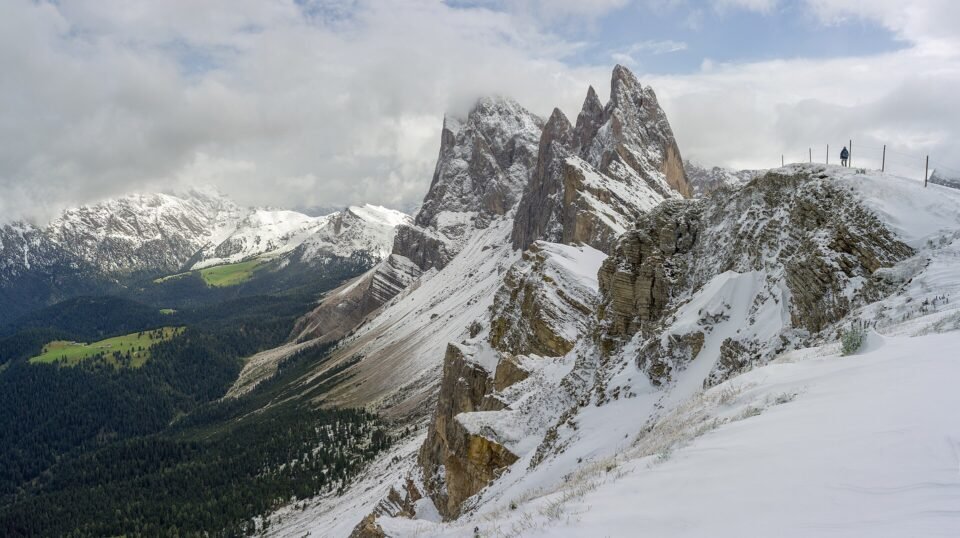
If you have scrolled through photos of the Dolomites, you have almost certainly seen Seceda without knowing its name: a grassy slope that rises gently from one side and then breaks off into a sheer wall of rock on the other, with the needle-sharp Odle peaks lined up behind it. It is one of the most photographed viewpoints in the Alps, and unlike many famous mountain scenes, you do not need climbing skills to stand there. A pair of cable cars lifts you from the village of Ortisei almost to the top.
This guide explains how Seceda works in practice: how to get up, what it costs, which hikes are worth your time, when to go and how to avoid the worst of the crowds.
What Is Seceda?
Seceda is a 2,519-metre summit on the sunny northern side of Val Gardena, a valley in South Tyrol in northern Italy. It sits on the edge of the Puez-Odle Nature Park (Parco Naturale Puez-Odle), which belongs to the Dolomites UNESCO World Heritage Site.
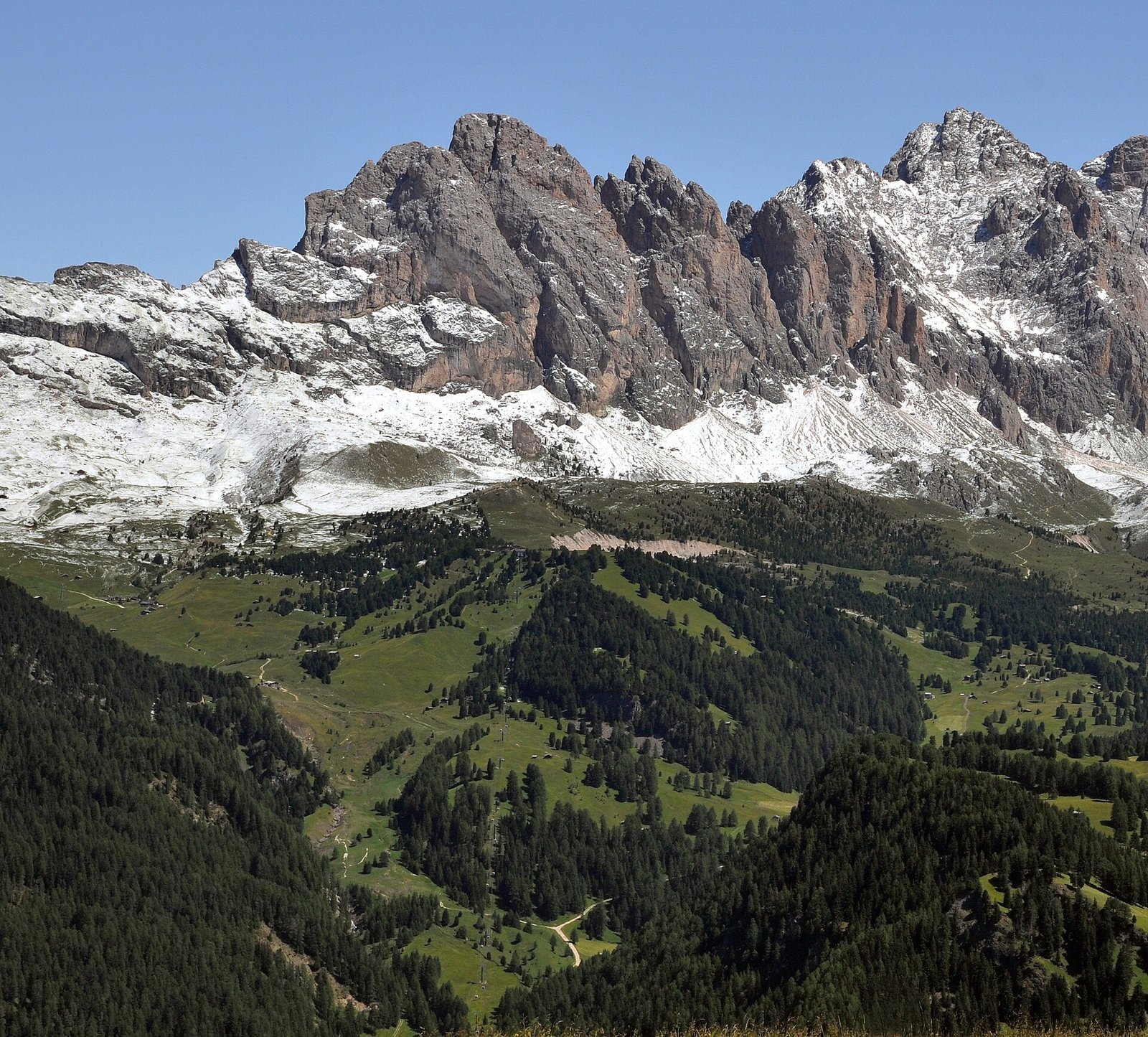
What makes it special is geology. The Seceda ridge is a tilted slab of rock: from the south you walk up a soft meadow, while the northern face drops away in steep cliffs. Right behind the ridge stand the Odle (Geisler) group, a row of jagged towers including Sas Rigais and Furchetta. On a clear day the summit panorama also takes in the Sassolungo, the Sella massif, the Alpe di Siusi plateau and, far in the distance, the Ortler and the Austrian Großglockner.
Near the summit there is a lookout cross and a circular panorama board with the names and heights of the surrounding peaks, which is handy for working out what you are looking at.
How to Get to Seceda
By cable car from Ortisei
The classic route starts in Ortisei (St. Ulrich), the largest village in Val Gardena. Two lifts run one after another:
- Ortisei to Furnes – a gondola, about 2.5 km long, climbing roughly 450 metres
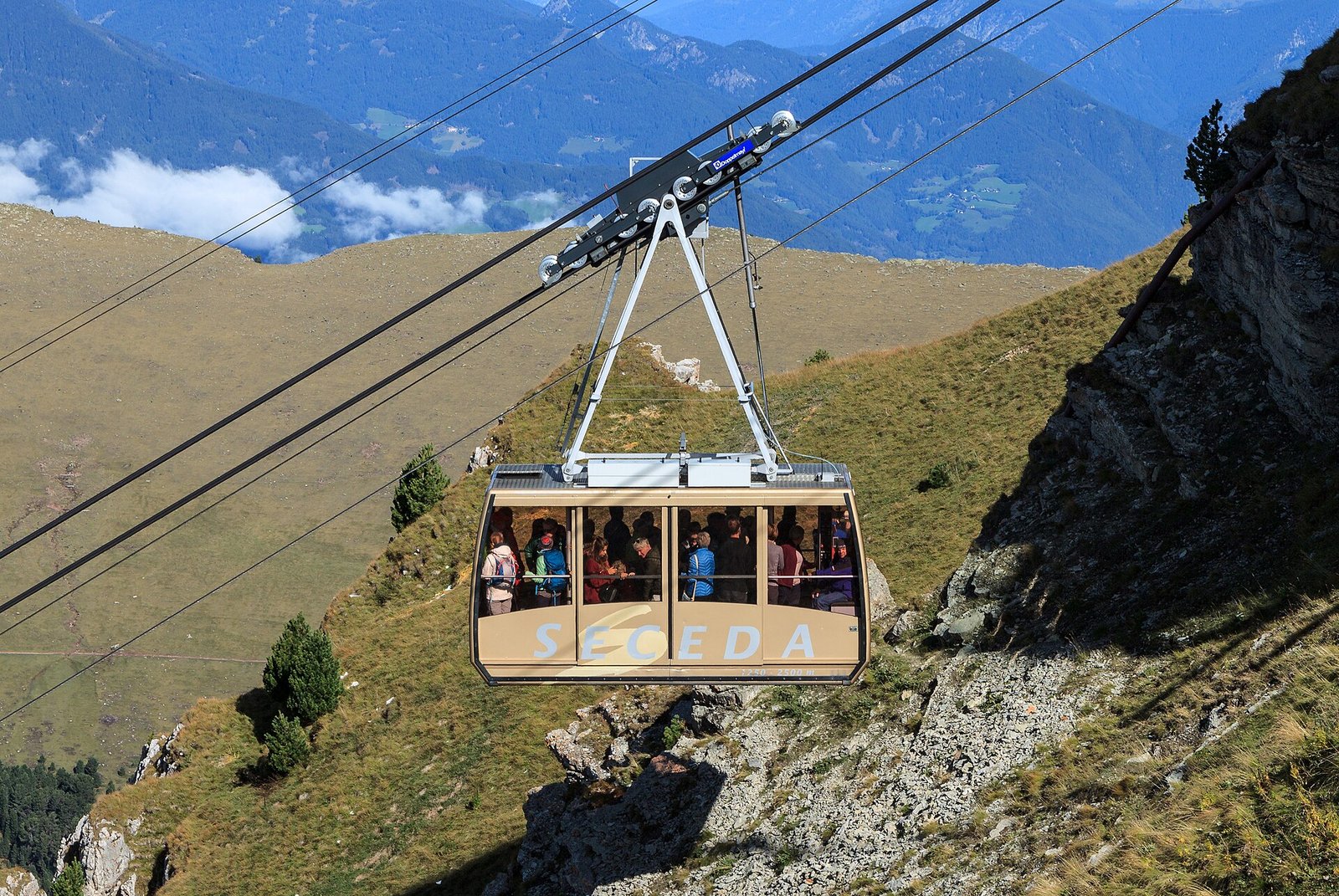
- Furnes to Seceda – an aerial cable car, about 2 km long, climbing roughly 700 metres
The top station sits at about 2,500 metres, so the summit cross is only a short, easy walk away. There is also the Fermeda chairlift, which connects the Seceda plateau with the slopes further east.
The valley station is on Via Val d’Anna. Parking in Ortisei is limited, so the lift company recommends arriving by bus: get off at the Piazza S. Antonio stop and walk about six minutes through the “La Curta” pedestrian connection to the station.

By gondola from Santa Cristina (Col Raiser)
If you are staying in Santa Cristina or Selva, the Col Raiser gondola is a good alternative. Its valley station is just outside Santa Cristina (reachable by local shuttle bus or car, with paid parking), and the ride takes around 15 minutes. From the top station you walk up to Seceda – the official Val Gardena route via trails 2 and 1A is about 3.5 km with roughly 420 metres of ascent, around 1.5 hours. You see more of the alpine meadows this way, and the gondola is usually cheaper than the Ortisei cable cars.

On foot
Fit hikers can walk up from the valley floor. The official route from the Col Raiser valley station via Rifugio Firenze is about 8 km with close to 1,000 metres of climbing and takes around 3.5 hours one way. It is a serious day, but the trails are quieter than the summit.
Getting to Val Gardena
The nearest larger city is Bolzano, around an hour away. Regular buses connect Bolzano and Ponte Gardena/Waidbruck train station with Ortisei, Santa Cristina and Selva. If you fly, Innsbruck, Verona and Venice are the most practical airports, all a few hours’ drive or train-and-bus journey away.
Opening Times and Ticket Prices (2026)
According to the Seceda lift company, the Ortisei–Furnes and Furnes–Seceda cable cars run in summer from 22 May to 2 November 2026, daily from 8:30 am to 5:30 pm. In winter the area becomes part of the Val Gardena ski region (Dolomiti Superski), with separate dates.
2026 summer prices for the combined Ortisei–Furnes–Seceda ride:
- Adults: €74 return, €49 one way (up or down)
- Juniors (8–15): €37 return, €25 one way
- Children under 8: free with a paying adult
- Dogs and bikes: €7 each
Prices are high compared with many Dolomite lifts. This is partly deliberate: the valley has raised fares and introduced booking slots to spread out the visitors. Buying online in advance is strongly recommended, especially in July and August.
Note that the Dolomiti Super Summer pass is *not* valid on the Seceda lifts. If you plan several lift days, look at the Gardena Card instead (in 2026 valid from 6 June to 11 October): €124 for three consecutive days or €160 for six, with unlimited use of the participating Val Gardena lifts, including Seceda.
Best Hikes from Seceda
The Seceda ridge walk
This is the walk everyone comes for. From the top station, follow the path to the summit cross and continue along the edge towards Forcella Pana. The ridge section is only about 1 km and easy, but you should allow an hour, because you will stop every few steps. Stay on the marked path – the cliffs are vertical and there are no railings.
Seceda – Pieralongia – Rifugio Firenze loop
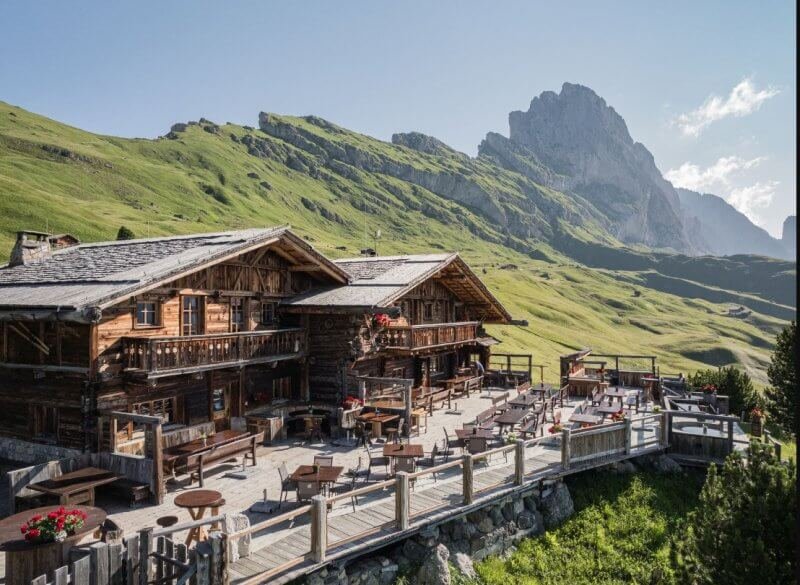
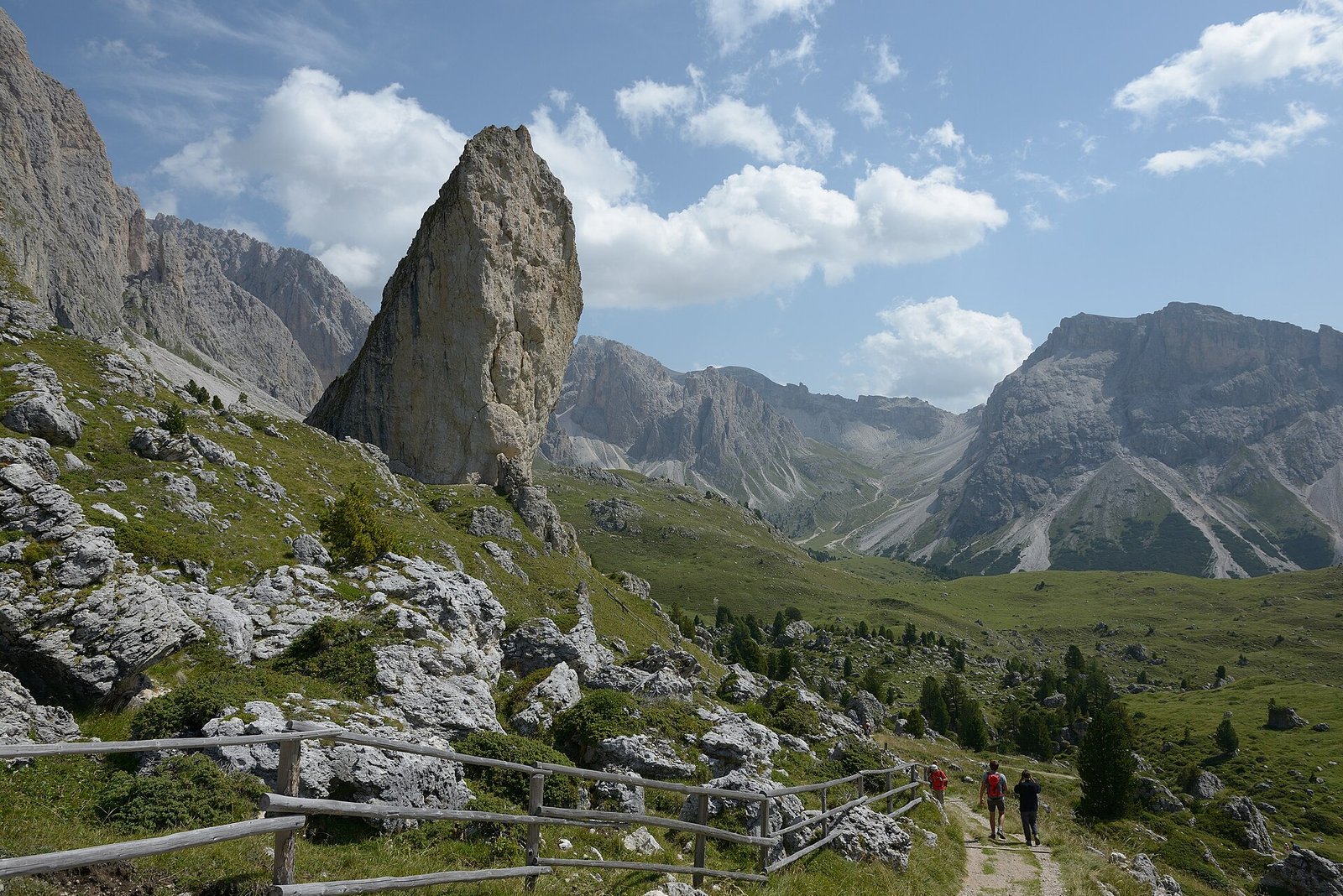
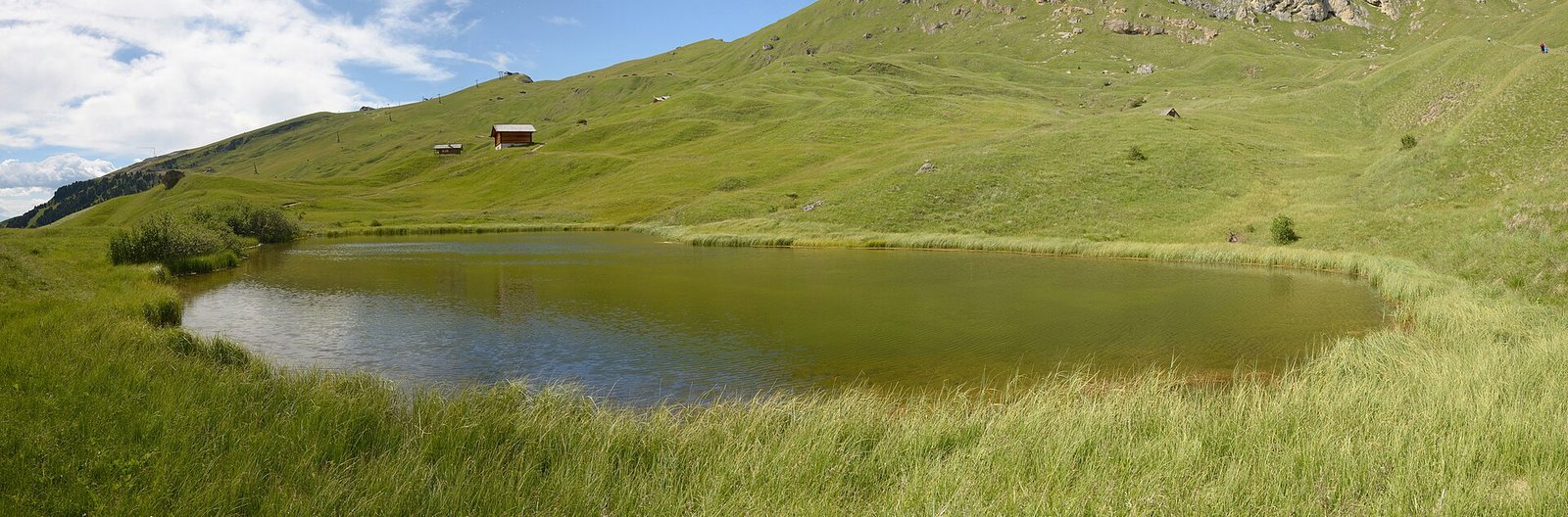
If you only do one longer hike, make it this one. From the ridge, descend past Forcella Pana to the Pieralongia meadows, where two strange rock pillars stand alone in the grass like giant tooth fragments. Continue down to Rifugio Firenze (Regensburger Hütte), a classic mountain hut for lunch, then climb back via Lake Iman and the Troier hut to the Seceda top station.
- Distance: around 9 km
- Ascent and descent: around 520 m
- Walking time: about 3 to 3.5 hours without breaks
- Difficulty: easy to moderate, on good trails
You can also end at the Col Raiser gondola instead of returning to Seceda, which makes a pleasant one-way day.


Col Raiser – Seceda – mountain hut circuit
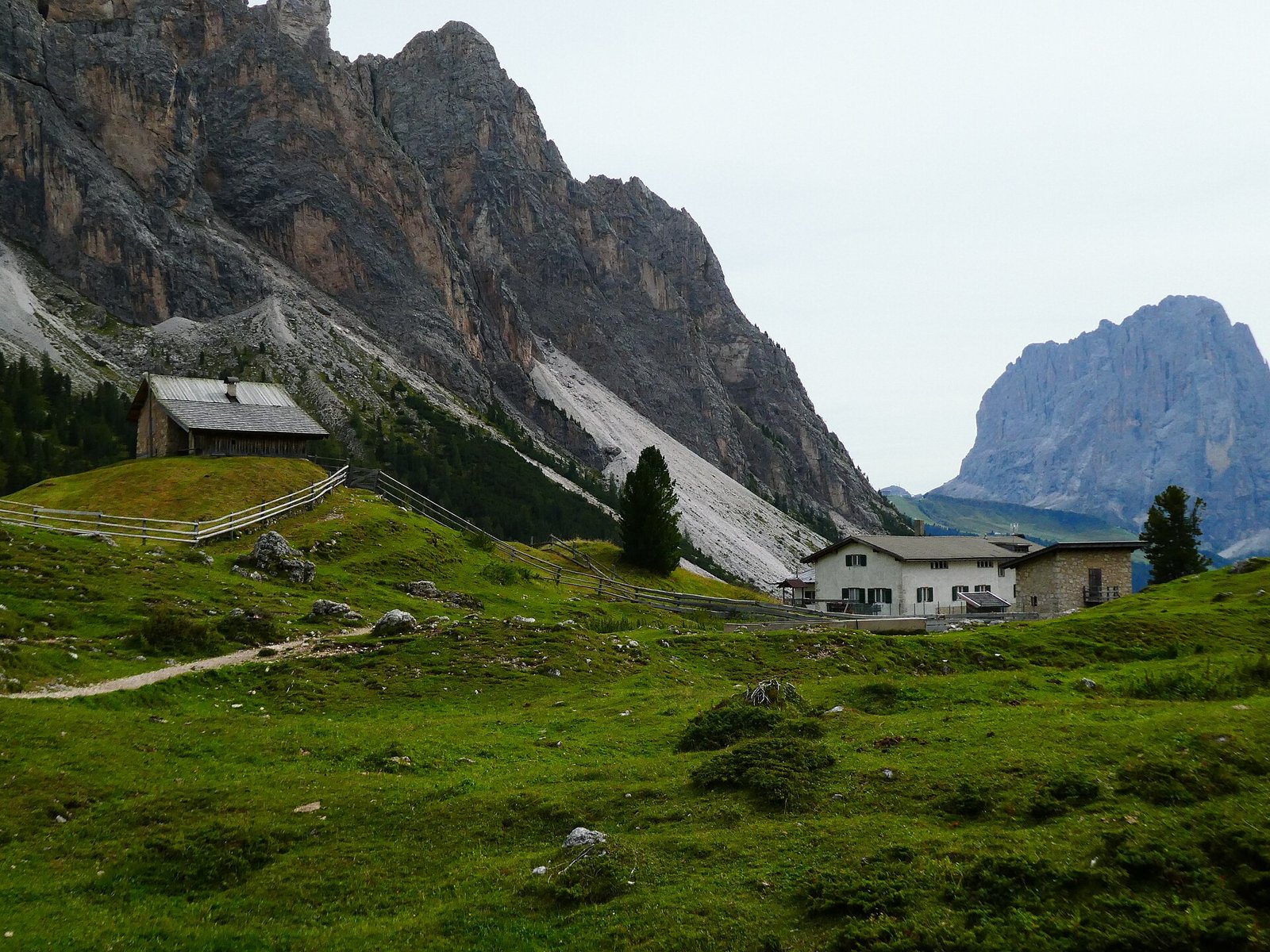
The Val Gardena tourist board describes a meadow circuit from the Col Raiser top station: up via Rifugio Firenze and Lake Iman to Seceda, then back down past a chain of small mountain huts (Sofie, Daniel, Fermeda) to Col Raiser. It is about 10 km with roughly 480 metres of climbing, about 3 hours 20 minutes of walking – ideal if you want to combine views with several stops for apple strudel.

Odle ridge views from below
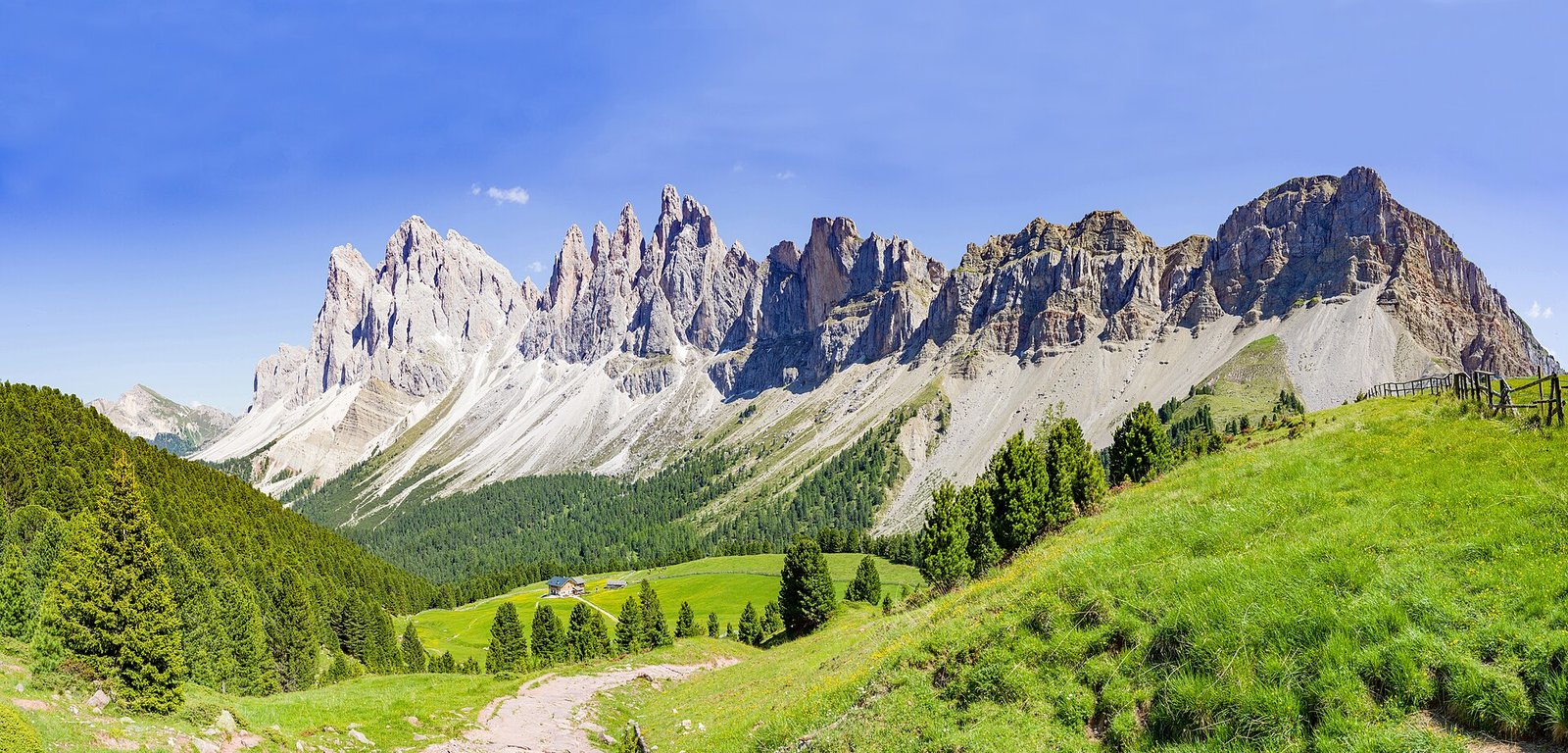
For a different angle on the Odle, walk from Col Raiser towards the Mastlé viewpoint or along the Adolf Munkel trail on the northern side (in Val di Funes). These paths run directly beneath the towers rather than looking at them from across the valley.
Best Time to Visit Seceda
Summer (June to September) is the main season. Meadows are green, all huts are open and every trail is accessible. July and August are also the busiest months by far.

Late May and early June can still have snow on the higher paths, but you get fresh green slopes and fewer people.
September and October are many people’s favourite: clearer air, golden light and calmer trails. Check the lift dates, as some huts close in October.
Winter turns Seceda into a ski area with long red runs down to Ortisei, including the famous “La Longia” descent of around 10 km. Non-skiers can still ride up for the view.
Time of day matters as much as the season. Morning light hits the Odle beautifully and the first cable cars are far less crowded. By midday, clouds often build around the peaks in summer, and afternoon thunderstorms are common.
Seceda Overtourism and the Path Fee
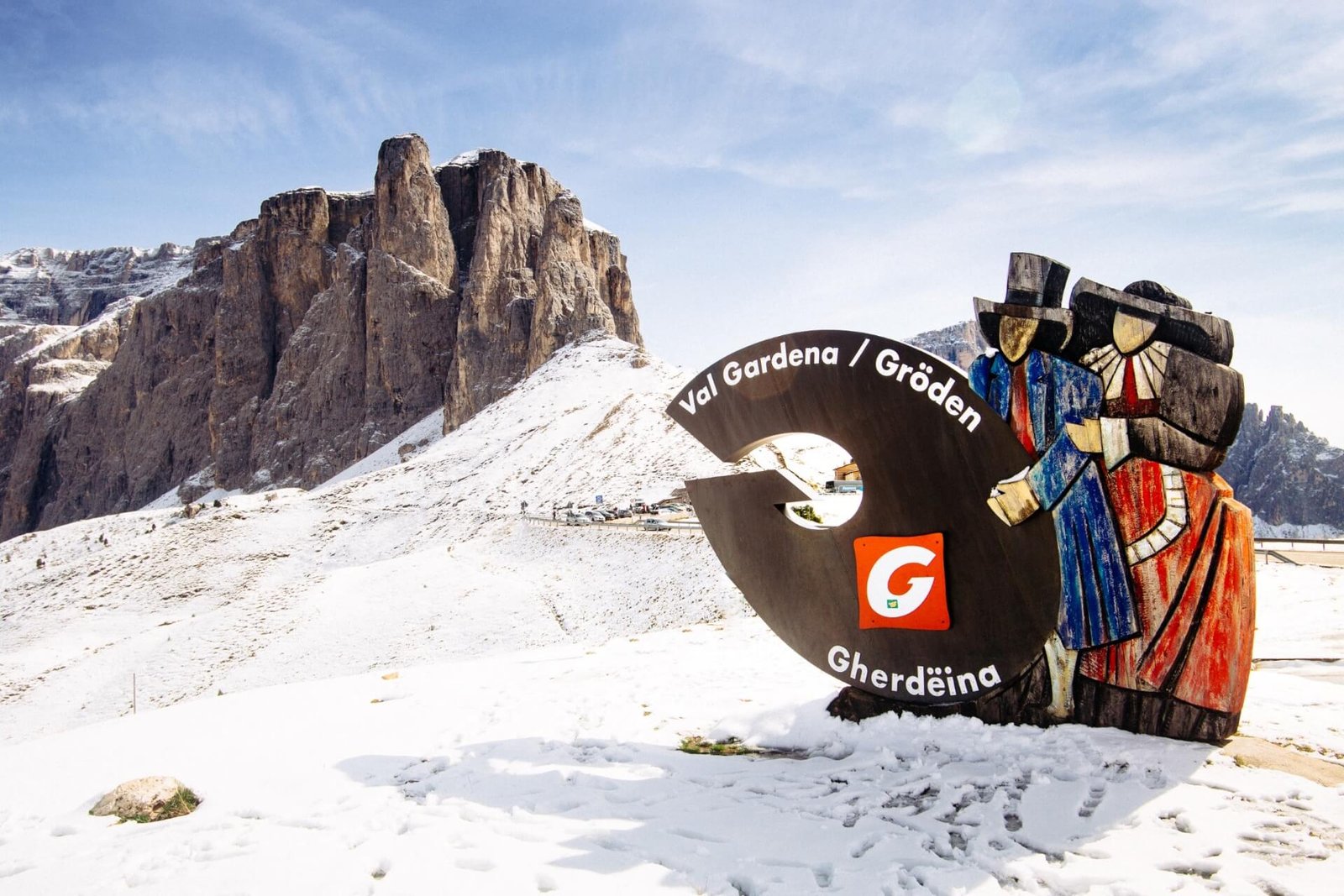
Seceda has become a victim of its own fame. Local reports speak of several thousand visitors a day in peak summer. In 2025 and again in June 2026, the farmers who own the meadows installed a turnstile on the path to the famous viewpoint, charging €5 per person; a second paid gate later appeared on an alternative path. The fee is disputed – the authorities have questioned whether it is legal – so the situation may change. Bring a little cash or a card just in case, and remember that the meadows are working pastures: stay on the trails and do not walk across the grass for photos.
Practical Tips
- Book lift tickets online and aim for the first departures.
- Check the webcam and forecast before buying – if the Odle are in cloud, the view you came for is gone.
- Bring layers. At 2,500 m it can be 10 °C cooler than in Ortisei, and the wind on the ridge is strong.
- Wear proper shoes. The ridge path is easy, but trainers slip on gravel and wet grass.
- Respect the cliff edge. There are no barriers, and drones are restricted in the nature park.
- Use the bus. Val Gardena’s local buses are frequent and spare you a parking hunt.
- Eat at a hut. Rifugio Firenze, Baita Troier and the smaller huts serve hearty South Tyrolean food such as canederli (dumplings), polenta and Kaiserschmarrn.
Where to Stay
Ortisei is the most convenient base, with direct access to the Seceda cable car, plenty of shops and restaurants, and buses in every direction. Santa Cristina is quieter and sits close to the Col Raiser gondola. Selva Gardena, at the head of the valley, is ideal if you also want to explore the Sella Pass and the Passo Gardena.
FAQ About Seceda
How high is Seceda?
The summit is 2,519 metres above sea level. The cable car top station is at about 2,500 metres, so you barely need to climb.
How much does the Seceda cable car cost?
In summer 2026 a return ticket from Ortisei to Seceda costs €74 for adults and €37 for juniors aged 8–15. Children under 8 ride free with an adult.
Can I visit Seceda without the cable car?
Yes. You can take the cheaper Col Raiser gondola from Santa Cristina and walk about 1.5 hours to the top, or hike all the way up from the valley in roughly 3.5 hours.
Is the Seceda ridge walk difficult?
No. The ridge path is short, wide and well marked, suitable for most people with reasonable fitness. Just keep away from the cliff edge and wear sturdy shoes.
How much time do I need at Seceda?
Two to three hours is enough for the cable car, the ridge and a drink at a hut. Plan a full day if you want to hike the Pieralongia and Rifugio Firenze loop.
Do I have to pay to walk to the Seceda viewpoint?
In summer 2026 landowners were charging €5 at a turnstile on the main viewpoint path, although its legality was being disputed. Check the latest local news before you go.
When is the best time to see Seceda?
Early morning between June and early October gives the best light and fewest people. September is often the sweet spot for weather and crowds.
Konstantin is an acclaimed travel writer, celebrated for transforming ordinary journeys into extraordinary narratives. With years of experience exploring diverse destinations across the globe, his work blends vivid storytelling, cultural insights, and practical advice to inspire wanderlust and guide readers toward unforgettable adventures.
As a key contributor to enjoythetrip.org website, Konstantin has built a loyal readership through their expertise in uncovering both iconic landmarks and off-the-beaten-path treasures. He specializes in providing travelers with honest, actionable tips, whether it’s finding the best resorts in Maldives, exploring cultural hubs like Paris, or diving into the natural wonders of Croatia.