
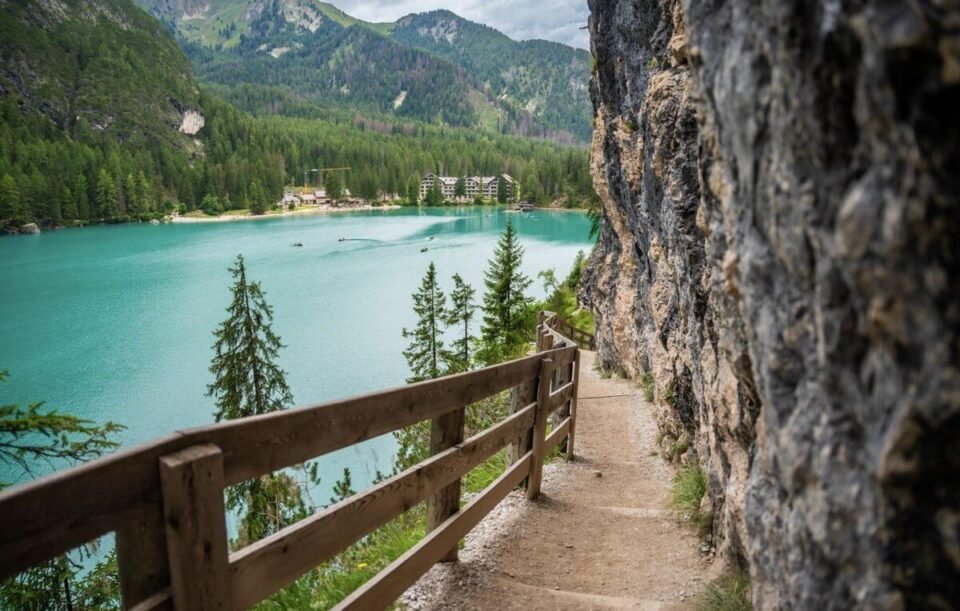
The Dolomites are one of the most beautiful regions in Italy, and it is here that some of the most picturesque mountain lakes in Europe are located. Turquoise water, reflections of the cliffs, coniferous forests and ideal panoramas — all this makes the Dolomite lakes an essential part of any itinerary.
There are dozens of lakes in the Dolomites, but not all of them are equally interesting. Some are easily accessible and suitable for a short stop, while others require hiking but reward you with incredible views without crowds of tourists.
In this guide, we have compiled the most beautiful lakes in the Dolomites that are truly worth seeing. This is the optimal list if you are planning a trip and want to understand which lakes to visit in the Dolomites first.
Where are the Dolomite Lakes located and how can you see them?
The Dolomite lakes in Italy are located in different parts of the region, but most of the most beautiful locations are concentrated around Cortina d’Ampezzo, Alta Badia, and Val di Fassa.
If you’re just starting to plan your trip, it’s also useful to check out the official website of the Dolomites region, which features a map and descriptions of the zones, where you can study the region’s structure and get a better understanding of how the main locations are arranged.
Many lakes are located relatively close to each other, and it’s convenient to combine them into a route. The main thing is to take into account the specifics of mountain roads: the distances are short, but due to the serpentines, the travel time increases.
If you plan your trip correctly, you can see several of the best lakes in the Dolomites in 1–3 days without unnecessary travel. If you’re also exploring the region itself, check out the complete guide to Alta Badia.
How to best plan a route around the lakes of the Dolomites
Day 1: Lago di Braies + Lago di Dobbiaco
This is the most convenient combination if you have limited time.
These Dolomite lakes are located nearby — just a 15–20‑minute drive away — and neither requires hiking.
Why is it convenient to combine them:
- minimum level crossings
- easy access
- you can see both lakes without hurrying
How’s your day going:
- Morning — Lago di Braies (it’s better to arrive early)
- then — Lago di Dobbiaco (a leisurely walk)
2 days: add Lago di Misurina and Tre Cime
On the second day, it makes sense to head in the direction of Cortina d’Ampezzo.
Why exactly:
- The route goes in a circle, with no way back.
- Lago di Misurina is conveniently located along the road.
- This is a different cluster that complements the route.
How’s your day going:
- morning — Lago di Misurina
- further — Tre Cime di Lavaredo
3 days or more: Lago di Sorapis
If you have more time, it’s worth adding Lago di Sorapis.
Important:
- It’s not a lake by the roadside
- A hike is required (2–3 hours one way).
Why set aside a separate day:
- the route takes a long time
- it is important to go without haste
- it is better to start early in the morning
Dolomite Lakes on the map — why this is important
Many people underestimate the importance of planning and don’t check the Dolomites’ lakes on the map in advance — and that’s a mistake.
In practice:
- roads pass through passes
- travel time is longer than it seems
- parking spaces may be restricted
Before the trip is better:
- Mark all the lakes in the Dolomites of Italy on the map.
- check your real travel time
- group locations by day
This will allow you to see more and avoid unnecessary moves.
TOP‑5 most beautiful lakes in the Dolomites
1. Lago di Braies is the most famous lake in the Dolomites.
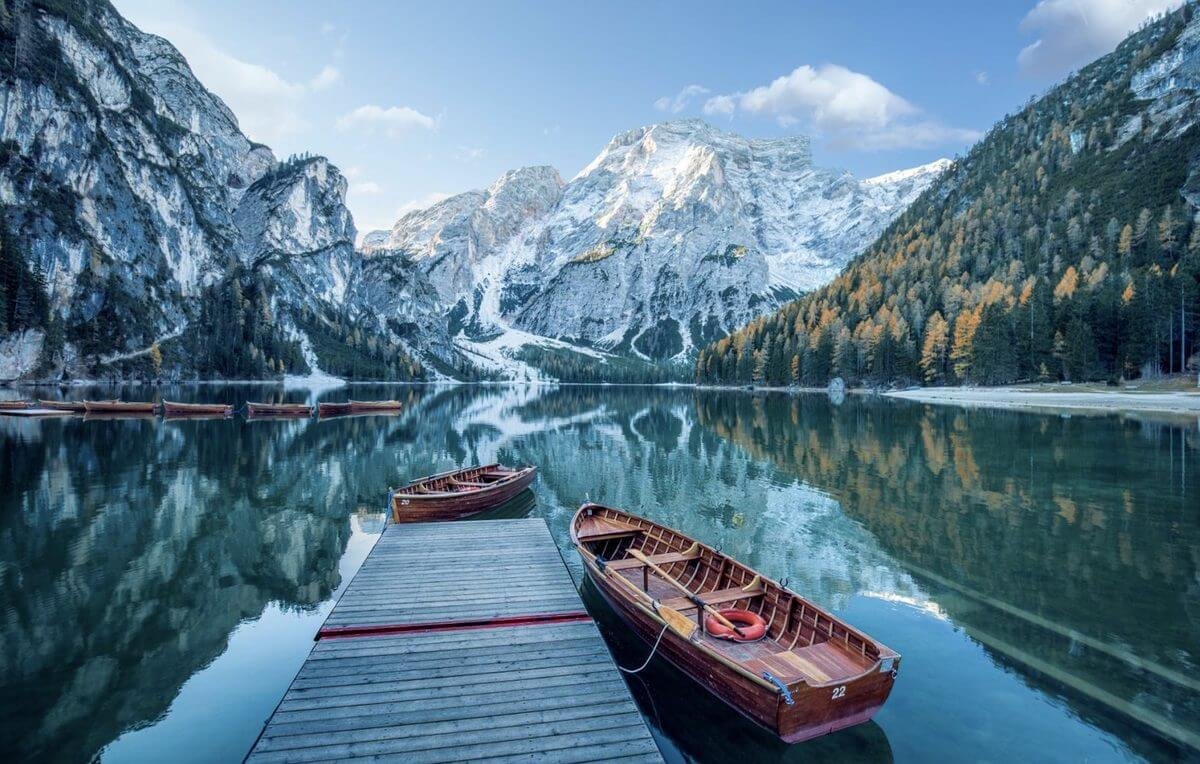
Lago di Braies is the most popular and one of the most photogenic lakes, where people go to get those perfect shots. It is known for its emerald water, boats, and the reflection of the mountains.
The main advantage is easy access. You can drive to the lake, and there is a convenient trail around it.
Suitable for:
- getting to know the region for the first time
- have a nice walk
- a short session
Minus — a large number of tourists.
This is one of the few lakes in the Dolomites that is equally beautiful at any time of the year, including autumn and winter.
More about Lago di Braies: how to get there, when to go, parking, and boats.
2. Lago di Carezza is one of the most beautiful lakes in the Dolomites.
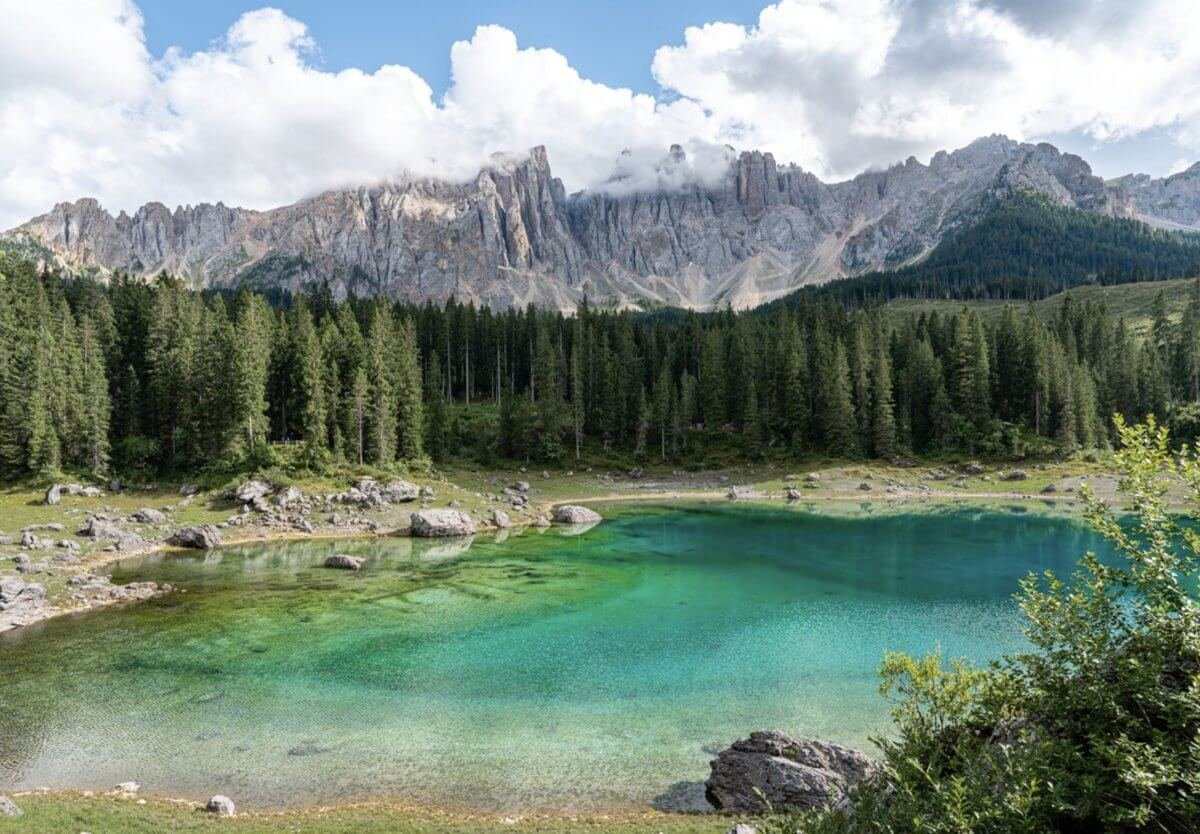
Lago di Carezza is considered one of the most photogenic lakes in the Dolomites in Italy. The water here changes color from emerald to bright turquoise.
The lake is small, and you can take a quick look at it, but that’s precisely what makes it a convenient stop on the route.
Suitable for:
- short stop
- photos
- route via Val di Fassa
The lake looks best in sunny weather, when its rich color and reflections are especially noticeable.
3. Lago di Sorapis — an unusual lake in the mountains.
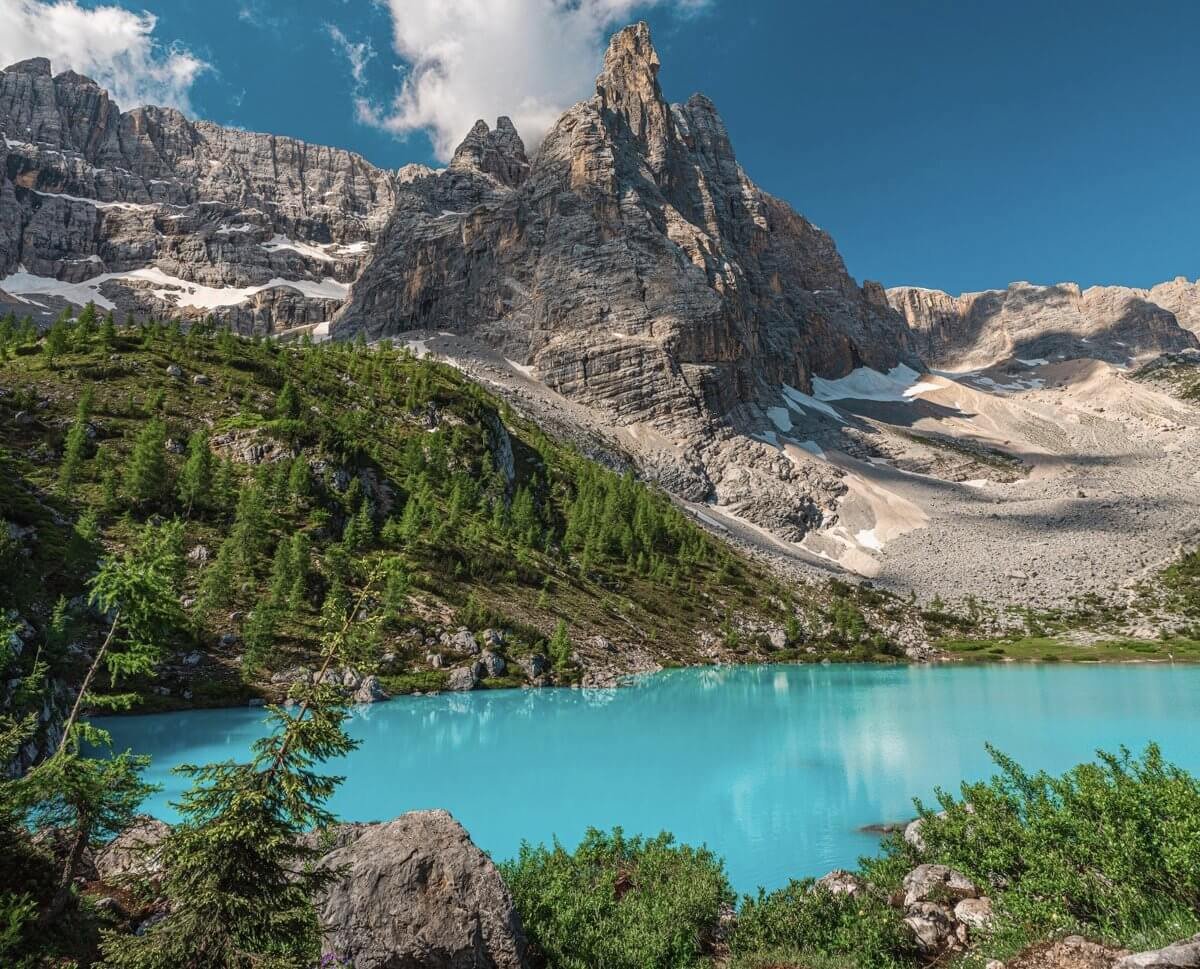
Lago di Sorapis is one of the most unusual and beautiful lakes in the Dolomites, thanks to its milky‑turquoise water.
But you can’t drive here — you have to walk.
Features:
- the route takes 2-3 hours
- there are some difficult sections
- need comfortable shoes
This is one of the best lakes in the Dolomites if you’re ready for a hike.
The reward for following the route is seeing sights that are quite different from all the other lakes in the region.
4. Lago di Misurina — a convenient lake near Tre Cime.
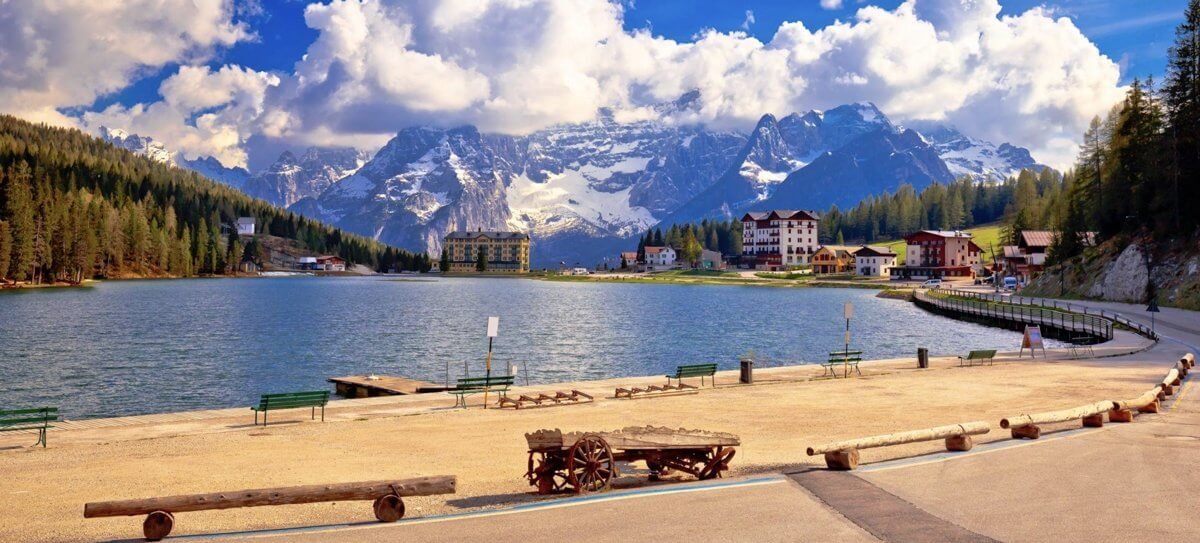
Lago di Misurina is one of the most convenient lakes in the Dolomites, especially if you’re planning to visit Tre Cime.
There are hotels, restaurants, and a well-developed infrastructure here.
Suitable for:
- accommodation options
- have a relaxing holiday
- bases for trips
Thanks to its location, this is one of the best places to stay overnight and explore the surrounding area.
5. Lago di Dobbiaco — a calm lake without crowds.
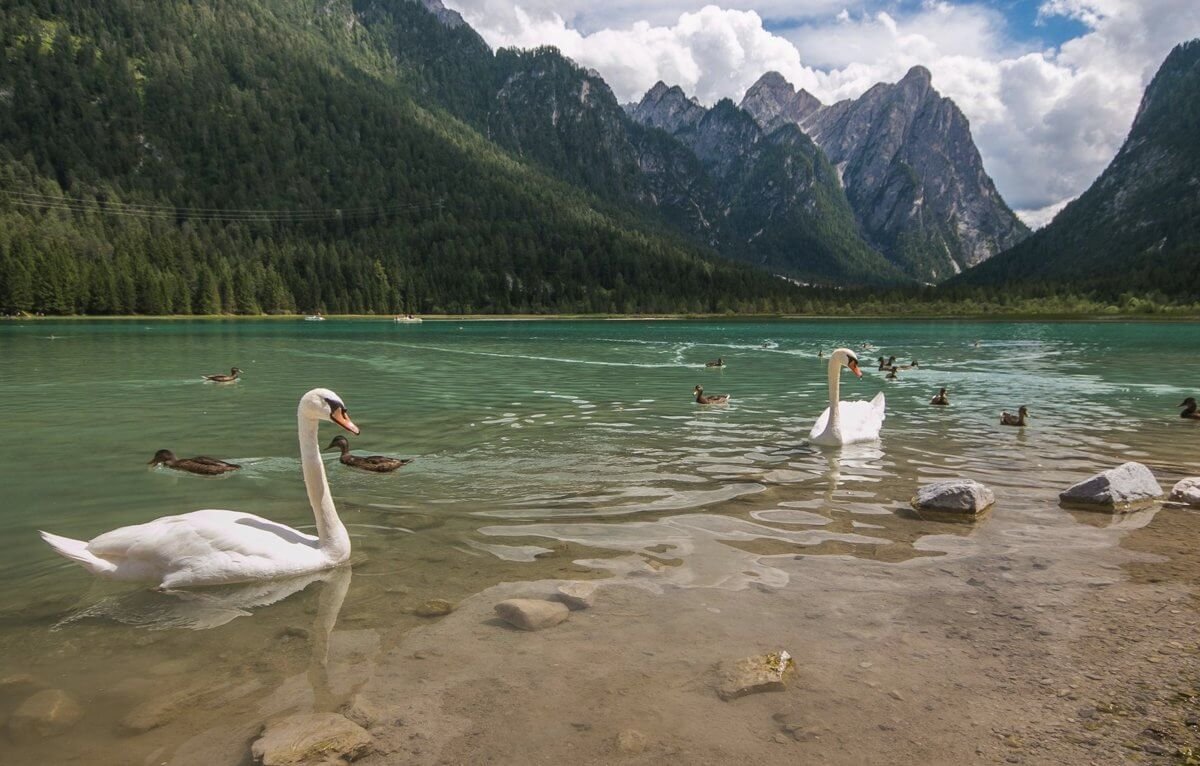
Lago di Dobbiaco is a lesser‑known but very pleasant lake in the Dolomites.
It’s a great alternative to more popular places.
Suitable for:
- walking tours
- recreation without crowds
- combinations with Lago di Braies
A convenient route has been laid out around the lake, making it an excellent place for leisurely walks.
Comparison of Dolomite lakes
Below is a convenient comparison of the best Dolomite lakes based on accessibility, popularity, and visit format. This will help you quickly understand which Dolomite lakes to choose for your route.
| Lake | Availability | Popularity | Complexity | How much time is needed | Suitable for anyone |
|---|---|---|---|---|---|
| Lago di Braies | Very easy (access by car) | Very high | Easy | 1-2 hours | Everyone, especially for the first time |
| Lago di Carezza | Very light | High | Easy | 20-40 minutes | For short stops and photos |
| Lago di Sorapis | Only on foot | Average | Average | 4-6 hours | For lovers of hiking |
| Lago di Misurina | Very light | Average | Easy | 30-60 minutes | For a comfortable stay and stay |
| Lago di Dobbiaco | Very light | Low | Easy | 40-60 minutes | Those who want fewer people |
If you have limited time, the optimal route around the Dolomite lakes is to start with Lago di Braies and Lago di Dobbiaco, and, if you have 2–3 days, add Lago di Misurina and Lago di Sorapis to see the most beautiful Dolomite lakes without unnecessary travel.
Where to stay to see the lakes of the Dolomites
If you plan to see the best lakes in the Dolomites, it’s important to choose the right base for accommodation. This will determine how much time you spend on the journey and how comfortable the route will be.
The best place is the Cortina d’Ampezzo area.
The best option is to stay in the Cortina d’Ampezzo area. This is one of the most convenient locations if you want to see several Dolomite lakes in Italy at once.
Why here?:
- central location relative to key lakes
- Convenient access to Lago di Misurina and Lago di Sorapis.
- A good road to Lago di Braies and Lago di Dobbiaco (about 40–60 minutes).
- developed infrastructure
In fact, this is a point from which it’s convenient to build a route that goes in different directions, rather than making a round trip.
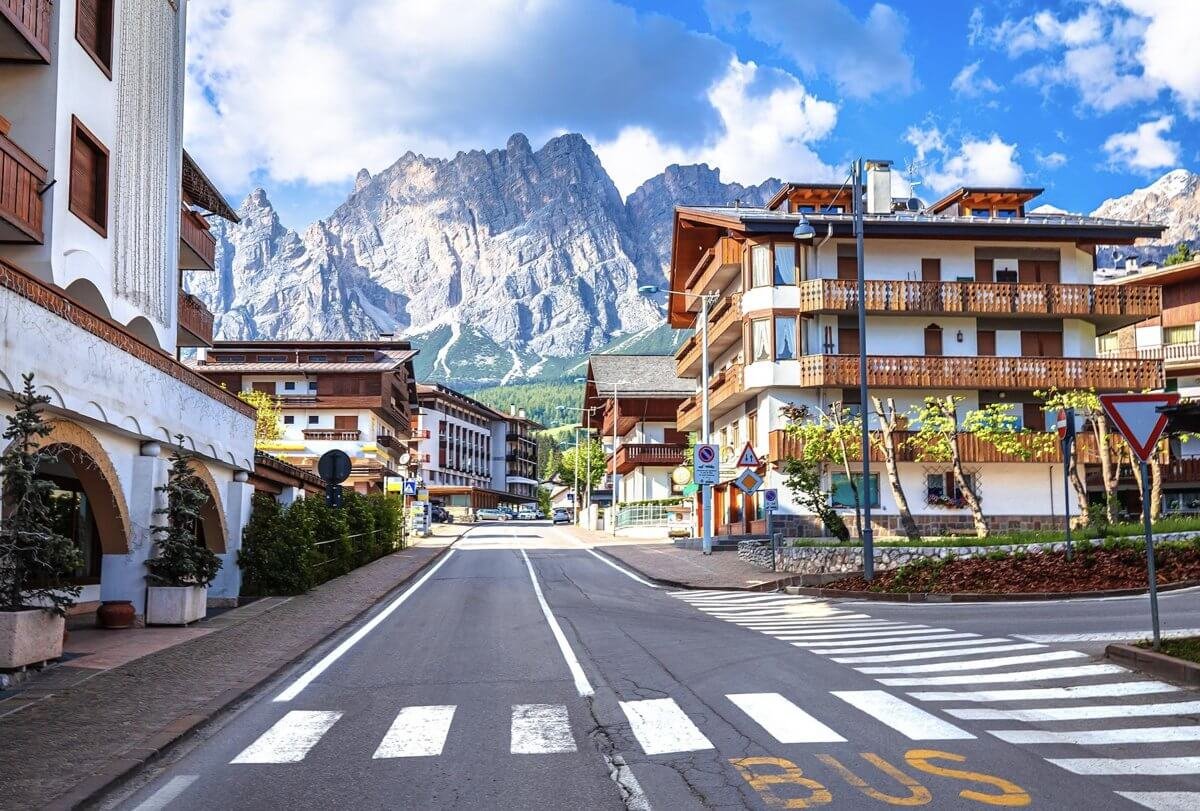
The alternative is Dobbiaco / Toblach.
If your goal is primarily to visit the most beautiful lakes in the Dolomites, such as Lago di Braies and Lago di Dobbiaco, you can stay closer to them — in the Dobbiaco area.
Positive:
- minimum distance to Braies
- calm atmosphere
- fewer tourists than in Cortina
Minus:
- worse access to Sorapis and Val di Fassa
Prices for accommodation
Prices depend on the season, but on average:
- Dobbiaco / Toblach — from 90–150 € per night
- Cortina d’Ampezzo — from 150–300 € per night
- apartments are usually more profitable than hotels
During the high season (July–August), prices may be 30–50 % higher.
If you want to combine a trip to the lakes with a winter holiday, it’s useful to find out in advance how Dolomiti Superski works and how the Sella Ronda route is structured. And if you plan to stay closer to ski regions, also check out the guide to Sella Ronda from Alta Badia.
Useful tips
1. Arrive early in the morning
The popular lakes of the Dolomites are quickly filling up with tourists.
2. Plan your route in advance
The best lakes in the Dolomites are located in different places, and without a plan, you can waste a lot of time.
3. Don’t try to see everything at once.
Even if it seems that the lakes in the Dolomites of Italy are nearby, the journey takes time.
4. Take into account the level of difficulty.
Some lakes in the Dolomites require hiking, for example, Lago di Sorapis.
5. Check parking spots
Restrictions apply at the popular lakes in the Dolomites: the number of spots is limited, some parking lots are paid, and during the high season, especially at Lago di Braies, access may be regulated or the area may be closed once it fills up.
It’s better to check the rules for a specific lake in advance and arrive early in the morning to avoid parking problems.

Konstantin is an acclaimed travel writer, celebrated for transforming ordinary journeys into extraordinary narratives. With years of experience exploring diverse destinations across the globe, his work blends vivid storytelling, cultural insights, and practical advice to inspire wanderlust and guide readers toward unforgettable adventures.
As a key contributor to enjoythetrip.org website, Konstantin has built a loyal readership through their expertise in uncovering both iconic landmarks and off-the-beaten-path treasures. He specializes in providing travelers with honest, actionable tips, whether it’s finding the best resorts in Maldives, exploring cultural hubs like Paris, or diving into the natural wonders of Croatia.