
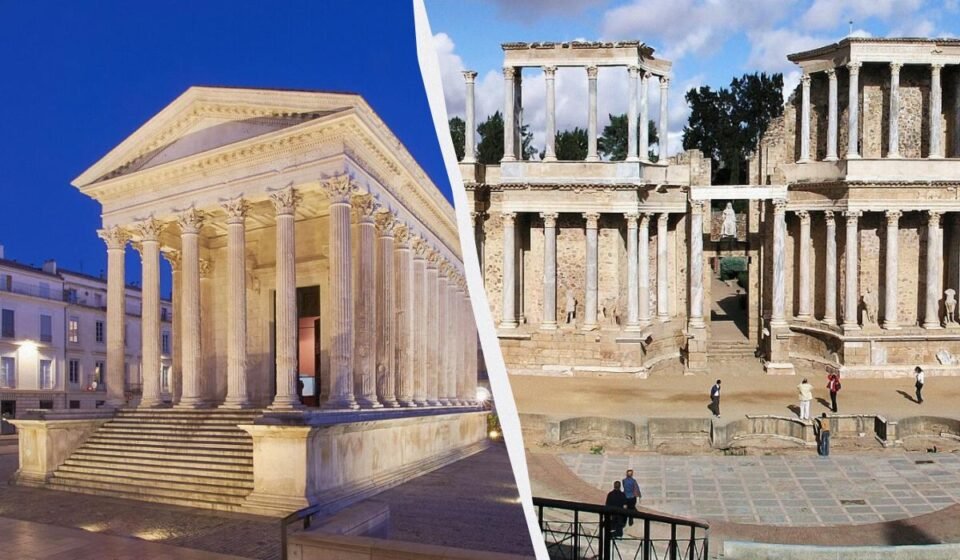
Here, everyone can enjoy the architecture that has stood the test of time.
For many tourists, the main attractions of Europe are historical temples, ancient amphitheaters, as well as emperors and military leaders who built an entire civilization. But not everyone knows that you don’t need to travel to crowded Rome and Athens to experience this.
The publication Travel off path has named four European cities that will win the hearts of history enthusiasts, but without the crowds of tourists.
Nimes, France
Nîmes is the realization of every child’s dream who is fascinated by the Roman Empire. Here you can see a 2,000‑year‑old arena, a remarkably well‑preserved version of the Colosseum, built at the end of the 1st century — just a few decades after the opening of the main Roman landmark. However, unlike the Colosseum, the central part of the arena is still in use, and every summer world‑famous artists perform here.
In addition to the incredibly well‑preserved arena, Nîmes is home to the “Maison Carrée” – a temple dating back to the early 1st century that has survived virtually undamaged. As for ancient Roman temples, in terms of preservation it can вполне compete with the Pantheon.
Furthermore, nearby Pont du Gard is a huge three‑tiered aqueduct built by the Romans across the Gardon River, with a beautiful pebble beach at its foot.
Evora, Portugal
Évora is a compact, medium‑sized city located in the very heart of the Alentejo region. It can be reached by train from Lisbon in just 1.5 hours.
The main attraction here is a nearly 2,000‑year‑old Roman temple – one of the best‑preserved ancient Roman monuments in Portugal, although it is still sometimes called the Temple of Diana. It is worth noting that archaeologists associate the temple with the imperial cult, possibly with Emperor Augustus, and there is no evidence that it was ever dedicated to Diana.Advertisementad
In any case, the fact that its monumental granite podium and fluted Corinthian columns still stand in the middle of a living, breathing medieval city makes it even more remarkable.
Just a two‑minute walk from the temple is the cathedral – a grandiose marvel in the Romanesque‑Gothic style, built of pink granite, with a solemn Gothic cloister courtyard, a towering central nave, and a rooftop terrace that you can climb to admire the city’s terracotta roofs.
Plovdiv, Bulgaria
Bulgaria’s second‑largest city is an extensive open‑air museum where you can see Greco‑Roman ruins, Byzantine churches, Ottoman mosques and mansions from the Bulgarian Renaissance era. Built on seven hills that in many ways resemble Rome, Plovdiv is best known for its ancient theatre on the hillside, with rows of restored marble seats and a reconstructed stage that still serves as a backdrop for performances and concerts.
Another important landmark is the Roman stadium, hidden beneath the main street: it was built in the early 2nd century AD, during the reign of Emperor Hadrian.
Plovdiv is pure, genuine, eye‑catching ancient history: from the Roman ruins scattered throughout the Historic Centre to the climb up Nebet Tepe – an outstanding hill where traces of a Chalcolithic settlement and fortifications built and rebuilt by the Thracians, Romans, Byzantines and medieval rulers have been preserved. We are talking about thousands upon thousands of years of history superimposed on each other.
Merida, Spain
Hidden in the western hinterlands of Spain, closer to Portugal than to Madrid, Mérida is one of the underappreciated gems. The city was founded in 25 BC under Emperor Augustus for battle‑hardened veterans of the Cantabrian Wars who wore galli.
It is here that one of the best‑preserved Roman theatres is located: behind the main stage rises a double tier of Corinthian columns, and the wide rows of stone seats are filled with spectators every year during festivals.
Furthermore, tourists will be delighted by Puente Romano – a half‑mile‑long granite bridge spanning the Guadiana River, which leads directly to the foot of the Alcázar – an Islamic fortress built by the Umayyads in 835 using sections of a Roman wall and recycled Roman‑Visigothic masonry.

Konstantin is an acclaimed travel writer, celebrated for transforming ordinary journeys into extraordinary narratives. With years of experience exploring diverse destinations across the globe, his work blends vivid storytelling, cultural insights, and practical advice to inspire wanderlust and guide readers toward unforgettable adventures.
As a key contributor to enjoythetrip.org website, Konstantin has built a loyal readership through their expertise in uncovering both iconic landmarks and off-the-beaten-path treasures. He specializes in providing travelers with honest, actionable tips, whether it’s finding the best resorts in Maldives, exploring cultural hubs like Paris, or diving into the natural wonders of Croatia.