
Among the hundreds of Greek islands, one stands out in particular.
Greece is famous for its vast variety of islands, each with its own character and offering tourists completely different experiences. There are picturesque beaches with turquoise water, quiet islands with almost untouched nature, popular resorts with vibrant nightlife, and places where ancient and medieval history literally surrounds travelers at every turn. That is why, even after numerous trips to the Greek islands, tourists often find new favorite destinations.
An avid traveler and regular contributor to the publication Travel Off Path, Vinicius Costa has visited more than 25 Greek islands. And among all of them, he named Rhodes his undisputed favorite. He explains his choice by the combination of beach holidays, ancient heritage, and a well‑preserved medieval city.
According to the author, he returns to Rhodes repeatedly because he considers it one of the best options for a full‑fledged trip, rather than just a short stop between other islands.
Rhodes is the fourth-largest island in Greece and one of the main tourist centers of the Dodecanese. The author emphasizes that its size — approximately 77 kilometers from north to south — makes the island a self‑contained destination. There are beaches, mountains, fertile valleys, villages, and numerous historical monuments here.
The city of Rhodes occupies a special place in the narrative. Its historical center is included in the UNESCO list and, according to the author, is one of the best‑preserved medieval ensembles in Europe. The ancient streets, arches, defensive walls, and the Palace of the Grand Masters remind one of the period of the Knights of St. John. After the fall of the knights in 1522, the island was under the rule of the Ottoman Empire for nearly four centuries, which left a noticeable mark in the form of mosques, minarets, and baths.
Unlike some popular resorts, the historical center of Rhodes, according to the author, has not turned into a mere tourist attraction. The old town still looks inhabited by local residents.
Another important point on the route is Lindos, located about an hour’s drive from the island’s capital. The white houses on the slope lead to the acropolis with the Temple of Athena Lindia, which rises above the sea. Beaches and traditional taverns are located nearby, so visiting Lindos allows you to combine historical attractions with relaxation.
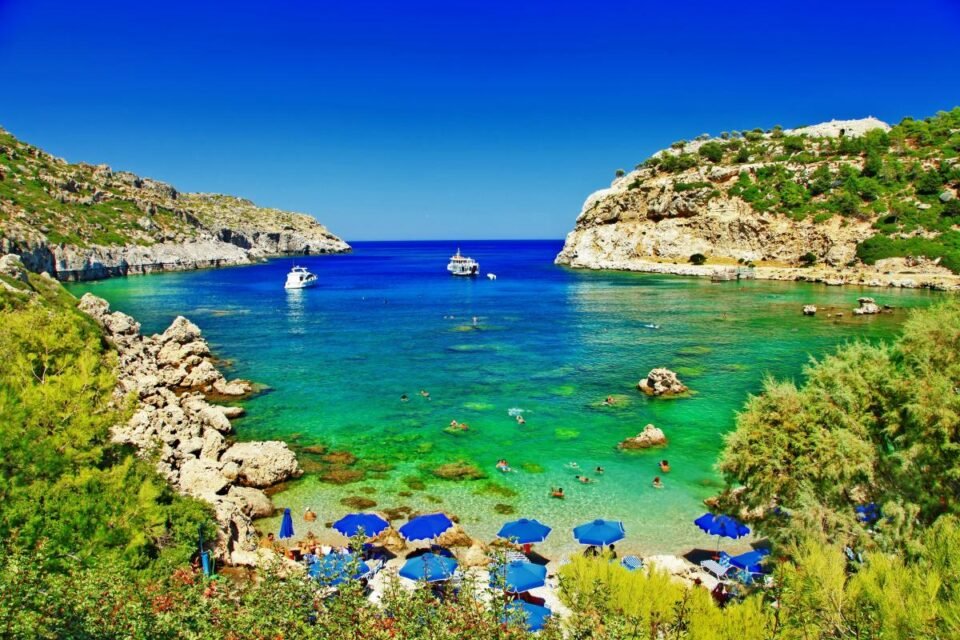
The author considers the beaches of Rhodes to be no less attractive. Among them, he highlights Prasonisi, Faliraki, Ixia, Ellie Beach, the Kalithea thermal baths, and Anthony Quinn Bay. He calls the latter one of the most convenient options for those who want to see turquoise water not far from Rhodes or Lindos.
The author also mentions the long swimming season as an advantage of the island. In October, the average daytime temperature is about 24 °C, and the sea temperature is approximately 23 °C. Most tourist areas continue to operate until mid‑October, although the likelihood of rain increases towards the end of the month.
Ultimately, the author acknowledges that other islands – Folegandros, Kalymnos, Symi, Corfu, Kos, and Chios – also have their advantages. However, in his opinion, Rhodes best combines various types of leisure activities.
“Rhodes is the best pearl of the Aegean Sea,” Costa concludes.

Konstantin is an acclaimed travel writer, celebrated for transforming ordinary journeys into extraordinary narratives. With years of experience exploring diverse destinations across the globe, his work blends vivid storytelling, cultural insights, and practical advice to inspire wanderlust and guide readers toward unforgettable adventures.
As a key contributor to enjoythetrip.org website, Konstantin has built a loyal readership through their expertise in uncovering both iconic landmarks and off-the-beaten-path treasures. He specializes in providing travelers with honest, actionable tips, whether it’s finding the best resorts in Maldives, exploring cultural hubs like Paris, or diving into the natural wonders of Croatia.