
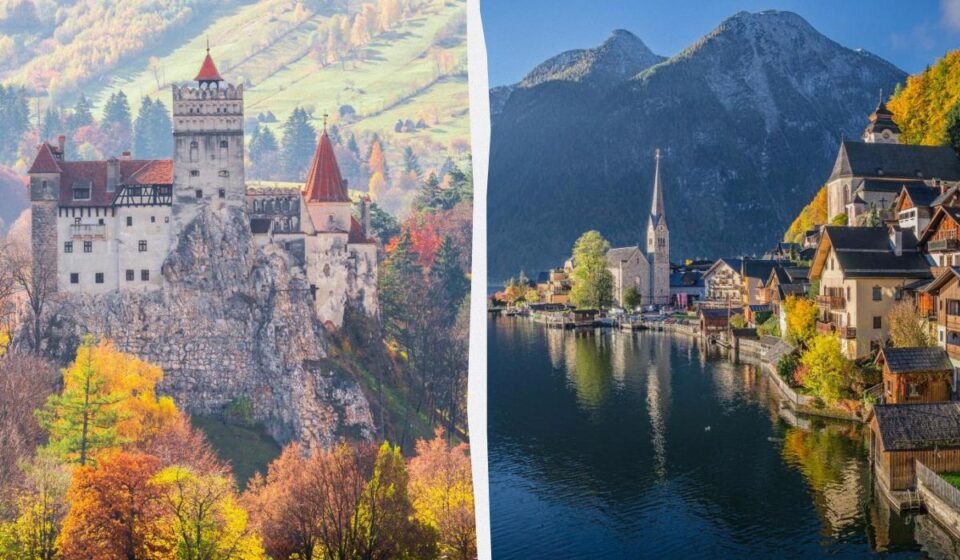
In some regions, the foliage remains vibrant until November.
In autumn, most of Europe is painted in bright colors as the foliage on the trees changes from green to yellow, orange, or crimson. And many tourists strive to capture this beauty, because during this period all these majestic castles and ancient streets look especially atmospheric.
As seasoned traveler and editor-in-chief of the Travel Off Path portal Tyler Fox writes in his article, in his home state in the USA, the end of October usually brings an unpredictable two‑week period to enjoy the autumn colors before a sudden storm rips all the leaves from the branches and freezing winter rain sets in. However, in Europe, completely different rules apply.
“Thanks to its unique geography – the vast elevation changes in the Alps, the deep river valleys, and the extensive boreal forests – you can stretch the autumn magic over several months if you know exactly where to look,” he notes.
10 places in Europe with the longest and most impressive autumn foliage season
- Bavarian Alps, Germany: the first yellow foliage appears in the highlands as early as September, while in the lowlands the “golden autumn” lasts until November.
- Lake Bled, Slovenia: the rich red and orange hues here persist until the end of October and the beginning of November.
- Transylvania, Romania: the dense, spreading forest cover of the Carpathian Mountains gradually changes color over the course of several weeks, depending on the altitude.
- The Dolomites, Italy: although ordinary deciduous trees here shed their leaves relatively early, the coniferous larches in this region turn a bright golden hue by the end of October and retain it until heavy snow falls in November.
- The Engadine Valley, Switzerland: thanks to its unique microclimate and dense larch forests, this area retains bright yellow hues for several weeks – longer than the deciduous forests in the rest of the country.
- The Scottish Highlands, United Kingdom: here, in fact, a “double autumn” is observed – first, the heather on the moors acquires a deep, rich purple hue in late summer and early autumn, and then it is replaced by golden birches and oaks, which retain their colour until November.
- Plitvice Lakes National Park, Croatia: since the lakes in the park are arranged in terraces at different elevations, the dense beech and oak forests gradually change color from the upper lakes to the lower canyon, which significantly extends the flowering season.
- Lapland, Finland: in the far north of the country, “golden autumn” begins in early September and slowly moves southward, giving tourists more than a month to chase the changing colors as they travel across the country.
- Salzkammergut (Hallstatt), Austria: the vast alpine lakes in this region moderate the local temperatures, preventing early severe frosts and allowing the extensive rocky beech forests to remain lush until the end of October.
- The Douro Valley, Portugal: instead of deciduous trees, there are kilometers of terraced vineyards here, which, after the harvest, turn fiery red, orange, and yellow, retaining their vibrant colors until the end of November.

Konstantin is an acclaimed travel writer, celebrated for transforming ordinary journeys into extraordinary narratives. With years of experience exploring diverse destinations across the globe, his work blends vivid storytelling, cultural insights, and practical advice to inspire wanderlust and guide readers toward unforgettable adventures.
As a key contributor to enjoythetrip.org website, Konstantin has built a loyal readership through their expertise in uncovering both iconic landmarks and off-the-beaten-path treasures. He specializes in providing travelers with honest, actionable tips, whether it’s finding the best resorts in Maldives, exploring cultural hubs like Paris, or diving into the natural wonders of Croatia.