
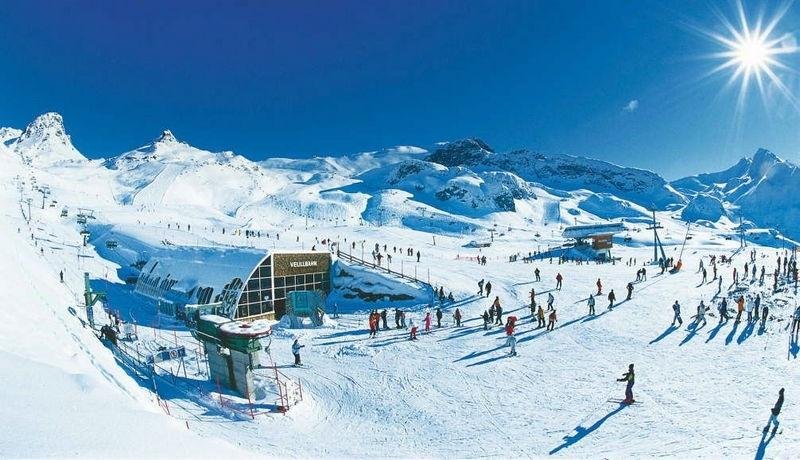
The best ski resorts in Austria offer everything from long connected Alpine ski areas and snow-sure glacier skiing to family-friendly villages and thermal spa towns. This guide compares 20 Austrian ski resorts for the 2026/27 season, including terrain, location, transport, ski-pass information and where to stay.
Our top picks: St. Anton for experienced skiers, Serfaus-Fiss-Ladis for families, Sölden and Gurgl for high-altitude skiing, Saalbach for a large connected ski area, and Innsbruck for skiing combined with a city break.
Compare the best ski resorts in Austria
| Resort | Region / ski area | Best for |
|---|---|---|
| Sölden | Tyrol · Sölden / Ötztal | High-altitude skiing, intermediates, glacier |
| Obergurgl | Tyrol · Gurgl, 112 km | Snow reliability and quieter luxury |
| Ischgl | Tyrol · Silvretta Arena / Samnaun | Large ski area and après-ski |
| Kitzbühel | Tyrol · KitzSki | Historic town and varied skiing |
| Mayrhofen | Tyrol · Mountopolis, 142 km | Intermediate terrain, snowparks |
| Serfaus | Tyrol · Serfaus-Fiss-Ladis | Families and beginner progression |
| Innsbruck | Tyrol · Ski plus City: 265 km across 12 areas | City break plus skiing |
| Seefeld | Tyrol · Rosshütte and local ski areas | Beginners and cross-country skiing |
| Igls | Tyrol · Patscherkofel | Short ski breaks and beginners |
| St. Anton am Arlberg | Tyrol · Ski Arlberg, 300 km | Advanced and confident intermediates |
| Lech | Vorarlberg · Ski Arlberg, 300 km shared | Luxury, groomed slopes and families |
| Bad Gastein | Salzburg · Gastein / Ski amadé | Skiing and thermal spas |
| Bad Hofgastein | Salzburg · Schlossalm / Angertal / Gastein | Families, wellness and intermediates |
| Saalbach | Salzburg · Skicircus, 270 km | Large interconnected area and après-ski |
| Zell am See | Salzburg · Schmittenhöhe, 77 km | Lake scenery and varied skiing |
| Kaprun | Salzburg · Kitzsteinhorn / Maiskogel | Glacier skiing and families |
| Obertauern | Salzburg · Obertauern ski circuit | Snow-sure high-altitude resort |
| Bad Kleinkirchheim | Carinthia · 103 km | Thermal baths and red pistes |
| Schladming | Styria · 4-mountain ski area, 123 km | Intermediates, families and ski racing |
| Hippach | Tyrol · Mountopolis, 142 km shared | Quiet base for Mayrhofen skiing |
Map of Austrian ski resorts
Find major resorts on Google Maps: Sölden · Ischgl · Kitzbühel · Mayrhofen · Serfaus · Innsbruck · St. Anton am Arlberg · Lech · Saalbach · Zell am See · Obertauern · Schladming.
1. Sölden
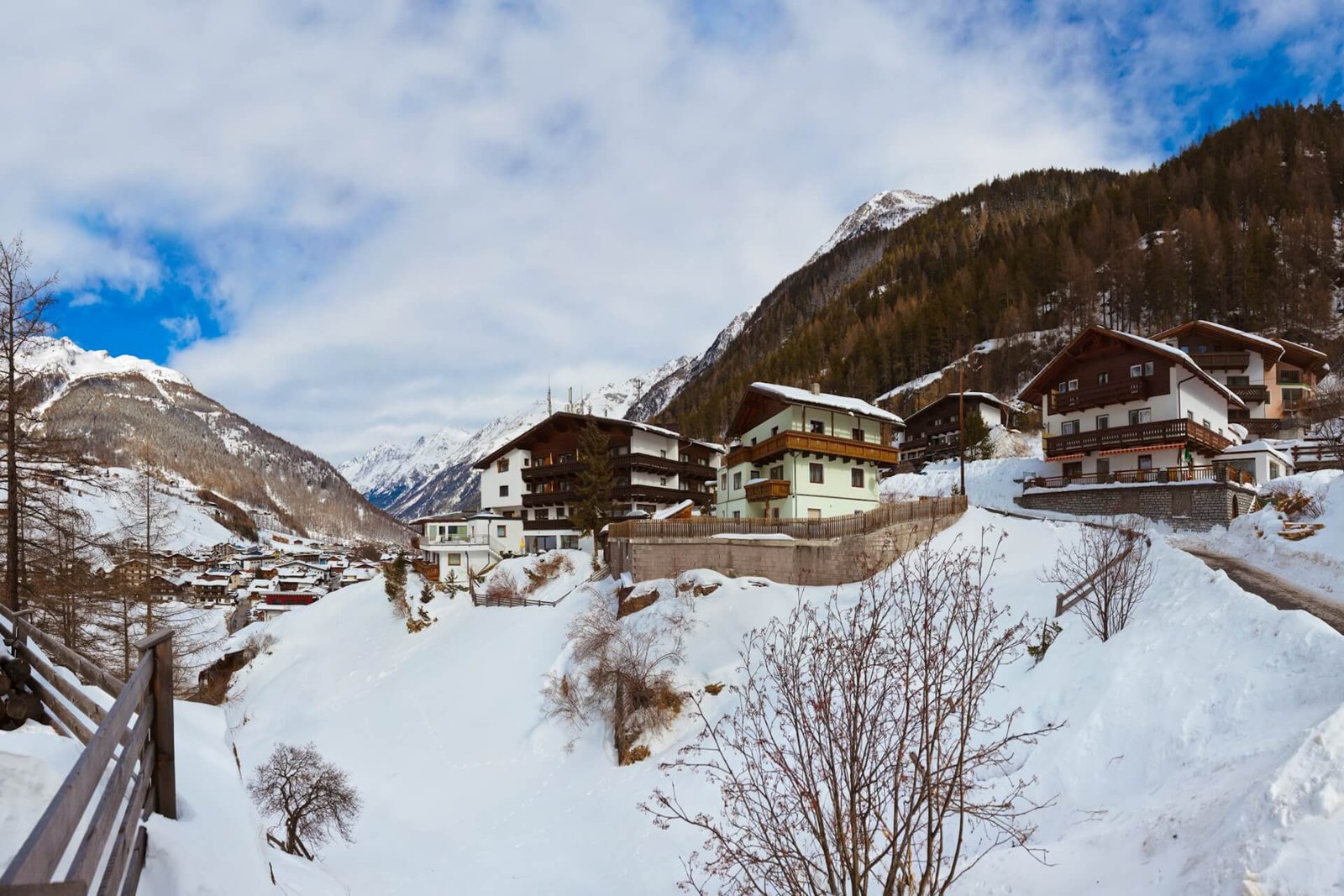
Region: Tyrol · Ski area: Sölden / Ötztal · Best for: High-altitude skiing, intermediates, glacier.
Sölden combines a lively resort village with two glacier ski areas, Rettenbach and Tiefenbach, and high-altitude terrain above 3,000 metres. The Giggijoch and Gaislachkogl gondolas connect the village to extensive groomed slopes. Confident intermediates will find plenty of long reds, while learners can use the easier training areas near Giggijoch.
The resort is a good choice for early and late-season skiing; the published 2026/27 winter period is 12 November–18 April, with glacier skiing scheduled separately until 2 May. Weather and lift conditions determine availability. Stay near a gondola if you want to minimise ski-bus journeys.
Getting there: Innsbruck; train to Ötztal + bus. Official ski area information and tickets.
2. Obergurgl
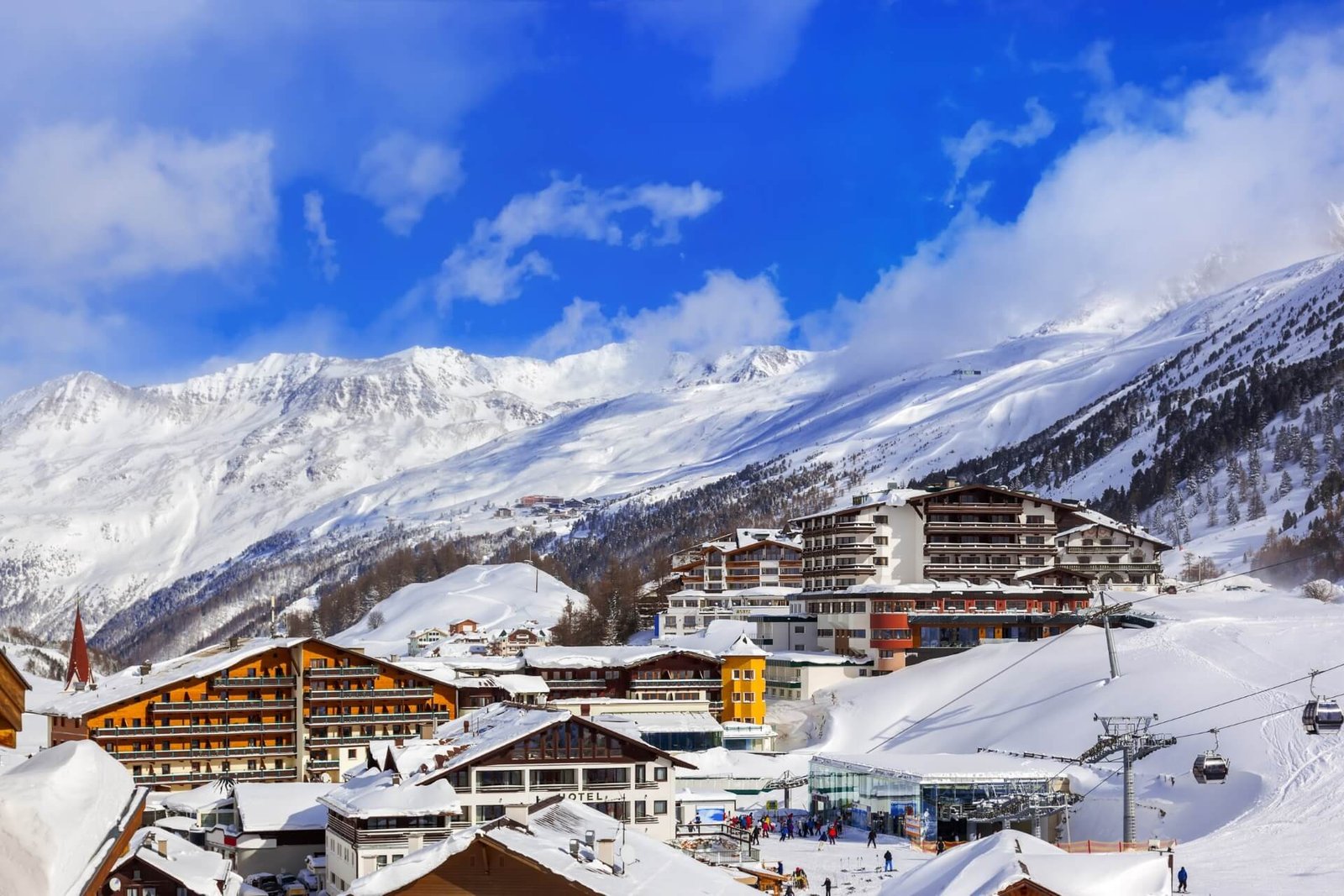
Region: Tyrol · Ski area: Gurgl, 112 km · Best for: Snow reliability and quieter luxury.
High in the Ötztal valley, Obergurgl and neighbouring Hochgurgl form the Gurgl ski area, with around 112 kilometres of pistes reaching above 3,000 metres. The high village elevation makes it attractive for travellers prioritising snow conditions; terrain includes wide blues and more challenging runs.
The atmosphere is quieter than Sölden, with many hotels offering spa facilities and convenient lift access. The scheduled 2026/27 tariff periods start 19 November and continue through 18 April. Ski passes of three days or more include the wider Ötztal Superskipass under the published terms.
Getting there: Innsbruck; train to Ötztal + bus. Official ski area information and tickets.
3. Ischgl
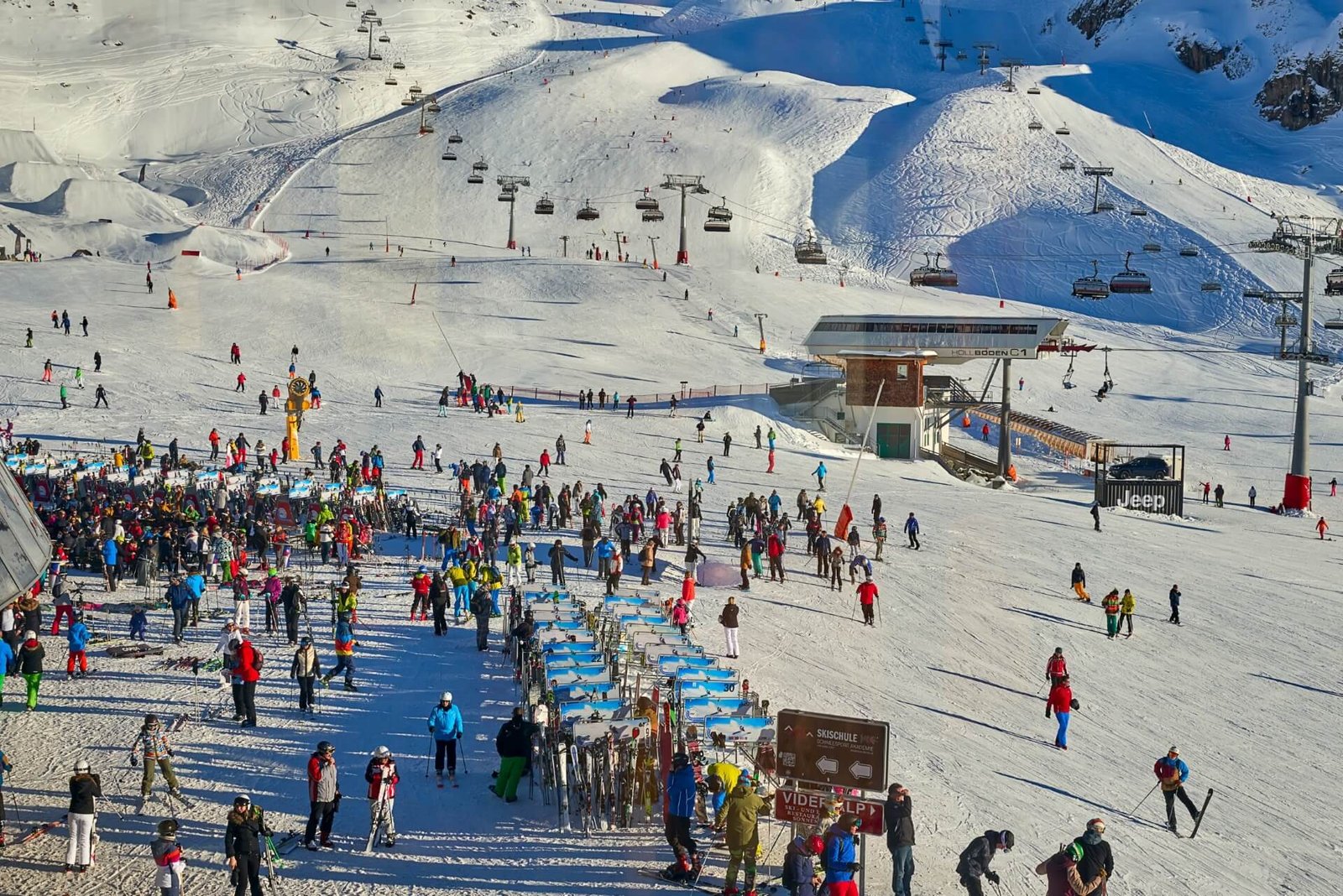
Region: Tyrol · Ski area: Silvretta Arena / Samnaun · Best for: Large ski area and après-ski.
Ischgl is a lively ski village in the Paznaun valley, with a large interconnected ski area extending across the Swiss border to Samnaun. High-altitude runs, modern lifts and broad red pistes make this a strong choice for confident intermediates and advanced skiers.
After skiing, the village offers mountain restaurants, concerts and active après-ski. The published day ticket for Ischgl/Samnaun is €83 for adults in 2026/27; the planned ticket season runs 26 November–2 May. The broader Silvretta pass covers additional nearby areas.
Getting there: Innsbruck; train to Landeck-Zams + bus. Official ski area information and tickets.
4. Kitzbühel
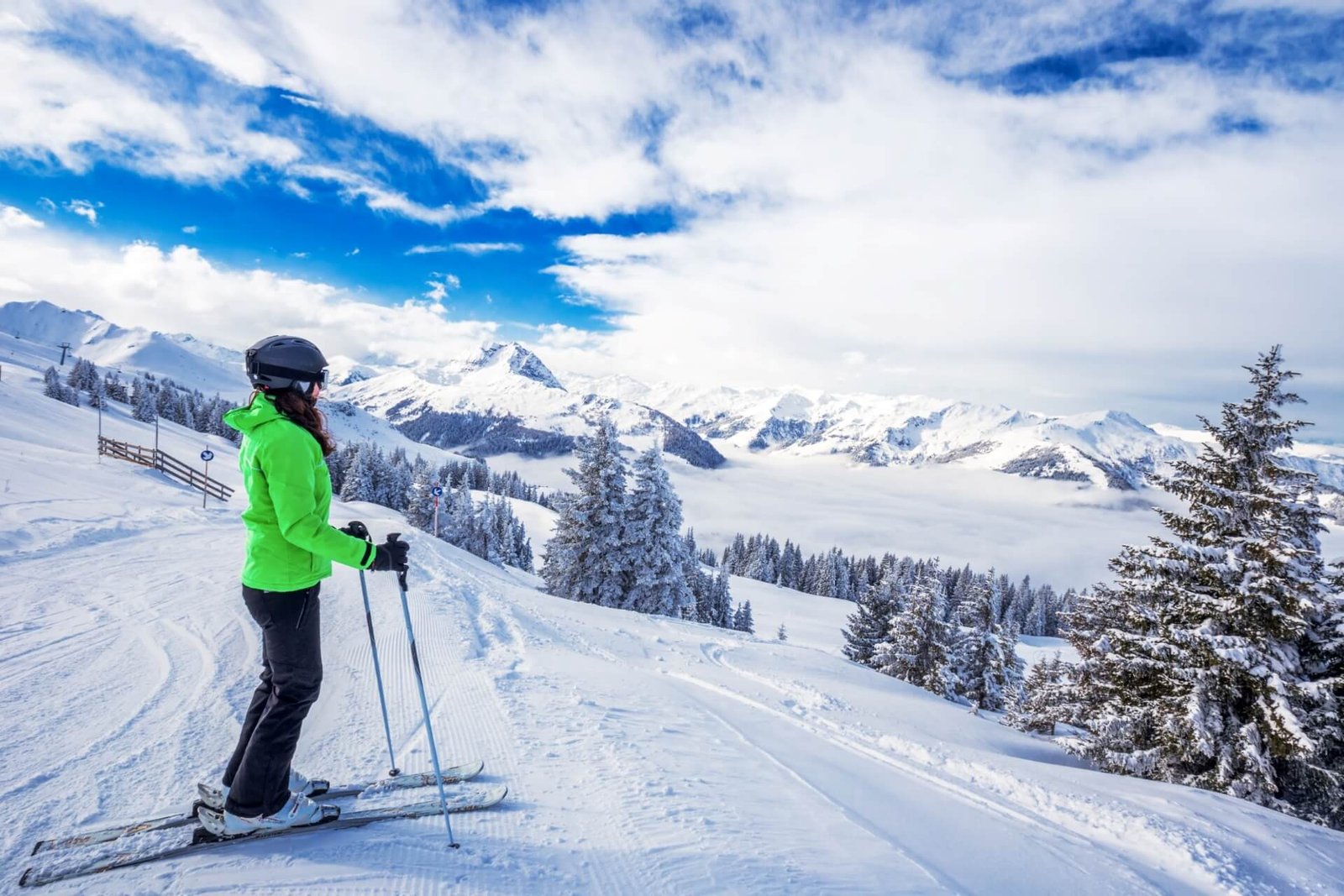
Region: Tyrol · Ski area: KitzSki · Best for: Historic town and varied skiing.
Kitzbühel is an elegant medieval town with painted façades, cafés and a world-famous skiing tradition. The KitzSki network offers varied terrain around the Hahnenkamm and neighbouring villages. The famous Streif racecourse is for experienced skiers; there are also gentler runs and ski-school areas.
The town is especially attractive if some members of your group prefer shopping, restaurants and sightseeing. Adult day passes for the published 2026/27 season range from €69 to €83 according to tariff period. Its railway station makes it a practical car-free destination.
Getting there: Train via Wörgl or Salzburg. Official ski area information and tickets.
5. Mayrhofen
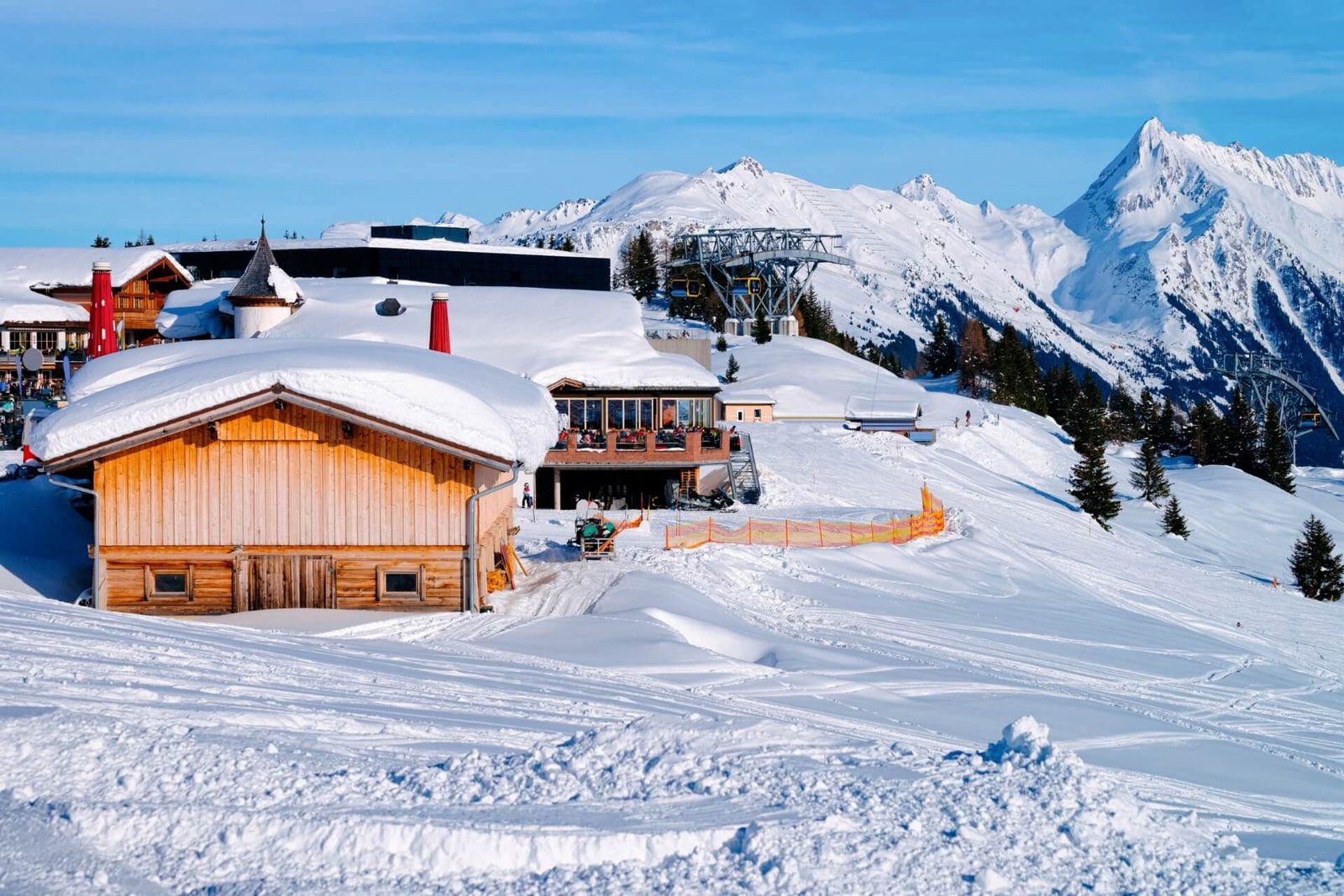
Region: Tyrol · Ski area: Mountopolis, 142 km · Best for: Intermediate terrain, snowparks.
Mayrhofen is a lively base in the Zillertal, connecting the Penken and Ahorn mountains. Mountopolis advertises 142 kilometres of slopes and 60 lifts. The Penken area suits confident skiers and snowboarders, while the Ahorn plateau offers gentler runs and family facilities.
Harakiri is a famous expert slope with a gradient of 78 percent, not 78 degrees. The wider Zillertal offers other ski areas, including Hintertux Glacier, reached by separate transport. Stay near the Penkenbahn or Ahornbahn for convenient morning starts.
Getting there: Innsbruck; train via Jenbach. Official ski area information and tickets.
6. Serfaus
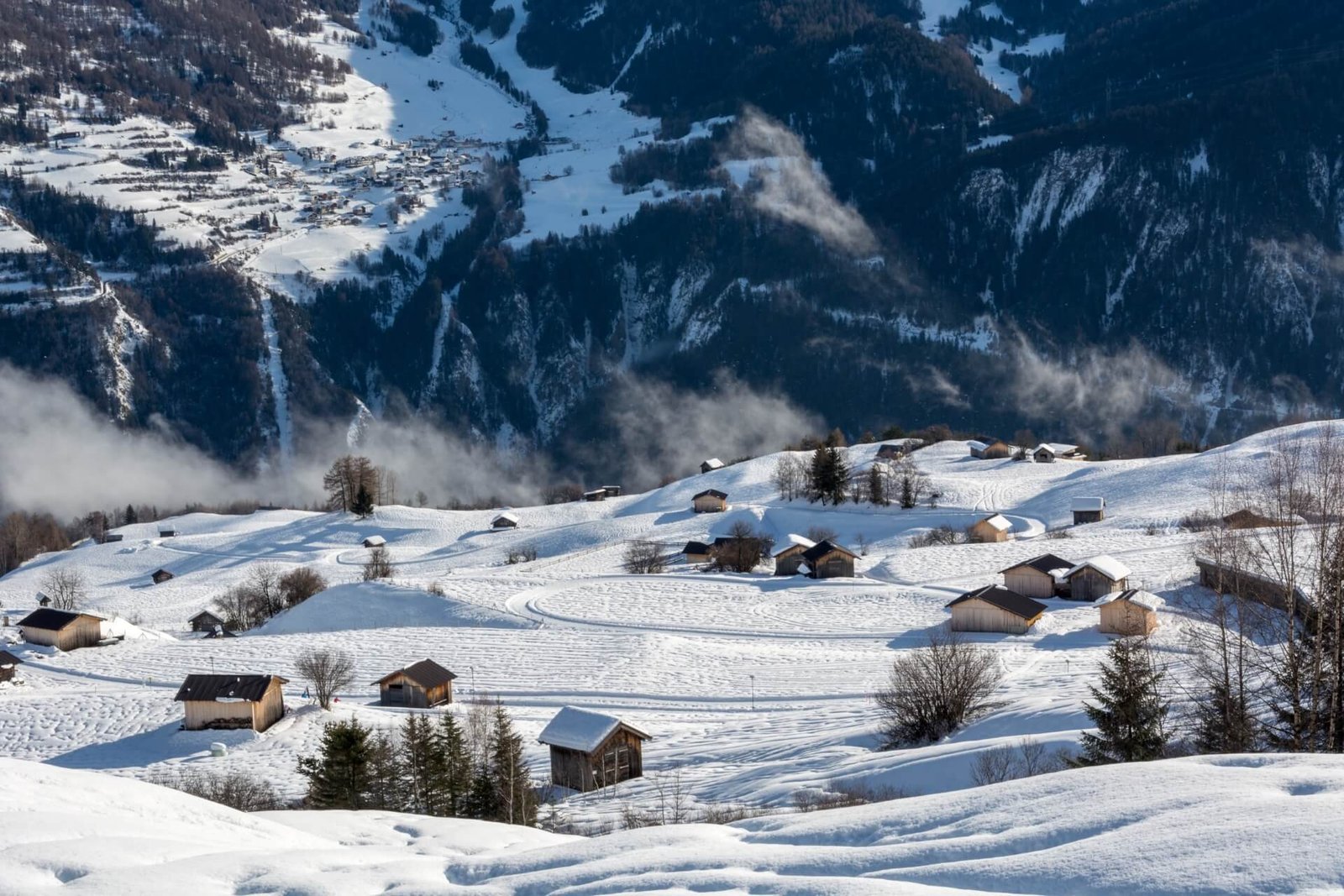
Region: Tyrol · Ski area: Serfaus-Fiss-Ladis · Best for: Families and beginner progression.
Serfaus is part of the large Serfaus-Fiss-Ladis ski area on a sunny plateau. It is especially well suited to families, with dedicated children’s learning areas, ski schools and a wide variety of groomed slopes. More confident skiers can explore the interconnected mountains.
The village’s underground railway links the centre with the lifts, helping families avoid walking long distances in ski boots. A guest card from participating accommodation provides access to reduced ski-pass rates and other benefits according to the current terms.
Getting there: Train to Landeck-Zams + bus. Official ski area information and tickets.
7. Innsbruck
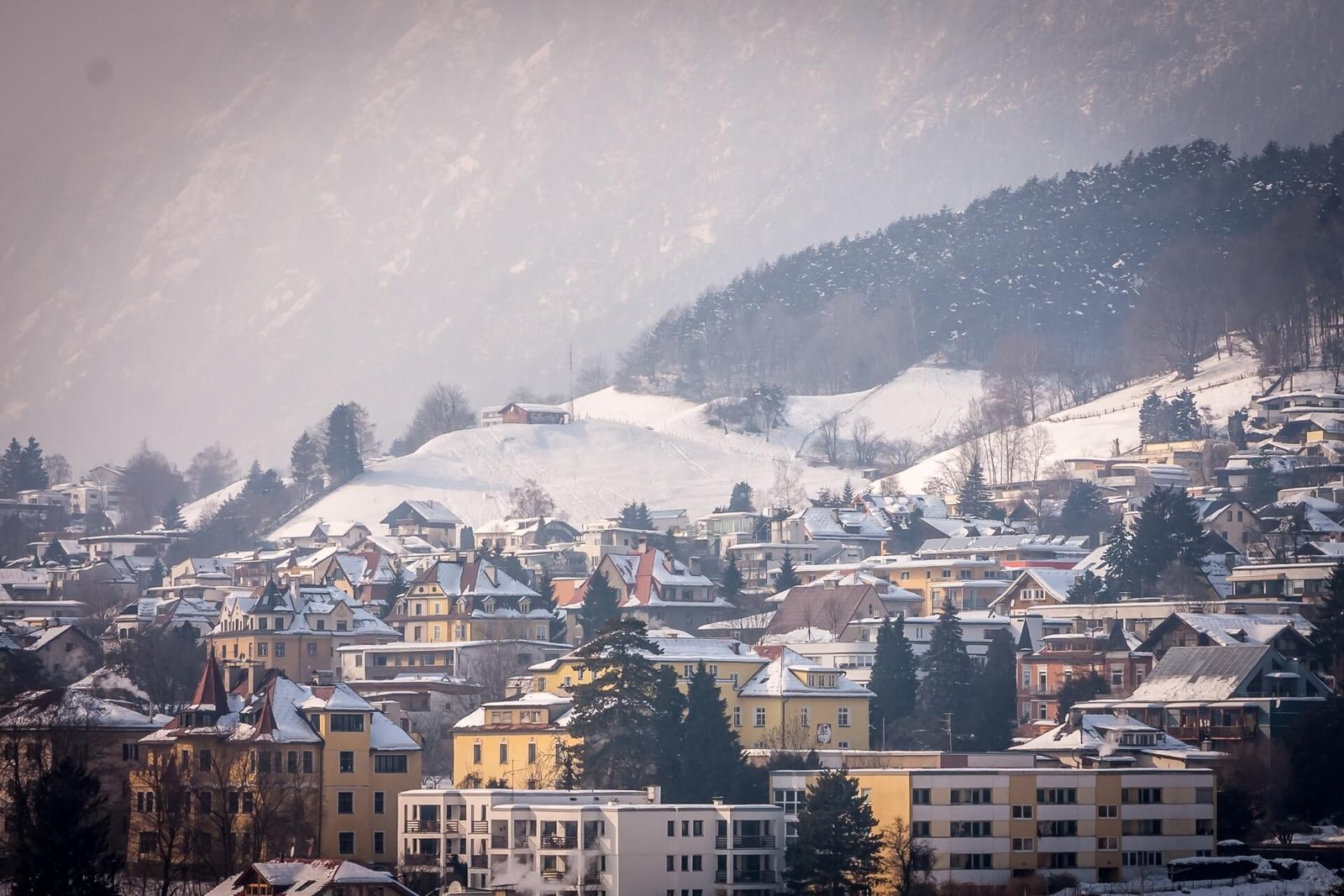
Region: Tyrol · Ski area: Ski plus City: 265 km across 12 areas · Best for: City break plus skiing.
Innsbruck combines historic architecture and restaurants with access to several mountain areas, including Nordkette, Axamer Lizum, Patscherkofel and the Stubai Valley. It is a practical option for mixed groups who want a city break as well as ski days. The areas are not all linked by lifts, so plan transfers.
The 2026/27 SKI plus CITY Pass Stubai Innsbruck covers 12 ski areas with 265 kilometres of pistes and selected sightseeing and transport benefits. Published adult prices are €162 for two days and €386 for six days. The airport and main railway station make the city an excellent car-free base.
Getting there: Innsbruck airport or train. Official ski area information and tickets.
8. Seefeld
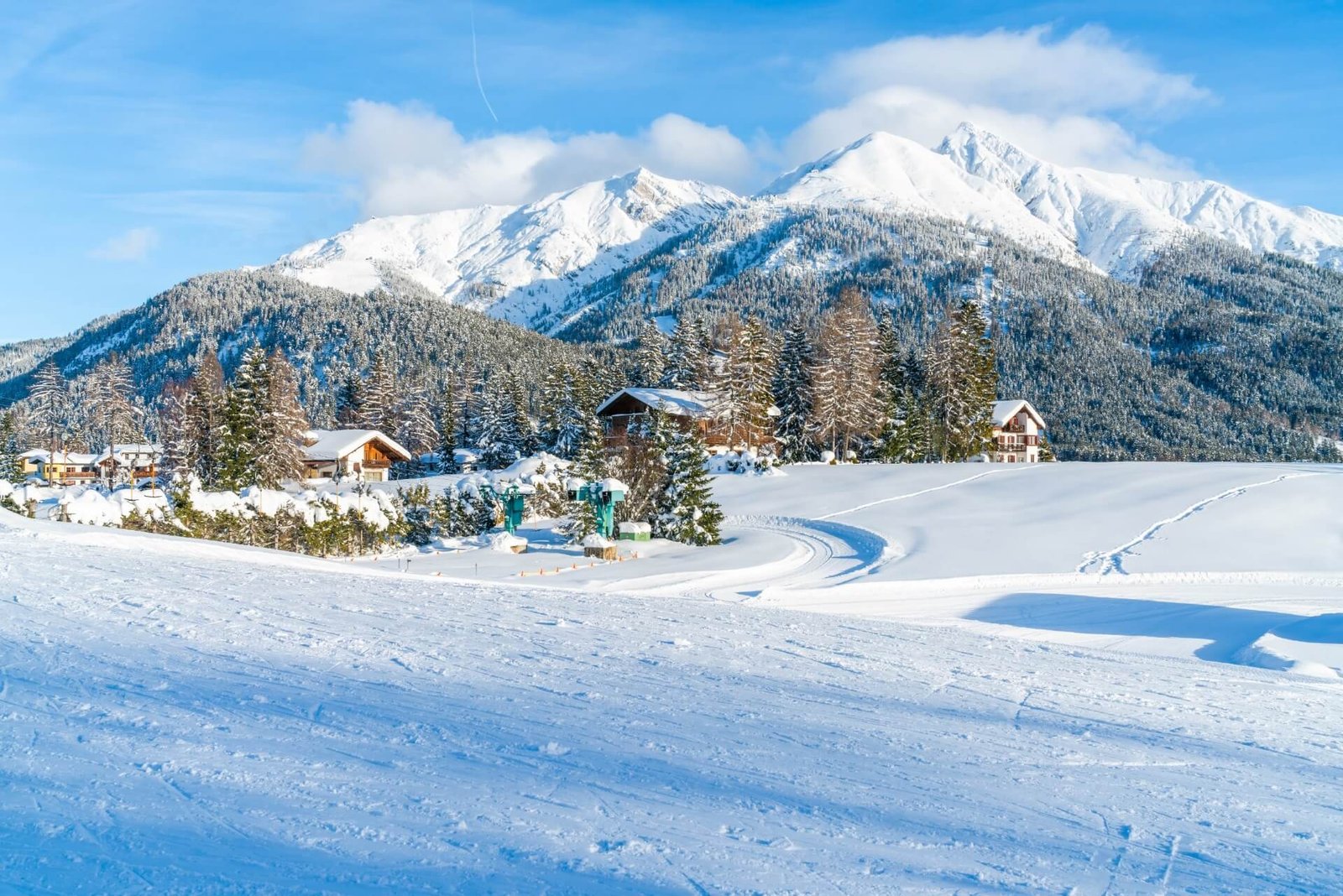
Region: Tyrol · Ski area: Rosshütte and local ski areas · Best for: Beginners and cross-country skiing.
Seefeld sits on a sunny high plateau above the Inn Valley and is renowned for cross-country skiing and winter walking. Alpine skiing is concentrated around Rosshütte and smaller local areas, with accessible training terrain and some more challenging pistes.
It is a good place for a first winter holiday or for a mixed group who do not all want to ski downhill every day. The village has a compact centre, hotels, cafés and wellness facilities, and its railway station makes travel from Innsbruck straightforward.
Getting there: Direct train from Innsbruck. Official ski area information and tickets.
9. Igls
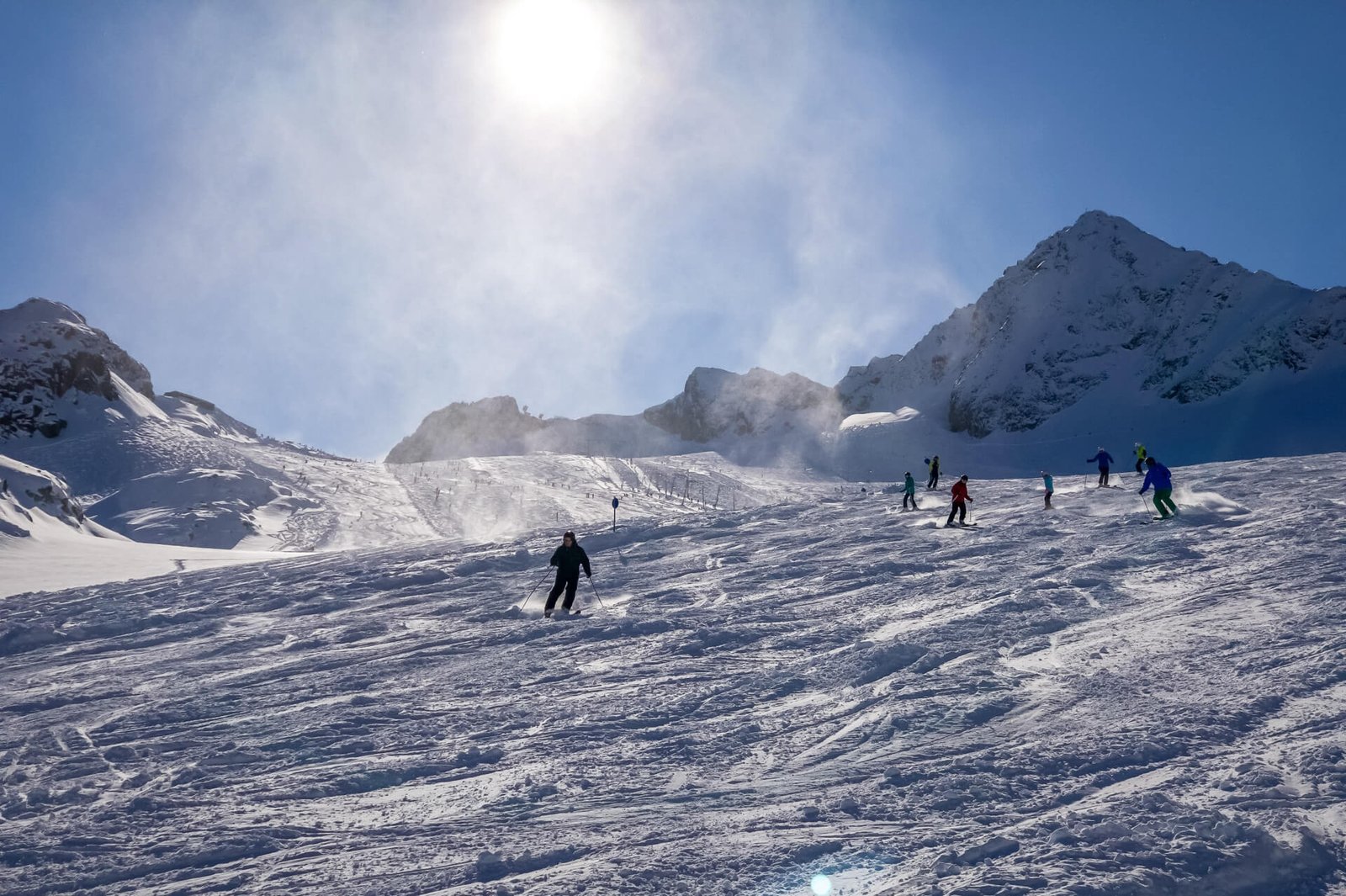
Region: Tyrol · Ski area: Patscherkofel · Best for: Short ski breaks and beginners.
Igls is a village just south of Innsbruck beneath Patscherkofel, the Olympic mountain. Its modest local ski area has practice slopes and varied groomed runs. The proximity to Innsbruck makes it more useful for day skiing than for a full week of extensive downhill exploration.
Stay here if you prefer a village setting while retaining access to the city. Skiers can combine Patscherkofel with other Innsbruck-area resorts through the appropriate regional pass and public transport.
Getting there: Bus from Innsbruck. Official ski area information and tickets.
10. St. Anton am Arlberg
Region: Tyrol · Ski area: Ski Arlberg, 300 km · Best for: Advanced and confident intermediates.
St. Anton is one of Austria’s classic destinations for serious skiing, with access to the interconnected Ski Arlberg network. The wider area advertises 300 kilometres of ski runs and 85 lifts, linking several villages including Lech and Zürs. St. Anton itself is particularly appealing for experienced skiers who enjoy varied terrain.
The resort has a strong après-ski scene, mountain restaurants and excellent rail access. Beginners should arrange lessons and choose suitable practice areas rather than relying on difficult return runs. Off-piste terrain requires appropriate equipment, training and local professional guidance.
Getting there: Direct train to St. Anton. Official ski area information and tickets.
11. Lech
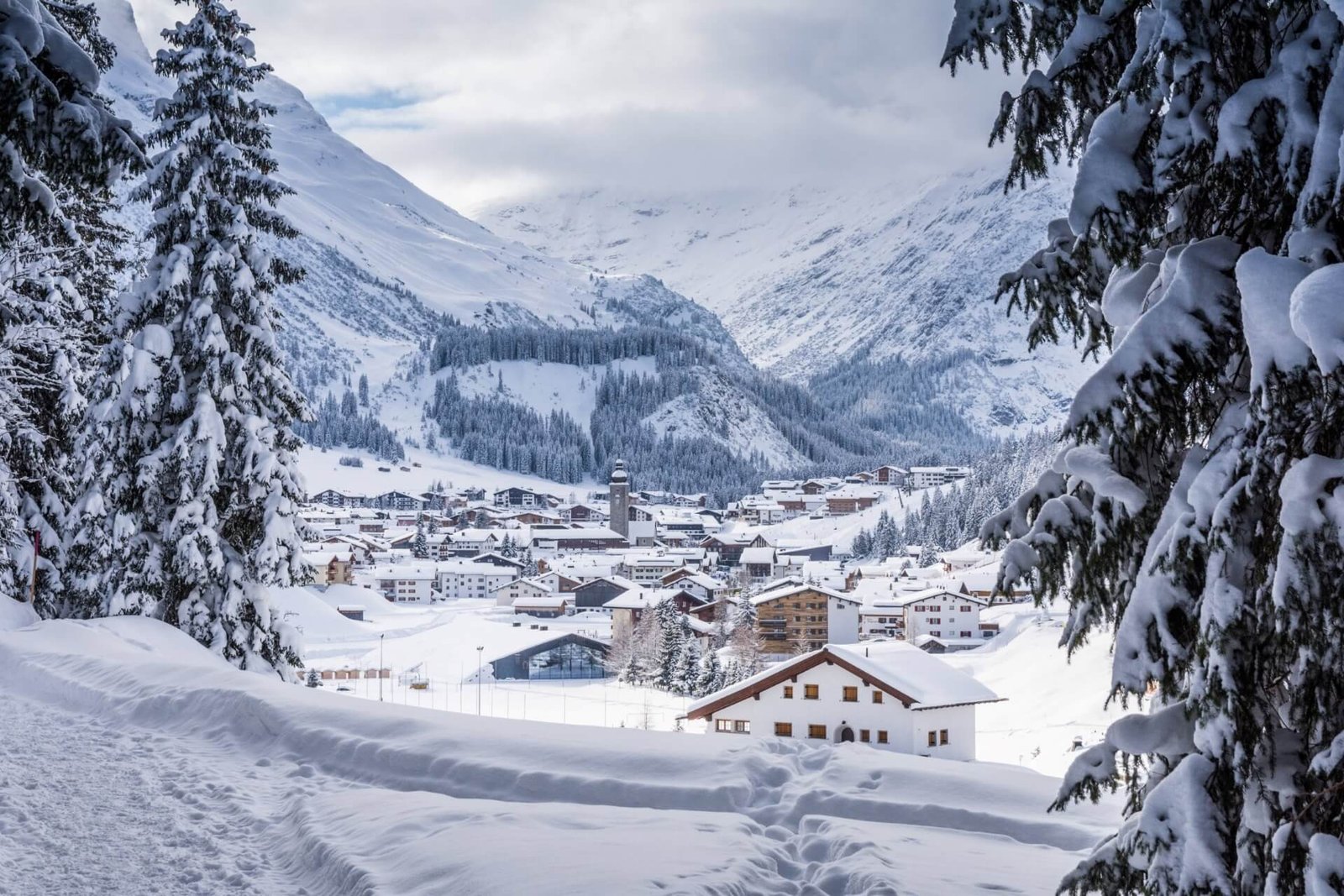
Region: Vorarlberg · Ski area: Ski Arlberg, 300 km shared · Best for: Luxury, groomed slopes and families.
Lech combines a traditional village setting with sophisticated hotels and access to the Ski Arlberg network. It offers attractive groomed blue and red pistes around the Lech-Zürs area, while expert terrain is available across the connected mountains.
The atmosphere is generally calmer and more refined than St. Anton. Oberlech is particularly attractive for convenient slope access, while the village centre has restaurants and shops. Lech is a premium destination, so accommodation and dining can be expensive in peak weeks.
Getting there: Train to Langen am Arlberg + bus. Official ski area information and tickets.
12. Bad Gastein
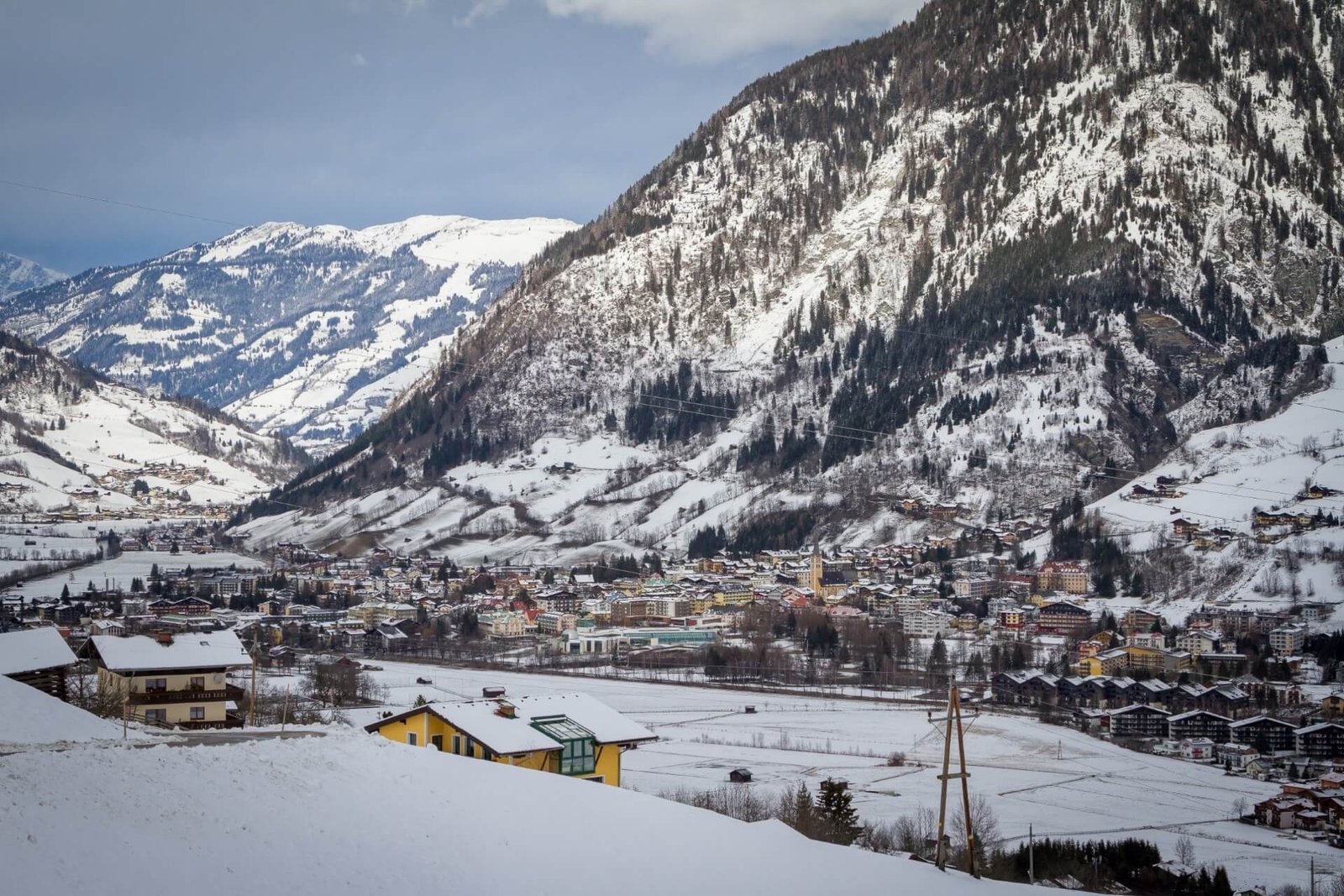
Region: Salzburg · Ski area: Gastein / Ski amadé · Best for: Skiing and thermal spas.
Bad Gastein is a historic spa town built around a waterfall in the Gastein valley. Skiers can access Stubnerkogel from near the railway station, and the wider valley includes Sportgastein and other sectors. The local terrain is particularly appealing to intermediates, with scenic mountains and steeper sections.
After skiing, enjoy the Felsentherme thermal baths or explore the town’s Belle Époque architecture. The resort is connected to the wider Ski amadé system, but not every sector is joined by pistes; bus connections matter.
Getting there: Railway station in resort. Official ski area information and tickets.
13. Bad Hofgastein
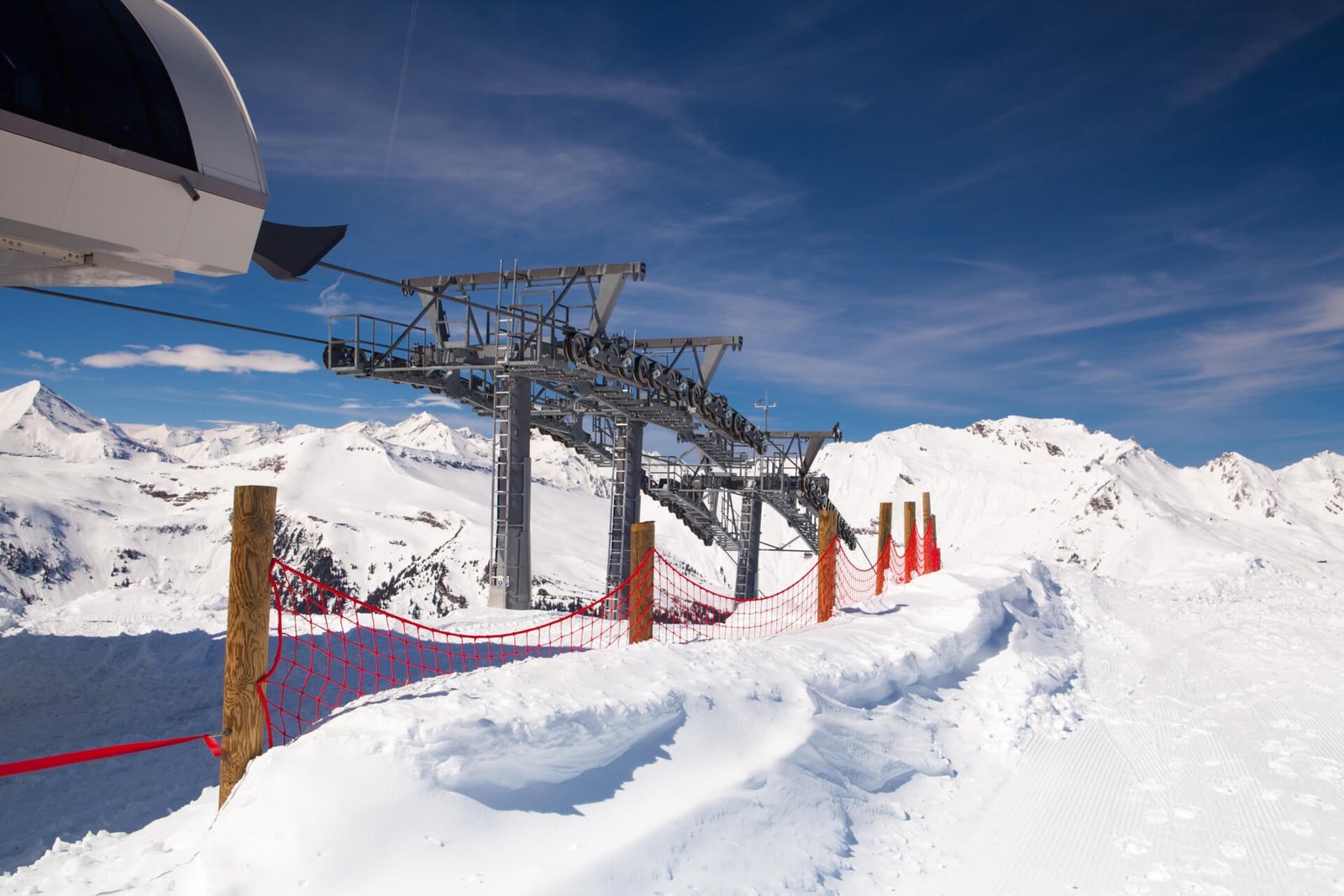
Region: Salzburg · Ski area: Schlossalm / Angertal / Gastein · Best for: Families, wellness and intermediates.
Bad Hofgastein offers a more accessible valley-town atmosphere than Bad Gastein, with pedestrian streets, hotels and the Alpentherme thermal complex. The Schlossalmbahn provides access to interconnected skiing towards Angertal and Stubnerkogel.
Angertal has learning facilities, while confident skiers can explore the larger network of red and blue pistes. This is a particularly appealing base for families or couples who want relaxed evenings and a thermal spa holiday alongside skiing.
Getting there: Train + local bus. Official ski area information and tickets.
14. Saalbach
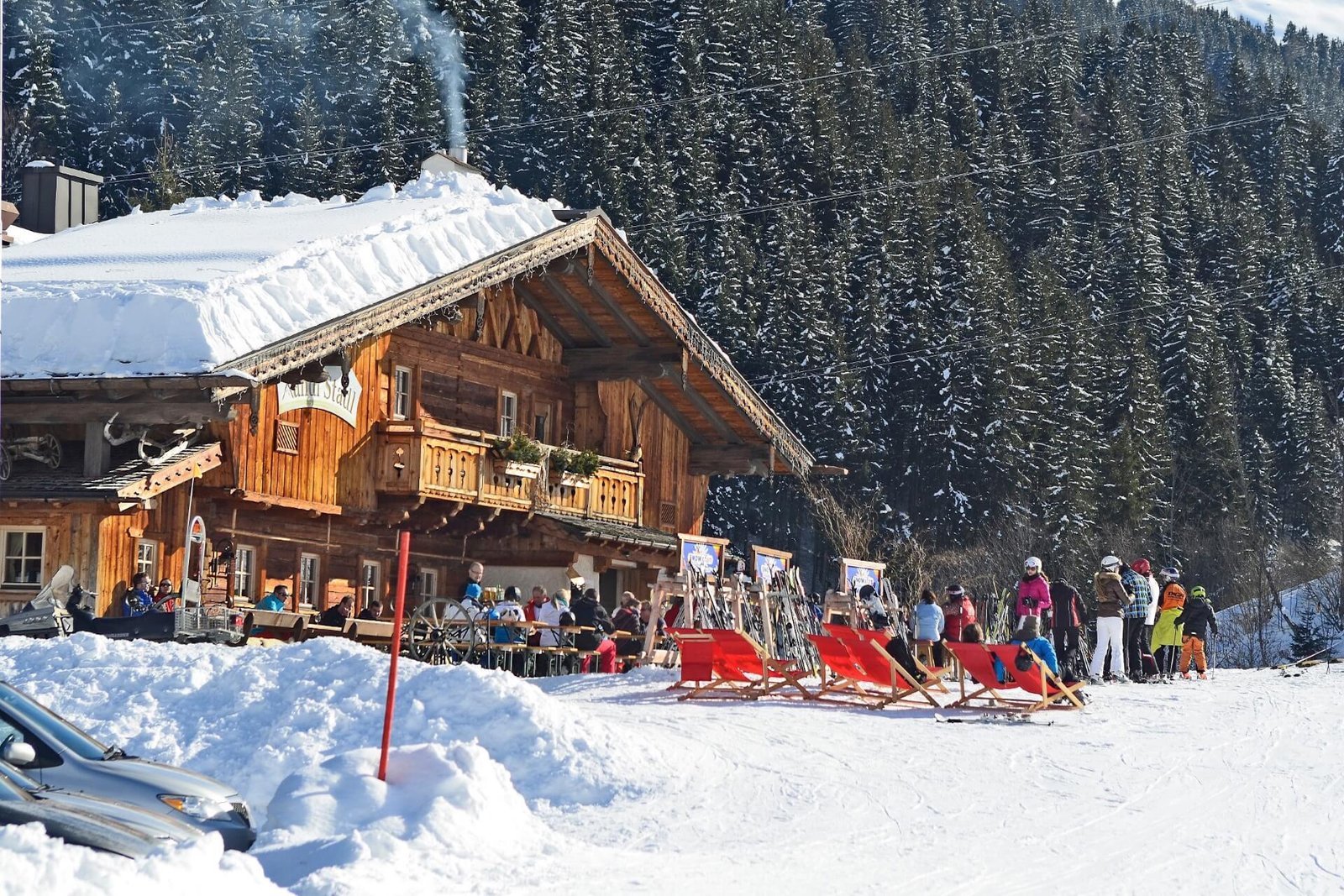
Region: Salzburg · Ski area: Skicircus, 270 km · Best for: Large interconnected area and après-ski.
Saalbach is the heart of the Skicircus Saalbach Hinterglemm Leogang Fieberbrunn, an extensive network of around 270 kilometres of runs. Its interconnected lifts and scenic circuit routes are ideal for intermediate skiers who want to explore different mountains without repeatedly taking buses.
The resort offers mountain huts, lively après-ski and family areas. Planned 2026/27 skiing is 27 November–4 April. The ticket alliance ALPIN CARD also includes Zell am See’s Schmittenhöhe and Kaprun’s Kitzsteinhorn/Maiskogel areas; travel between separate sectors may be necessary.
Getting there: Train to Zell am See + bus. Official ski area information and tickets.
15. Zell am See
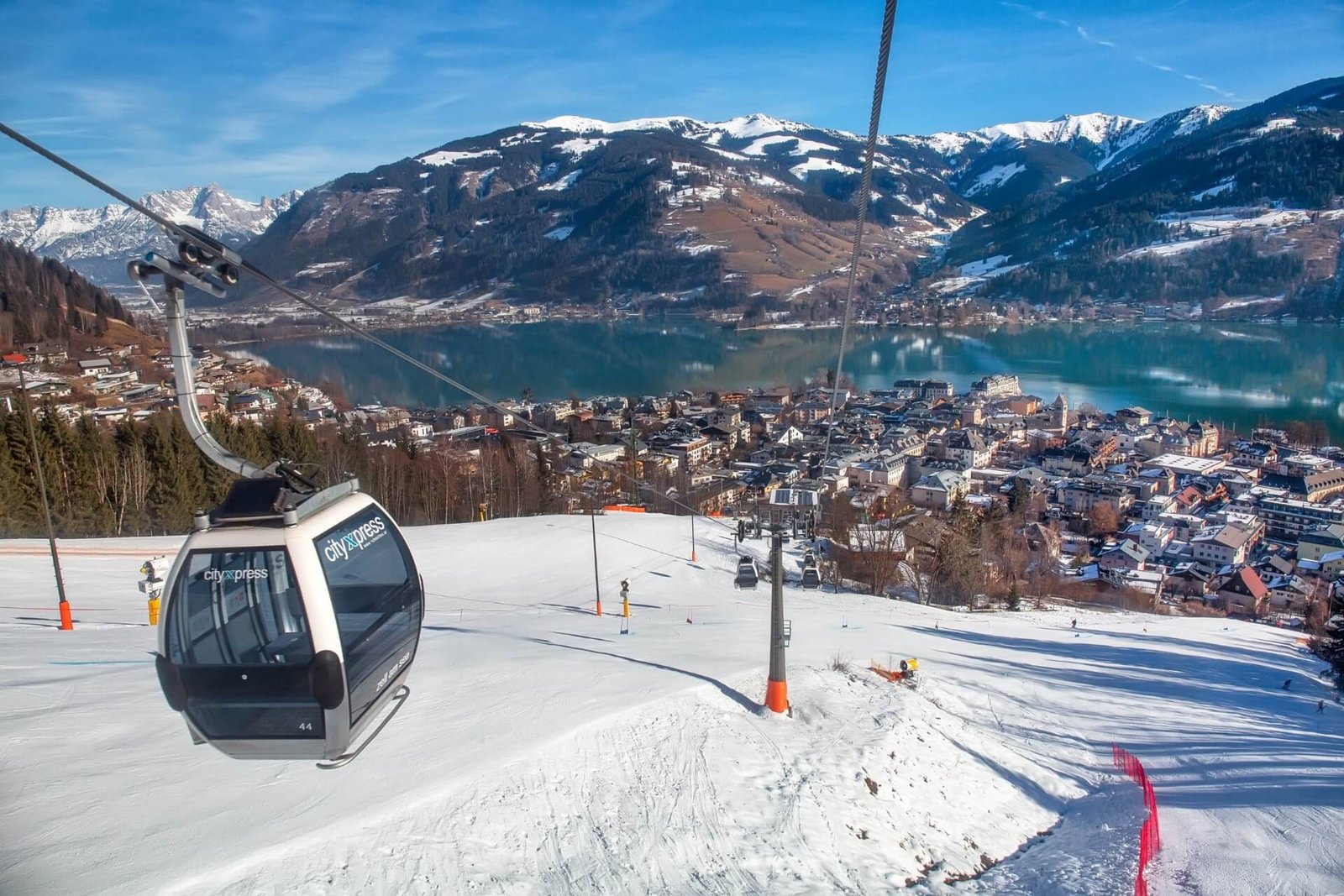
Region: Salzburg · Ski area: Schmittenhöhe, 77 km · Best for: Lake scenery and varied skiing.
Zell am See is a scenic lakeside town beneath Schmittenhöhe, with approximately 77 kilometres of pistes on its local mountain. The ski area has family-friendly runs, panoramic restaurants and more challenging descents. The town centre offers plenty to do off the slopes.
The nearby Kaprun glacier provides an alternative for high-altitude skiing on the ALPIN CARD. The town’s railway station, ski buses and lakeside setting make it a strong choice for travelers combining skiing with winter sightseeing and relaxation.
Getting there: Direct train to Zell am See. Official ski area information and tickets.
16. Kaprun
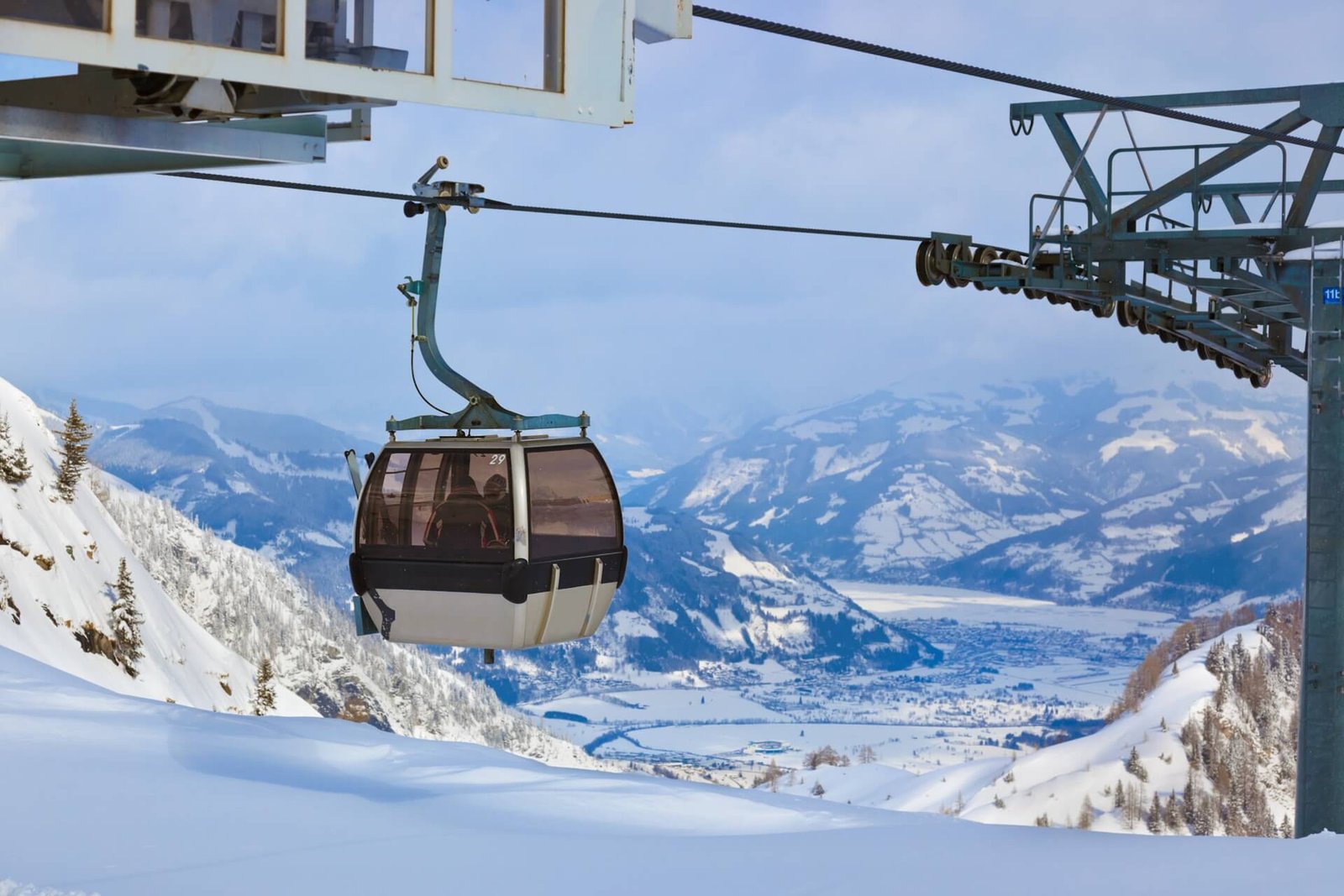
Region: Salzburg · Ski area: Kitzsteinhorn / Maiskogel · Best for: Glacier skiing and families.
Kaprun is a compact mountain village famous for access to Kitzsteinhorn, where skiing takes place at high altitude. Maiskogel offers gentler family terrain and the lift connection towards the glacier makes the village a convenient base.
High-elevation skiing can extend the season beyond many lower resorts, although wind and weather can affect operation. The village also has restaurants, ski schools and the Tauern Spa. The ALPIN CARD connects the ticket offering with Zell am See and Saalbach.
Getting there: Train to Zell am See + bus. Official ski area information and tickets.
17. Obertauern
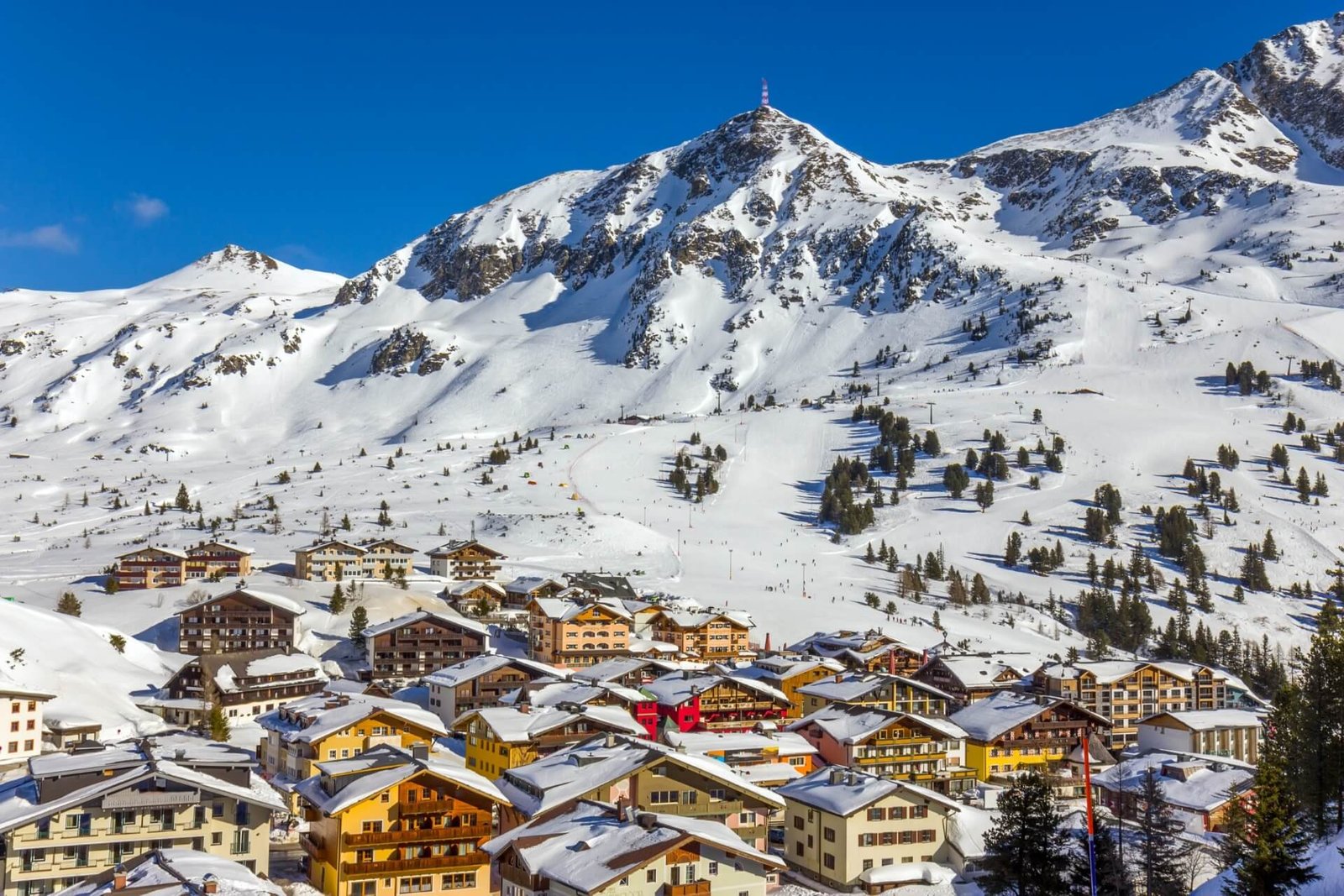
Region: Salzburg · Ski area: Obertauern ski circuit · Best for: Snow-sure high-altitude resort.
Obertauern lies high on a mountain pass, with ski slopes surrounding the village and convenient lift access from many hotels. Its circular terrain allows skiers to explore both sides of the valley and is especially suitable for confident intermediates.
The high elevation is attractive for winter snowfall, and the resort has lively mountain huts and bars. For the published 2026/27 peak tariff, an adult one-day ticket costs €72 and a six-day ticket €368. The season and open pistes depend on conditions.
Getting there: Salzburg; transfer via Radstadt. Official ski area information and tickets.
18. Bad Kleinkirchheim
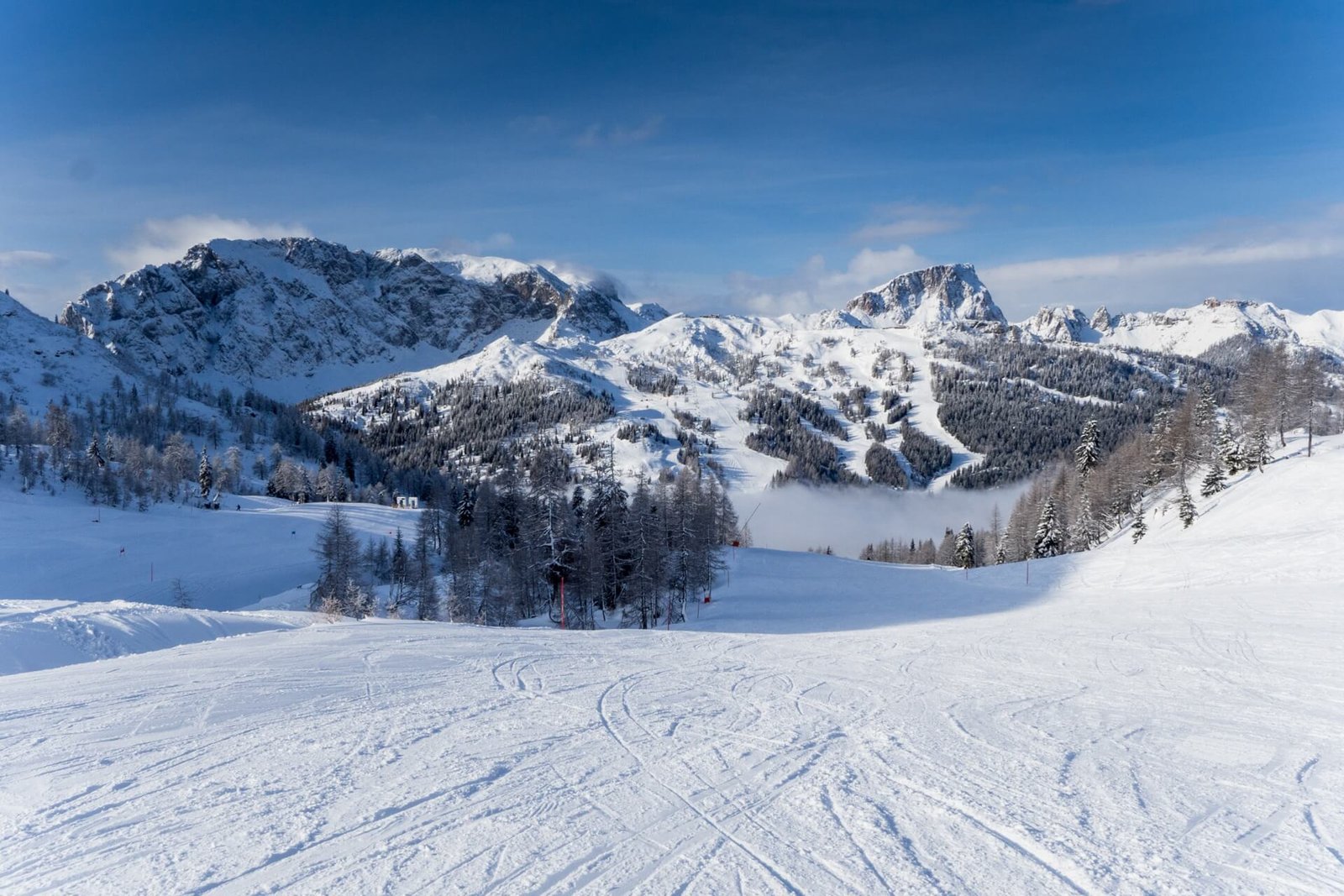
Region: Carinthia · Ski area: 103 km · Best for: Thermal baths and red pistes.
Bad Kleinkirchheim is a peaceful Carinthian resort known for combining skiing with thermal baths. The local area advertises 103 kilometres of pistes, predominantly red runs, making it particularly suitable for intermediates. The Franz Klammer World Cup course is a demanding highlight.
The two thermal complexes and traditional hotels offer plenty of opportunities to relax after skiing. The area is comparatively quiet, with family facilities and forested slopes, though a transfer or car is often useful for getting around.
Getting there: Klagenfurt or Villach + transfer. Official ski area information and tickets.
19. Schladming
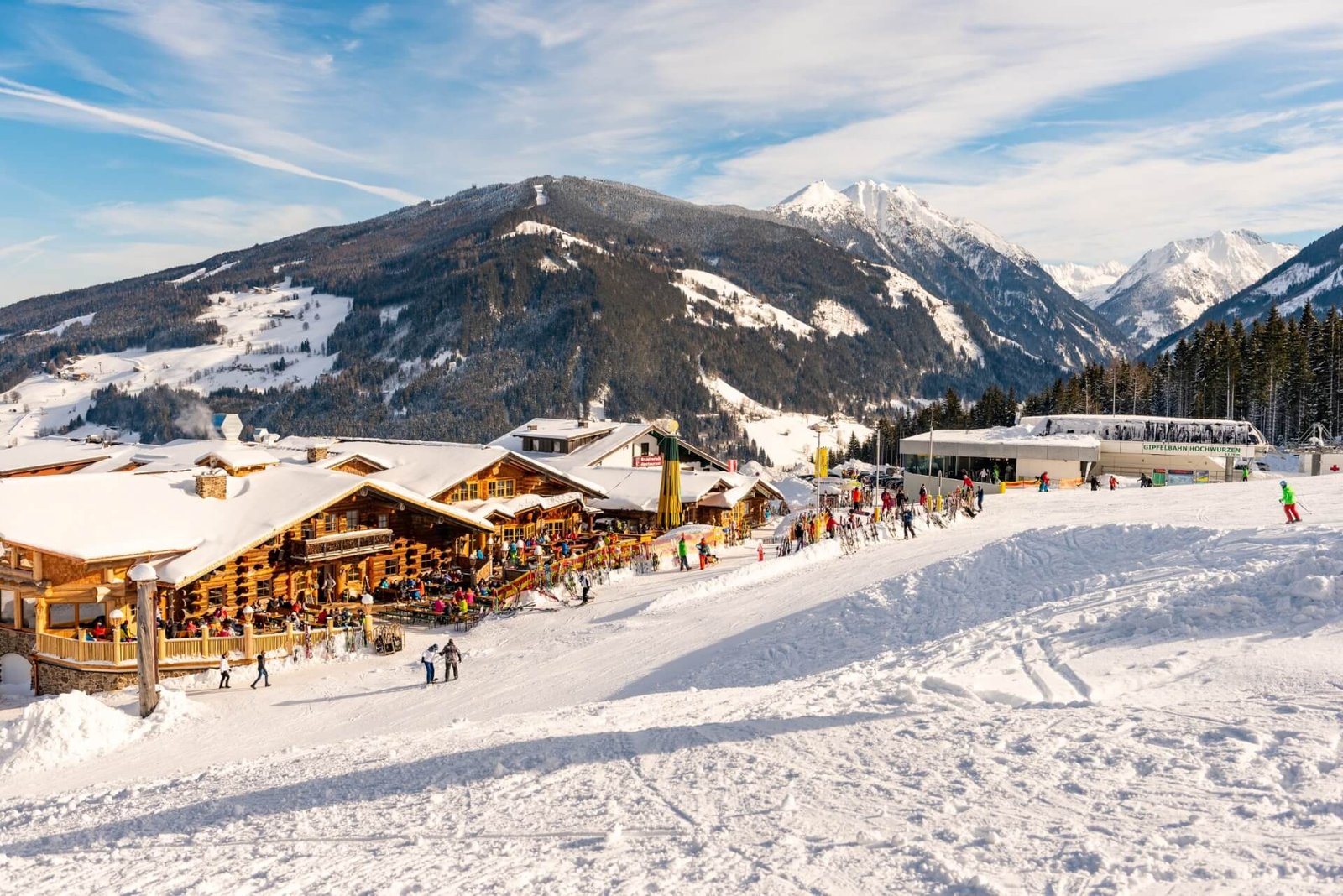
Region: Styria · Ski area: 4-mountain ski area, 123 km · Best for: Intermediates, families and ski racing.
Schladming lies in the Enns valley and its four linked mountains — Hauser Kaibling, Planai, Hochwurzen and Reiteralm — offer 123 kilometres of connected pistes. It is an excellent all-round destination, with good learning areas and long, varied red runs.
The Planai hosts international ski racing, and Hochwurzen is known for winter activities beyond downhill skiing. The wider Schladming-Dachstein region contains additional ski areas, so distinguish its regional piste total from the four-mountain circuit. Rail access is convenient and the town offers restaurants and hotels.
Getting there: Direct train to Schladming. Official ski area information and tickets.
20. Hippach
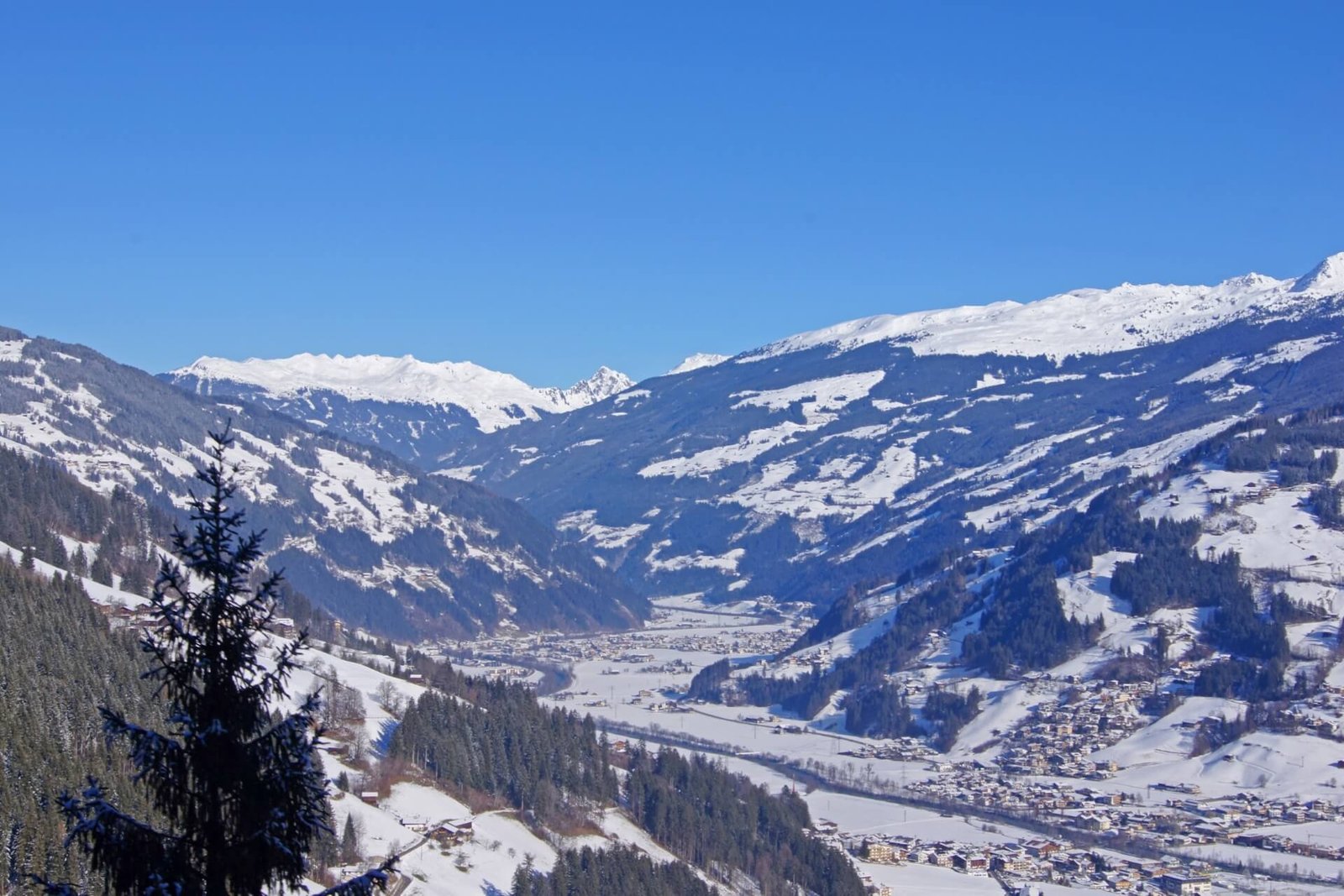
Region: Tyrol · Ski area: Mountopolis, 142 km shared · Best for: Quiet base for Mayrhofen skiing.
Hippach sits near Mayrhofen in the Zillertal and provides a quieter village base for the same Mountopolis skiing area. The nearby Horbergbahn gives access to the Penken terrain, with the wider area’s varied slopes and snowparks.
Accommodation often includes apartments, traditional guesthouses and family hotels. It is a practical alternative to staying in central Mayrhofen, particularly for travelers who value a quieter evening and access to valley transport.
Getting there: Train via Jenbach to Ramsau-Hippach. Official ski area information and tickets.
Ski pass prices in Austria for 2026/27
Prices depend on dates, age category, advance purchase and which ski areas are included. These published adult rates are useful examples for planning a winter trip (checked November 2026).
| Resort or pass | Published adult price | Official source |
|---|---|---|
| Ischgl/Samnaun | €83 / day | Ischgl |
| KitzSki | €69–83 / day | KitzSki tariffs |
| Saalbach (main season) | €82 / day | Skicircus |
| Obertauern (peak tariff) | €72 / day; €368 / 6 days | Obertauern |
| Innsbruck SKI plus CITY | €162 / 2 days; €386 / 6 days | 2026/27 brochure |
| Schladming Ski amadé (main season) | €137.50–161.50 / 2 days online | Schladming |
Multi-day tickets, children’s discounts and online early-booking rates can reduce costs. A pass valid in several resorts does not necessarily mean the areas are linked by lifts. Check what is included before purchasing.
Where to stay in Austrian ski resorts
For a convenient ski holiday, choose accommodation near the main lift or a ski-bus stop. Here are five options in popular resorts.
Das Central, Sölden
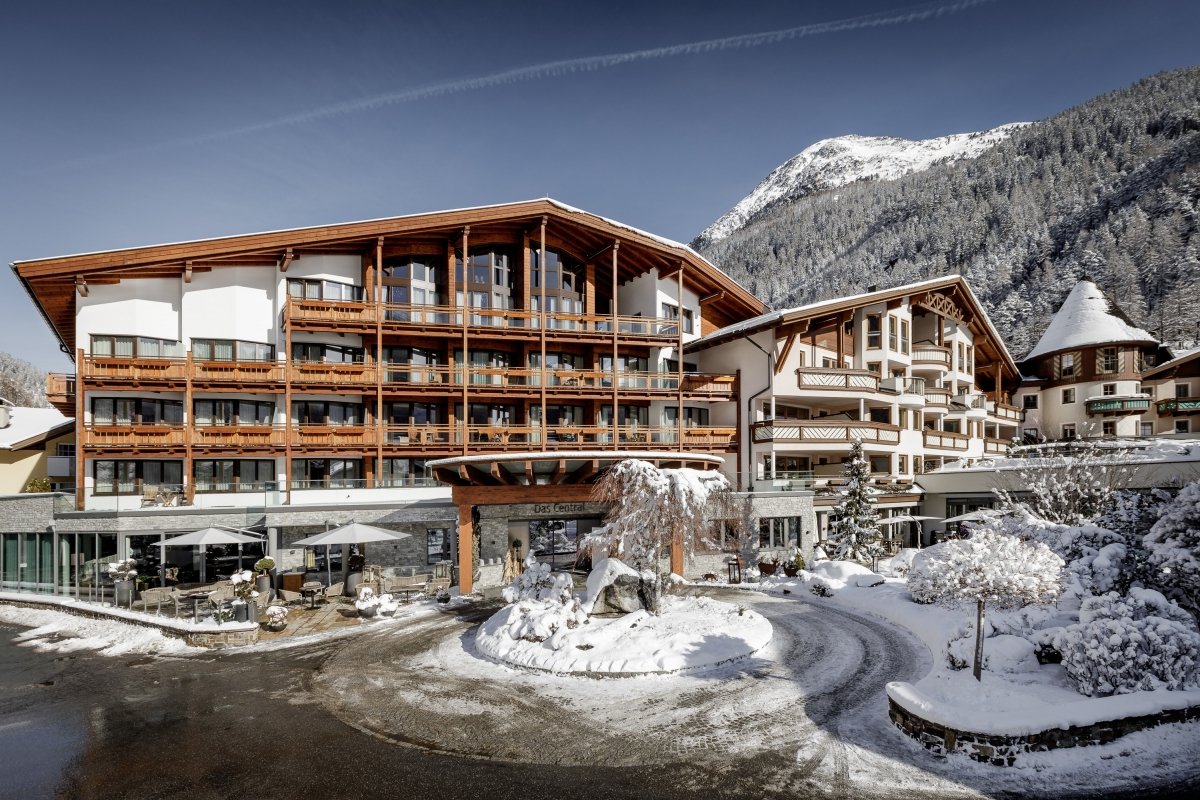
A five-star hotel in Sölden combining Tyrolean style with contemporary luxury. Its rooms and suites are complemented by fine dining and a 2,000 m² Summit Spa with a rooftop infinity pool, saunas and treatments. A strong choice for skiers wanting a luxury wellness retreat after a day in the Ötztal.
Check prices and availability on Trip.com
Superior Hotel Post Ischgl

A four-star superior hotel in central Ischgl, with ski-in access and cable cars within walking distance. Rooms, suites and apartments are complemented by regional cuisine, a wine bar and a substantial wellness area. Particularly suited to couples who want comfortable ski logistics and evenings in the village.
Check prices and availability on Trip.com
Schwarzer Adler Kitzbühel – Adults Only
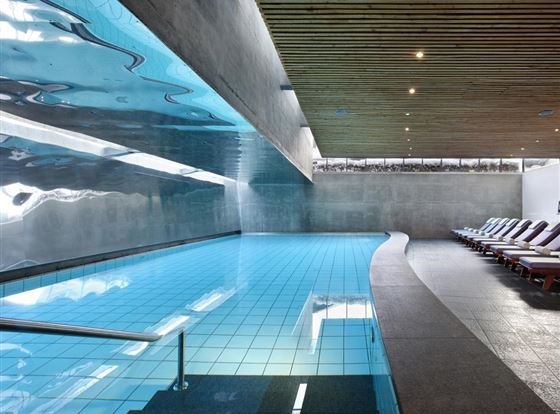
A stylish boutique hotel a short walk from Kitzbühel’s old town, welcoming guests aged 16 and over. Rooms and suites, gourmet dining and the Black Spa make it an enjoyable base for a romantic ski break. Its heated rooftop swimming pool offers views of the surrounding mountains.
Check prices and availability on Trip.com
Das Bergschlössl, St. Anton

This characterful boutique hotel sits beside the Galzig and Gampen valley stations and ski schools. Its Alpine interiors and central location make it particularly convenient for Ski Arlberg holidays, with direct ski-in and ski-out access when conditions permit. Ideal for skiers who prioritise being close to the lifts.
Check prices and availability on Trip.com
TUI BLUE Schladming
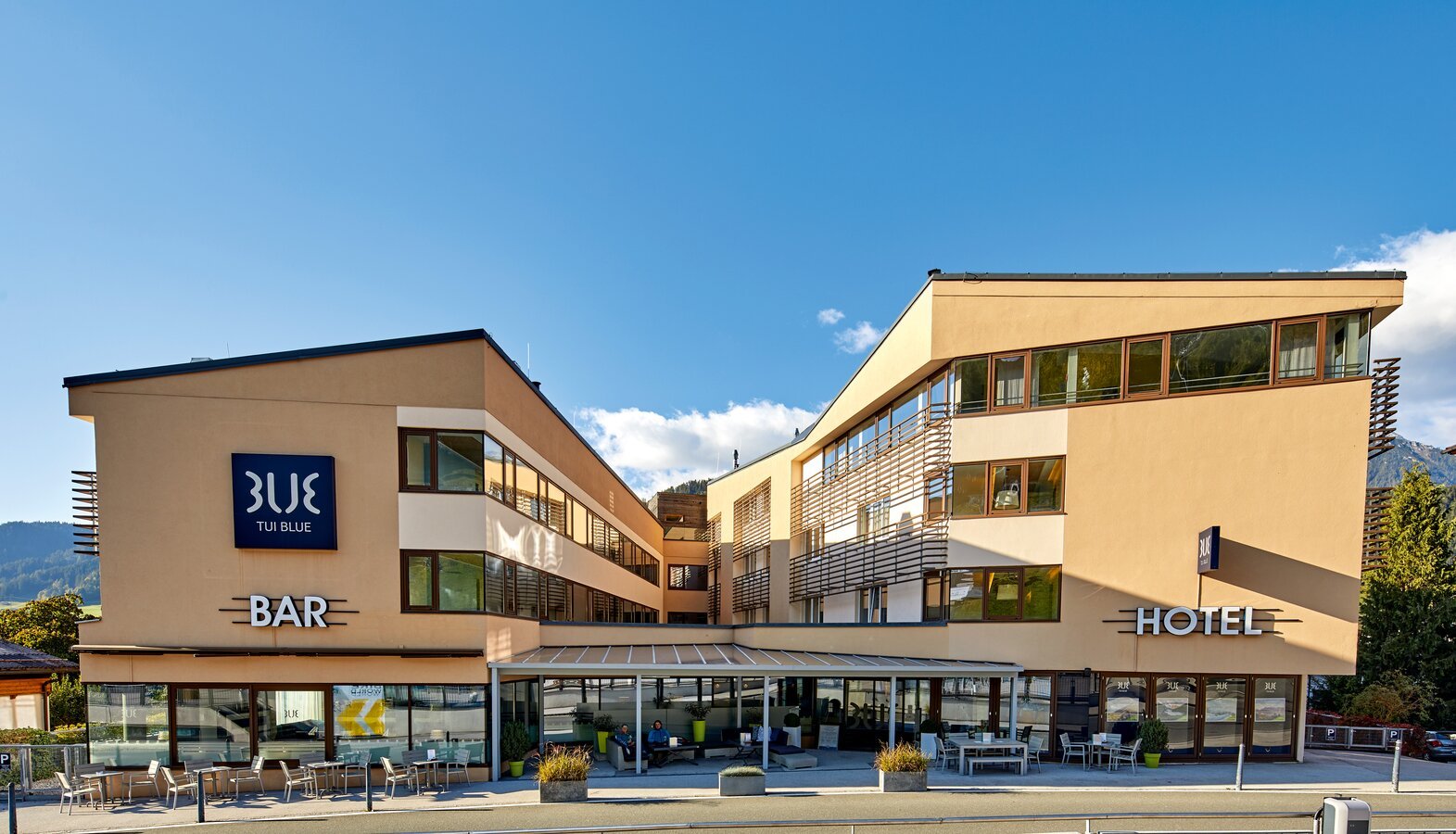
A contemporary hotel in central Schladming next to the Planai valley station. Comfortable rooms and on-site dining make it a practical base, while the SkySauna and panoramic terrace offer relaxation after skiing. Particularly convenient for families and active couples exploring the four-mountain ski area.
Check prices and availability on Trip.com
Best time to ski in Austria
December through March is the main season in most Austrian ski resorts. January often offers good midwinter conditions, February brings school-holiday crowds, and March can be ideal for sunny high-altitude skiing. High-altitude and glacier areas such as Sölden, Gurgl and Kitzsteinhorn may offer earlier or later skiing, but there is no guarantee of snow, open pistes or lift operation. Consult the resort’s snow report before traveling.
How to choose an Austrian ski resort
Beginners and families: Serfaus-Fiss-Ladis, Seefeld, Igls and the family areas in Kaprun or Schladming offer ski schools and easier slopes. Intermediate skiers: Saalbach, Kitzbühel, Mayrhofen and Schladming offer extensive varied groomed terrain. Advanced skiers: St. Anton, Ischgl and Sölden have challenging pistes. Choose marked runs according to your experience.
For a car-free ski holiday: Innsbruck, St. Anton, Kitzbühel, Zell am See and Schladming have convenient railway connections. For accommodation in smaller villages, check the final bus or shuttle to the hotel. Use ÖBB rail travel information to plan your journey.
For wellness and non-skiers: Bad Gastein, Bad Hofgastein, Bad Kleinkirchheim and Innsbruck combine mountain scenery with thermal baths, culture or winter walking.
Practical tips for your Austria ski trip
Book accommodation and ski lessons early for Christmas, New Year and February school holidays. Compare hotel locations with lift stations, check ski-bus schedules, bring suitable winter clothing and arrange travel insurance that covers winter sports. Wear a helmet and follow marked piste signs and closures. Off-piste skiing carries avalanche risks and requires specialist training, appropriate equipment and local guidance.
Ski resorts in Austria: frequently asked questions
What is the largest ski resort in Austria?
Ski Arlberg, which includes St. Anton, Lech and Zürs, advertises about 300 kilometres of ski runs in its connected network. Saalbach’s Skicircus offers around 270 kilometres of linked pistes.
Which ski resorts in Austria are best for beginners?
Serfaus-Fiss-Ladis, Seefeld and the family learning areas in Kaprun and Schladming are appealing starting points. Book lessons and choose a base close to suitable beginner slopes.
When is the best time to ski in Austria?
December to March is the principal season. January and February tend to offer winter conditions at many resorts, while high-altitude skiing can continue into spring.
Is skiing in Austria expensive?
Costs vary. Published adult day passes at several large resorts range from around €69 to €83 for the 2026/27 season, with equipment, accommodation, lessons and meals charged separately. Advance booking and staying in well-connected nearby villages can help reduce costs.
Do you need a car in Austrian ski resorts?
No. Many resorts have reliable railway and ski-bus connections. A car can be convenient for visiting separate valleys, but is not essential in destinations with direct rail access.
Related guides on Enjoy The Trip: Schladming, Kitzbühel, Lech, Innsbruck, Sölden and Bad Gastein.

Konstantin is an acclaimed travel writer, celebrated for transforming ordinary journeys into extraordinary narratives. With years of experience exploring diverse destinations across the globe, his work blends vivid storytelling, cultural insights, and practical advice to inspire wanderlust and guide readers toward unforgettable adventures.
As a key contributor to enjoythetrip.org website, Konstantin has built a loyal readership through their expertise in uncovering both iconic landmarks and off-the-beaten-path treasures. He specializes in providing travelers with honest, actionable tips, whether it’s finding the best resorts in Maldives, exploring cultural hubs like Paris, or diving into the natural wonders of Croatia.