
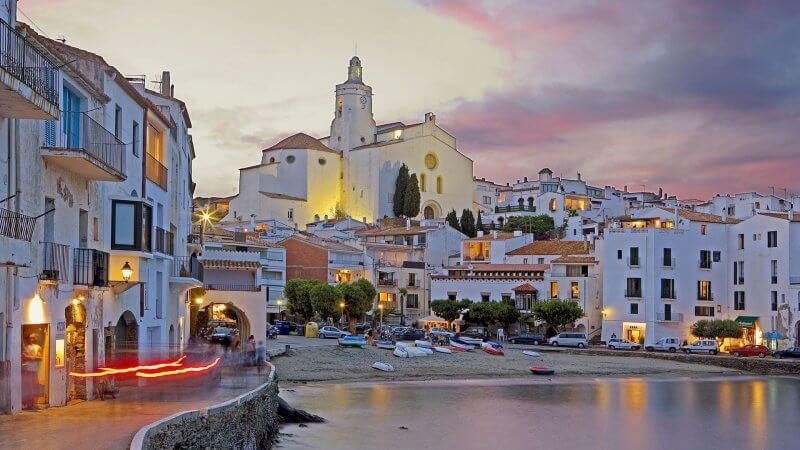
Cadaques (Cadaqués) is one of the most picturesque towns on Spain’s Costa Brava. Its whitewashed houses overlook a Mediterranean bay on the Cap de Creus peninsula, where rocky coves, coastal paths and Salvador Dalí’s artistic legacy create a distinctive seaside escape. Located about 170 km from Barcelona and 80 km from Girona, Cadaques is ideal for a weekend of sightseeing, swimming and seafood.
Due to its isolated position, Cadaqués developed a maritime culture and distinctive local Catalan traditions. Its narrow streets, white houses and stone-paved lanes have inspired artists and visitors for generations.
This Cadaques guide covers the Salvador Dali House in Portlligat, the town sights, Cap de Creus, the best beaches, recommended hotels, an interactive map and how to get there from Barcelona.
Cadaques at a glance
- About 170 km from Barcelona and 2 hours 45 minutes by direct bus
- Salvador Dali House in Portlligat: booking for a set time is required
- Main beaches: Playa Grande, Portdoguer, Llané Gran and Llané Petit
- Cap de Creus Natural Park and lighthouse: 7–8 km from the town
- Best time to visit: May to October; tourist trains run from April to October
At the beginning of the 20th century, rich and noble families from neighboring Barcelona, Figueres and Girona began to come to Cadaques to relax on the seaside. Cadaques soon acquired the reputation of the “Spanish Saint-Tropez”, where the rich and bohemian public flocked for the summer.
Interesting fact! Salvador Dali lived here for a long time, and Pablo Picasso spent the summer of 1910 here; both drew inspiration from the town. Garcia Lorca, Marcel Duchamp, the Duke of Windsor, Walt Disney, Gabriel Garcia Marquez, Mick Jagger also vacationed here.
Nowadays Cadaques has lost its reputation as an elite resort, but it is still a functioning Mediterranean resort with good beaches and is always popular with tourists.
Cadaqués is also a charming town with a rich history and a bohemian-artistic reputation. Of course, Cadaques has attractions – perhaps fewer than other cities in Spain, but none the less interesting.
Map of Cadaques attractions and beaches
Salvador Dali House Museum Portlligat · Santa Maria Church Cadaques · Platja Gran Cadaques · Portdoguer Cadaques · Platja Llané Petit Cadaques · Es Pianc Cadaques · Cap de Creus Lighthouse · Paratge de Tudela
Salvador Dali House Museum
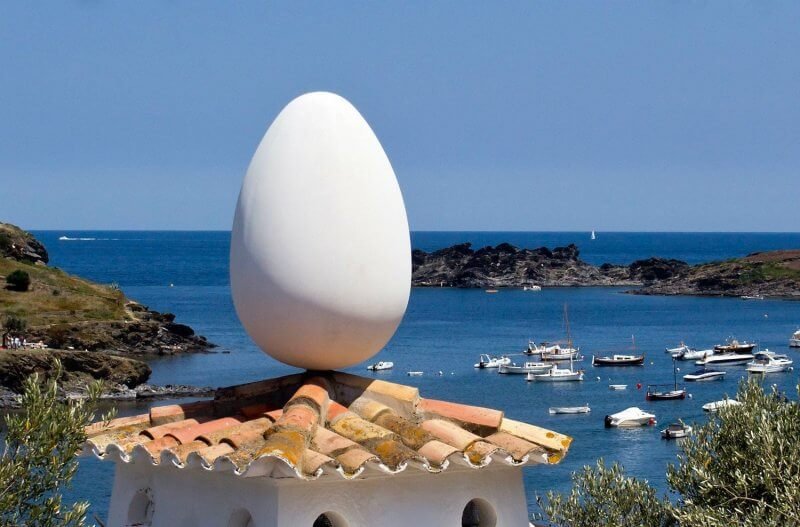
In the Bay of Port Lligat there is an iconic landmark of Cadaqués, part of the “Dalí Triangle of Spain”: this is the house where Salvador Dalí lived from 1930 to 1982. The other two objects of the “triangle” are the theatre-museum in Figueres and the castle in Púbol.
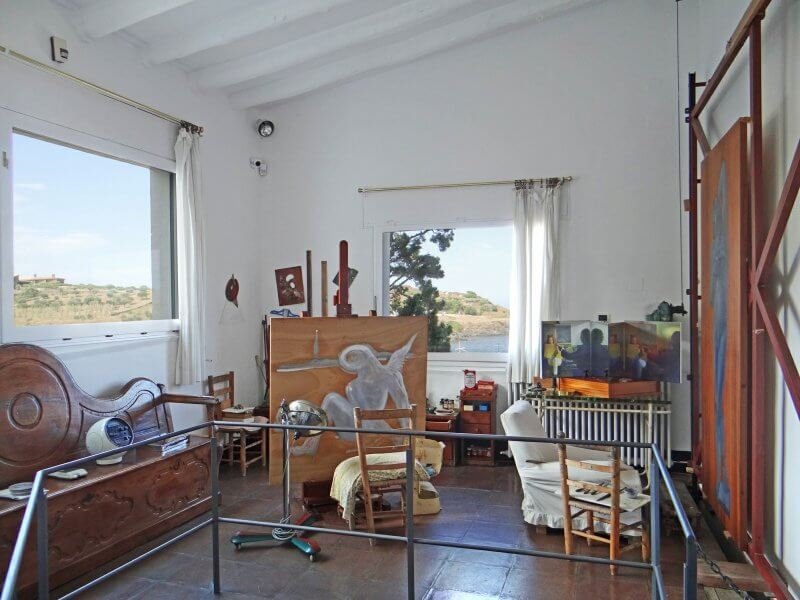
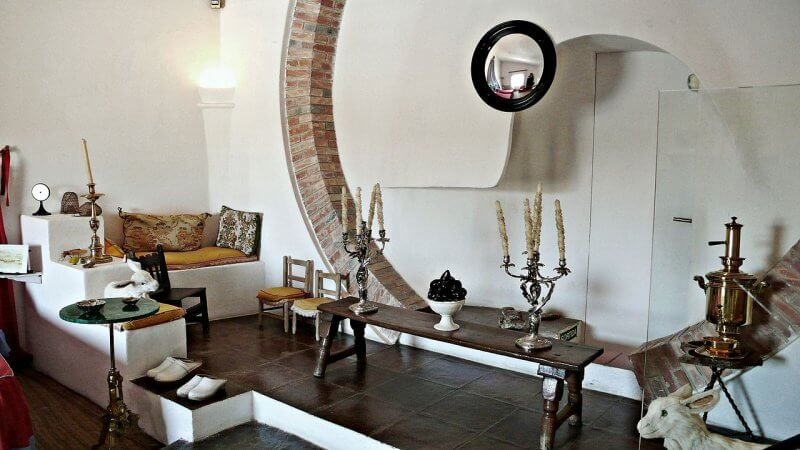
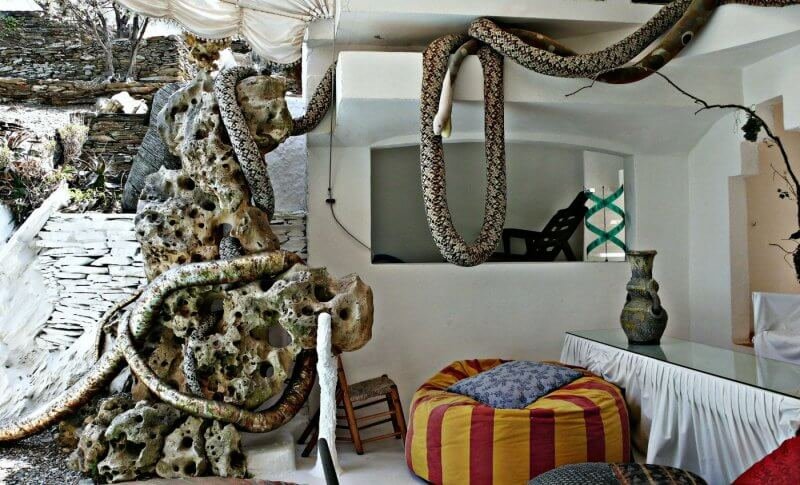
Dali’s house in Cadaqués is as extraordinary and mysterious as its genius owner. You can recognize this house right away, and even from afar: two rather creepy-looking metal heads stick out above the building, one of which is split. Right at the entrance to the back there is a huge stuffed bear with necklaces on its neck and a lamp in a wicker lampshade in its front paw. In the rooms and in the yard there are many stuffed animals and birds – the artist had a strange attachment to them. There are many different creations of the genius surrealist here, among them there are absolutely amazing paintings: if you look at them from one angle, you can see one image, if you change the angle – a completely different one. There are so many exhibits here that you can look at them endlessly, but the tour is structured so that you can linger in each room for no more than 2-3 minutes.
The Dali Museum in Cadaques includes a compact courtyard and garden, which also have many interesting attractions. In the courtyard, where flower pots are placed everywhere, there are gazebos, a summer dining room, and a small pool. Among the olive and pomegranate trees, various exhibits in the art house style unexpectedly open up to the eye. For example, the installation “Christ from Garbage”, which Salvador built from trash washed ashore by the sea waves. More aesthetically pleasing is the snow-white dovecote, on the roof of which there is a huge egg. Here you can also see a broken wooden boat, from which a cypress tree grows – the artist captured this landscape in one of his paintings.
Interesting fact! This museum does not have a museum feel, it has the atmosphere of a residential building. But this house causes different impressions in people: many experience a state of euphoria, and some experience dizziness and headaches.
Practical information
Address of the Salvador Dali House-Museum: Calle Port Lligat s/n, 17488, Cadaqués, Spain.
Opening hours for this attraction:
| Dates (2026) | Open | Hours |
|---|---|---|
| 1–6 January | Tuesday to Sunday | 10:30–18:00 |
| 7 January–11 February | Closed | – |
| 12 February–31 March | Tuesday to Sunday | 10:30–18:00 |
| 1 April–14 June | Every day | 10:30–18:00 |
| 15 June–13 September | Every day | 9:30–20:00 |
| 14 September–31 October | Every day | 10:30–18:00 |
| 1 November–31 December | Tuesday to Sunday | 10:30–18:00 |
The museum is closed on Mondays only from November to March, and it closes completely from 7 January to 11 February. Last entry is 40 minutes before closing. Therefore, before visiting, you should always check the opening hours on the official website.
Tickets must be booked in advance for a set date and time, and collected at the box office at least 30 minutes before your entry time. Ticket prices:
| Ticket (2026) | House and olive grove | Olive grove only |
|---|---|---|
| General | €15.50 online / €17 at the ticket office (July–August €18.50 / €20.50) | €8 |
| Reduced (ages 9–17, students, 65+) | €12 online / €14 at the ticket office (July–August €14 / €16) | €6 |
| Children up to 8 | Free, but a ticket is still needed | Free |
The museum is small, visitors go in small groups that enter every 10 minutes – otherwise it’s impossible to miss each other. The group is always accompanied by a guide in the house, excursions are only in Spanish, French and English. The walk in the garden is without a guide, independent.
Advice! Absolutely all bags of any size must be immediately checked into the storage room, otherwise they will not let you into the house!
What else to see in Cadaqués
There are other attractions in this small town that are worth visiting.
Monument to Salvador Dali
In the center of the embankment, near the city beach, there is a statue of Salvador Dali – it is not difficult to find. The statue, made in life-size, looks very realistic! It seems that the famous artist simply went for a walk by the sea and stopped, turning towards the city.
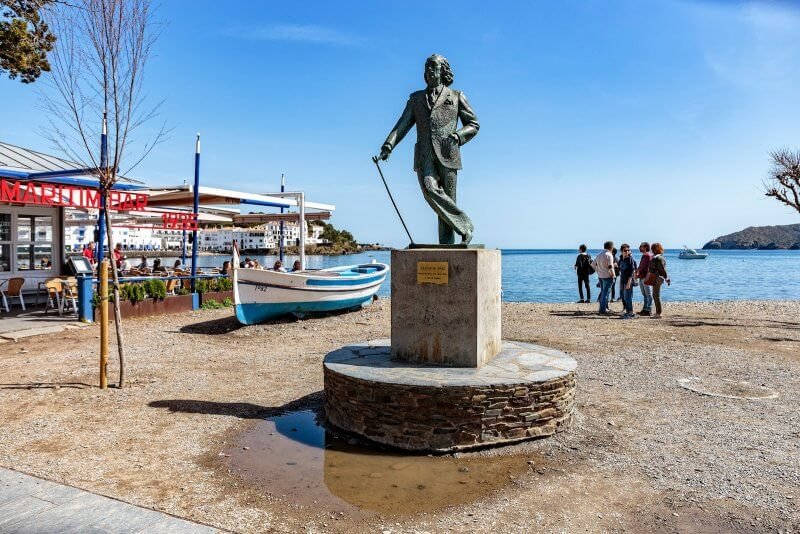
The Salvador Dali monument is not a remarkable landmark from an artistic point of view. However, it is very appropriate in Cadaqués, the city where the master of surrealism spent most of his life.
By the way, the Dali monument is never alone: locals often sit on the pedestal, and tourists who come to see Spain and Cadaqués to take a photo against the backdrop of the statue line up.
Church of St. Mary
The Church of Santa Maria is located on a hill, in the highest place of the town. From the observation terrace there are wonderful views of the town and the Bay of Cadaqués. An unusual road leads up to the church – it is laid out of stones that were installed vertically.
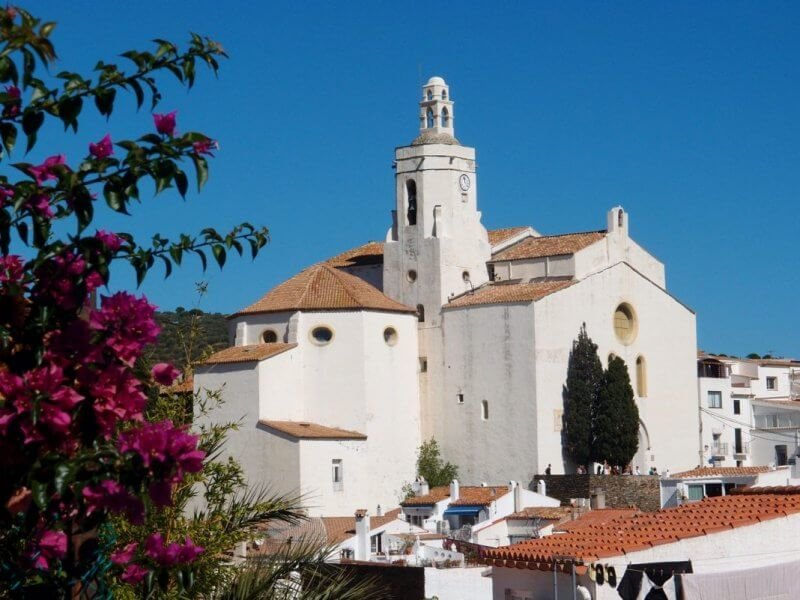
Esglesia de Santa Maria is also a historical landmark, as it was built in the 16th century. Perhaps the most interesting thing that attracts attention inside the building is the luxurious Baroque altar, recognized as the most beautiful in Catalonia. For €1, you can ask to turn on the altar lighting – a fascinating sight, especially in the dark.
The church is a wonderful starting point for exploring the old quarter. Its hilltop location gives you panoramic views of the whitewashed town, the harbour and the blue bay. Opening hours can vary with religious services.
Attraction address: Calle Eliseu Meifren, Cadaqués, Spain.
What’s interesting in the surrounding area: Cap de Creus Natural Park
The Cap de Creus peninsula, part of the Verdera mountain range, and the resort towns of La Selva de Mar, El Port de la Selva, Llansa and Cadaqués are all attractions of Spain, known under the general name of the Cap de Creus Natural Park. The park is huge in its scale (almost 14,000 hectares), but usually it is the Cap de Creus cape that is meant. It is 7-8 km from Cadaqués to the cape, the road leads towards the lighthouse, but motor vehicle access is regulated on certain dates. Seasonal shuttles operate when restrictions apply. See the official park access information before travelling.
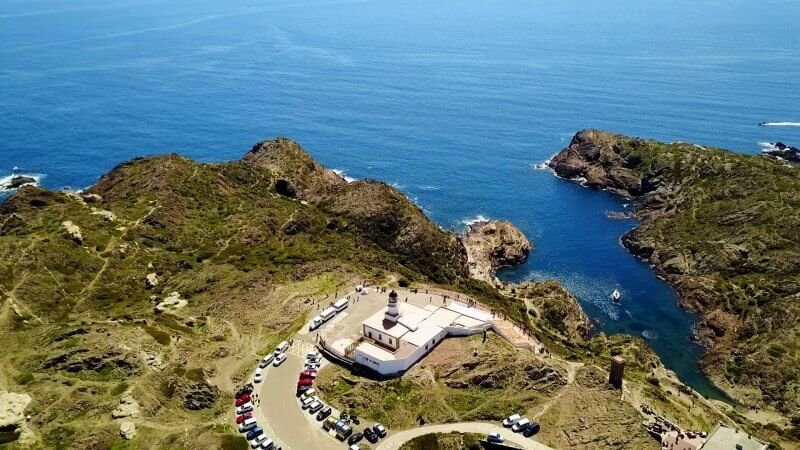
Bring water, sun protection and shoes suitable for rough trails. The tramontana wind can be strong and the landscape offers limited shade. Stay on marked routes to help protect the park’s rare plants and geological features. Short paths suit relaxed sightseeing, while longer coastal hikes require more time and preparation.
The lighthouse houses a museum about the Natural Park and a tourist information center. The information center gives tourists a free map of the park’s paths. Although the markings on the map are not very good, they will help you to understand at least roughly where the most interesting places are and in which direction to go.
Interesting fact! The Creus Lighthouse is also a landmark. In 1971, it served as the filming location for the feature film “The Light at the Edge of the World” with Kirk Douglas, based on the novel by Jules Verne.
The main and most picturesque attractions of the Cap de Creus Park are the amazing stone formations. Their appearance, complexity and unusualness excite the imagination: in them you can see a variety of animals, both real and mythical. Having climbed some rocky ledges, you can admire the natural views that literally take your breath away.
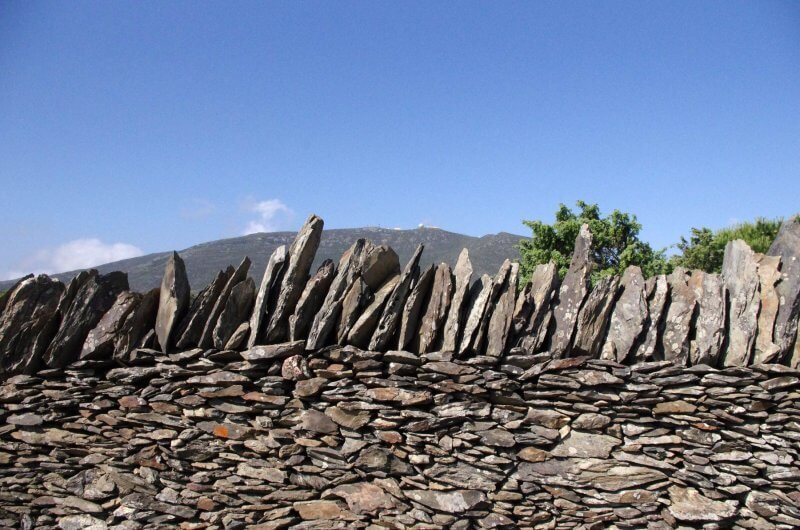
Explore the old town and coastal paths
Start at the waterfront and climb the steep cobbled lanes toward Santa Maria church. Explore the whitewashed homes, tiny squares, galleries and cafés before returning to the sea. Continue along the shore toward Es Pianc and Portlligat, where scenic viewpoints reveal the landscape that inspired Dalí. The official Spain tourism guide provides more ideas for exploring the town.
Tourist trains in Cadaqués
From April to October, the resort operates tourist trains Es Trenet de Cadaqués. There are 2 routes:
- Getting to know the city’s sights: near the Old Town, along the central city square, through Port Lligat to the Salvador Dali House Museum.
- Getting to know natural attractions: past the Cap de Creus cape and the lighthouse of the same name.
You can find out the train schedule, departure point and cost of the excursion on the official website http://www.estrenetdecadaques.cat/.
Best beaches in Cadaques
Since Cadaqués is a Mediterranean resort in Spain, we cannot help but talk about its beaches, which are part of the Costa Brava tourist coast.
The coastline here has a complex shape, as if it were cut into many small sections. Therefore, the local beaches are small and picturesque.
Platja Gran (Playa Grande)
Playa Grande is the main city beach of Cadaqués, which can only be reached via the embankment. The coastal strip is 200 m long, 20 m wide, and has a pebble-sand surface.
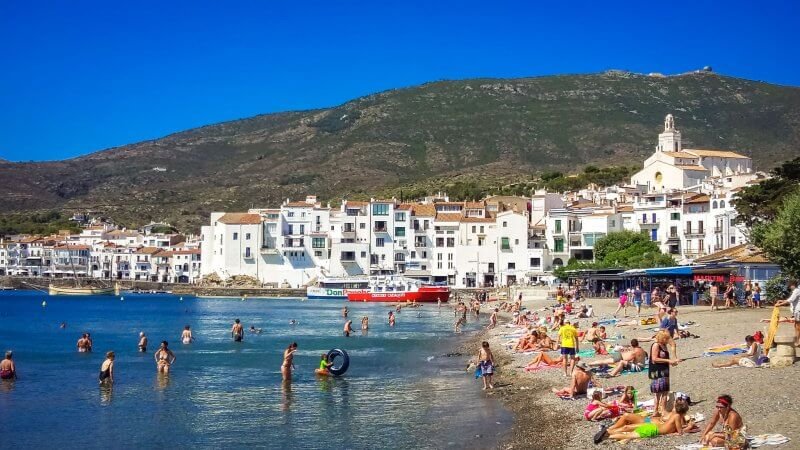
This is the best of the local beaches in terms of infrastructure, it is equipped with everything necessary for relaxation: changing rooms, showers, toilets, sun loungers for rent.
There are many bars, cafes and restaurants around Playa Grande, most of which are the most popular in Cadaqués.
There is a sailing centre here, you can rent kayaks, and from here you can take a boat cruise along the Costa Brava.
Platja Gran is convenient for families and short beach visits because restaurants, shops and the promenade are close by. Bring water shoes for the pebbles and arrive early during July and August.
Portdoguer (Es Port Dogué)
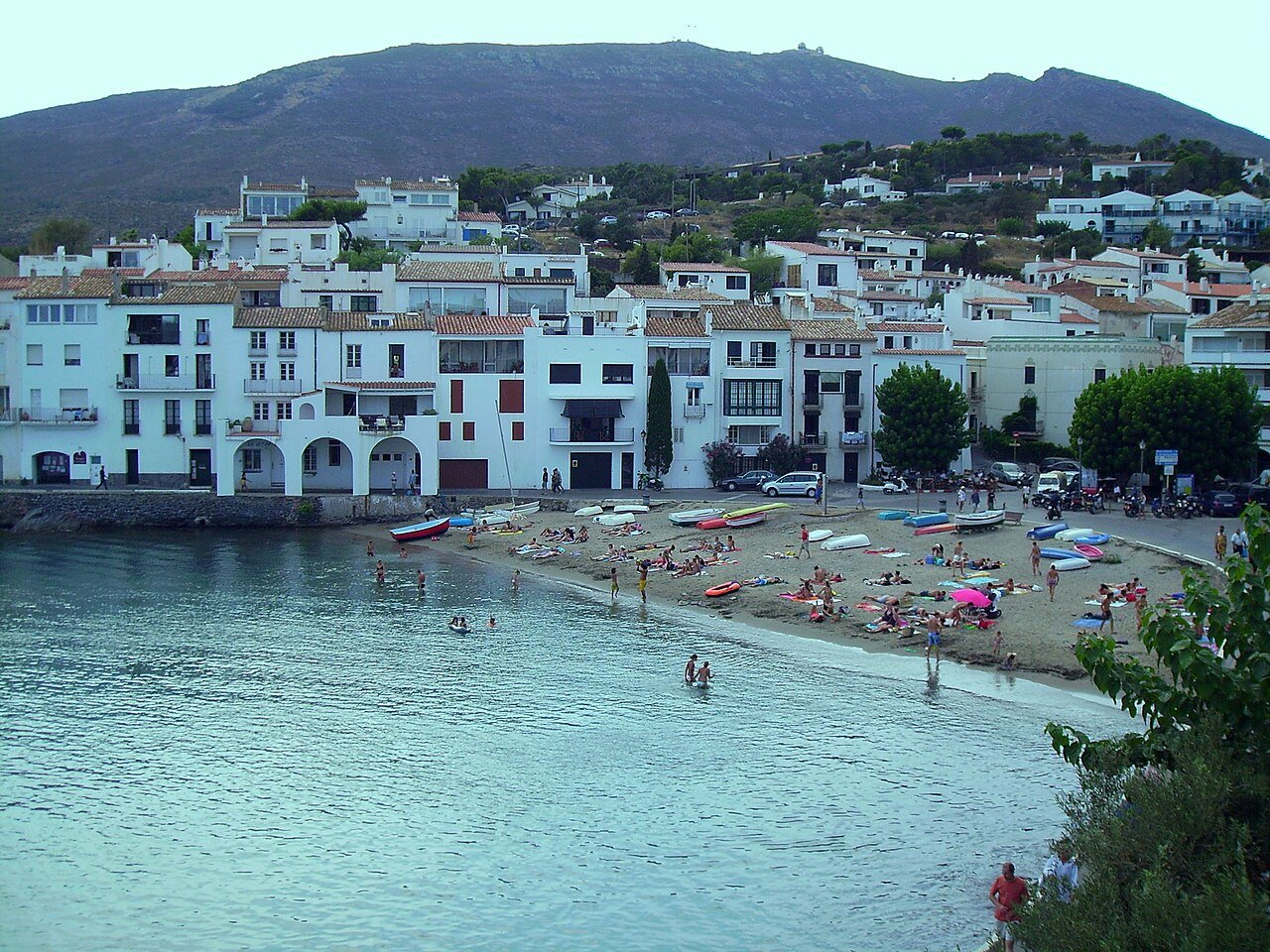
This is the closest beach to the Old Town and is extremely modest in size. In summer, the townspeople keep their boats here, which makes the space even smaller, and it also affects the cleanliness. But if after a trip to the sights you want to swim in the sea as soon as possible, this place is quite suitable. The shore is also pebbly and sandy, the descent into the water is convenient.
Llané Gran and Llané Petit
These beaches, located one after another, are the main alternative to the city beach. Playa de Llané Gran, which means “big”, is about 90 m long and 12 m wide. Playa de Llané Petit, which means “small”, is indeed much smaller than its neighbor.
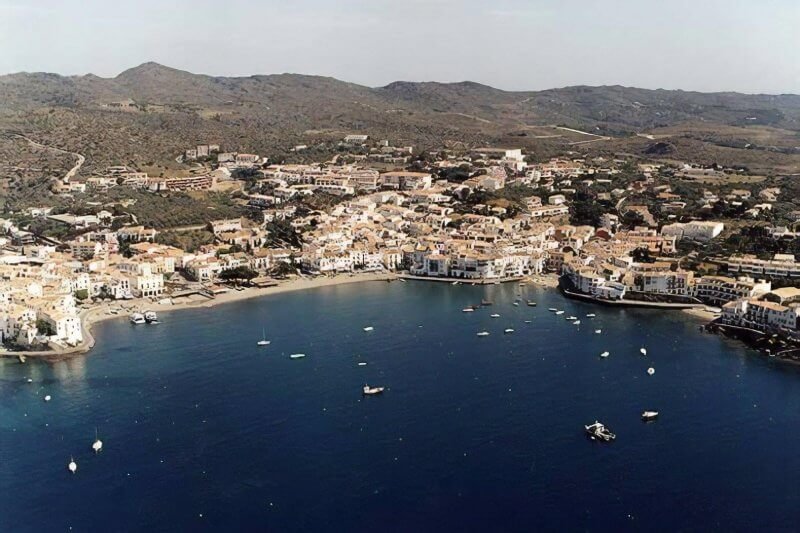
Both beach strips and the bottom near the shore are covered with flat pebbles. The entry into the water is smooth, but the depth increases faster than on the city beach. But the water here is always perfectly transparent and clean.
Amenities: changing rooms, showers, parking nearby.
Follow the waterfront promenade from the centre to Llané Gran and then Llané Petit. This route is particularly attractive in the late afternoon, with views of the harbour and the white old town. Water shoes are useful on the pebble shore.
Es Pianc and Portlligat beaches
Es Pianc is a small beach on the eastern side of the main bay, with views towards the whitewashed old town. Portlligat, beyond the centre, offers a quiet fishing-cove setting close to Dalí’s house. The beach is a charming stop during a walk rather than a large resort beach. For more remote coves, plan a day in Cap de Creus.
Where to stay in Cadaques
Choose accommodation according to the kind of stay you want: near the old town for restaurants and sightseeing, or in Portlligat for a quieter coastal setting close to Dalí’s house. In July and August, book early, especially if you want a sea-view room or parking.
Hotel Playa Sol 4★
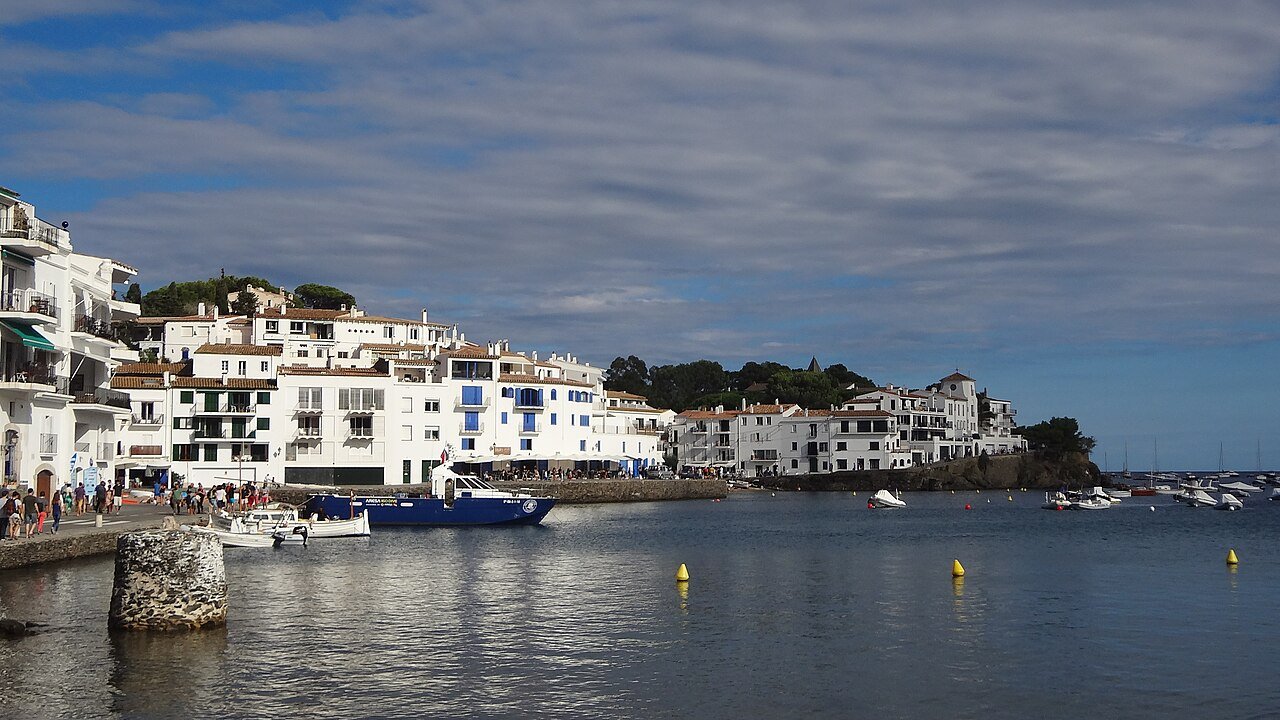
Hotel Playa Sol is a seafront property at Es Pianc, overlooking the bay and the white buildings of Cadaqués. Its Mediterranean garden, outdoor pool and terrace create a relaxed atmosphere after a day of sightseeing. Sea-view rooms make the most of the coastal location, and guests can easily walk to the old town, restaurants and waterfront. It is especially appealing to couples and visitors planning a car-free stay.
Check availability, hotel photos and prices at Hotel Playa Sol
Hotel Calina
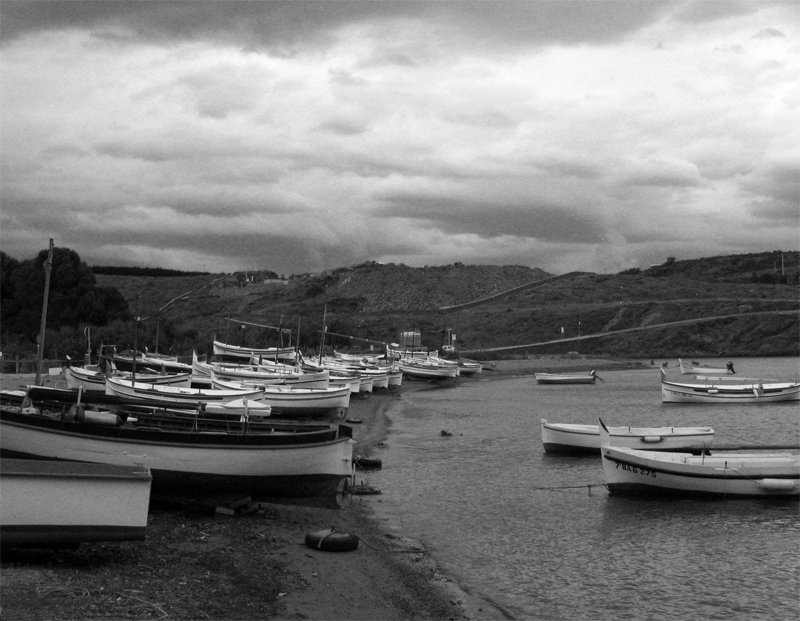
Hotel Calina is set right by Portlligat beach, a short walk from Salvador Dalí’s House Museum. The coastal setting, outdoor pool and views over the little fishing bay make it an attractive base for a slower holiday. Choose this area if you prefer a peaceful morning by the sea and easy access to scenic walks towards Cap de Creus. The old town of Cadaqués is about a 15–20 minute walk away.
Check availability, hotel photos and prices at Hotel Calina
How to get to Cadaqués from Barcelona
Barcelona El Prat and Girona-Costa Brava airports are both practical gateways for Cadaqués. There is no train station in the town, so the final part of the journey is by bus, car or taxi.
Bus
The most convenient, simple and inexpensive way to get to Cadaqués is by bus.
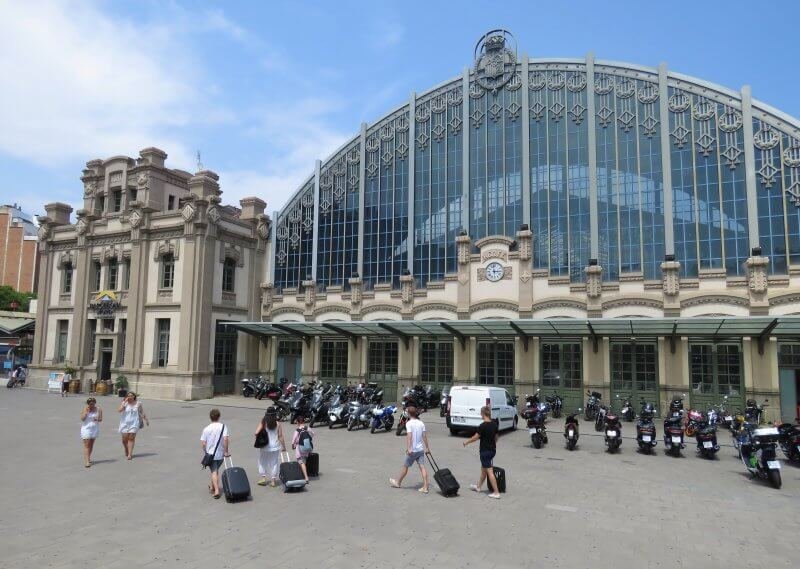
There are direct services in this direction from Estacio de Nord (North Station), located near the Arc de Triomf metro station. Moventis Sarfa line 3 buses run several times a day in July and August and only once or twice a day from October to May, so check the timetable for your date. The journey takes 2 hours 45 minutes. The ticket costs about €25–29 and can be bought at the ticket office or online on the Moventis website.
The same buses pick up passengers at the airport, from both terminals. The journey to Cadaqués takes 3 hours 30 minutes. The ticket costs about €27 (check the current price).
Train
There are no direct trains from Barcelona to Cadaqués, the only way to get there by train is to Figueres, and from there you need to take a bus.
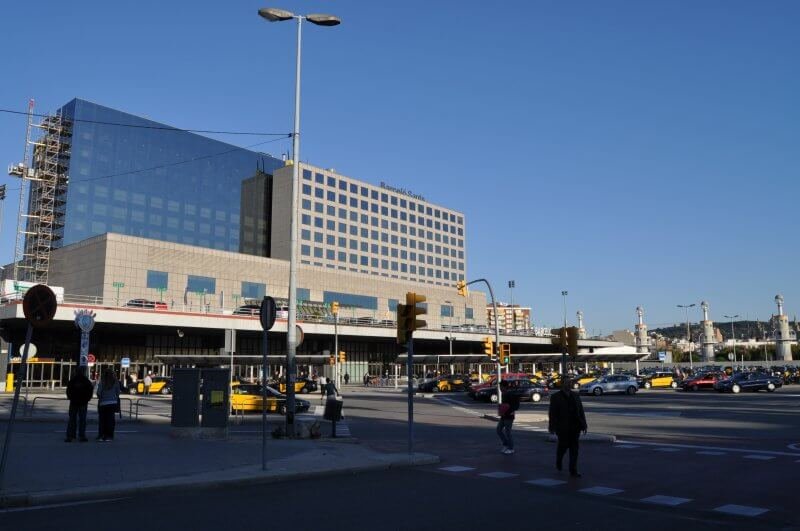
The most convenient way to get on the train to Figueres is at Barcelona Sants Central Railway Station. Electric trains run every 30 minutes, from 6:00 to 21:55. Travel time is about 2 hours. Check the current ticket price, and not all tickets are sold online – for some only at the ticket office.
Next to the train station in Figueres there is a bus station, from there bus number 12 goes to Cadaqués (Spain). There are only a few departures a day, and the journey lasts about 1 hour 10 minutes. Check the current fare before you go.
Best time to visit Cadaques
May and June offer pleasant conditions for walking, sightseeing and coastal excursions. July and August are the busiest months and usually best for swimming, while September often brings warm sea temperatures and fewer crowds. In winter, the town is quieter and some seasonal facilities close. Dalí’s house has a winter closure, so plan around its published calendar.
Two days in Cadaques: travel itinerary
Day 1: Explore the old town and Santa Maria church, stroll along Platja Gran and Portdoguer, then enjoy a sunset walk along the bay. Visit the small galleries and try local seafood at a waterfront restaurant.
Day 2: Reserve a morning time slot at the Dalí House Museum in Portlligat, then visit Cap de Creus by shuttle or follow a marked coastal path. Return to Cadaqués for a relaxed evening and dinner by the harbour.
Practical tips for visiting Cadaques
Leave your car in a designated car park at the entrance to the town. The centre has narrow streets and is easiest to explore on foot. Reserve your Dalí House ticket in advance, carry water and comfortable shoes, and check the park’s seasonal road restrictions before setting off for the lighthouse.
Cadaques: frequently asked questions
How do I get from Barcelona to Cadaques?
The easiest way is the direct Moventis Sarfa bus from Estació del Nord, which takes 2 hours 45 minutes and costs about €25–29. You can also take the R11 train to Figueres and then bus 12 to Cadaqués, but there are only a few buses a day.
Do I need to book the Dali House in Cadaques?
Yes. Every visitor needs a ticket booked for a set date and time, and tickets must be collected 30 minutes before entry. In 2026 a general ticket for the house and olive grove costs €15.50 online.
Is Cadaques worth a day trip from Barcelona?
It is possible by car, but the bus timetable leaves little time in the town outside the summer, so most visitors stay at least one night to see the Dali House, the old town and Cap de Creus.
Related guides on Enjoy The Trip: Figueres and the Dali Theatre-Museum, Tossa de Mar, Lloret de Mar, Day trips from Barcelona.
Cordoba – an authentic medieval city in Spain

Konstantin is an acclaimed travel writer, celebrated for transforming ordinary journeys into extraordinary narratives. With years of experience exploring diverse destinations across the globe, his work blends vivid storytelling, cultural insights, and practical advice to inspire wanderlust and guide readers toward unforgettable adventures.
As a key contributor to enjoythetrip.org website, Konstantin has built a loyal readership through their expertise in uncovering both iconic landmarks and off-the-beaten-path treasures. He specializes in providing travelers with honest, actionable tips, whether it’s finding the best resorts in Maldives, exploring cultural hubs like Paris, or diving into the natural wonders of Croatia.