
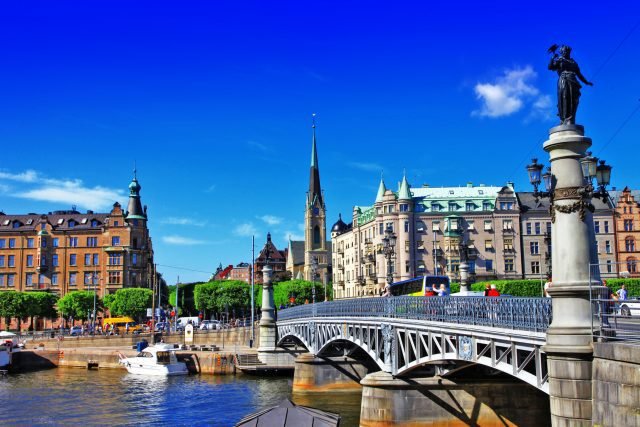
Central Stockholm is easy to explore on foot. This self-guided walk takes you from the City Hall through Norrmalm and Helgeandsholmen to Östermalm, past Drottninggatan, the Riksdag, the Royal Opera, the Museum of Music and the Swedish History Museum.
You’ve already seen the main attractions of Stockholm and are now wondering what else to explore? It’s time to take a walk through the city center, called Norrmalm, visit the island of Helgeandsholmen, and see one of the city’s most prestigious districts – Östermalm. A self-guided tour will give you the chance to admire the old Church of Saint Clara and the City Hall, stroll along the pedestrian street Drottninggatan, see where the Swedish Parliament meets, and several other interesting places. Let’s get started!
City Hall

Built in the early 20th century by architect Ragnar Östberg, this building is one of the symbols of modern Stockholm. It is where Swedish officials hold meetings, and delegations gather for negotiations.
However, the City Hall is best known for hosting the annual banquet for Nobel laureates. Initially, this festive event was held in the Golden Hall, decorated with gold mosaic consisting of more than 18 million tiles. Since 1974, the banquet has been held in the Blue Hall.
Tourists can only walk through the City Hall’s halls with a guided tour. However, visitors can stroll through the City Hall courtyard on their own. Be sure to climb the observation deck – at a height of 106 meters, it offers a stunning view of the Swedish capital.
Church of Saint Clara
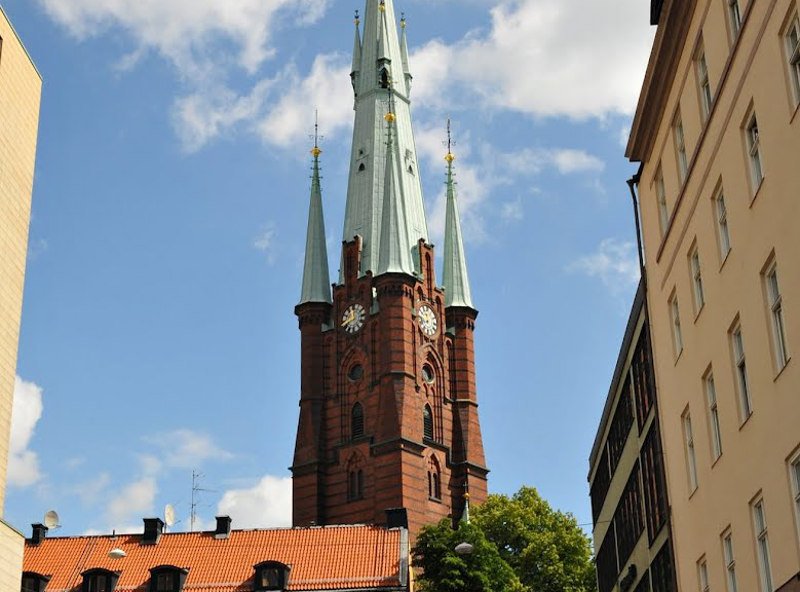
This church has a long history spanning nearly seven and a half centuries. Magnus Ladulås ordered the construction of a women’s monastery with a church dedicated to Saint Clara, revered throughout Europe. However, another Swedish ruler in the 1500s ordered these buildings to be demolished. They were later rebuilt and functioned for two centuries until a fire nearly destroyed them. The building was restored over a long period, and in 1886, a tower was erected, becoming the tallest structure in Stockholm at 116 meters.
The church’s interior is richly decorated with stained glass windows, a marble floor, a carved pulpit, and beautiful sculptures. The main attraction is the still-functioning organ.
Drottninggatan
Translated as “Queen Street,” this is one of the largest pedestrian streets in Stockholm, stretching 1500 meters.
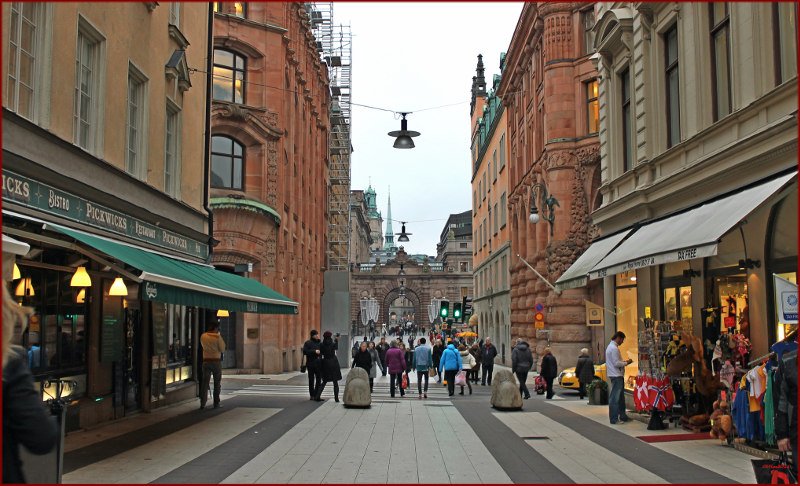
The street begins with a sculpture of a fox-beggar by Laura Ford, intended to draw attention to homeless animals. At the opposite end of the street is an observatory surrounded by a park.
One of the street’s attractions is the “Owl” pharmacy, the oldest in the city, which began operating in 1761 and has never changed its location since the late 18th century.
A notable feature is the inscription stretching along the street by Johan August Strindberg, who laid the foundations of Swedish literature and theater. His house is now a museum.
Royal Academy of Fine Arts
Originally named the Royal Academy of Drawing, it was founded in the first half of the 18th century by order of Carl Gustaf Tessin. The Paris Academy served as an example for its charter. Over time, it expanded to include lessons in drawing, architectural courses, and art history lectures.
Rosenbad
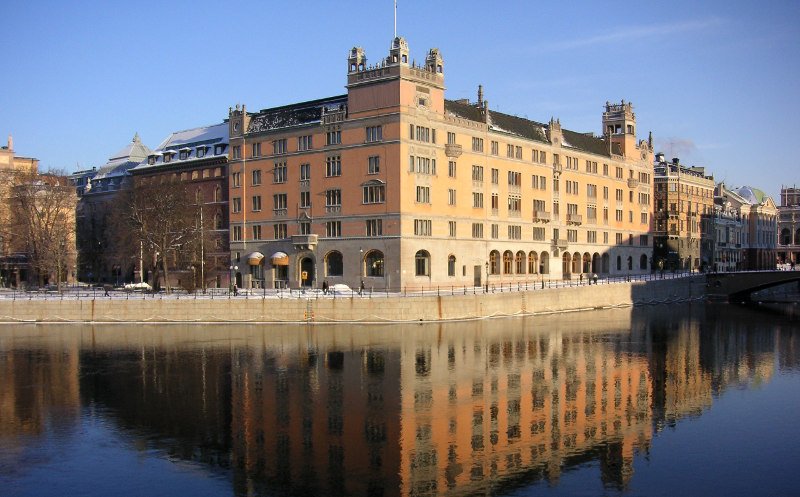
This architectural complex houses the offices of the Ministry of Foreign Affairs, the Ministry of Justice, and the government chancellery. The Swedish Prime Minister’s residence is also here. Daily, press conferences, meetings with major political figures, and official gatherings are held in Rosenbad.
Originally, these 17th-century buildings functioned as public baths owned by the Bondes family. Now, the same-named restaurant is located here.
Riksdag
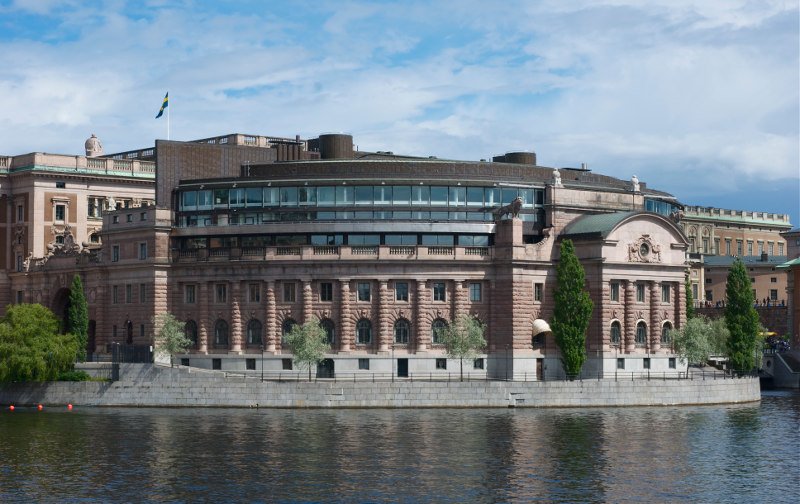
The Swedish Parliament consists of a single chamber headed by the Speaker and includes 349 members elected every four years. The Parliament building is located on the island of Helgeandsholmen in central Stockholm.
Museum of Medieval Stockholm
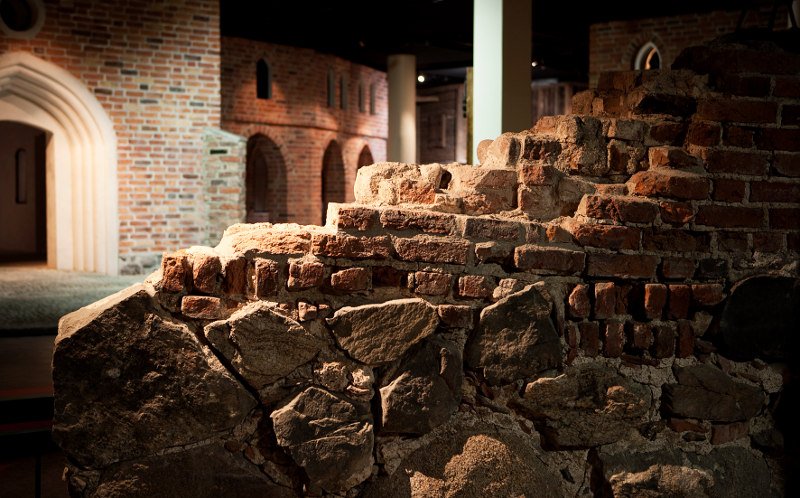
Located on the island along with Parliament, this museum emerged from archaeological excavations in the early 1980s. Discoveries included fragments of a 16th-century wall and an ancient cemetery named “House of the Holy Spirit,” giving the island its name.
The museum is unique in that it is largely underground.
Royal Opera
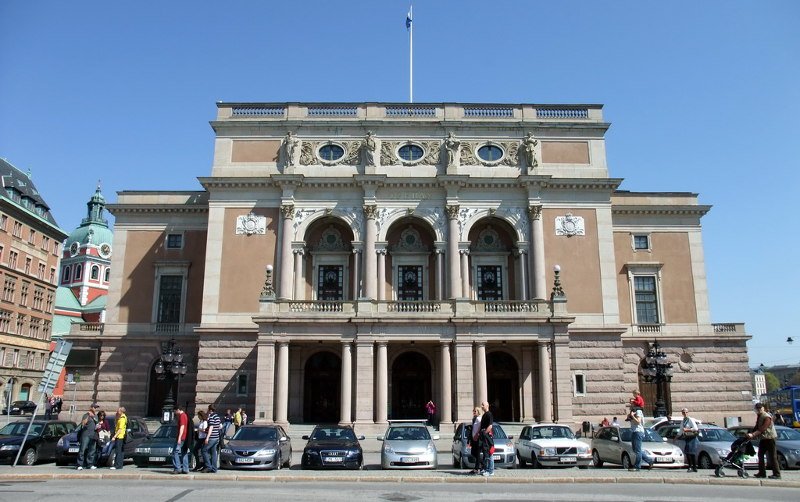
Founded in the second half of the 18th century, this opera house now hosts both opera and ballet productions. It has its symphony orchestra, which performs independent concerts.
The first theatrical troupe was formed under Swedish ruler Gustav III, a known advocate of enlightened absolutism, who ordered a separate building for it.
Royal Opera performers toured the Soviet Union in 1975.
Church of Saint James
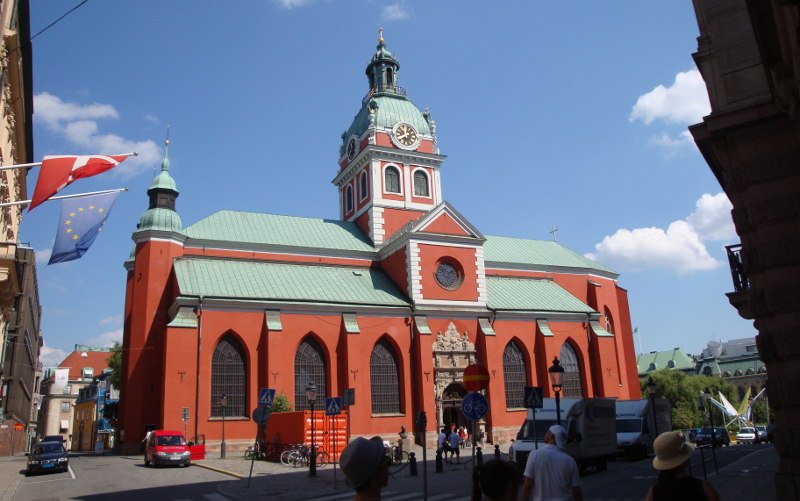
Often overlooked by tourists, this building doesn’t impress compared to major attractions. However, it is one of the oldest surviving buildings in Stockholm.
Dedicated to the patron of sailors, the church was built in the late 16th century, replacing an older church with a three-century history.
The church houses several artifacts, including an 18th-century baptismal font.
Royal Dramatic Theatre
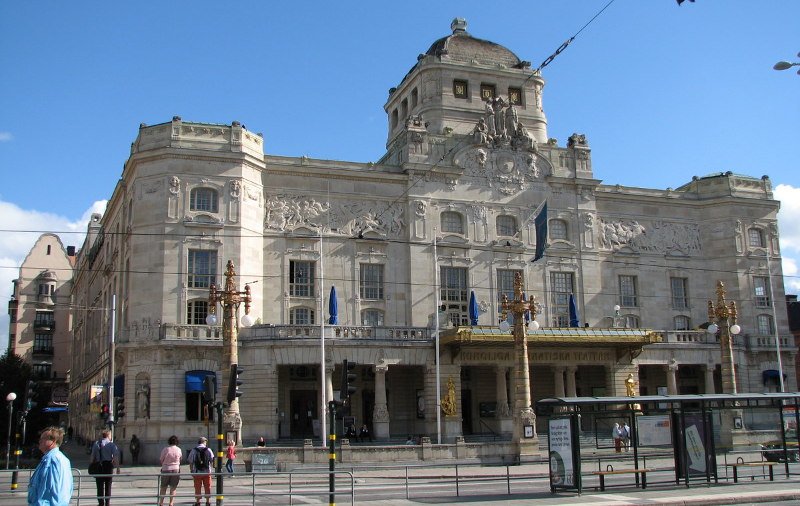
Dating back to 1788, the theater acquired its current appearance in the early 20th century, thanks to architect Fredrik Lilljekvist. The first performance, “Master Olof,” was staged in 1908.
The Dramatic School, associated with the theater, has produced many renowned actors and directors.
Museum of Music
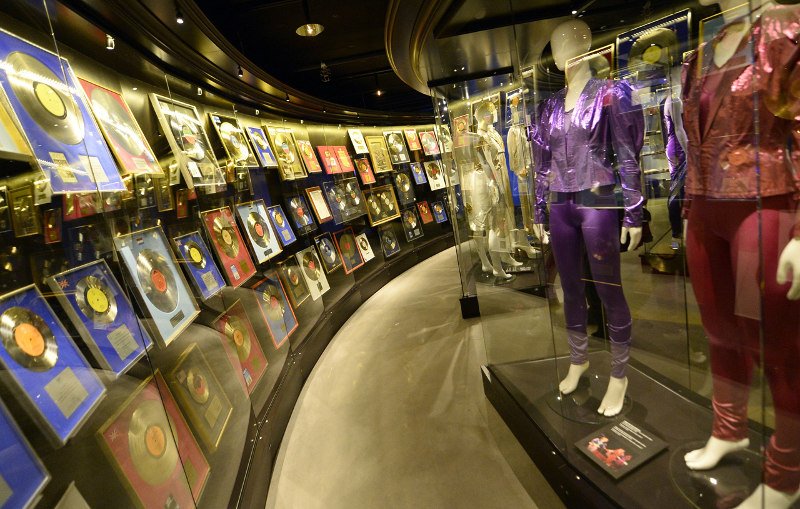
This museum boasts an extensive collection of musical instruments from various times and cultures. The Swedish Museum of Music is considered one of the best in the world.
Housed in a 17th-century building, formerly the royal bakery, the museum allows visitors to try some instruments (marked with green squares). Fragile items are behind glass, and their sounds can be heard through nearby headphones.
Noteworthy exhibits include a large phonograph globe with national music from different cultures.
Army Museum
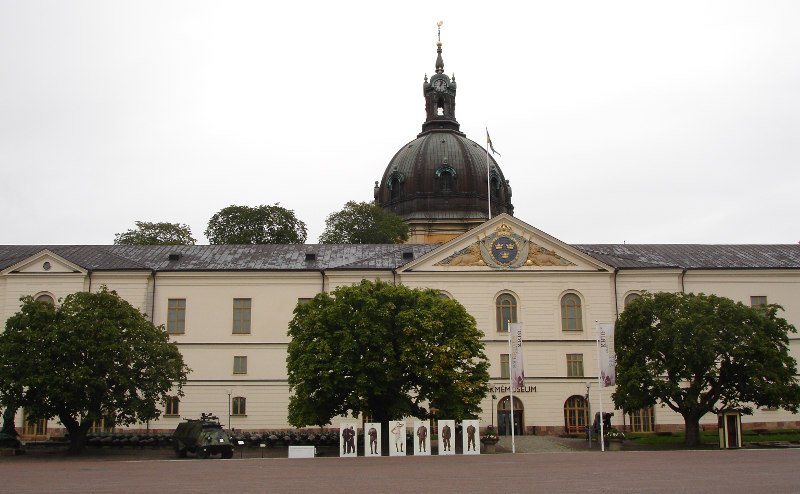
This museum traces the development of the Swedish army from Viking times to the present. The first thing visitors see is a monument to those who fell in the Battle of Poltava, located at the entrance. The museum showcases a collection of historical weapons, each labeled with information about the movie that made it famous.
Unlike most military museums, this one emphasizes the social impact of war, aiming to highlight its horrors.
Swedish History Museum
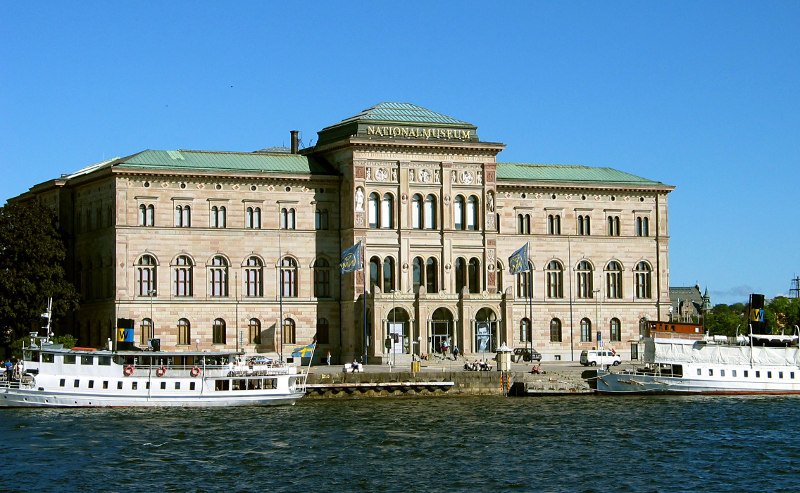
Compared to other attractions, this relatively new building dates to the 1930s and 40s. The museum covers Swedish cultural history from the Stone Age to the 16th century, with later history covered by the Nordic Museum.
The Golden Hall, designed by architect Leif Blomberg, is particularly interesting, featuring an extensive collection of gold jewelry.
Enjoy your exploration of central Stockholm!
Central Stockholm: frequently asked questions
How long does a walk through central Stockholm take?
The walk itself takes about two to three hours. Allow a full day if you want to visit the City Hall and some of the museums along the way.
Can you visit Stockholm City Hall without a tour?
You can walk into the courtyard on your own, but the halls can only be visited on a guided tour. The tower with the viewing platform is open in season.
Is central Stockholm walkable?
Yes. Norrmalm, Helgeandsholmen and Östermalm are close together, and most sights on this route are 5 to 15 minutes apart on foot.
Related guides on Enjoy The Trip: Helsinki museums, trains from Malmö and Gothenburg to Oslo, Scandinavian dishes, Christmas in Tallinn.

Konstantin is an acclaimed travel writer, celebrated for transforming ordinary journeys into extraordinary narratives. With years of experience exploring diverse destinations across the globe, his work blends vivid storytelling, cultural insights, and practical advice to inspire wanderlust and guide readers toward unforgettable adventures.
As a key contributor to enjoythetrip.org website, Konstantin has built a loyal readership through their expertise in uncovering both iconic landmarks and off-the-beaten-path treasures. He specializes in providing travelers with honest, actionable tips, whether it’s finding the best resorts in Maldives, exploring cultural hubs like Paris, or diving into the natural wonders of Croatia.