
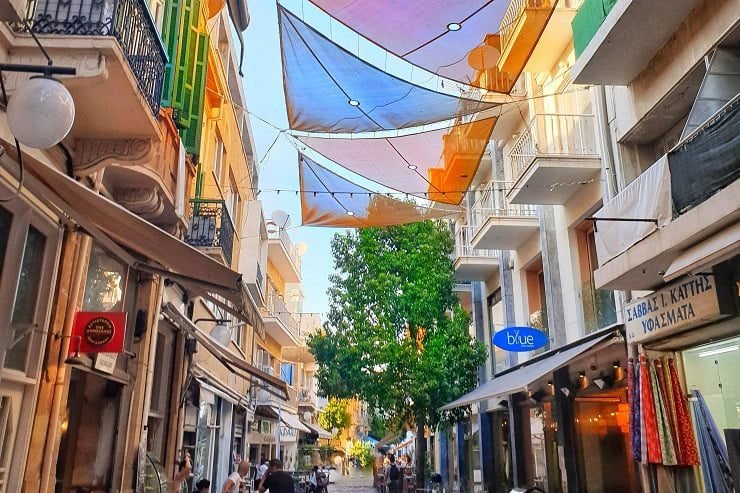
Nicosia, Cyprus is the island’s inland capital, divided by the Green Line, with Venetian walls, Laiki Gitonia, the Archbishop’s Palace, Büyük Hamam and the Selimiye Mosque.
Unlike the other big towns on the island, Nicosia, Cyprus lies inland rather than on the coast. It sits in the Mesaoria Valley, about 170 m above sea level. Although it is one of the most modern cities on the island, it keeps a unique ancient atmosphere. As a result, crowds of tourists come here every year.
General information
Nicosia is the only capital of two states on the whole planet (the Republic of Cyprus itself and the unrecognized Turkish Republic of Northern Cyprus). The total area is 111 km2. The population is slightly more than 300 thousand people. The number of names is 3: official, Turkish (Lefkoşa), and Greek (Lefkosia). Curiously, the latter is gradually returning to active use. Now it can be seen not only in buses and on address signs, but also in the official documentation of Cyprus.
Despite the fact that the administrative center of the island is slightly inferior to other resorts due to its remoteness from the sea, it is never dull here. The absence of night parties and traditional beach holidays makes up for the rich historical heritage. Over the long years of its existence (more than 3 thousand years), the city has accumulated a huge number of interesting artifacts, for which it is often called the “open-air antiquities shop”. In terms of the richness of the excursion program, Lefkosia will also give a head start to most local resorts. At the same time, you don’t even have to travel outside the city limits – everything is literally at hand.
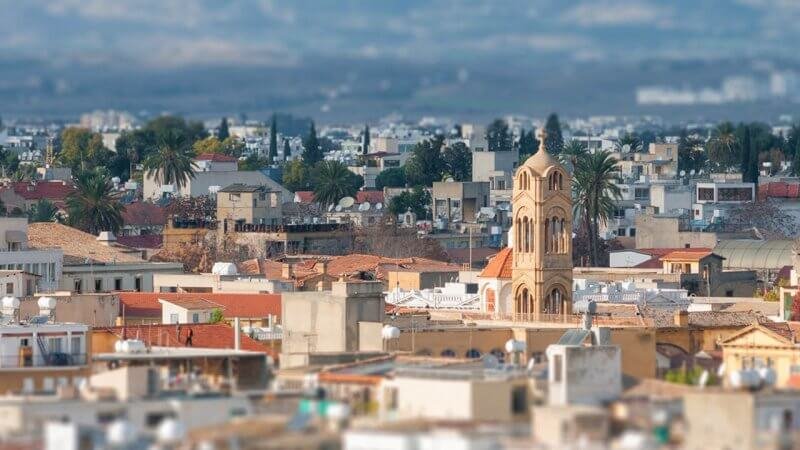
The rich historical past of the Cypriot capital simply could not but affect its appearance. Everything here is imbued with the spirit of multiculturalism – from Christian churches converted into Muslim mosques, to international restaurants built next to traditional taverns.
Well, where, if not in Nicosia, you can experience the extreme associated with the constant crossing of state borders! This is the only city in the world where you will have to pass a checkpoint and present your passport to get to another part of the street. But, believe me, it’s worth it! The urban landscapes of the Turkish and Greek regions are so different that you will not have any doubt that you are in 2 different countries. Add to this the simple tourist joys of cafe gatherings, souvenir shopping trips, wine tasting and active trading in the oriental bazaar – a pleasant and eventful holiday is guaranteed for you!
Historical background
The capital of Cyprus, Nicosia, is among the most ancient. Scientists say that people at this place lived in the Neolithic period. The first predecessor of the city was the settlement of Ledra, which, according to tradition, the Achaeans founded around the 11th century BC. Like many settlements of that time, it was later destroyed by an earthquake. Soon, a new large city grew up on these ruins, named, according to legend, after Lefkon, a son of Ptolemy I. In the first centuries of the New Era, Lefkosia was considered the Orthodox center of Cyprus. Many saints preached in it. Later, the crusader Guy de Lusignan took over the island in the late 12th century. Under his dynasty, the city became known as Nicosia. Moreover, it became the capital of the Kingdom of Cyprus.

In the following years, Nicosia managed to be in the hands of the Venetians, Turks and even the British. The period in the status of a British colony turned out to be quite long – Cyprus became independent only in 1960, but the adventures of Nicosia itself did not end there. After 14 years, the island was divided into two parts – Greek and Turkish. After the country was divided and its capital. The main confirmation of these events is the so-called Green Line, which runs through the historical center of the city and is controlled by UN peacekeepers.
South Nicosia Attractions
The sights of Nicosia (Cyprus) include many cultural, spiritual and historical sites. Let’s consider only the main ones.
The Cathedral
The Cathedral

The Cathedral of Lefkosia, dedicated to St. John the Evangelist, was built in 1662 on the site of an abandoned Byzantine monastery. Outside, it is small and rather ascetic – a row of snow-white columns, light stone masonry, clear geometric shapes. This simplicity is quite understandable here – in the time of the Ottoman Empire, when the construction of this shrine began, no Christian church could compete with a Muslim mosque either in height or appearance.
Another thing is inside! The rich interior of the Cathedral remains almost the same as it was hundreds of years ago. The walls of the temple are decorated with numerous frescoes depicting famous scenes from the Bible. In the carved iconostasis there are old icons painted in 1795 and 1797. The vault above this holy place is decorated with a painting called “Heavenly Liturgy”, which is rare in content and unique in technique. Currently, the cathedral is open to all comers. You can visit it from Monday to Friday (09: 00-16: 00) and on Saturday (09:00 – 12:00).
Bastions
Bastions

The old City of Nicosia is surrounded by an ancient defensive wall, which includes 11 bastions and 3 entrance gates. From its height, this structure resembles a huge star, surrounded by a deep, water-filled moat. Money for the construction of the fortification, which protected local residents from Ottoman raids, was allocated by rich Venetian families. In this regard, each of the 11 bastions bears the name of its patron-Musalla, Loredano, Caraffa, Podocatro, D’Avila, etc.
Curiously, after the division of Lefkosia into 2 parts, each of the fortifications passed to its own country. Today 5 of them are in the Greek Cypriot south, 5 are in the Turkish Cypriot north, and 1 lies on the UN buffer zone. Currently, political, religious, cultural and entertainment organizations are located in the former military facilities and in the surrounding area – the city hall, the Melina Mercouri Hall, the National Struggle Museum, the Freedom Monument, a mosque, a modern city park with attractions, etc.
Archbishop’s Palace
Archbishop’s Palace
The official residence of the Archbishop of Cyprus, where all the services of the diocese are located, is one of the most famous sights of Nicosia. The two-story building, which is interesting from an architectural and political point of view, was built between 1956 and 1960. Designed in the best traditions of the Venetian style, it is decorated with high windows and two openwork arches. Snow-white columns and cream-colored facade give the residence a luxurious look, and the wide staircase leading to the central entrance fully justifies its name.
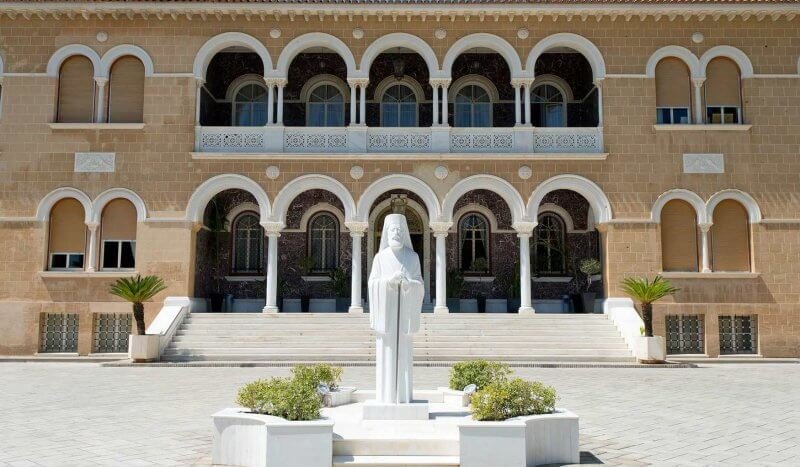
Statues of 2 Archbishops – Makarios and Kyprianos – stand opposite the Palace. The courtyard of the residence is decorated with a picturesque garden with lawns and picturesque flower beds, and on the main entrance gate there is a disk with the coat of arms of the Orthodox Church of Cyprus.
Now it houses museums (Byzantine and Ethnographic), a library and an art gallery. These cultural and educational institutions and the inner courtyard are the only places of the residence that are open to the general public.
Laiki Gitonia Quarter
Laiki Gitonia Quarter
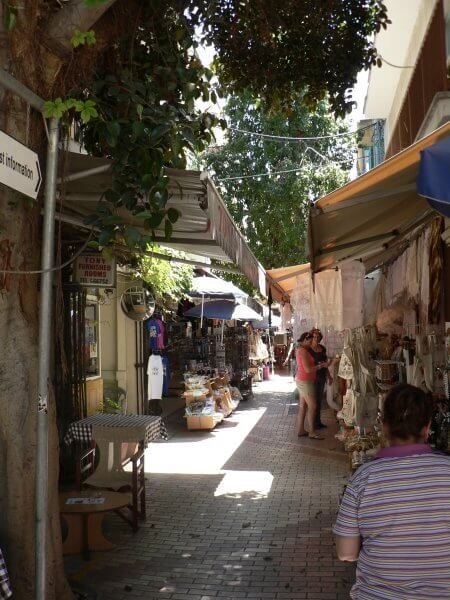
Laiki Gitonia quarter, often called the old heart of Nicosia, is the main tourist area of the Greek part of the city. The local government spent a considerable amount of money on the restoration of ancient houses, so the current Laiki Gitonia looks exactly the same as it did two hundred years ago. Winding narrow streets, cozy family taverns hidden in orange groves, antique shops with funny signs, wandering musicians, street artists, beautiful lanterns in openwork grids… The atmosphere of ancient Cyprus attracts a huge number of tourists, so this part of the city is always very crowded.
Among other things, in the souvenir shops of Laiki Gitonia, you can buy excellent lace, handicrafts, silver, traditional embroidery, jewelry, etc.
Phaneromeni Church
Phaneromeni Church
The Church of Our Lady of Phaneromeni, was built in its present form in 1872–73 on the site of an ancient convent. Today it is the largest Orthodox church within the Venetian walls. Over the long history of its existence, it has experienced more than a dozen reconstructions, so now there are elements of Byzantine, neoclassical and Latin architecture in its appearance. The main value of Faneromeni Church is the carved and gilded iconostasis from the 18th–19th centuries, decorated with scenes from the Old and New Testaments.
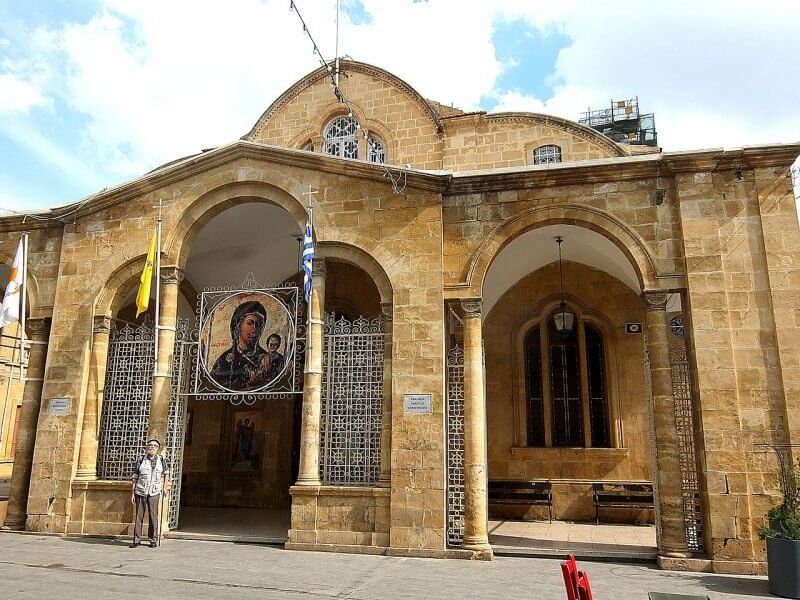
The name of the church, whose literal translation means “the one that was found”, is associated with the missing icon of the Virgin Mary. It took a lot of effort and time to find her, but all was unsuccessful. Everything changed after one of the nuns had a prophetic dream with a clear indication of the place where this icon was hidden. Now the face of the Virgin is kept in the museum of Byzantium, and in the temple it appears only during major religious holidays.
Attractions in the northern part of the city
The northern part of the city of Nicosia pleases with no less choice of attractions, acquaintance with which promises to be interesting and rich.
Arabahmet District
Arabahmet District
The residential area of Arabahmet, located opposite the Rokkas bastion, remains much the same as it was under British rule. Most of the local houses were built at the turn of the 19th and 20th centuries. Two-story wooden houses decorated with bright shutters, verandas and balconies remind you of pictures from Arabic fairy tales, and clean courtyards with lush flower beds make for a pleasant stay.
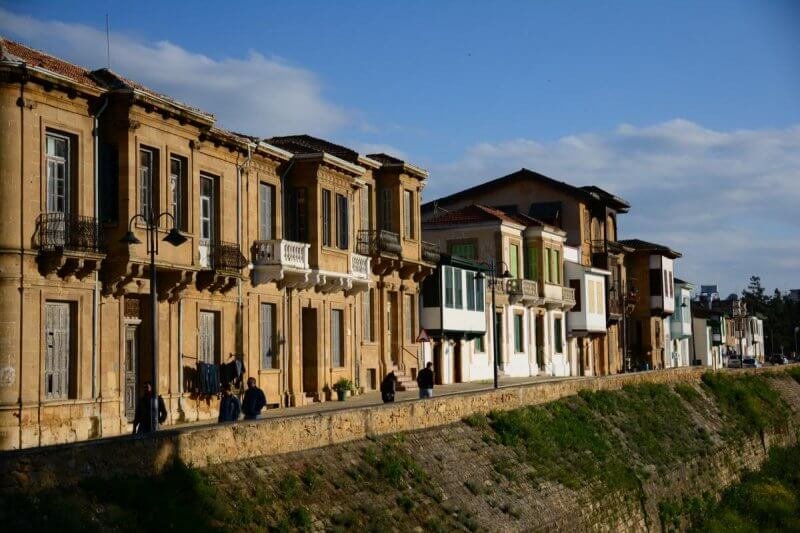
No less noteworthy are the doors of local houses that resemble real works of art: old, with beautiful bronze ornaments and rusty mailboxes, which were used during the First World War.
The streets in Arabahmet are narrow, paved with highly polished stone slabs. At the end of the main one, Salakhi Sevket, stands a mosque with a beautiful dome. In former times, an ancient Latin chapel stood on this site. Now there are very few remains of the former shrine-25 tombstones decorated with engravings and commemorative inscriptions. In front of the mosque you can see a small garden with a fountain, cypresses and graves of famous Turkish commanders.
Buyuk Hammam Baths
Buyuk Hammam Baths
Buyuk hamam is a famous underground bathhouse built in the late 16th century on the site of the Church of St George of the Latins. The only thing left of the medieval church is the entrance to the hamam, decorated with a carved arch.
At the time of its foundation, it was the most visited place in the city, because the houses of that time did not have their own bathrooms. Buyuk hamam is still active today.

Several years ago, the baths were renovated and equipped with the latest technology. Now they consist of 3 main departments-a changing room and two rooms (cold and hot). But there is no division into men’s and women’s halls in Turkish baths, so the procedures are carried out on different days of the week. In addition to classic bathing, you can also use the services of a massage therapist. Drinks and bath accessories are included in the price.
Arasta Street
Arasta Street
Arasta Street is a famous pedestrian street named after the part of the mosque that merchants were allowed to visit. In ancient times, there were long shopping malls on both sides of Arasta with textiles, jewelry, silks and shoes. Now they are replaced by cafes, family restaurants and souvenir shops. The western end of the street is crowned by the Turunçlu Mosque, built in the Ottoman period. The main feature of this mosque is an unusual layout: on one side – a large hall for prayers, on the other-a covered gallery with columns.
Selimiye Mosque
Selimiye Mosque
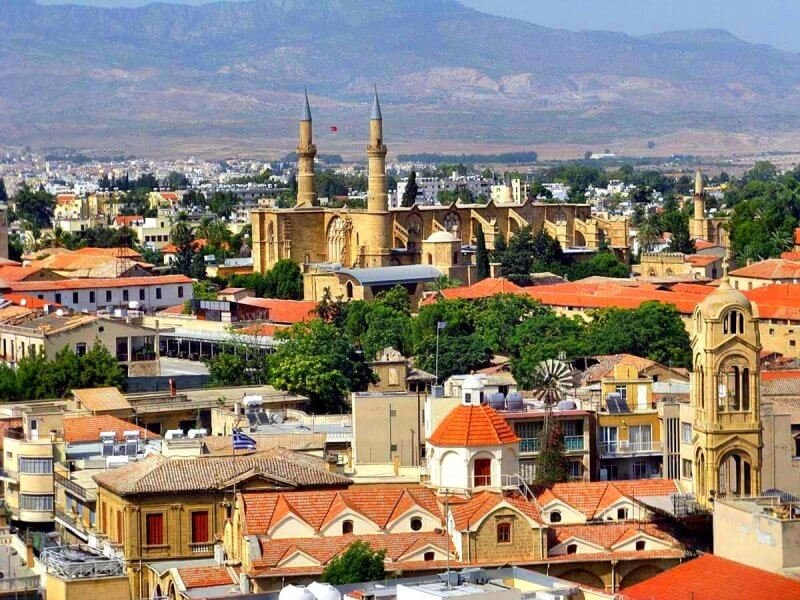
Another important attraction of Nicosia in Northern Cyprus is Selimiye Camii, the main and most visited mosque in the Turkish part of the city. Standing right in the center of the former Hagia Sophia, it is one of the most beautiful architectural monuments in Lefkosia. The construction of this structure, which began in 1209, lasted 117 years. Designed in the traditional Gothic style, it was very different from other buildings in Cyprus. It is probably for this reason that Hagia Sophia served for a long time as the coronation church of the Lusignan kings. Currently, the Selimiye Mosque is still active – it still hosts Muslim rituals.
Famagusta, Cyprus-the main ghost of the island
How to get there?
There is no airport in Nicosia – it was closed in 1974, when the city was divided into Greek and Turkish parts. The nearest air gates are located in the following localities:
- Paphos (140 km). Buses from the local airport run only 3 times a day. This is not very convenient, so many tourists prefer to take route 613, which goes to the city’s Karavella bus station, and from there – on the Intercity bus going to Nicosia;
- Larnaca (40 km). Round-the-clock shuttles run from Larnaca Airport to the capital of Cyprus every few hours. Another option is to take the number 419, 407 or 418 bus, go to the local bus station and transfer to an intercity flight in the direction of Lefkosia.
Interesting facts
- Taxis in the city of Nicosia, Cyprus do not have a distinctive color. You can only recognize them by their license plate number – it always starts with the letter T.
- Lawrence Durrell, a well-known English writer and author of the novel “Bitter Lemons”, taught at the Pancyprian Gymnasium, which is considered the oldest educational institution in Cyprus.
- The city is located in the center of the island, so it has no access to the sea.
Nicosia, Cyprus: top sights
- South: the Cathedral of St John, Venetian bastions, Archbishop’s Palace, Laiki Gitonia, Phaneromeni Church
- North: Arabahmet district, Buyuk Hammam, Arasta street, Selimiye Mosque
- Crossing: pass a checkpoint with your passport
- Nearest airports: Larnaca and Paphos
Nicosia cyprus: frequently asked questions
Can you cross between the two parts of Nicosia, Cyprus?
Yes, through a checkpoint, where you show your passport.
Which airport is closest to Nicosia, Cyprus?
Larnaca, about 40 km away; Paphos is about 140 km.
Is Nicosia on the coast?
No, it lies inland in the Mesaoria plain.
Related guides on Enjoy The Trip: A Culinary Journey in Cyprus: Wine, Olive Oil and Food You’ll Love, 6 Wonderful Sunny Places in Europe for a Warm October Holiday.

Konstantin is an acclaimed travel writer, celebrated for transforming ordinary journeys into extraordinary narratives. With years of experience exploring diverse destinations across the globe, his work blends vivid storytelling, cultural insights, and practical advice to inspire wanderlust and guide readers toward unforgettable adventures.
As a key contributor to enjoythetrip.org website, Konstantin has built a loyal readership through their expertise in uncovering both iconic landmarks and off-the-beaten-path treasures. He specializes in providing travelers with honest, actionable tips, whether it’s finding the best resorts in Maldives, exploring cultural hubs like Paris, or diving into the natural wonders of Croatia.