
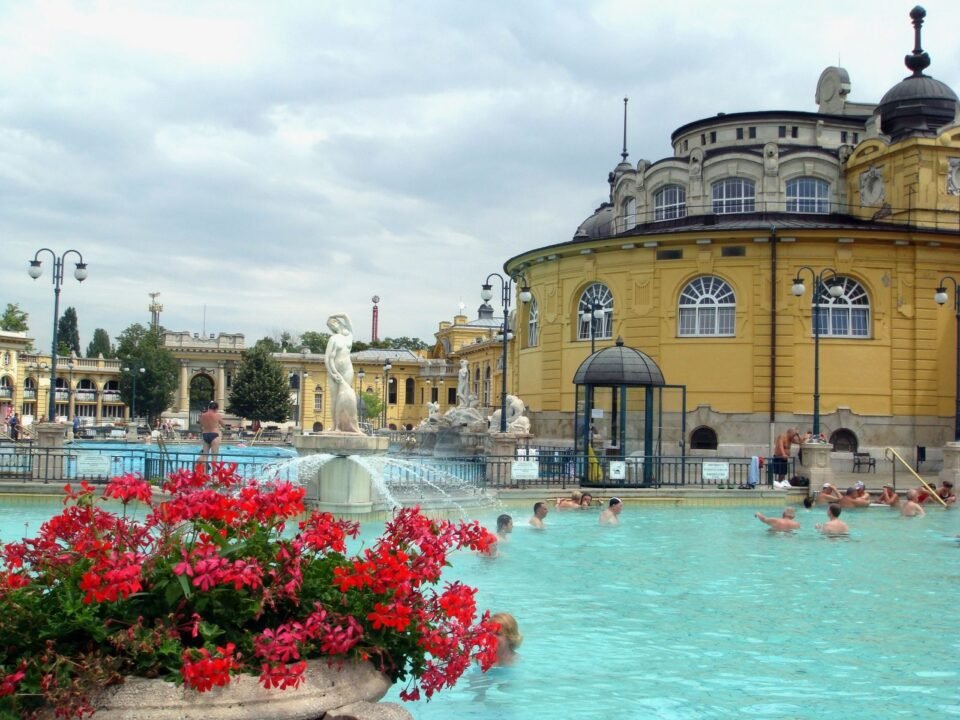
Thermal resorts in Hungary range from Lake Hévíz and Budapest’s Széchenyi and Gellért baths to Hajdúszoboszló, Sárvár and Bük. Prices mentioned in this guide were last checked in earlier years and may have changed.
Best thermal resorts in Hungary at a glance
| Resort | Highlights | Planning notes |
|---|---|---|
| Hévíz | Natural thermal lake | Outdoor bathing; central bath building closed |
| Széchenyi, Budapest | Historic city baths | Indoor and outdoor pools |
| Gellért, Budapest | Art Nouveau landmark | Closed until planned reopening in 2028 |
| Bükfürdő | Large spa complex | Wellness and family pools |
| Sárvár | Spa town | Thermal and wellness hotels |
| Miskolc-Tapolca | Cave bath | Check access after reconstruction |
| Debrecen | Aquaticum | Indoor water park and spa |
| Harkány | Southern spa town | Thermal bathing |
| Hajdúszoboszló | Hungarospa | Large family complex |
| Balatonfüred | Lake Balaton town | Lakeside wellness |
| Visegrád | Danube Bend | Scenic spa break |
| Zalakaros | Thermal and leisure complex | Family facilities |
| Gyula | Castle Bath | Historic park and pools |
For a city break, choose Budapest. Families may prefer Hajdúszoboszló, Zalakaros or Debrecen, while Hévíz and Sárvár are appealing for longer spa stays. Use this Hungary thermal baths map to plan a route.
Hungary, which ranks among the top five countries in the world for the number of thermal springs, is deservedly called the empire of baths, leading in balneological treatment. The thermal springs of Hungary, about 60,000 of which are found throughout the country, have led to the construction of numerous health resorts and baths.
Today, there are over 1,000 mineralized healing springs in the country with temperatures above 30°C for wellness purposes. Spa enthusiasts are offered a wide range of balneological resorts with extensive opportunities for treatment and meaningful leisure.
1. Hévíz Thermal Lake
Visitor update (November 2026): Outdoor bathing is available, but the central bath building is still closed. Entry during the winter period is via the Festetics Bathhouse. Check the current hours and ticket information.
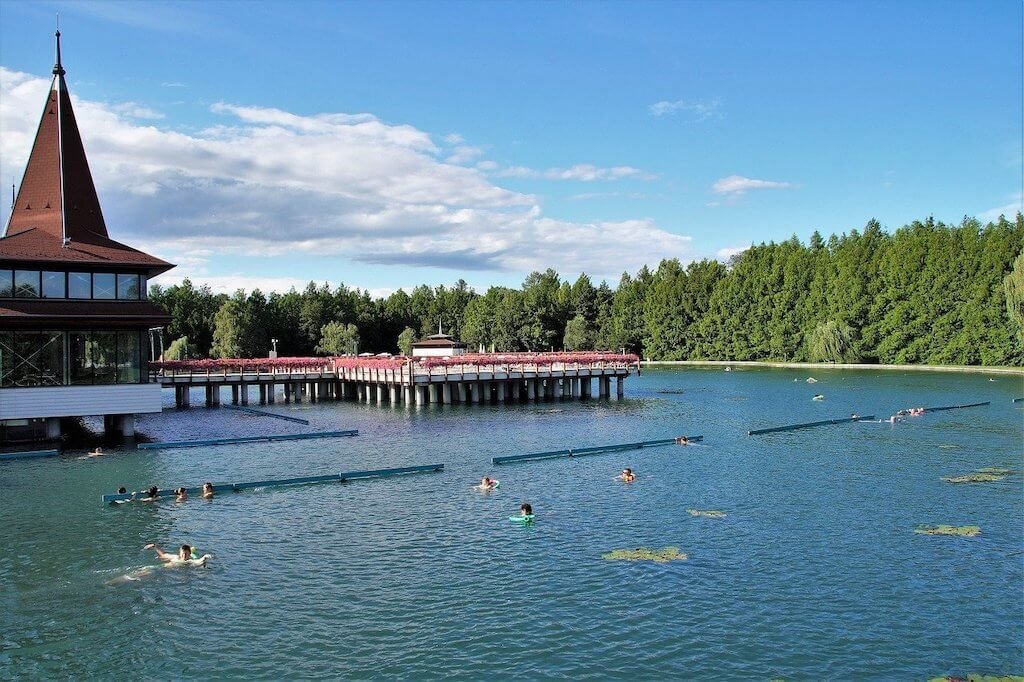
The small Hungarian resort of Heviz became known in the 17th century thanks to the largest swimmable thermal lake in the world, which has unique healing properties. The lake, covering 4.7 hectares, is fed by two springs located in a cave under the reservoir with temperatures of +42°C and +38°C, and one mineral spring with water at +17°C.
When mixed, the water temperature at the outlet becomes +30°C – 32°C in summer, and in winter it stays within 24°C – 26°C. As the air temperature above the lake decreases, steam clouds rise from the lake, which has a funnel shape. Every 28 hours, the water in the lake is renewed. The lake water is rich in sulfur, carbon dioxide, and radon.
The bottom of the lake is covered with mineral-rich mud. Hévíz has a long tradition of supervised spa programmes, including bathing, hydro-massage and mud applications.
Follow the venue’s posted bathing-time limits and staff guidance.
Hévíz also has mineral-water drinking facilities connected with its spa tradition. Ask the spa staff about appropriate use.
2. Széchenyi Thermal Bath, Budapest
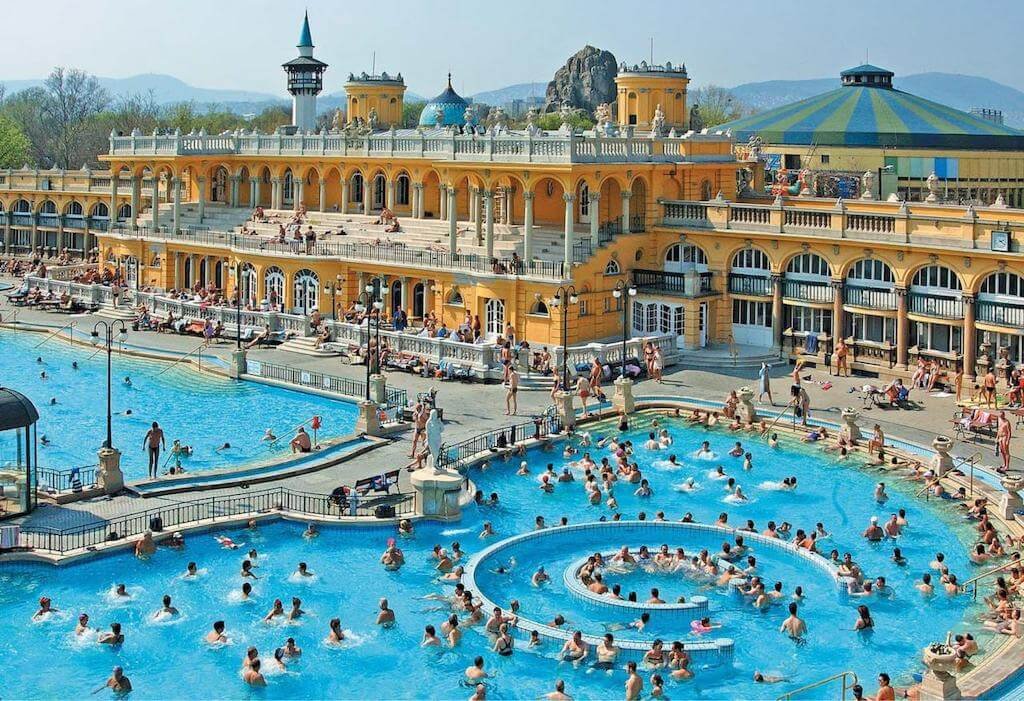
The luxurious thermal complexes of the “Pearl of the Danube” – Budapest, are fed by the St. Stephen’s spring, where the water in the pools stays around 78°C. The Széchenyi Bath, opened in 1913 in the Neo-Baroque style, is the best known (though not the oldest: the Rudas and Király baths date from the Ottoman era).
Over the past century, the bathhouse expanded and improved, becoming one of the largest bathing complexes in Europe. It includes 15 indoor pools, 3 outdoor pools, 10 saunas, and steam rooms.
The water in the baths comes from the depths of the earth at a depth of 1,246 meters. The list of therapeutic services, healing both body and soul, includes not only bathing but also massages – aromatic massage with three types of aromas, thermal massage relieving muscle tension and joint pain.
Széchenyi has a historic tradition of mineral-water bathing and spa treatments.
Szechenyi effectively uses balneotherapy: bathing in mineralized pools, sessions in carbonic and salt baths. Hydrotherapy methods include weight baths, underwater and beam massage sessions, and underwater gymnastics.
3. Gellért Thermal Bath, Budapest
Visitor update: Gellért Bath has been closed for renovation since October 2025, and reopening is planned for 2028. See the official notice. For a bath in Budapest now, consider Széchenyi. The description below reflects Gellért before its closure.
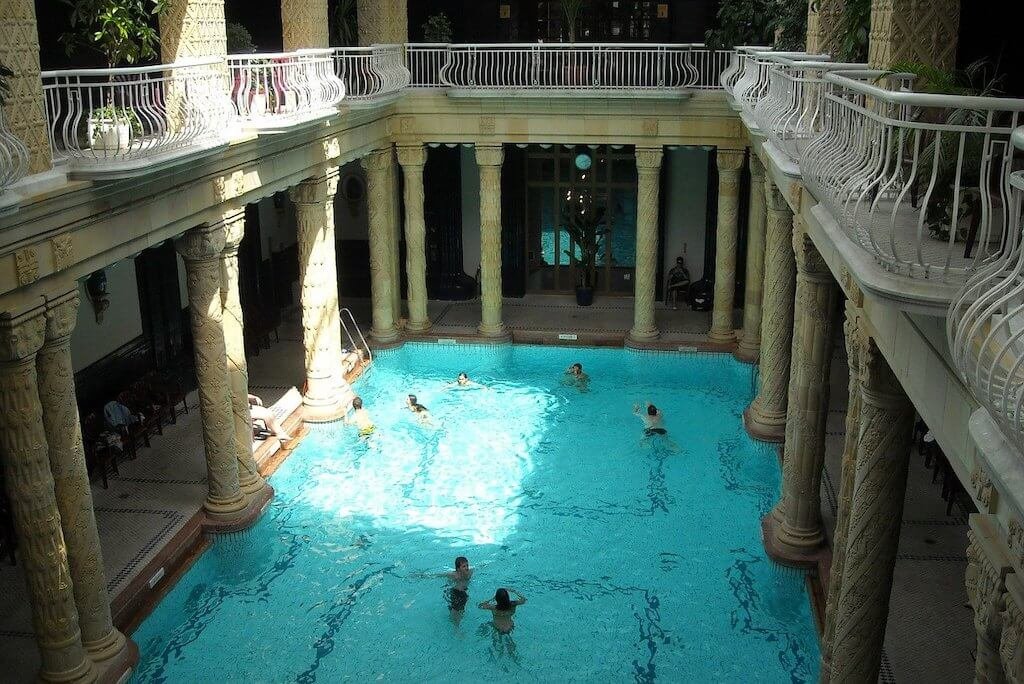
The Gellert Baths, built in the style of grand Roman baths, are recognized as the most beautiful thermal complex in the Hungarian capital. This indoor architectural ensemble, shining with a myriad of glass colors, creates enchanting lighting in 13 luxurious pools adorned with columns.
The Gellert Baths feature an outdoor pool, a sitting and children’s pool, wave pool sessions, and a pearl bath. The baths are filled with waters from the depths of Gellert Hill, heated from +38°C to +43°C. The spring has a vast array of microelements, enabling the treatment of people with spine diseases and relieving joint pain.
Historically, visitors have used the thermal complex for a range of supervised spa programmes.
Traditional water procedures are complemented by hydrotherapy, sauna and steam sessions, mud applications, and various types of massages. The roof of the hydrotherapy center is equipped with terraces for nude sunbathing. In summer, on Fridays and Saturdays, the outdoor pools are open until midnight.
4. Bükfürdő
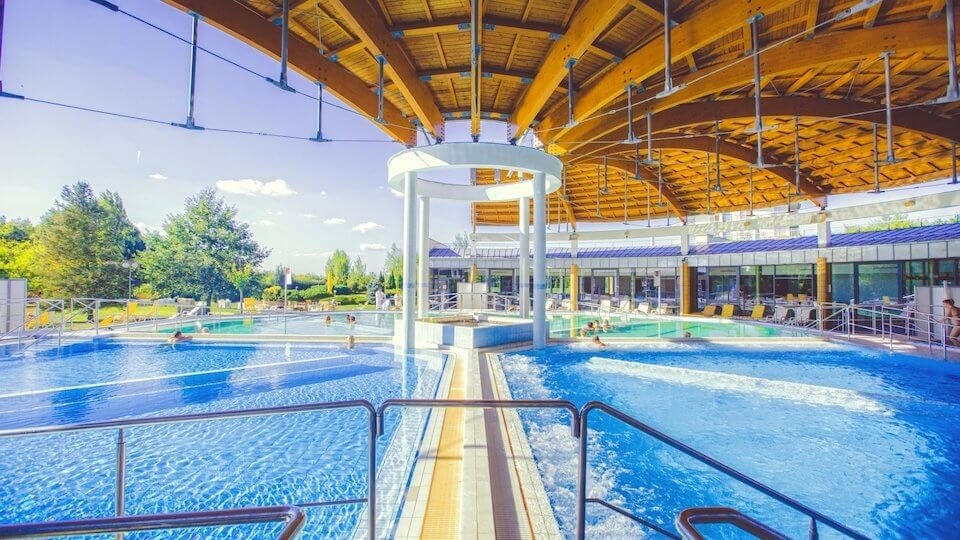
Bukfurdo is a resort in the western region of the country, distinguished by the highest concentration of calcium and magnesium in the bicarbonate healing water that surfaces heated from +55°C to +65°C.
It has a multifunctional complex, including medical and children’s centers, the “Sauna World,” and an upscale restaurant. After a thorough medical examination, the doctors of the complex will create an individual treatment program.
This program includes necessary traditional and alternative methods: reflex, Thai, or underwater massages, mud wraps and healing baths, laser and reflex therapies.
The mineral composition of Bükfürdő’s water is a distinctive feature of the resort.
5. Sárvár
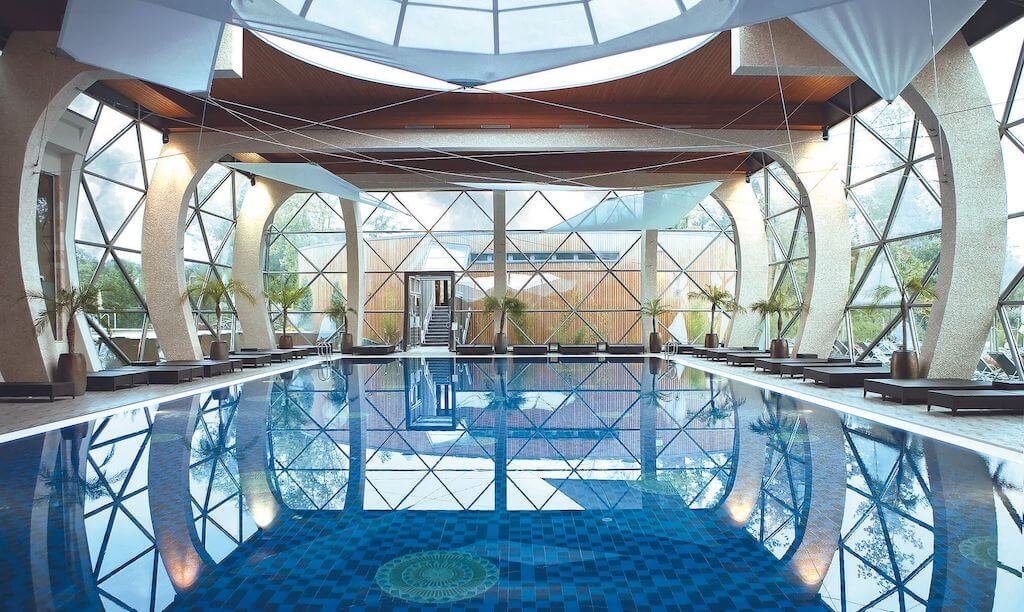
Sarvar is a balneological resort known for having the best thermal hotel in Hungary, Spirit Hotel Thermal Spa 5*. The presence of two healing hot springs in Sarvar, differing in mineral properties, expands the range of treatable diseases.
Water from one hot spring is rich in minerals; the other spring has a different composition.
The two springs underpin Sárvár’s long spa tradition.
Salt-rich water from the source is used to produce Sárvár bath salts. The bathhouse also has a salt cave.
6. Miskolc-Tapolca Cave Bath
Visitor update: The complex suffered a fire in 2024 and has undergone reconstruction. Check the latest visitor information before travelling, as access to specific facilities can change.
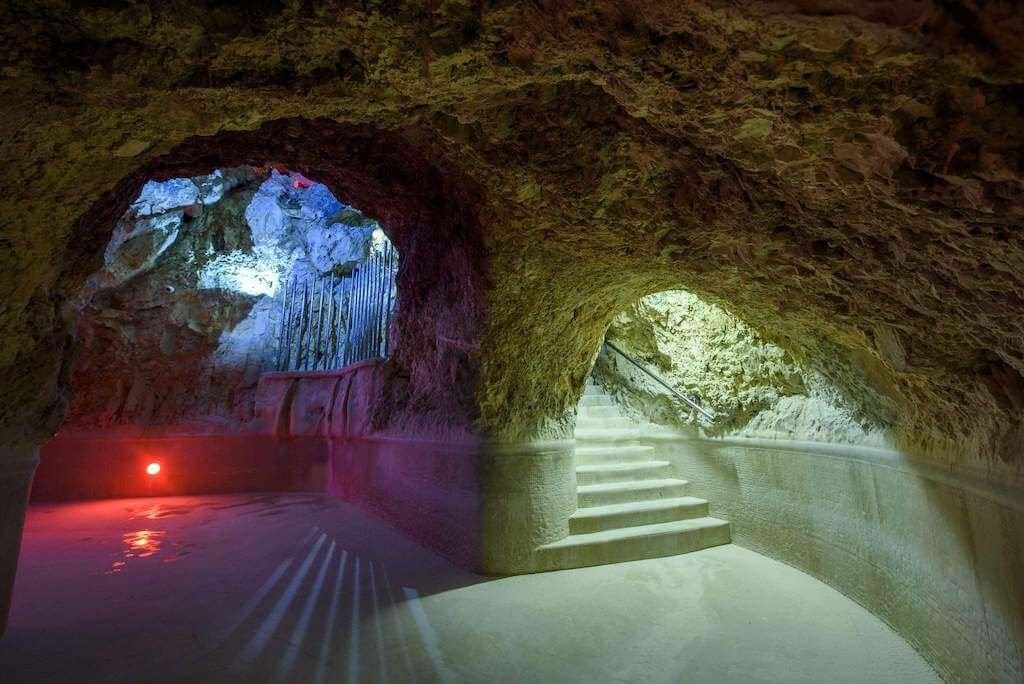
The city of Miskolc-Tapolca is famous for the country’s only therapeutic cave bath, formed by springs beating under the cave vaults. The cave’s atmosphere with an air temperature of +18°C, beneficially affects the lungs and respiratory tract year-round.
The water in the cave bath – a lime-hydrogen-carbon dioxide type containing radon – does not have a high concentration of microelements, so it is recommended for bathing without age restrictions.
The mineral water in the two indoor pools is maintained at 35°C; in the “Roman” and “Star” halls – 32°C, and in the old cave pool – no lower than 29°C-30°C.
Visitors enjoy the unusual surroundings and warm pools of Miskolc-Tapolca.
The protection of the bath from the wind by the surrounding beech forest creates a microclimate ideal for wellness rest.
7. Debrecen Aquaticum
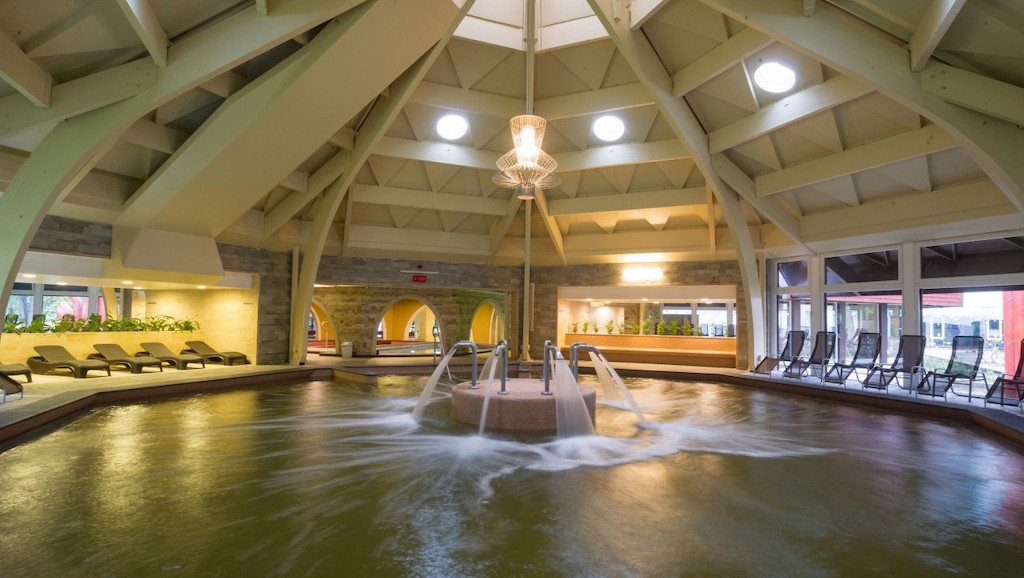
The city of Debrecen, located within the eastern forest-steppe zone, is called the second capital. Being among the top three balneological resorts, it includes the treatment departments of the “Aquaticum” complex and a hotel located in a forest park.
The world-famous covered “Mediterranean” bath with a dome of 66 meters in diameter with “effects” of the new millennium – a tropical garden, slides, cave baths, hydro massage pools, geysers, and waterfalls. A comfortable beach with 6 pools adjoins the bathhouse building.
The local mineral water has a distinctive chemical composition.
After a medical examination, an individual treatment program is created, and the course of balneotherapy can be supplemented with electrotherapy, laser and magnetic therapy, mud poultices, and therapeutic massage. On the main square of Diod, a drinking fountain was built at the beginning of the 19th century, where mineral water is still drunk today.
8. Harkány
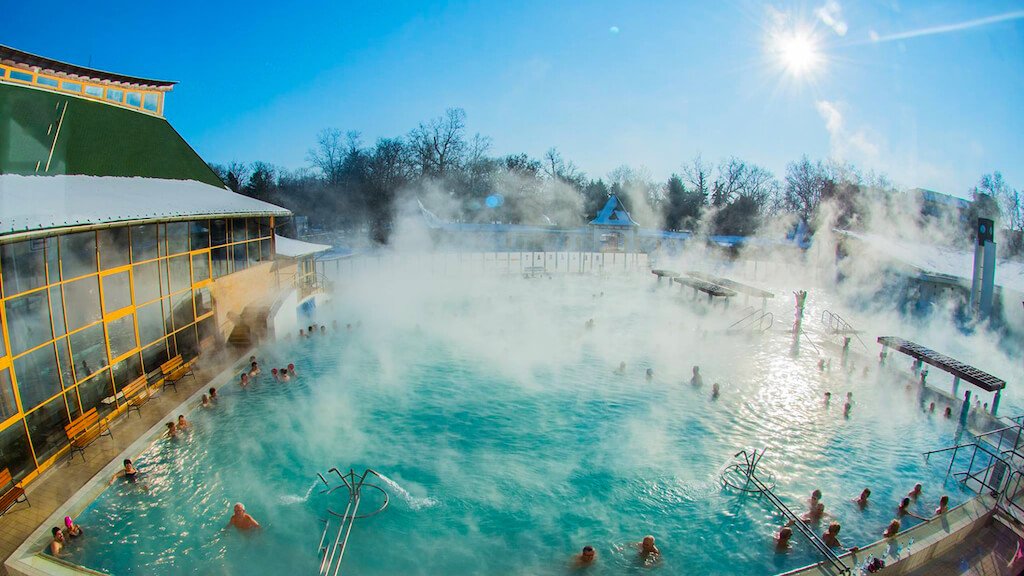
A balneological resort located in the southern region of Hungary near Mount Tenukesh. The thermal sulfur waters of Harkany have been known for more than a century, with the first bathhouse opening at the beginning of the 20th century.
The renovated bathhouse in our millennium is fed by mineral water with a temperature of +62°C, coming from the depths of 1,500 meters. The wide range of healing properties is based on the content of sulfides, selenium, fluoride, and zinc. The presence of gases in sulfur water causes healing substances to penetrate the body through skin cells and breathing.
The healing effect is also exerted by the steam containing gas rising above the pools in a layer from 10 to 30 centimeters. The main profiles of the balneo resort are dermatology, gynecology, and rheumatology.
Visitors interested in supervised spa treatments can enquire about the programmes offered by the medical centre.
9. Hajdúszoboszló
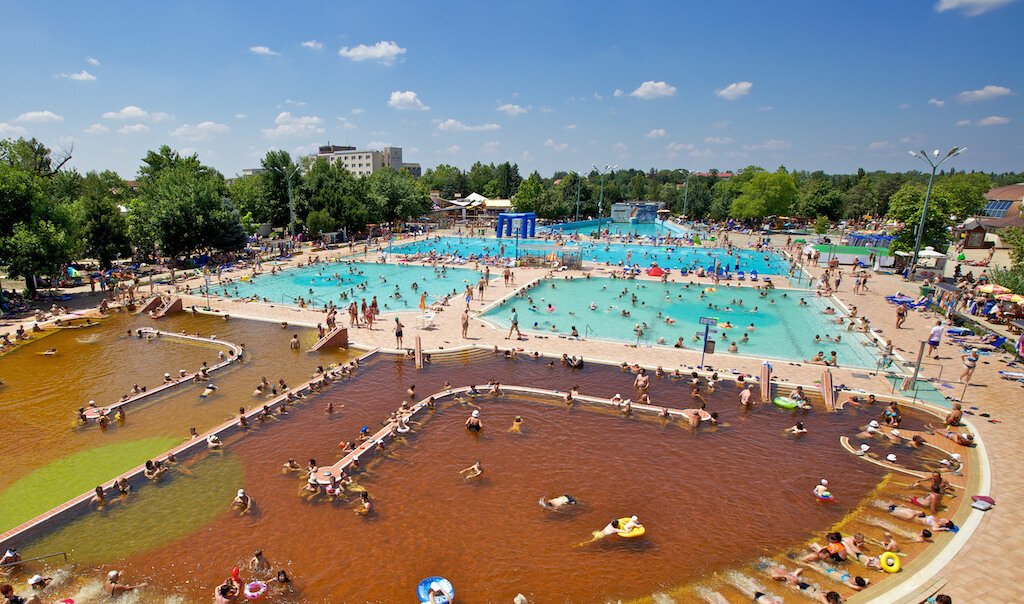
Rheumatics from all over Europe strive to get to the thermal baths of the Hajduszoboszlo balneological resort, which has a beneficial climate and an atmosphere saturated with salt vapors mixed with iodine emanating from a large lake.
The city has baths and pools where you can independently relax and get health benefits. Treatment under medical supervision takes place year-round in the largest hydrotherapy center in Hungary.
The medical complex structure has 4 subdivisions:
- Healing bath with indoor and outdoor thermal water pools at +32°C, +36°C, and +38°C
- Aqua Palace with 8 thematic pools and slides for adults and children
- Beach area with a 30-hectare bath, wave pool, pearl bath, and swimming pool, operating from May 1 to September 30
- Aquapark with numerous slides
For therapeutic purposes, the subdivisions offer more than 40 types of procedures recommended by individual programs. A wide range of ailments is treated with alkaline water containing iodine, bromine, table salt, and bicarbonates, reaching +75°C.
The baths are filled with water from a depth of 1,090 meters. Scientists have also found the presence of titanium, copper, vanadium, zinc, barium, and other heavy elements in the water, which is why it was named “boiling gold.”
Specialised spa packages may include mud wraps, massage and other supervised procedures.
10. Balatonfüred
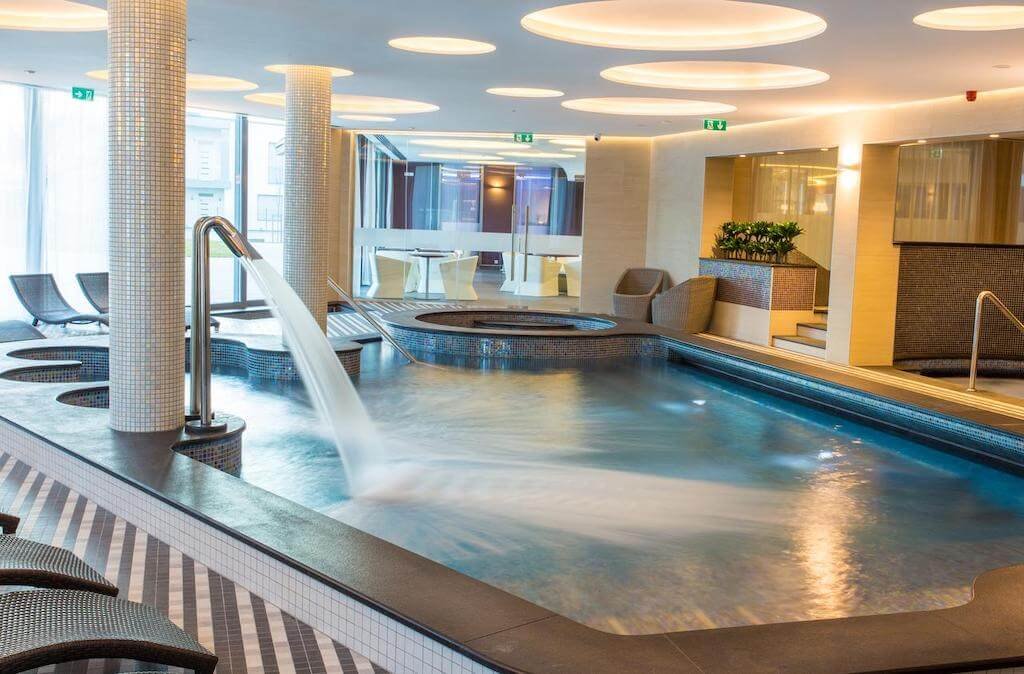
Balatonfüred is a historic resort on Lake Balaton, known for its spa tradition and carbonated mineral springs.
However, the main specialization of local sanatoriums is cardiology. Balatonfured is home to the country’s main State Cardiology Center. Several ancient carbon dioxide springs beat from the ground near it. The comprehensive sanatorium-resort treatment programs include progressive methods of treating the cardiovascular system, recovery after acute myocardial infarction and surgeries.
11. Visegrád
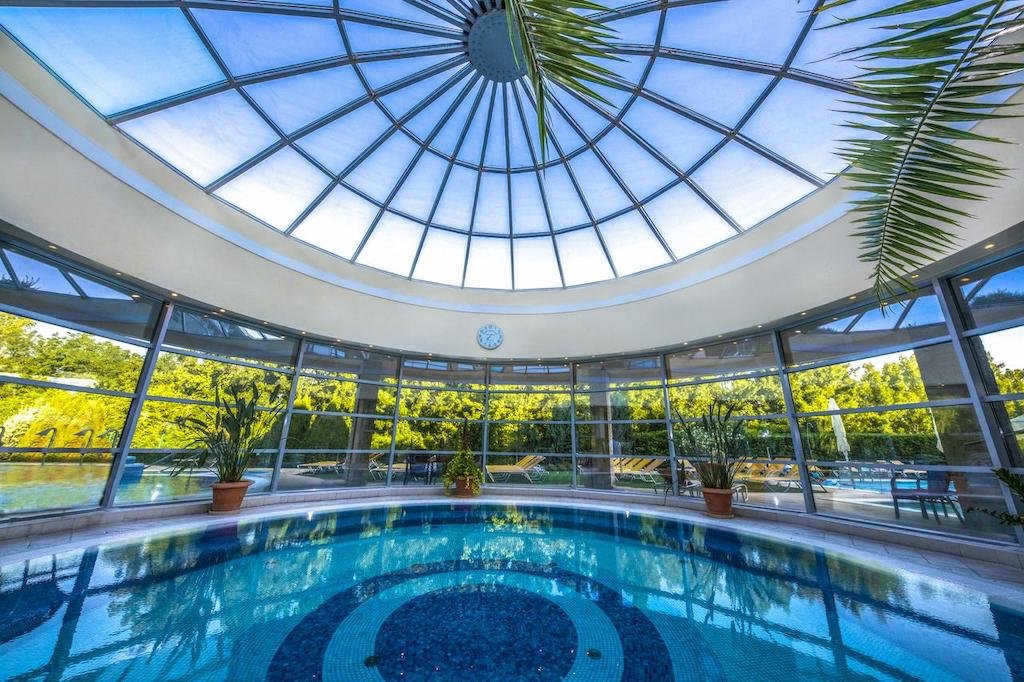
A small picturesque town located in the bend of the Danube River, 45 kilometers from Budapest. The resort thermal complex, based on the mineral healing waters of the Lepence spring, originating at a depth of 1,300 meters, is surrounded by the Pilis Nature Park.
The thermal centre offers a variety of wellness facilities in a scenic setting.
The treatment methods include the excellent effect of mud applications, 4-chamber baths, sessions in the salt room, hydro and aromatherapy, baths with aromatic oils, and various procedures based on hot mineral water.
12. Zalakaros
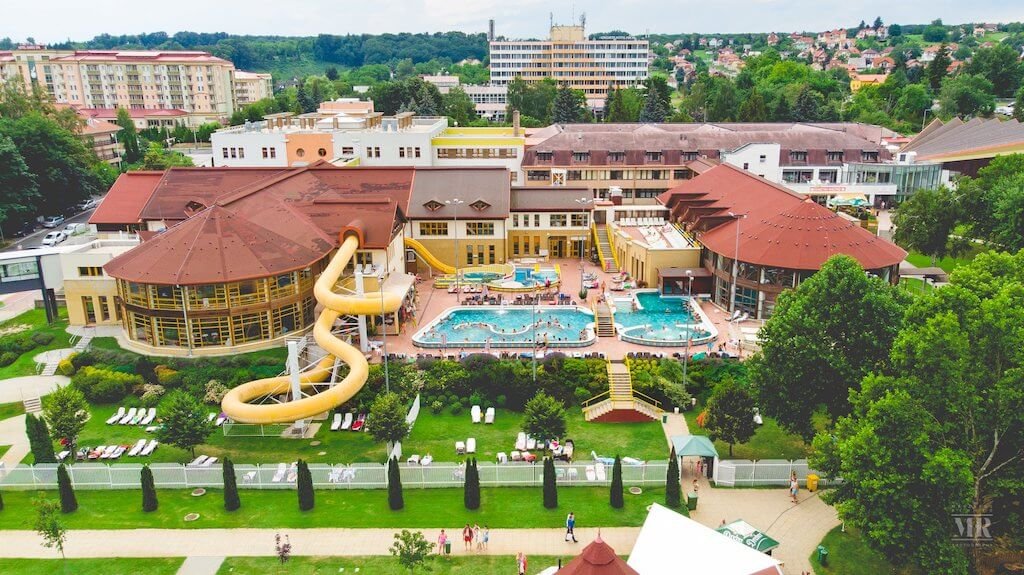
Despite its novelty, it has gained popularity among families with children and people of all ages. The resort’s hydrotherapy center is well complemented by an entertainment water complex.
The main treasure of Zalakaros is truly miraculous water from a depth of over 2,000 meters with a temperature up to +96°C, filling the pools of Zalakarosi Fürdő. The high bromine, iodine, and fluoride content has made Zalakaros’ alkaline-chloride water the country’s leader in healing properties.
These mineral springs are central to the town’s spa heritage.
The bath has male, female, and family changing rooms, where, after changing, visitors can go to the beach area, the water park, or the indoor pool. Two pools are open-air: with water at +36°C and +34°C, deepened to 1.1 meters.
Follow facility-specific time and temperature guidance when using the pools.
13. Gyula Castle Bath
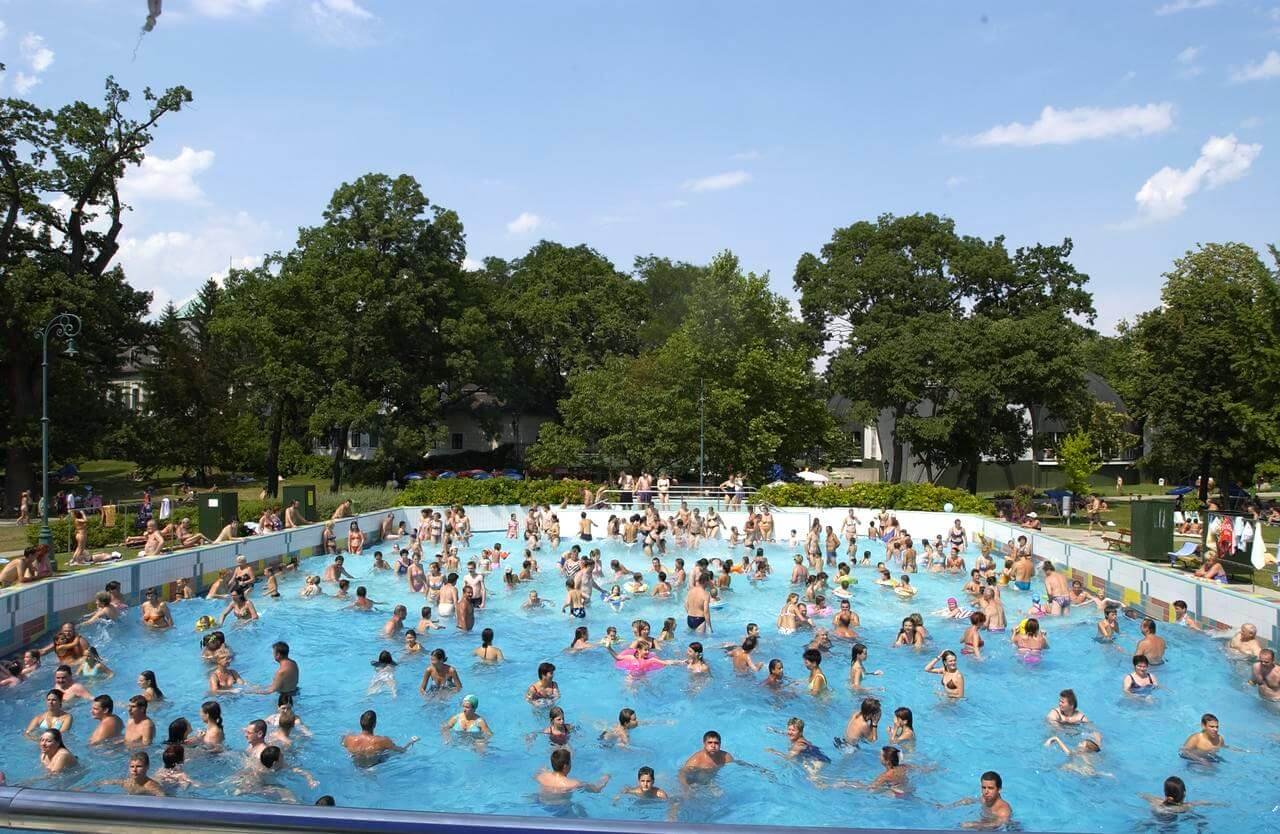
Gyula is a resort near the Hungarian-Romanian border, spread out on the banks of the Körös River. Gyula’s pools are filled from 7 thermal springs, healing many ailments.
In the Castle Bath, located in the middle of an old park, health is restored using a comfortable beach and thermal healing pools. Bathing fills with energy, improves overall physical condition, allowing one to forget about diseases.
In the Fortress balneological complex, health procedures are taken in the water of 20 pools with “effects,” “children’s paradise,” in wellness center treatment rooms, steam rooms and saunas, and carbonic baths. After the examination, a special set of procedures is developed for each patient with locomotor system ailments, skin problems, and digestive issues.
Best Time to Visit
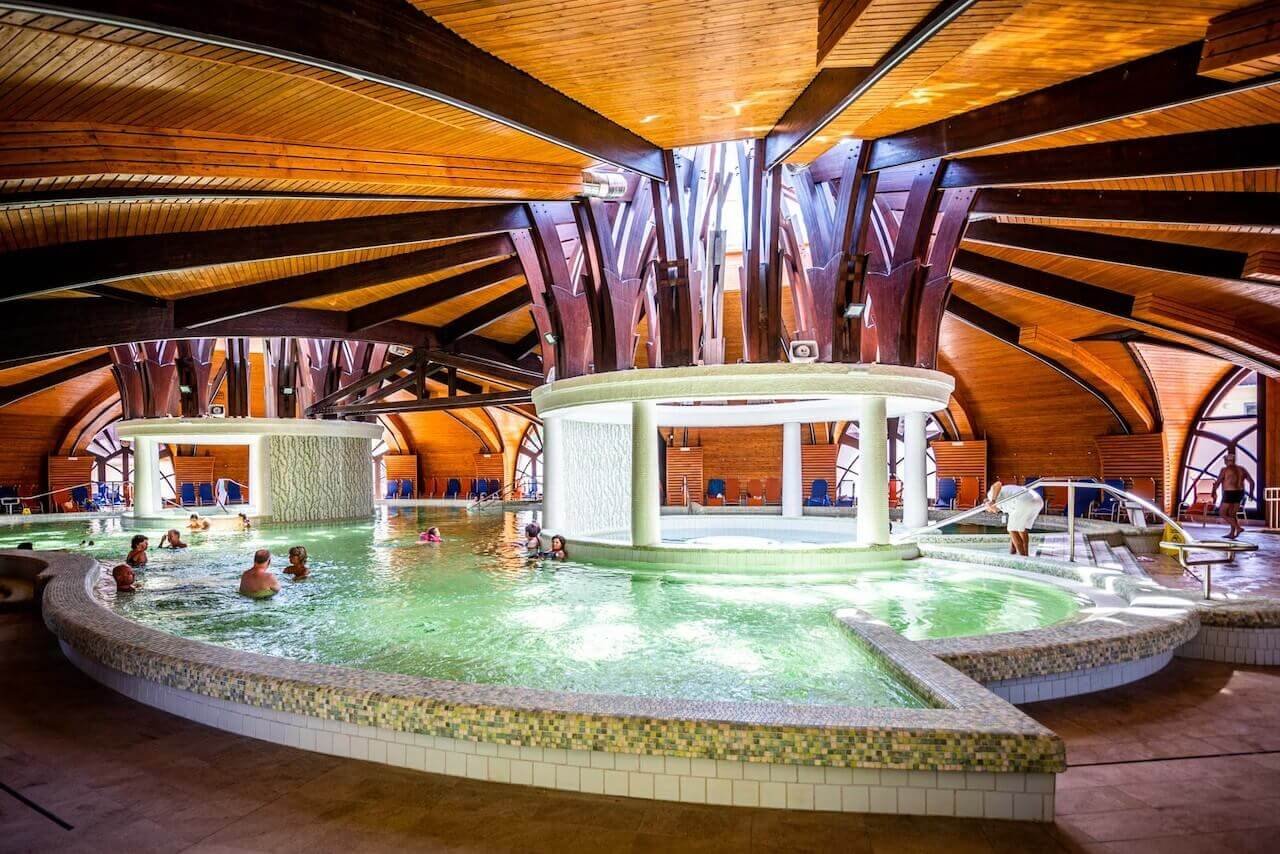
Thanks to the mild climate, Hungarian resorts are suitable for wellness holidays almost any season. The sun does not leave the sky of Hungary for more than 2,100-2,200 hours a year. Summers are moderately hot, autumns are dry and sunny, winters are mild, and springs are warm and rainy.
The bathing season starts in early May and lasts until early October. Although it often rains in May, they are usually short-lived. After the rain, the sun appears, inviting you to enjoy bathing in thermal reservoirs and pools.
From the second half of June to the first decade of September, rainfall is very rare, and the average air temperature stays around +22°C. In July and August, hot weather, like in Madrid or Cyprus, can prevail in the Zalakaros or Debrecen areas, but there are also cool days.
Visitors seeking medical spa treatment should discuss an appropriate season and programme with a qualified clinician.
Which Resort to Choose for a Family Vacation
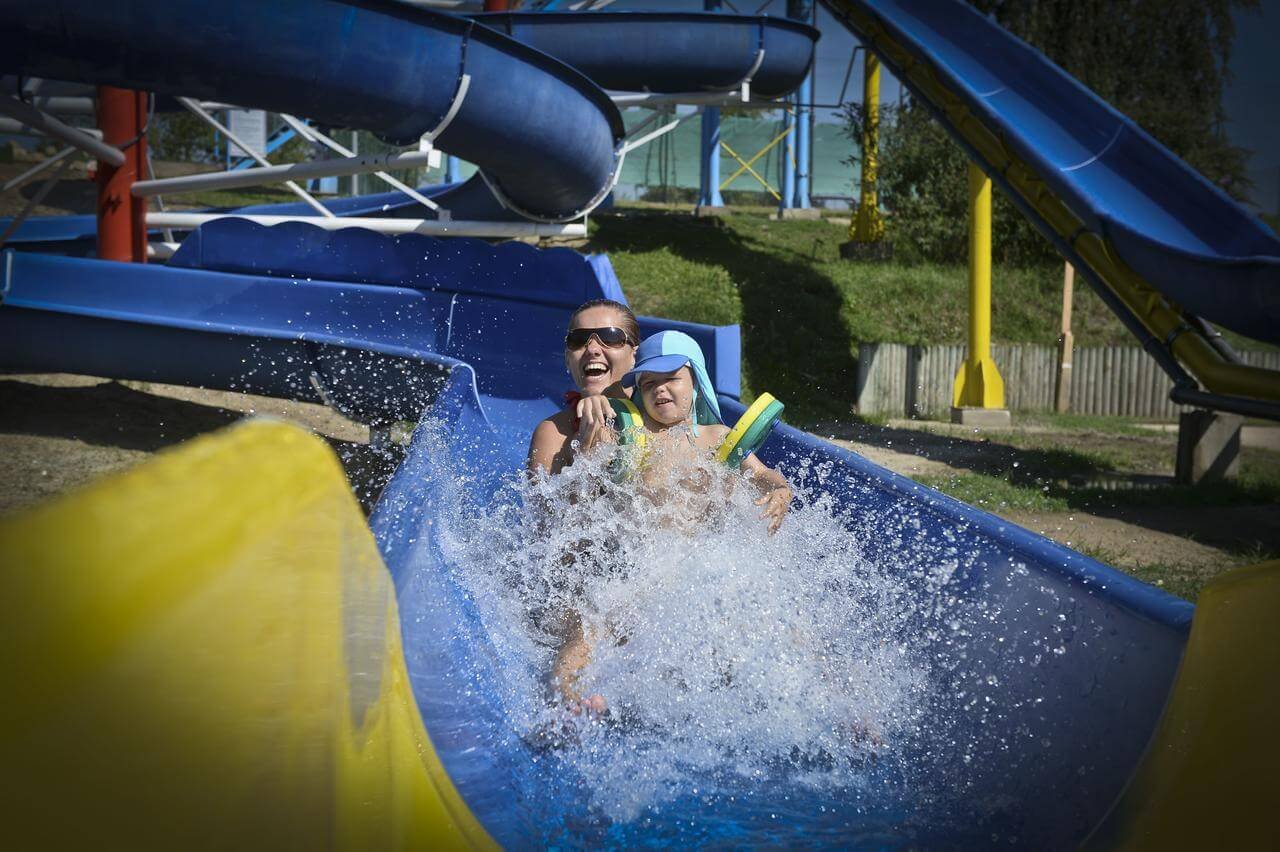
Hungary is an excellent country for family holidays with children. The more than 3-month long bathing season on the beaches of the healing Lake Balaton and open pools provides vast opportunities for swimming, sunbathing, beach holidays, and meaningful leisure.
In thermal complexes, pools for the whole family and paddling pools with fairy-tale designs are usually arranged next to the treatment area. Children can diversify their beach holidays with summer water parks in Budapest, Debrecen, Hajduszoboszlo, Zalakaros, Sarvar, equipped with slides with “effects” reaching up to 10 meters in height.
Parks with playgrounds can be found at any resort. Be sure to visit the unusual playground on Gellert Hill in Budapest, take a ride on the children’s railway, visit the Wildlife Park, and test your agility in the rope park.
A bright event will be visiting the Sumeg Fortress – the venue for knight tournaments, the cave under the Buda Castle, where a treatment center is located in the rock, and a pleasant trip to the two-hundred-year-old confectionery of Buda.
For history enthusiasts, exploring the ruins of ancient Roman settlements: “Aquincum” in Budapest and “Gorsium Ruins” in Szekesfehervar will be interesting. You can travel through the underground galleries of caves without leaving Budapest.
In the city, there are the Palveldi, Semlohegy, and Molnar-Janosh caves. Museums: “Palace of Wonders” and the railway museum in Budapest, the Pannonian Sea in Miskolc, “Agora” in Debrecen, the marzipan paradise in Eger with sweet sculptures will surely delight children.
Nature lovers can visit Lake Kis-Balaton with large populations of waterfowl and a buffalo reserve near the lake. Watching animals in the Budapest, Debrecen, and Miskolc zoos will also bring great joy to children.
Advantages of Treatment and Rest
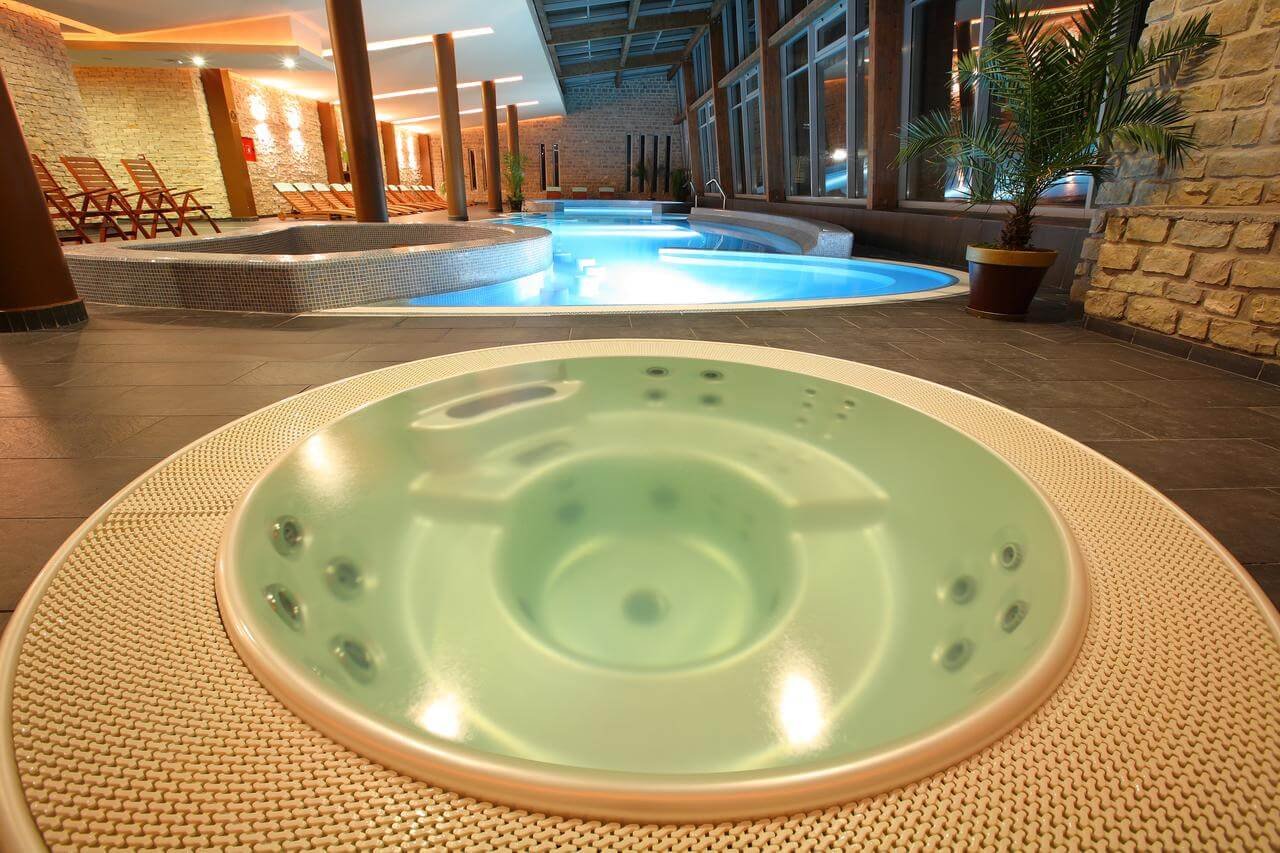
Hungary attracts tourists with extensive wellness opportunities at specialized thermal resorts, distinguished by the composition and healing properties of their waters.
Balneological centers at the resorts are usually represented by two types:
- Spa complexes with a large package of therapeutic services, thermal baths, and entertainment
- Sanatorium complexes where treatment is conducted with mineral water and other modern methods
They operate year-round, conducting medical examinations directly on-site with an offer of an individual treatment program. Hotels located near thermal springs ensure a comfortable stay.
Hungary is rich in historical and architectural monuments, medieval castles, and palaces in Baroque and Classicism styles, beautiful parks, and various museums, making treatment wonderfully combined with exciting excursions and cultural programs.
Indications
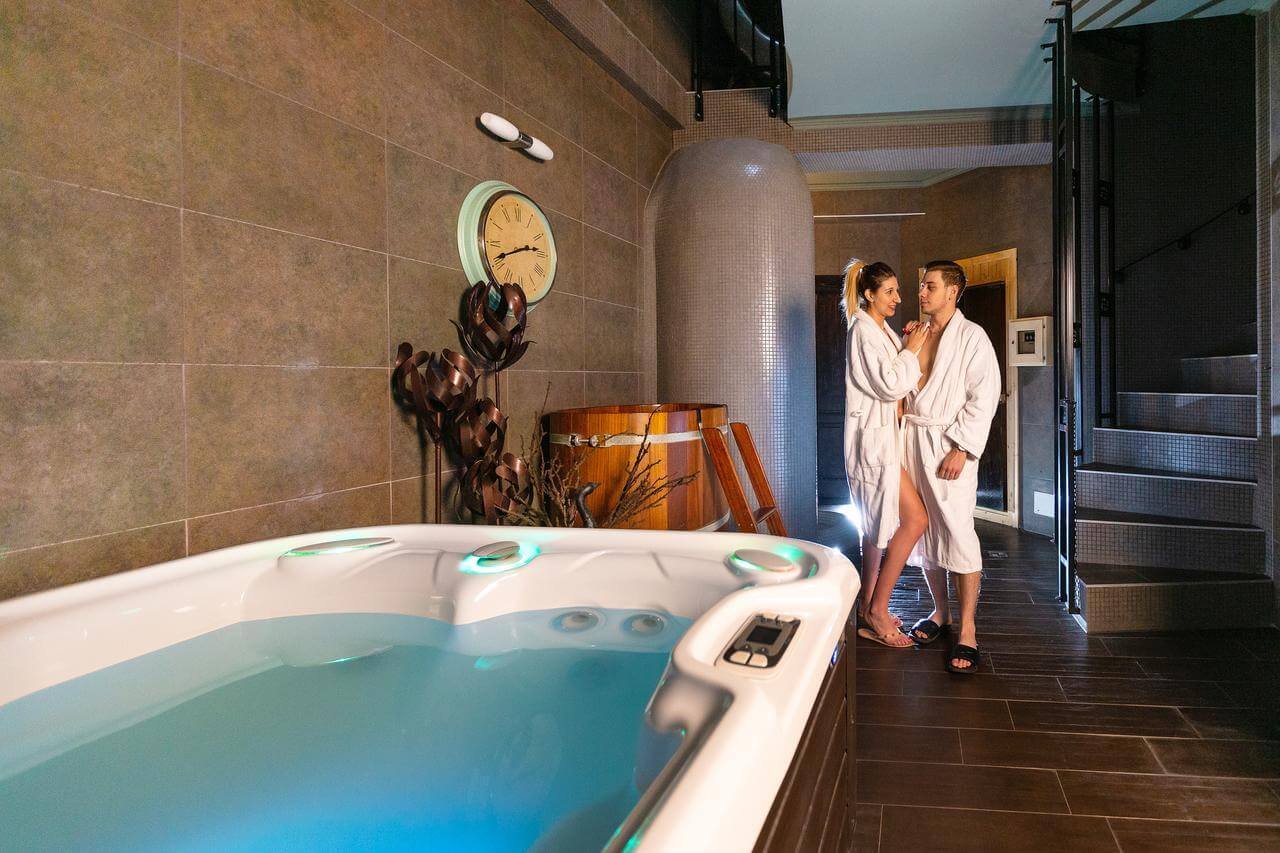
Medical spa programmes are individually assessed by qualified professionals. If you are considering treatment for a medical condition, consult your clinician and the resort before booking. Compare packages and costs for your dates.
Contraindications
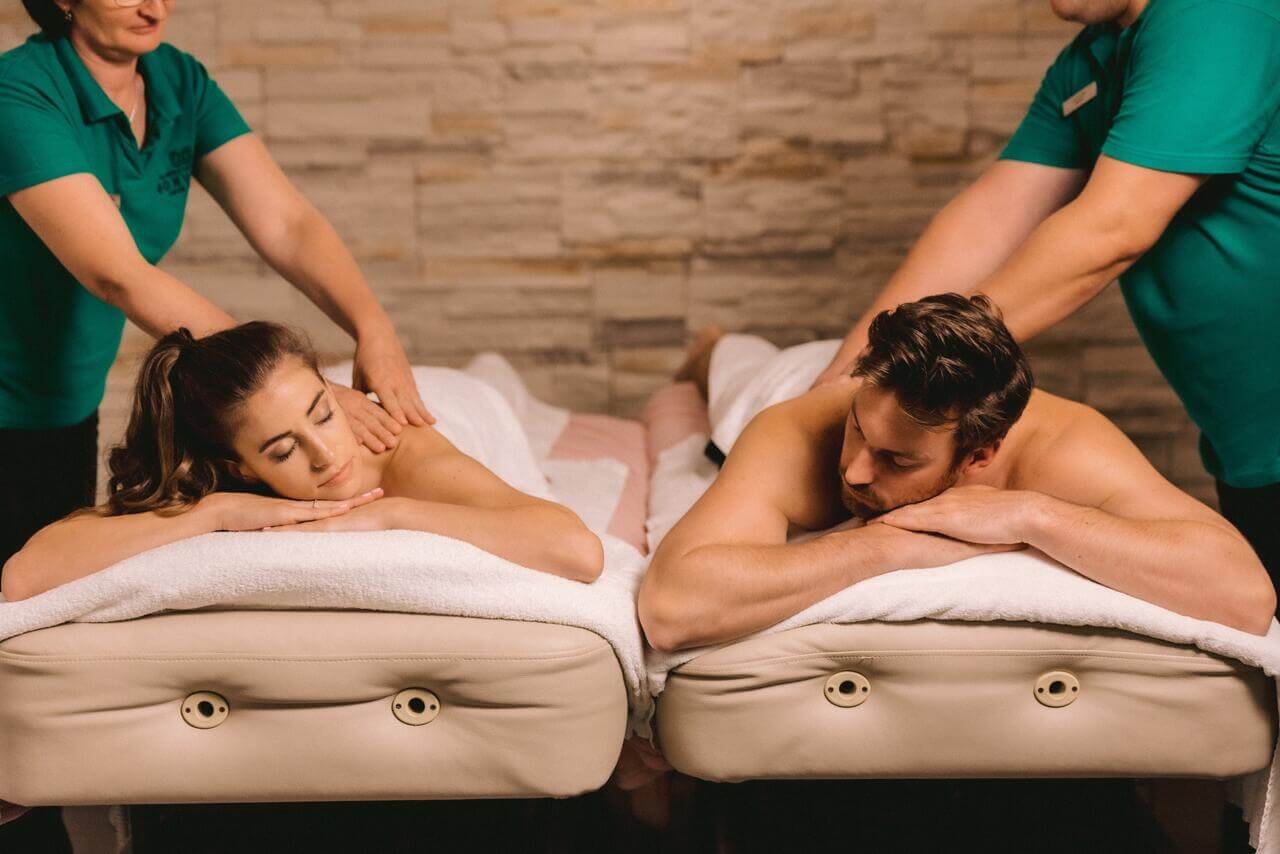
Before using hot thermal pools or medical spa treatments, seek professional advice if you have a medical condition, are pregnant or are travelling with children. Check the venue’s age, temperature and bathing-time rules. Choose family pools where appropriate.
Thermal resorts in Hungary: frequently asked questions
What is the most famous thermal resort in Hungary?
Hévíz, with its large natural thermal lake, and the Széchenyi Bath in Budapest.
Can you swim in Lake Hévíz in winter?
Yes, outdoor bathing is available at Hévíz in winter, subject to opening arrangements. The lake’s central bath building remains closed.
Is there a cave bath in Hungary?
Yes, Miskolc-Tapolca has a famous cave bath. Check the latest access arrangements following reconstruction.
Related guides on Enjoy The Trip: Budapest Day Trips: 12 Most Interesting Places to Visit, Budapest: 20 Fascinating Museums That Will Blow Your Mind, 15 Beautiful Parks in Budapest to Relax and Explore, Szimpla Kert Is Europe’s Best Bar: The Full Top 10.

Konstantin is an acclaimed travel writer, celebrated for transforming ordinary journeys into extraordinary narratives. With years of experience exploring diverse destinations across the globe, his work blends vivid storytelling, cultural insights, and practical advice to inspire wanderlust and guide readers toward unforgettable adventures.
As a key contributor to enjoythetrip.org website, Konstantin has built a loyal readership through their expertise in uncovering both iconic landmarks and off-the-beaten-path treasures. He specializes in providing travelers with honest, actionable tips, whether it’s finding the best resorts in Maldives, exploring cultural hubs like Paris, or diving into the natural wonders of Croatia.