
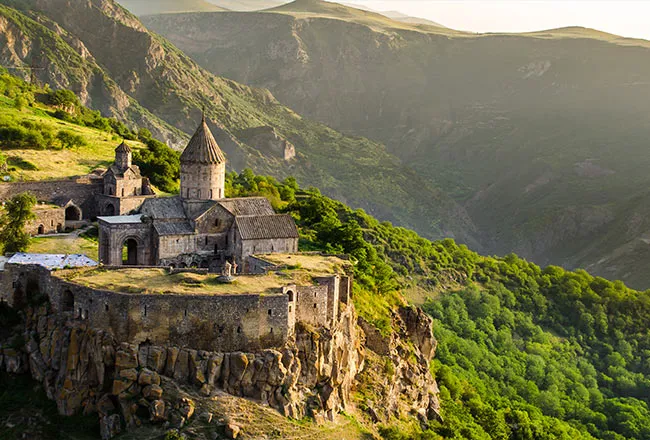
Exploring Armenia by car is a rewarding way to discover its monasteries, mountains and lakes. Armenia is a country located in the northeastern part of the Armenian Highlands. It is one of the oldest state formations in the world. The geographical location is such that the country borders Azerbaijan to the east, the Nakhichevan Autonomous Republic (part of Azerbaijan) to the southwest, Iran to the south, Turkey to the west, and Georgia to the north.
The Armenia–Azerbaijan border remains closed. Thousands of tourists visit the country annually, which is rich in both historical monuments and the natural beauty of the Caucasus.
A rental car gives you flexibility to explore this wealth of attractions. In addition, the guide includes 25 places and viewpoints in Armenia, with advice for planning a road trip.
Armenia by car: map and route overview
Plan your Armenia road trip around the following groups of sights. For example, you can combine the nearest stops into day trips from Yerevan or use several overnight bases for a longer journey.
| Route group | Places | Highlights |
|---|---|---|
| 1 | Yerevan | City sights; base |
| 2 | Zvartnots, Saint Hripsime, Etchmiadzin | UNESCO heritage |
| 3 | Hovhannavank, Garni, Geghard, Charents Arch | Day trips from Yerevan |
| 4 | Lake Sevan, Sevanavank, Hayravank | Lakeside monasteries |
| 5 | Dilijan, Goshavank, Haghartsin | Forest and historic sites |
| 6 | Khor Virap, Areni, Areni-1, Noravank | Views and wine country |
| 7 | Selim Pass, Jermuk, Shaki Waterfall | Mountain roads (check conditions) |
| 8 | Tatev, Wings of Tatev, Devil’s Bridge | Southern route; allow time |
| 9 | Gyumri | Architecture and culture |
| — | Khndzoresk Cave Town | Defer while official advisory applies |
Travel update, November 2026: The UK travel advisory advises against travel within 5 km of Armenia’s eastern border with Azerbaijan and along the M16/H26 between Ijevan and Noyemberyan. The US travel advisory also identifies areas east of Goris, including the region around Khndzoresk, as high-risk. Avoid those areas, check current advice before departure and ensure your rental insurance covers the route.
Benefits of car rental in Armenia

Upon arriving in the capital of Armenia, travelers can use the services of one of the companies that rent cars. It is best to do this through the Localrent aggregator. Moreover, you can book services in advance from home. Compare rental conditions and book a suitable car through Localrent in Yerevan.
Upon arrival at Yerevan airport, your rental provider can arrange pickup at the airport or another selected location, where available. After collecting the car, settle into your accommodation and plan the next day’s route. Also, check the insurance excess and mileage limits. In addition, inspect the vehicle and record any existing damage. Finally, download offline maps and confirm fuel stops before a long drive. Below is a list of significant tourist sites that are best visited by car.
For car tourists: the main roads Yerevan-Sevan, Jermuk-Tatev, Tatev-Yerevan have good quality asphalt, but they are all single-lane – quite decent, with good asphalt. However, they are single-lane, without lighting, shoulders, and often without markings.
On other routes, you can find road surfaces in a deplorable state. But it is in these places that you can find panoramas of unparalleled wild beauty. As for gas stations, there are many, but only on the main routes.
Regarding the navigator, you can buy a local SIM card in advance and use Yandex Navigator. Local traffic police are very friendly and always ready to show the right way.
Armenia road trip: ticket prices and opening times
For example, the published adult entry prices for Garni Temple and Zvartnots are 1,500 AMD each. The Wings of Tatev round-trip fare is 9,000 AMD from March to November and 5,500 AMD from December to February. Also, check the operating calendar before visiting.
Yerevan

This is a rapidly developing city with modern European infrastructure. Alongside skyscrapers is a small historical part with a very high density of attractions. Yerevan is a unique relic of ancient Armenians – Urartu, and modern hypermarkets, medieval churches, and Stalin-era houses.
One of the oldest cities in the world lies in the Ararat Valley. Meanwhile, the capital stretches along the Hrazdan River. Here, oriental bazaars are buzzing, the local youth and tourists fill numerous bars and restaurants in the evenings or just stroll along the wide avenues.
Top things to see in Yerevan
A rental car lets visitors see more attractions in one or two days. Here are some of the most popular tourist spots worth seeing:
- Cascade: One of the most popular tourist places in the city, it starts right behind the Opera House, consisting of three parts: an alley, stairs, and an observation deck at an altitude of 250 meters above sea level.
- Republic Square: The central square of Yerevan (until 1991, Lenin Square), built in the Soviet neoclassical style, now attracts tourists with the beautiful architecture of the surrounding buildings and evening singing fountains.
- Dancing Fountains on Republic Square: A light and music show of dancing fountain jets on Republic Square, which attracts city residents and Yerevan guests every evening.
- Tsitsernakaberd: A memorial complex in memory of the victims of the Armenian genocide of 1915, built on the eponymous hill, representing a mausoleum of 12 pylons (in memory of 12 Armenian territories captured by Turkey) with an Eternal Flame inside, playing mournful music.
- Erebuni: An ancient city-fortress on one of Yerevan’s hills, representing ancient ruins, attracts tourists with the beautiful panorama of the city.
- Charles Aznavour Square: A square named in 2001 in honor of the French chansonnier of Armenian descent, Charles Aznavour, who helped Armenia all his life.
Besides these attractions, it will be interesting to visit and see the Opera House and the monument to composer Arno Babajanyan, the Church of Surb Zoravor Astvatsatsin, Freedom Square, the Blue Persian Mosque, the Cathedral of Saint Gregory the Illuminator, and visit Northern Avenue.
In addition, Yerevan has many museums worth visiting.
Zvartnots

Catholicos Nerses III Shinogh, also known as the Builder, commissioned the cathedral in the seventh century. Historians believe Zvartnots remained active until the end of the 10th century. In the early 20th century, archaeologists began uncovering the ruins from beneath a thick layer of soil.
Archaeologists discovered the ruins of the temple, the Catholicos’s palace, a bath, monastic cells, household items, graves, a church and a stone winery. Zvartnots, translated from ancient Armenian, means “Temple of Heavenly Angels.” The ruins, including part of the colonnade, stand near Vagharshapat, west of Yerevan.
Renting a car allows you to start exploring Armenia’s attractions immediately by visiting the ancient temple’s remains. On the territory of the historical and cultural museum-reserve, which, together with the temple ruins, is included in the UNESCO World Heritage list, you can see numerous sculptural fragments, an arched colonnade with bas-relief images of grapevines, their clusters, and pomegranate fruits, as well as huge stone slabs with carved figures.
Also, look for the sundial discovered during excavations. In addition, the museum displays artifacts found during excavations at this site. These include colored ceramics, samples of jewelry, metal tools, nails, ploughshares. There is also a parking lot in front of the reserve’s entrance.
The museum-reserve charges admission; the standard adult price is 1,500 AMD. Also, check whether your chosen city pass covers it.
Church of Saint Hripsime
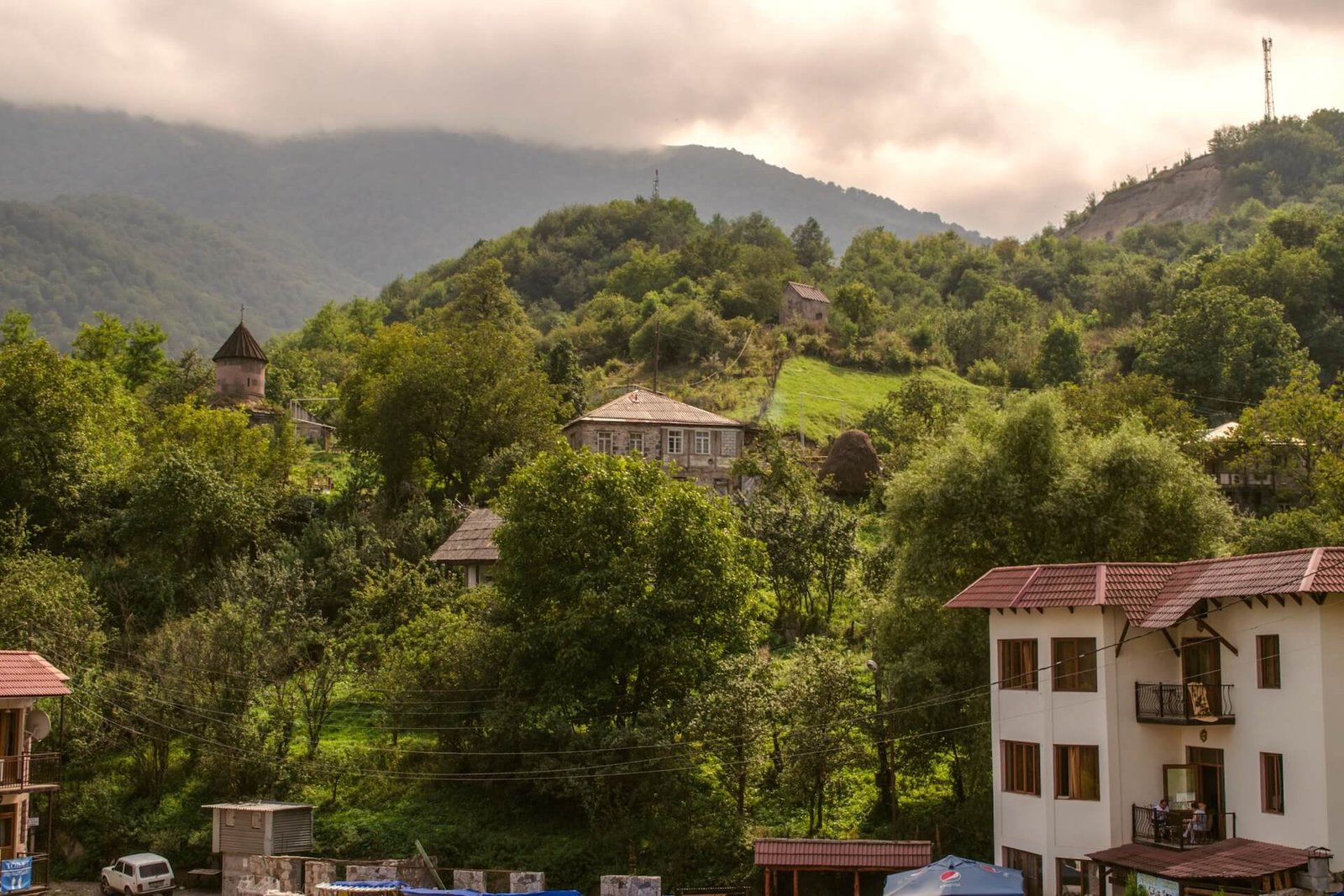
Near the Zvartnots temple in the ancient city of Vagharshapat is the grand temple structure – the Church of Saint Hripsime. The temple’s name is associated with the fate of 37 virgin girls who fled to Armenia in 301 AD from the Roman monastery of Saint Paul, escaping the persecution of the Roman emperor. One of the girls was Hripsime. She captivated the emperor with her beauty but refused to marry him.
The same story happened in Armenia. Only now, the beauty refused the Armenian king Trdat III, declaring to him that she was the bride of Christ and belonged only to him. In anger, the king ordered the execution of all 37 fugitives. Tormented by pangs of conscience, Trdat went mad.
According to tradition, Gregory the Illuminator saved him. He baptized the king, who, in turn, baptized the entire Armenian people. A temple was built at the execution site, which was rebuilt several times. The church acquired its modern appearance in 1653 when Catholicos Philip ordered a major renovation and general reconstruction of the building.
Etchmiadzin Monastery
In addition, the Church of Saint Hripsime is part of the Etchmiadzin Monastery complex. Its name reflects the other name of Vagharshapat, Etchmiadzin. Leaving the airport, it is best to go to Yerevan and rest at a hotel after the journey.
From Yerevan, head west towards the airport and Vagharshapat. This way, you can immediately see all three attractions: Zvartnots, the Church of Saint Hripsime, and the Etchmiadzin Monastery. In general, travelers on-site can choose one of two options.
Today, the monastery complex is the spiritual and administrative center of the Armenian Apostolic Church. The monastery determines the location of the throne of the Supreme Patriarch and Catholicos of All Armenians from 303-484 AD and again since 1441.
What to see at Etchmiadzin
In addition to the Church of Saint Hripsime, the Etchmiadzin complex includes a theological seminary, the building of which was built in the 19th century. Here, in the largest higher educational institution of the Armenian Church, students live and study.
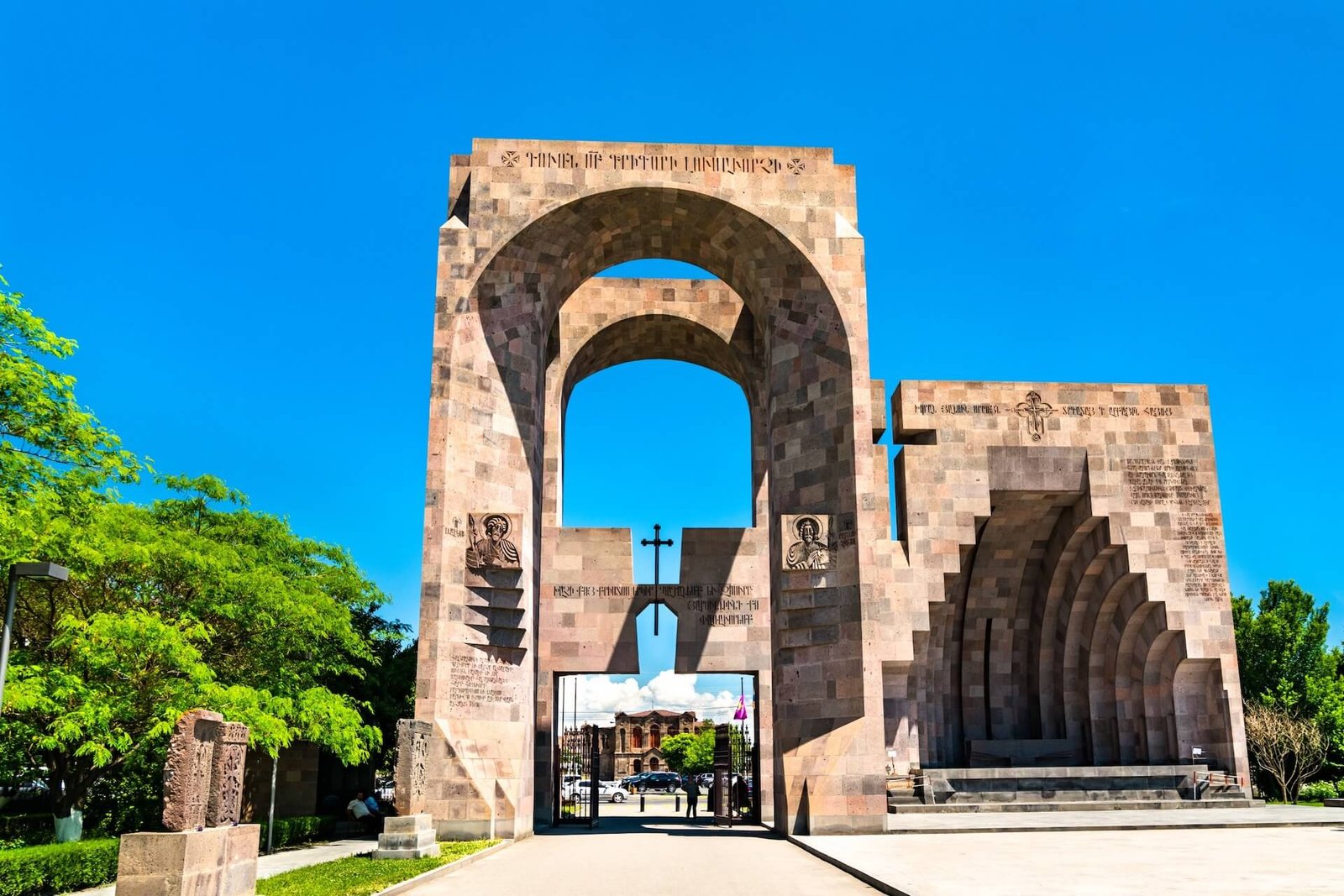
In addition, there are many khachkars here – a type of Armenian architectural monument and shrine representing a stone stele with a carved cross. If you go through the main entrance of the monastery – the Gates of King Trdat the Great and Gregory the Illuminator and look back, you can see the open altar of King Saint Trdat on the right side of the arch.
Also, note the architecture of the Church of the Holy Archangels. The building is a stone tower with a ribbed domed roof with a cross on a stele and a small crucifix above. The top of the wall has windows, where the frames are made in the form of stylized crosses.
Next, you can see the 1772 printing house and the building of the monastic residence, the walls of which are faced with tuff of contrasting colors. Moreover, the entire monastery complex is part of the UNESCO World Heritage list.
Hovhannavank
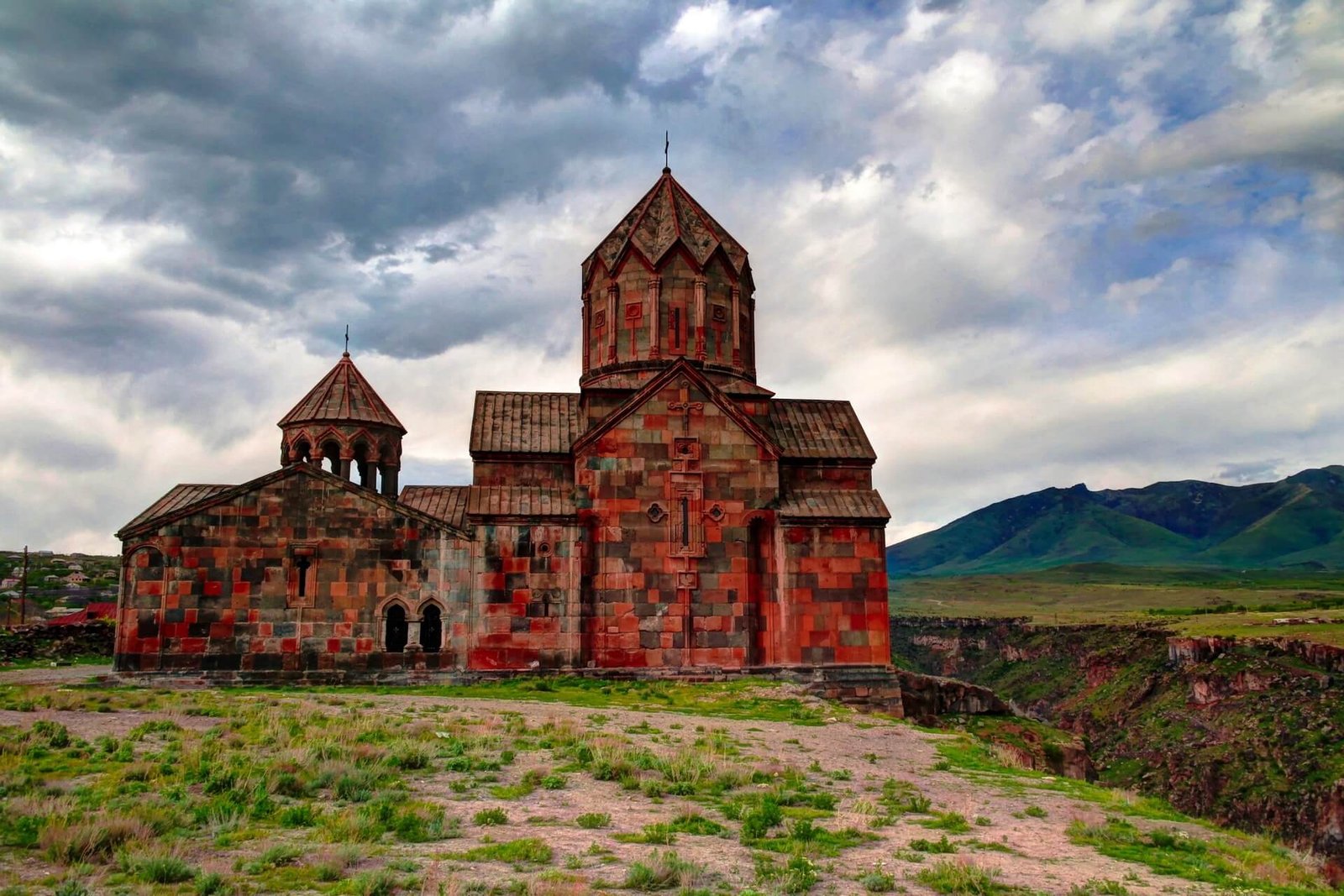
If time allows, on the same day, you can head from Etchmiadzin to the northeast to the Hovhannavank Monastery. The 27 km journey takes about 40 minutes. This is a medieval Armenian monastery in the village of Ohanavan.
The religious complex, rich in its history and amazing Armenian architecture, rightfully belongs to the golden fund of Armenian monasteries such as Geghard, Tatev, and Sanahin with Haghpat. Cyclopean masonry walls from the Urartu period surround its courtyard.
The monastery has long been famous for housing the shroud of Jesus Christ and the nail that pierced his right hand. The right hand of Saint Stephen was also stored here. Later, the clergy moved these relics to Etchmiadzin Monastery.
Earthquakes and shelling during the Russo-Persian War damaged the complex. However, restorers rebuilt the religious complex each time.
In addition, the monastery courtyard houses the Surb Grigor Basilica from the 5th century with a rare iconostasis in Armenia. Meanwhile, the church is adjacent to the ruins of the temple of the first Christians of the early 4th century. Bas-reliefs and Christian ornaments decorate the walls of Surb Karapet, the main church dating from 1221.
Unfortunately, a powerful earthquake destroyed the southern wall and dome in 1919. Between 1970 and 1990, restorers rebuilt the damaged parts of the church. Today you can see the remains of fortress walls with towers from the 12th-13th centuries and ancient tombstones.
Wings of Tatev Cable Car
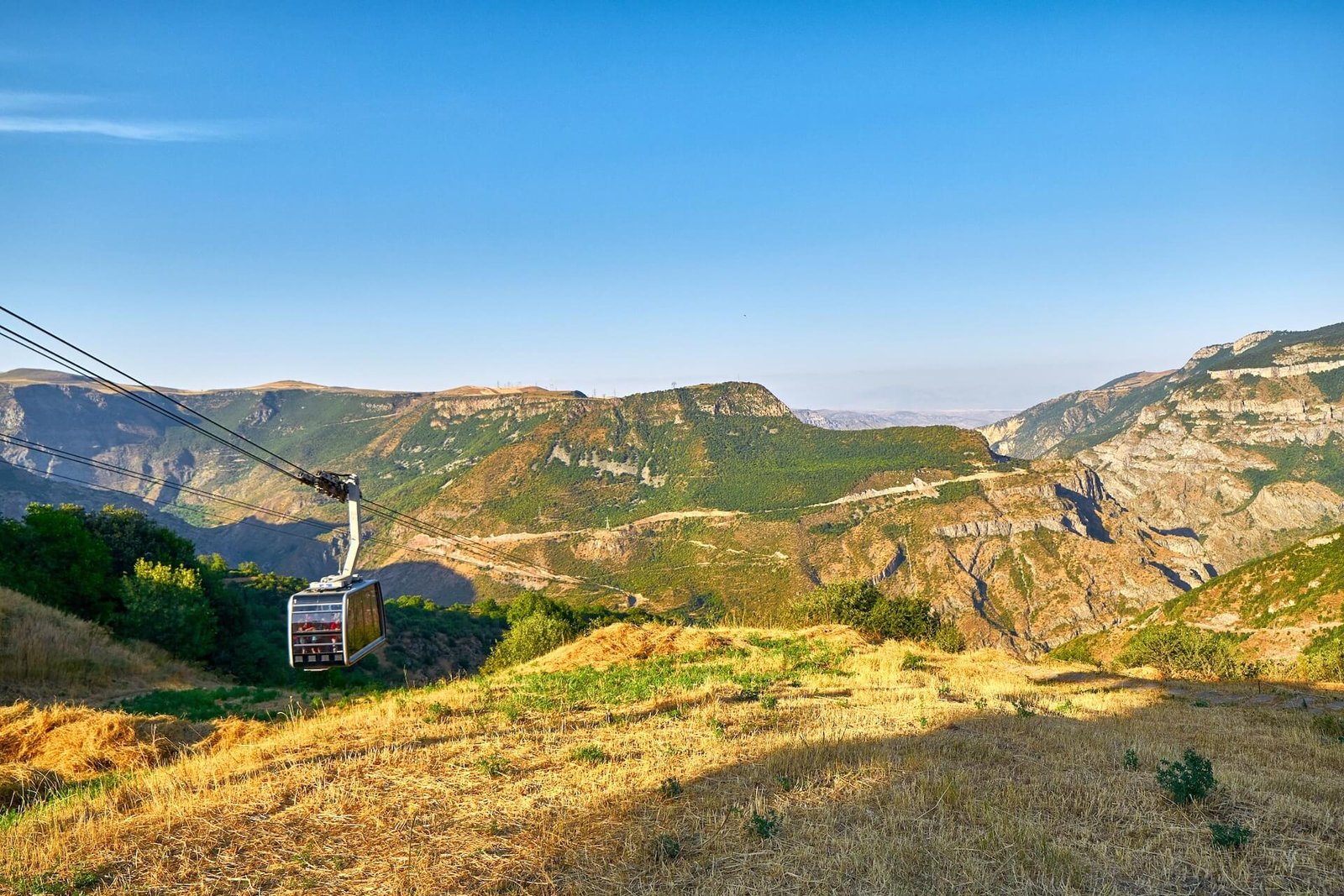
To ride in the cabin of the world’s longest passenger cable car, you need to leave Yerevan early in the morning and reach the village of Halidzor. The 236 km road takes about 4 hours.
The Wings of Tatev aerial route opened on October 16, 2010. Guinness World Records recognized it as the world’s longest reversible aerial tramway. Its length is 5752 meters. Over 10 months, the aerial road was built by the Austrian-Swiss company “Doppelmayr/Garaventa,” which is a world record for the construction time of such routes.
Two cabins move towards each other on the cable car over the Vorotan River gorge from the village of Halidzor to Tatev Monastery. Each cabin can carry up to 30 people and one guide. The journey also takes about 12 minutes.
When one cabin arrives at the Tatev station, the other completes its “flight” at the Halidzor station. After reloading, the movement of the cabins resumes in the opposite direction. The maximum height over the gorge is 320 meters.
Tatev

Upon arriving at the Tatev station, you can spend some time exploring Tatev Monastery. This historical monument from the 9th century is one of the most famous and ancient monastic complexes in Armenia. According to legend, the name “Wings of Tatev” comes from the belief that a soul entering the monastery’s walls gains wings.
The monastery was built at the turn of the 9th and 10th centuries. Tatev became the most important center of science and enlightenment in medieval Armenia. For a time, the monastery avoided the destruction and devastation that many Armenian monasteries suffered from the conqueror Tamerlane in the late 14th and early 15th centuries.
History of Tatev Monastery
Tatev University began operating within the monastery in 1373. However, in 1435, the troops of Shah Rukh, Timur’s son, destroyed and burned the monastery. Over time, the monastery was rebuilt. Tatev is famous for the fact that on April 27, 1921, a congress was held at the monastery, proclaiming the Dashnak Republic of Mountainous Armenia.
Today, you can see the following attractions on its territory:
- Church of Surb Poghos-Petros: The main structure from 895-906, with the tomb of Saint Grigor Tatevatsi, the last canonized saint of the Armenian Apostolic Church.
- Church of Saint Gregory the Illuminator: Built in 1295.
- Church of the Holy Mother of God: Built at the end of the 11th century, it is the smallest of the three churches of Tatev Monastery.
- Gavazan Column: Erected in 904, crowned with a khachkar, it has an unusual property of swaying at the slightest sign of an earthquake, thus warning monks of impending danger. Gavazan (heavenly staff) is an accurate heavenly compass oriented to the constellation Ursa Major (Hayk-Orion).
- Oil Mill from the 17th century: Preserves a massive millstone used for pressing oil.
Entrance to the monastery is free without restrictions.
Devil’s Bridge
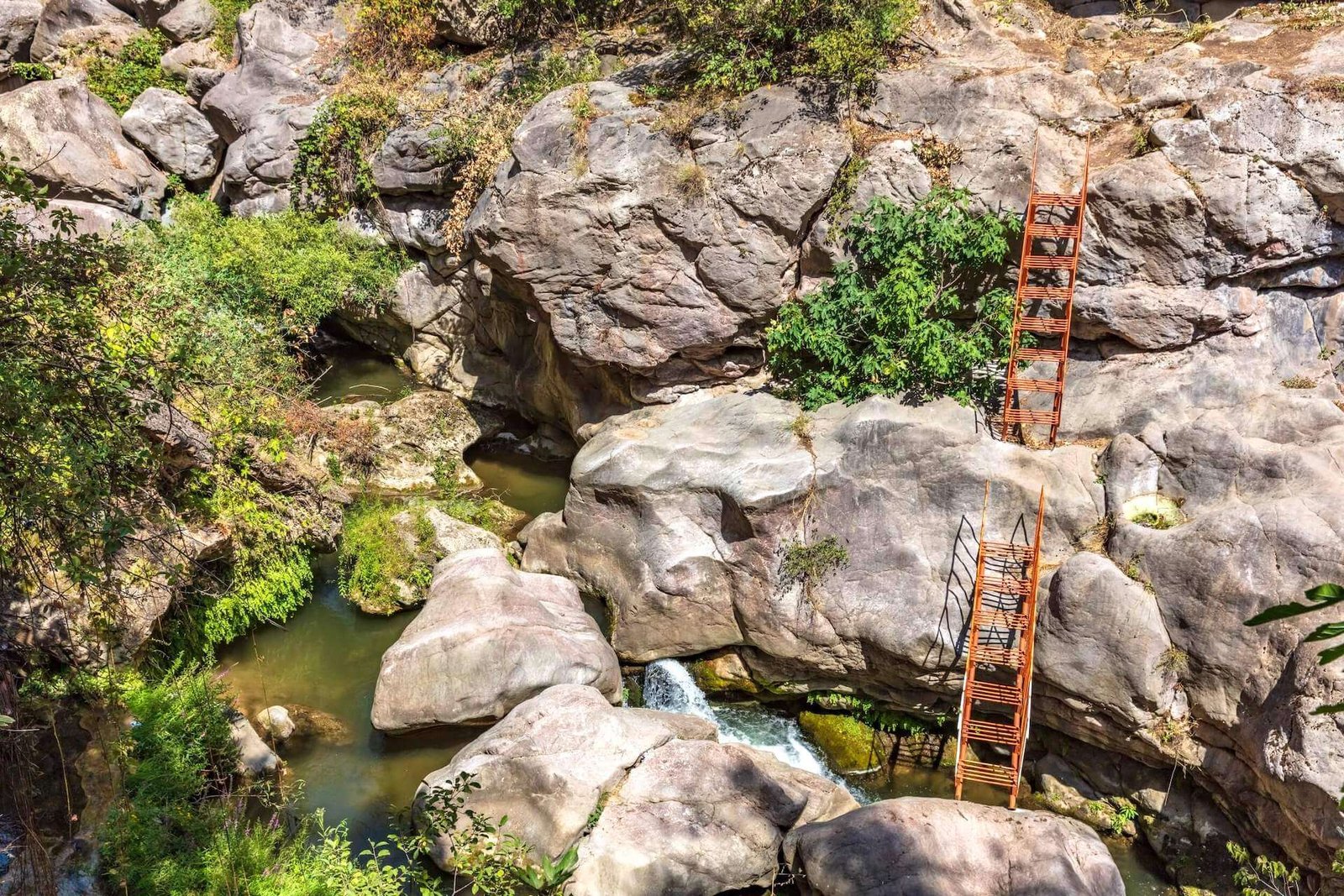
From Yerevan, you can get here via the M10 and E117 highways. The distance to cover is 300 km. Devil’s Bridge or Satan’s Bridge is one of the most mysterious natural wonders of the republic. If travelers reached Tatev via the cable car, they can get to Devil’s Bridge by hired transport.
The natural formation lies in the Vorotan River gorge. The bridge crossing over the river is an agglomerate of volcanic lava, processed by wind and water flows over several thousand years. Its length is 30 meters, and its width ranges from 50 to 60 meters. Indeed, the road to Tatev passes over it.
Around the gorge, mineral springs gush from grottoes. At a depth of 700-800 meters, tourists admire picturesque stalactites and waterfalls. All this, together with the arched bridge, creates a picturesque scene of stunning beauty. Mineral water, gushing from rock crevices, paints the canyon walls in yellow, pink, and green colors.
Natural springs feed the area. Therefore, bring drinking water and avoid consuming untreated spring water. Warm springs also emerge in the gorge. View the area from established paths and follow local access restrictions.
A staircase carved into the rock leads to the bridge. Here, travelers can change in special cabins and swim in the river under the cave arches. To get a complete picture of the attraction, you can join a tour group that arrives here by bus in large numbers. Therefore, ask a qualified local guide about current access conditions.
Selim Pass
Traveling by car, tourists will definitely want to visit Lake Sevan, one of the country’s symbols. By contrast, the direct route from Yerevan to Lake Sevan follows the M4. Selim (Vardenyats) Pass connects the Lake Sevan region with Vayots Dzor to the south.
This place between the cities of Martuni and Yeghegnadzor can demonstrate all the beauty and richness of Armenia’s nature. At 2,410 metres, it is one of the highest road passes in Armenia. Summer generally offers better driving conditions. However, snow can make the pass hazardous in winter.
At the highest point of the pass is the Selim Caravanserai. It was built in 1332 by order of Prince Chesar Orbelyan and served as a shelter for caravans traveling the ancient trade route. The powerful basalt structure on the windy plateau inside represents a three-nave hall, vestibule, domed chapel, and several small rooms where passing merchants with their horses and camels once spent the night.
On the facade of the caravanserai, car tourists will see two bas-relief statues with the Orbelyan prince’s coat of arms. After damage in the fifteenth and sixteenth centuries, restorers rebuilt the monument and reopened it in the 1950s.
Lake Sevan
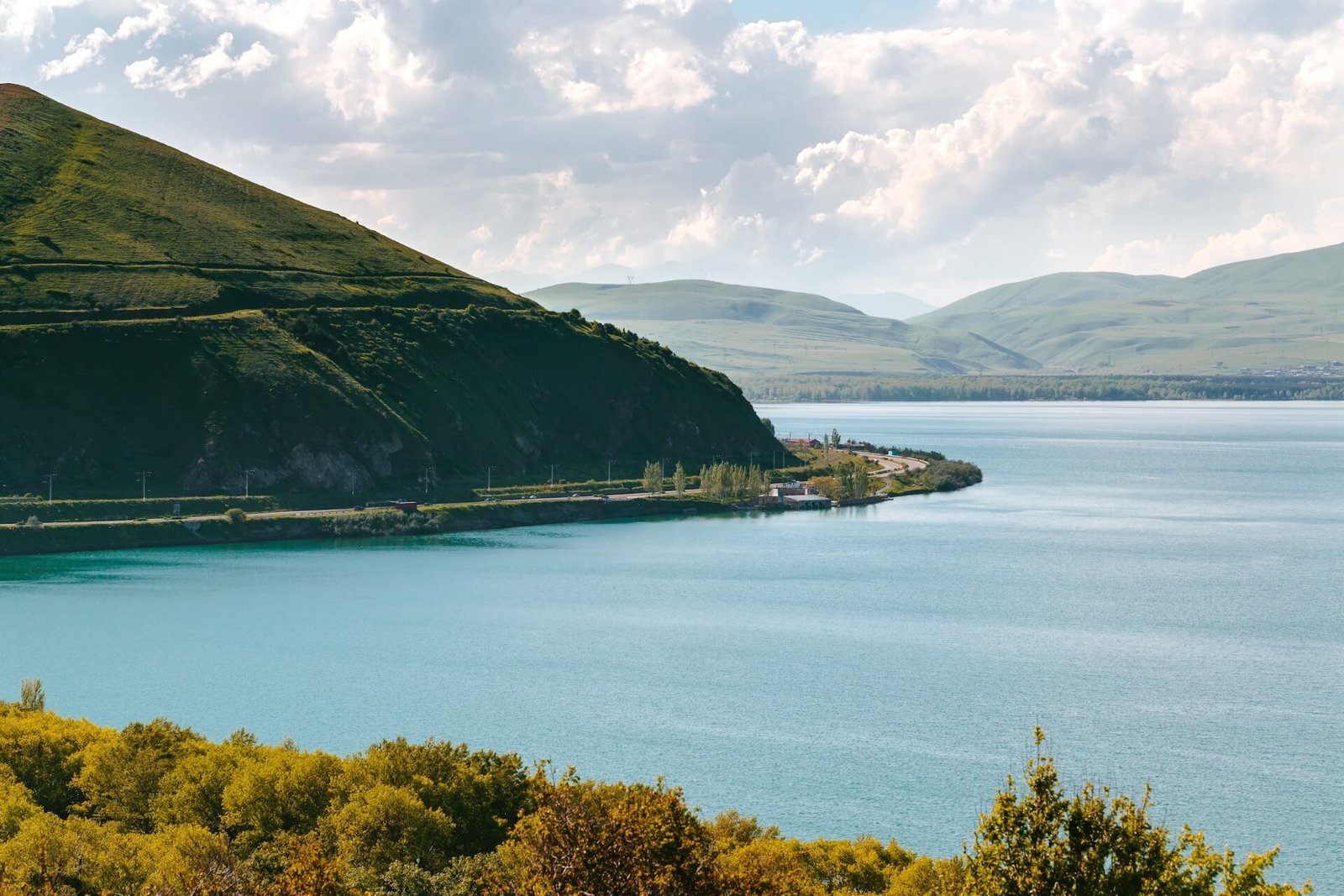
If car travelers have plenty of time, they can spend several days in the summer season by Lake Sevan. After passing through Selim Pass, tourists will find themselves in the city of Martuni on the shores of Sevan in 30 kilometers.
However, travelers report potholes and rough sections on some roads. Therefore, check local conditions before setting out. Therefore, there is reason to come to the lake from Yerevan – the 65 km road will take about 2 hours.
Armenia has no coastline. Instead, Lake Sevan offers a vast freshwater setting for lakeside holidays, much like Lake Balaton in Hungary. Indeed, the lake occupies a huge basin among the mountains at an altitude of 1,916 meters above sea level.
Beaches and scenery at Lake Sevan
However, the water in the lake is quite cool, so mass bathing of vacationers occurs during the hottest time of the year from July to September. During this time, the water warms up to 20 degrees.
Historians believe that the proper name Sevan was given to the lake from the name of the ancient church Sevanavank (Black Monastery), built on the northwest peninsula in the 9th century.
Another version holds that the word Sevan was taken from the ancient Urartu people who lived here before the Armenians and was a transformation of the ancient name of the lake Tsovini Svini. On the shores of the lake, 1,500 species of plants and trees grow, about 20 species of mammals live, including many birds. Fish such as trout-ishkhan, pike-perch, Khramulya, barbel, and the Ladoga sig brought here, live in the lake’s waters.
Car tourists can drive around Sevan on a circular road that is 200 km long. In addition, there are many hotel complexes and cottages here, with all modern infrastructure and ten types of beaches, some of which are “wild” areas.
Garni
After a trip to Lake Sevan, returning to Yerevan, tourists can turn their attention to the east and southeast of the republic. There are two attractions in this direction: the pagan temple of Garni and the ancient Christian monastery of Geghard.
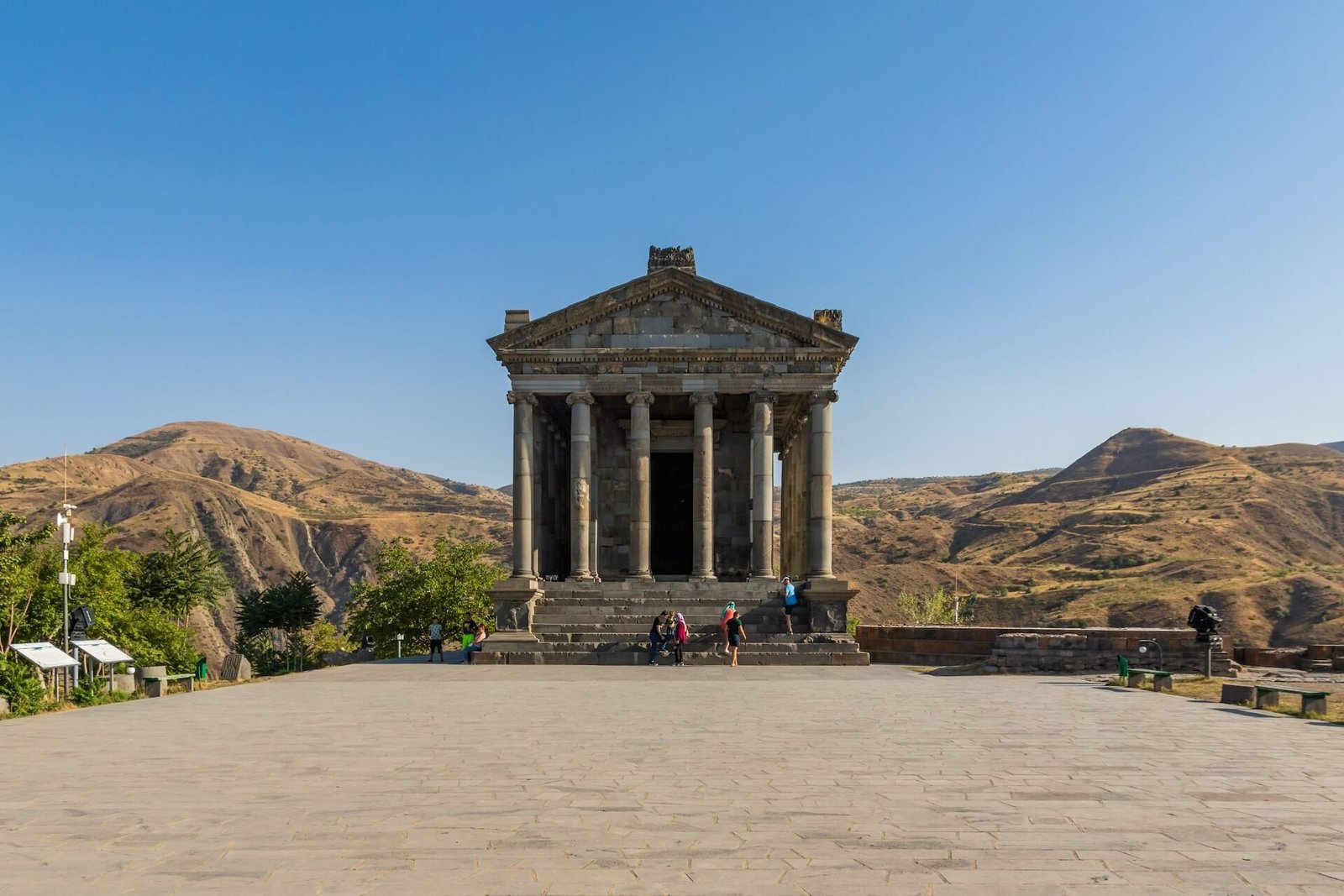
First, it will be more convenient to visit the village of Garni, located 30 km southeast of Yerevan. In particular, the village is famous for the well-preserved historical and architectural complex of Garni. It represents a monument to the era of paganism and Hellenism. The temple, built according to all the canons of ancient Greek architecture, is a grand structure and was part of a fortress complex built in the first half of the 1st century.
However, the pagan structure survived until a powerful earthquake destroyed it in 1679. In the 19th century, the ruins attracted many famous scientists and travelers, including names like Dubois de Montpere.
This French scientist, based on the study of fragments and ruins, created a project for the temple’s reconstruction in 1834. It became possible to begin implementing it only in 1966. Finally, the restoration finished in 1977. Upon closer inspection, it is visible that the building is made of smooth basalt blocks about 2 meters long.
Clamps and pins connect the stones. Nine massive steps, each 0.3 meters high, rise across the facade’s width. In addition, the roof rests on 24 columns. In particular, the sanctuary honored the sun god. Visitors also enjoy taking photos against the grand structure.
Geghard

Just 10 km from the village of Garni, in the Gokht River gorge, lies Geghard, an ancient monastery. Its full name, Geghardavank, means Monastery of the Spear. According to legend, the spear that pierced Christ on the cross was brought to the monastery by the Apostle Thaddeus. It is now exhibited in the museum of Etchmiadzin.
The religious complex began in the fourth century amid high cliffs, near a sacred spring flowing from a cave. In the ninth century, Arab forces demolished the monastery.
Throughout its history, Ayri Vank (its original name) was looted and destroyed several times. What visitors now see dates back to the later centuries, starting from the early 13th century.
Some chambers extend directly into the rock, while others connect with freestanding buildings. Carved khachkars, stone slabs with stylized crosses, fill the grounds.
In particular, the complex consists of several structures:
- Katoghike: The main church, standing opposite the impenetrable mountain
- Gavit: A narthex built in the early 13th century, attached to the church
- Rock Church with a Spring: Carved into the rock in 1240 in a cave with a spring
- Jhamatun: A mausoleum, the second rock church of the Holy Mother of God
- Rock Church behind Jhamatun: Connected to it by a passage, built in 1283 funded by Prince Prosh
- Upper Jhamatun Papak and Rukazan: Built in 1288, located on the second level above the mausoleum
- Chapel of Saint Gregory: Carved into the rock in 1177, located above the road before entering the monastery
Moreover, Geghard Monastery is a UNESCO World Heritage site.
Khor Virap

Khor Virap rises on a hill with views of endless plains and green pastures against the grand panorama of Mount Ararat. The sanctuary stands about 40 km south of Yerevan, near the closed border with Turkey.
The direction’s landmark is the village of Lusarat, where the ancient monastic complex of Khor Virap can be found nearby. Its origins date to 642 AD. The name “Khor Virap” in Armenian means “Deep Dungeon.”
According to tradition, King Tiridates imprisoned Gregory the Illuminator (257–326 AD) in a dungeon here for many years. Gregory Lusavorich, the founder and first official head of the Armenian Apostolic Church, converted Armenia from Zoroastrianism to Christianity in 301 AD.
Learning about this piety, King Trdat subjected the saint to torture and ordered him to be thrown into a deep pit called Khor Virap. Later, according to tradition, the king’s sister helped free Gregory. He then baptized King Trdat and the entire Armenian people.
The first church of Saint George, built in 642 AD, was repeatedly rebuilt and “grew” with other structures, including a fortress wall. Later, in 1662, builders completed the present monastic complex.
Areni Winery
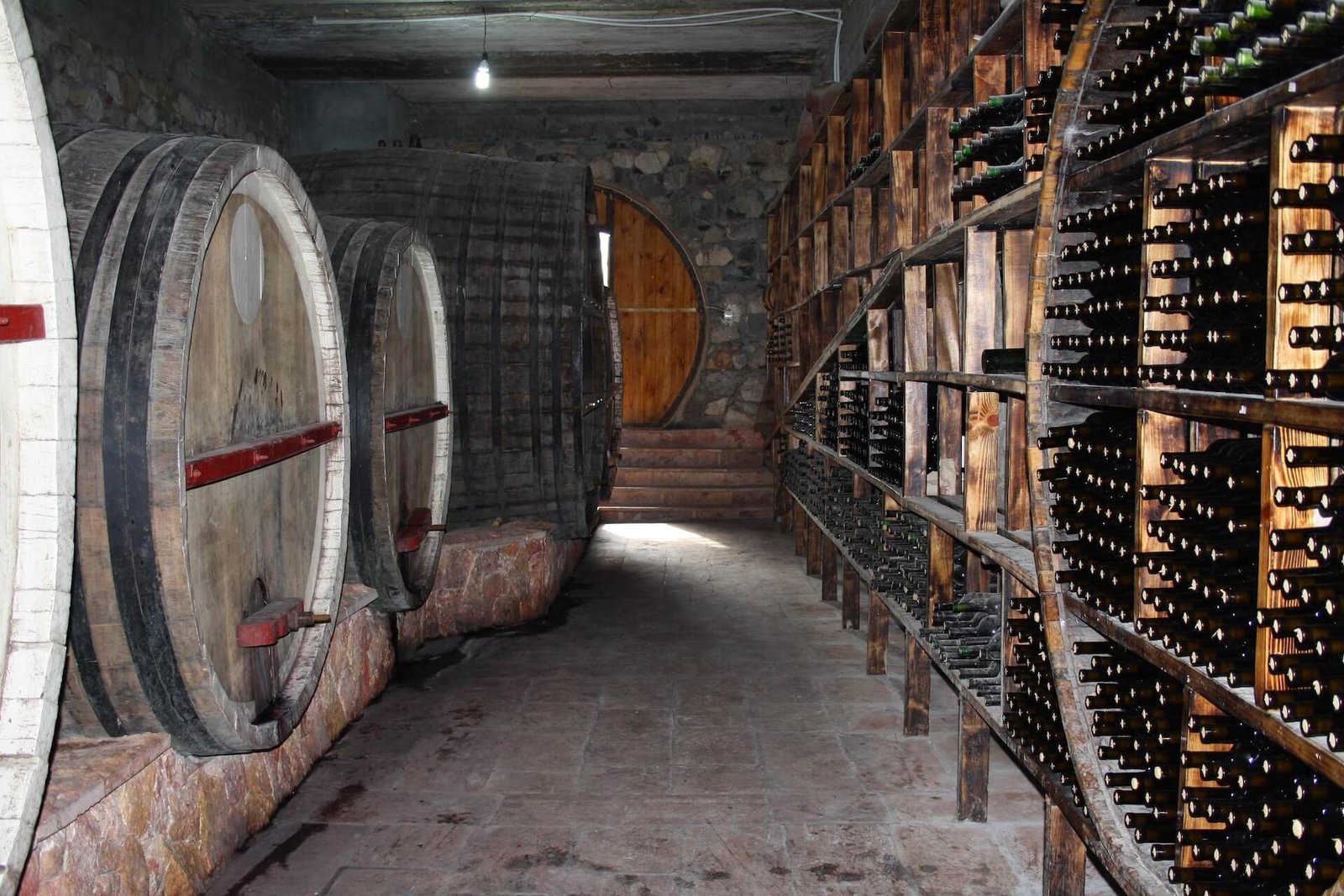
The Simonyan family founded the winery in the village of Areni in 1994. For its wines, the winery uses the local Areni grape variety. The winery is a prominent producer in Armenia. From Yerevan, it is quite easy and quick to reach by personal vehicle via good roads.
During busy periods, tour buses may gather at the main building. Here, you can join a tour group and walk through the factory. A guide can also explain Armenia’s wine history and production process.
Afterwards, tourists can taste Areni wines in a dedicated hall. Visitors can also see large oak barrels where the wine matures. In the courtyard, the guide will show an ancient amphora found nearby in a cave.
Based on the grape seeds found at the bottom of the vessel, specialists determined the amphora’s age to be around 6,200 years. A small room displays the winery’s bottled products. After the tour, travelers can buy several bottles of wine.
Areni-1 Cave
Combine the Areni winery with a visit to this archaeological cave complex in Vayots Dzor. Archaeologists discovered evidence of ancient winemaking here. In addition, guided visits are available. Check the Areni-1 Cave ticket options before your trip.
Mount Ararat viewpoints (Charents Arch)

One of the main symbols of Armenia, depicted on the country’s coat of arms since 1918. It is sacred to Armenians. According to the Old Testament, it was to Ararat that Noah’s Ark came to rest after the Great Flood.
Many visitors associate Ararat with Armenia. In fact, the mountain is in Turkey. The land border with Turkey is closed; enjoy the mountain from viewpoints in Armenia.
Historically, the mountain changed hands several times between Persia, the Russian Empire, and Turkey. Finally, under the Moscow Treaty of 1921, Mount Ararat was ceded to Turkey. From Charents Arch, you can admire the snow-capped mountain in clear weather.
Meanwhile, the arch stands near the village of Garni. Similarly, everyone visiting Khor Virap Monastery can observe the legendary peak in clear weather. Moreover, Mount Aragats has a wonderful observation deck from which Ararat is well visible. In addition, Yerevan offers views of the mountain.
Noravank
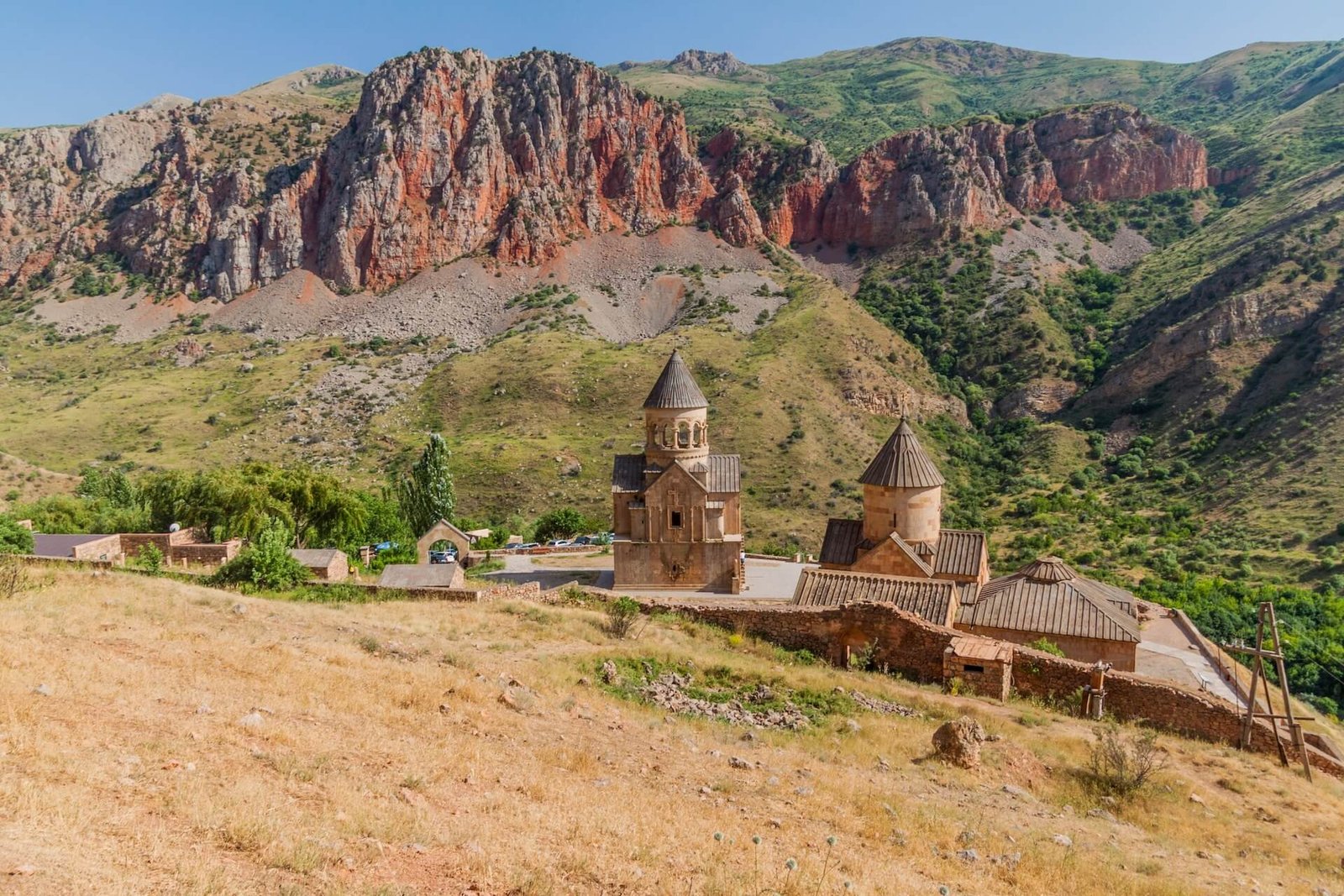
The distance from Areni Cave and the eponymous winery to Noravank Monastery is 10 km. The Noravank complex is a gem of Armenian religious architecture. It attracts tourists with its 13th-century churches against the backdrop of otherworldly beauty landscapes with sheer red cliffs in the Amaghu gorge near Areni.
Two magnificent churches and a beautiful chapel, as well as a large number of khachkars (stone steles with cross images) against the backdrop of surrounding mountain peaks, are the attractive features of the monastery complex. Noravank’s foundation date is considered to be 1205, when the Armenian bishop consecrated the first church.
Today, tourists can explore three early medieval structures on the complex’s territory:
- Chapel of Saint Gregory (1300): Houses a tomb with an image of a half-human, half-lion and many khachkars with blue eight-pointed stars.
- Church of Saint John the Baptist: Houses the richly decorated tomb of Prince Orbelian, an image of the Holy Mother of God, and God the Father holding Adam’s head.
- Church of the Holy Mother of God: The most majestic structure of the monastery complex with a beautiful conical dome, bas-reliefs depicting the Holy Mother of God with Child, archangels, and Christ with the figures of the apostles Peter and Paul.
To learn more about the attraction, experienced tourists advise joining a tour group by arranging with a guide on-site.
Sevanavank

While relaxing at Lake Sevan, you should not miss the opportunity to visit the ancient monastery of Sevanavank, located on the eponymous peninsula. It is quite easy and quick to reach by car from any point on the lake’s coast via the ring road.
At the foot of the hill where the Sevanavank complex is located, you can leave your car in a free parking lot and climb the stone steps. Mariam, the daughter of an Armenian king, founded the Monastery of the Holy Apostles in 874.
Originally, the builders chose an island in Lake Sevan for the churches. Over time, the water level in the lake dropped, and the island became a peninsula. Initially, Sevanavank consisted of the Church of the Holy Mother of God and a large three-nave Church of the Ascension. At that time, King Ashot II spent some time here, repelling Arab invaders. In the 16th-17th centuries, the monastery was completely destroyed. Finally, the last monks left the ruins in 1930.
After Armenia declared its independence in 1990, restoration and reconstruction work began on the peninsula. Restorers rebuilt the Church of Saint Karapet and the Church of Saint Arakelots. After inspecting the churches, you can enjoy the stunning panorama from the hill overlooking Lake Sevan. Moreover, the observation deck offers scenic photo opportunities.
Hayravank
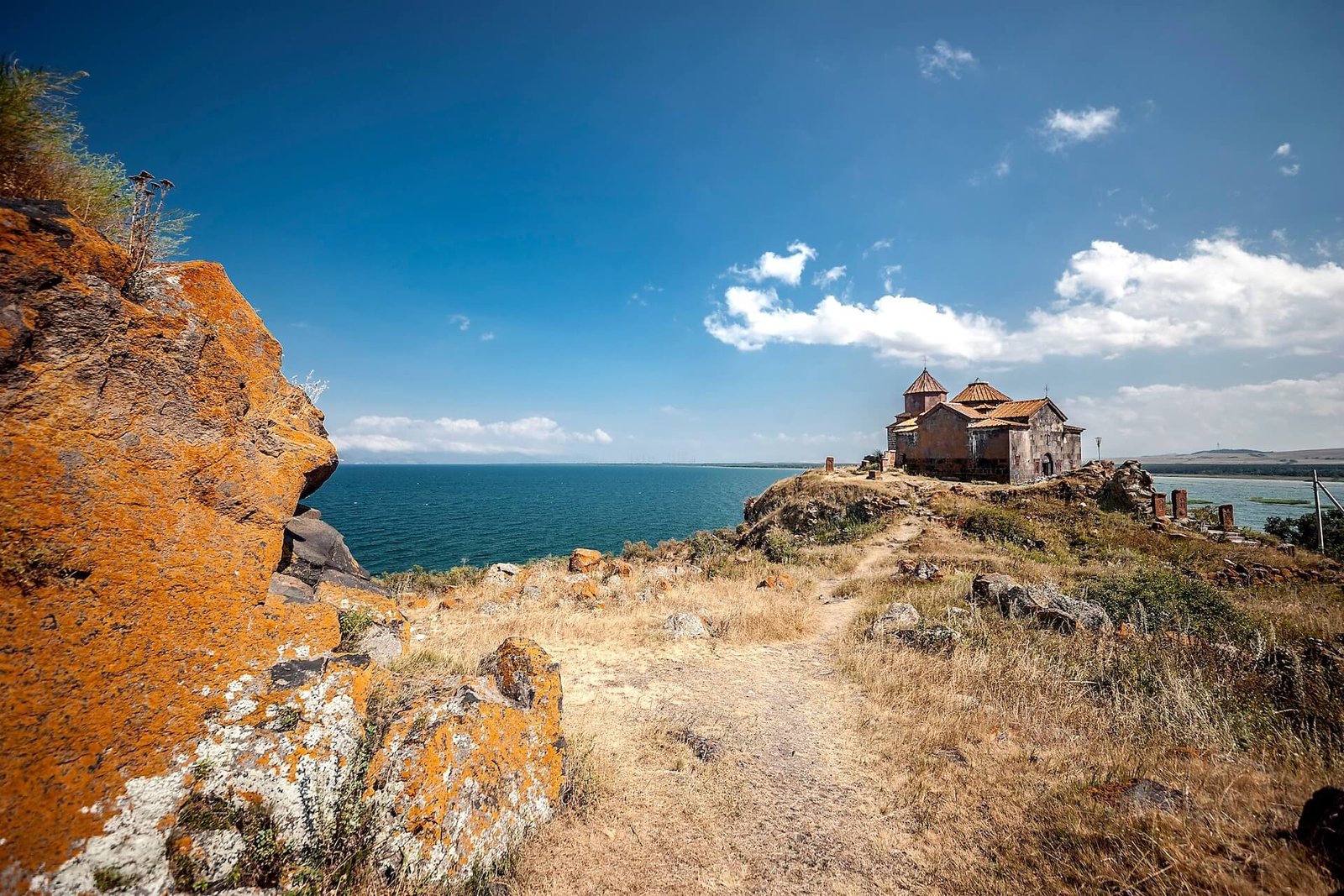
Farther south along the western shore of Lake Sevan, lies another monastery, Hayravank. Its origins date to the ninth century. In fact, it is more of an active temple complex than a monastery. In contrast, the architecture of the buildings is restrained, in the best traditions of ancient Armenian religious architecture.
Both inside and outside – bare walls and domes with narrow lighting holes. Such asceticism developed due to frequent and continuous raids by Mongols, Seljuk Turks, Persians, Arabs, making it senseless to arrange lavish decorations in the churches.
In particular, the oldest building is the Church of Saint Stephen. It was built in the early 9th century from roughly hewn black limestone. Later, builders added a chapel and a gavit. A restored staircase made of stone blocks leads to the church from the foot of the hill. Khachkars stand on its sides.
If car travelers join a tour group, they can hear a beautiful legend associated with the monastery from the guide. It tells how Abbot Hovhan, to save Armenians sheltering in the temple from being killed by Tamerlane’s troops, by God’s will, turned them into doves and released them through the church windows.
Dilijan
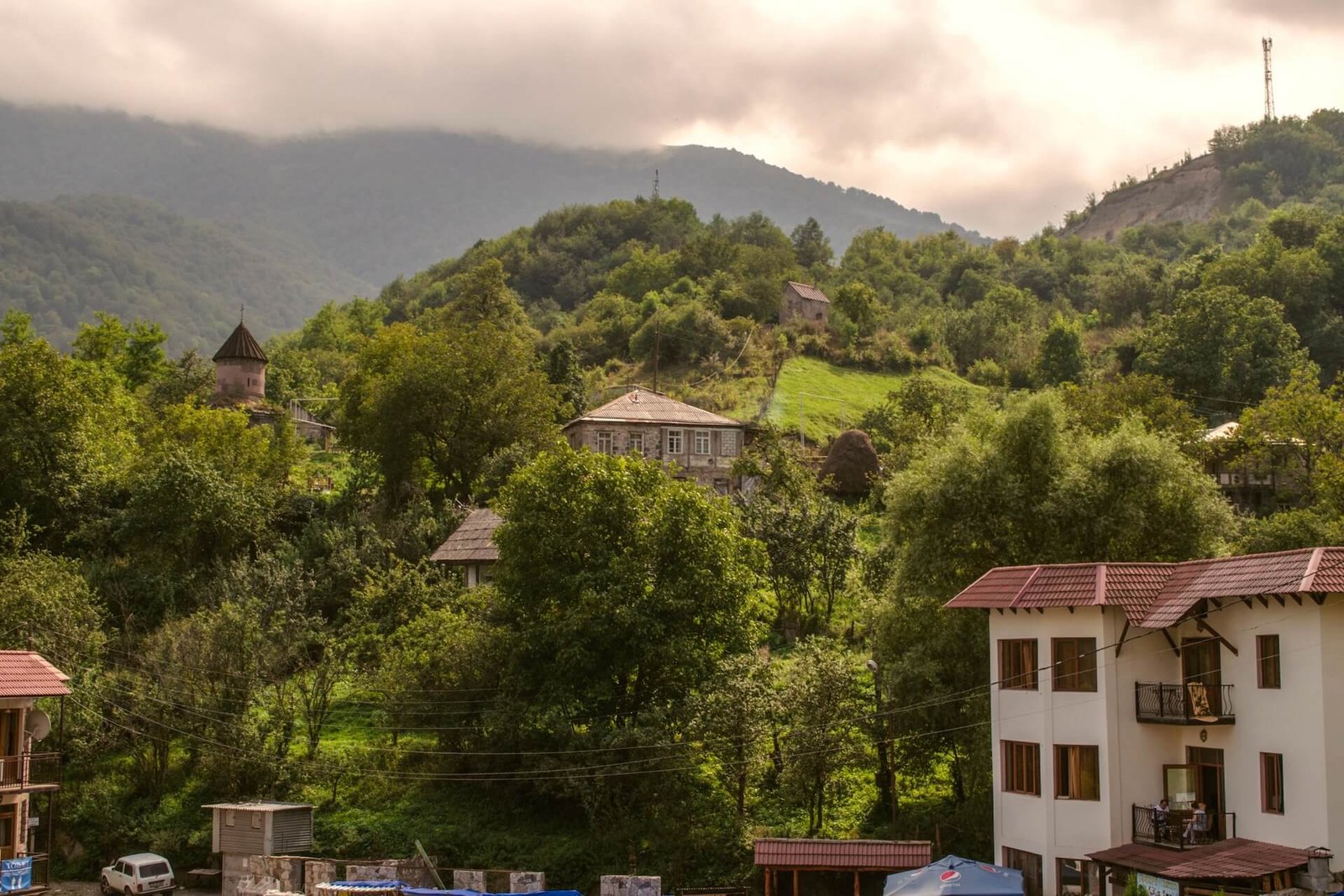
Located 100 km from Yerevan, the journey by car takes just an hour and a half. If car tourists have already arrived at Lake Sevan, getting to the city will take 20-30 minutes.
Dilijan will appeal to both museum lovers and those looking for natural attractions. Archaeologists have proven that the first settlements at the site appeared in the 2nd century BC. In the 13th century, there was a settlement called Boyjur Dili (Little Dili), and the modern name of the city first appeared in the manuscripts of a 17th-century French traveler.
From the late 18th and throughout the 19th century, Dilijan was known as a popular resort. The Armenian intelligentsia used to come here. In addition, the city became famous for gatherings of enlightened Armenians at the “Rotonda” – an open-air theater.
Exploring Dilijan
In Soviet times, about 20 sanatoriums accepted vacationers, where one could breathe fresh mountain air and drink mineral water. Now, the city has the status of a national park. Surrounded by mountains and forests, located at an altitude of 1,500 meters above sea level, Dilijan is especially beautiful in early autumn.
For nature lovers, the main attractions include Dilijan National Park with its Parz and Gosh Lakes. Both locals and visitors to the city love to relax here. You can also sit in a café with a view of the lake or enjoy a boat ride. For the young and strong, there are a rope park and a zipline.
An interesting monument in the style of urban sculpture is the figures of the three heroes of the film “Mimino”: war veteran Ivan Volokhov (Evgeny Leonov), pilot Valiko Mizandari (Vakhtang Kikabidze), truck driver and Dilijan resident Ruben Khachikyan (Frunzik Mkrtchyan). Today, the sculpture has become a symbol of the city. Residents from all over Armenia and visitors to the republic come to take photos or selfies against the bronze sculpture.
Goshavank
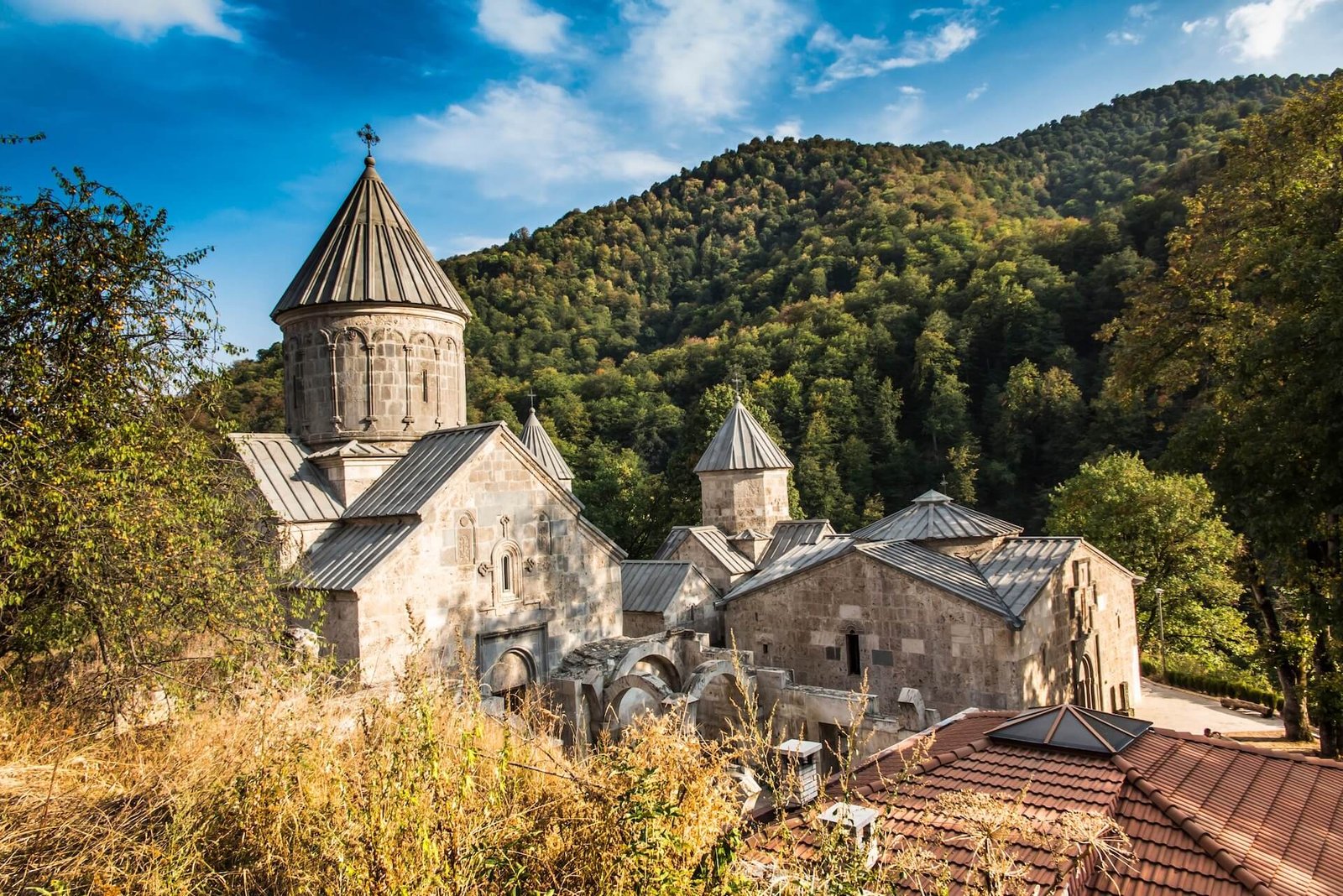
Not far to the east of Dilijan, in the village of Gosh, is the Goshavank Monastery. The monastery occupies the site of Getik Monastery, which an earthquake destroyed. Mkhitar Gosh founded the new monastery in 1188 with Prince Ivan Zakaryan’s support.
After Gosh’s death in 1213, the name changed from Nor-Getik to Goshavank. For a long time, it was one of the largest cultural, educational, and religious centers in medieval Armenia.
Historical manuscripts describe the monastery as a seminary or university. Here, prominent Armenian cultural figures such as Vanakan Vardapet and Kirakos Gandzaketsi studied.
The monastery complex includes the following sites:
- Church of Astvatsatsin (1196)
- Gavit (1203)
- Church of Saint Gregory (1241)
- Chapel of Lusavorich (1241)
- Library (1231)
On the territory, you can also see a bell tower-rotunda, several chapels, and other buildings. Visitors can also explore the ruins of Mkhitar Gosh’s crypt, the cemetery, and skillfully made khachkars.
Haghartsin Monastery
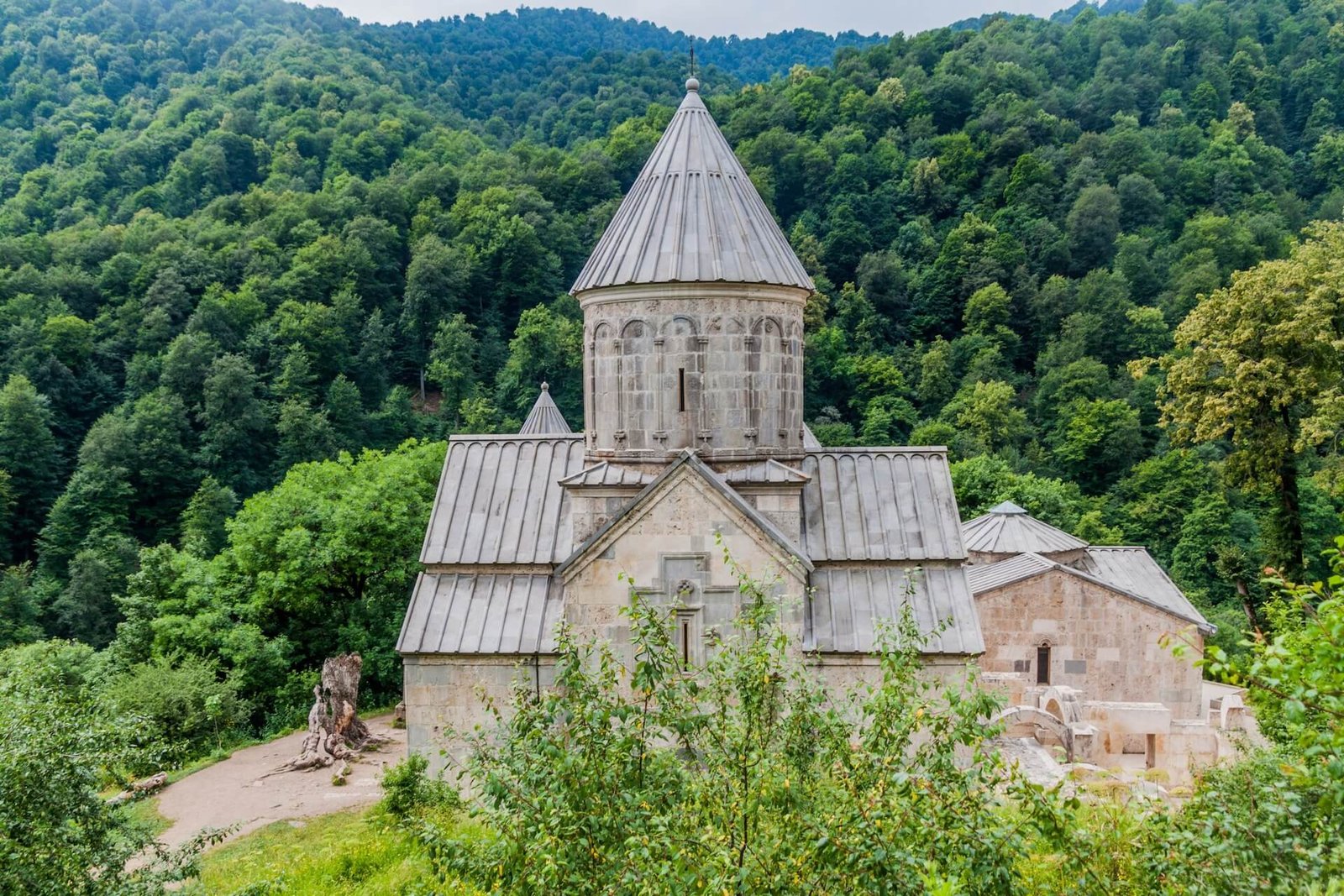
A little south of Goshavank, 18 km from Dilijan, is the Haghartsin Monastery. The Haghartsin Monastery complex is part of the Dilijan National Park. Lost in the dense beech forests of northeastern mountainous Armenia, the monastery has almost fully preserved its structures from the time of its peak in the 13th century.
The monastery takes its name from the Haghartsin River, which flows nearby in the gorge. Moreover, the monastery occupies a fairly extensive area. From the end of the 12th century, Haghartsin became a major spiritual center of Eastern Armenia. Historically, the monastery played an active role in making the Armenian church independent and self-sufficient.
In addition, monks taught spiritual and secular subjects at the monastery’s school. Moreover, its abbot Khachatur Taronatsi, a musician, poet and theologian, contributed to Armenian music.
At Haghartsin, the oldest structure is the Church of Saint Gregory. It was built in the 11th century by monks fleeing from Western Armenia from Byzantine persecution. A conical dome on an octagonal drum crowns the small rectangular building.
At the end of the twelfth century, builders added extensions, including a small blue-basalt chapel with a vaulted ceiling. Ruins of the monastic kitchen survive near the refectory. At the southern wall of the porch of the Church of Saint Gregory, you can see the foundations of the tombs of two kings from the Kyuriki dynasty.
The inscriptions read: “King Smbat” and “Tomb of King Gagik.” You can visit here at any time of the year. The restored Haghartsin complex has modern visitor facilities and an access road.
Jermuk Waterfall
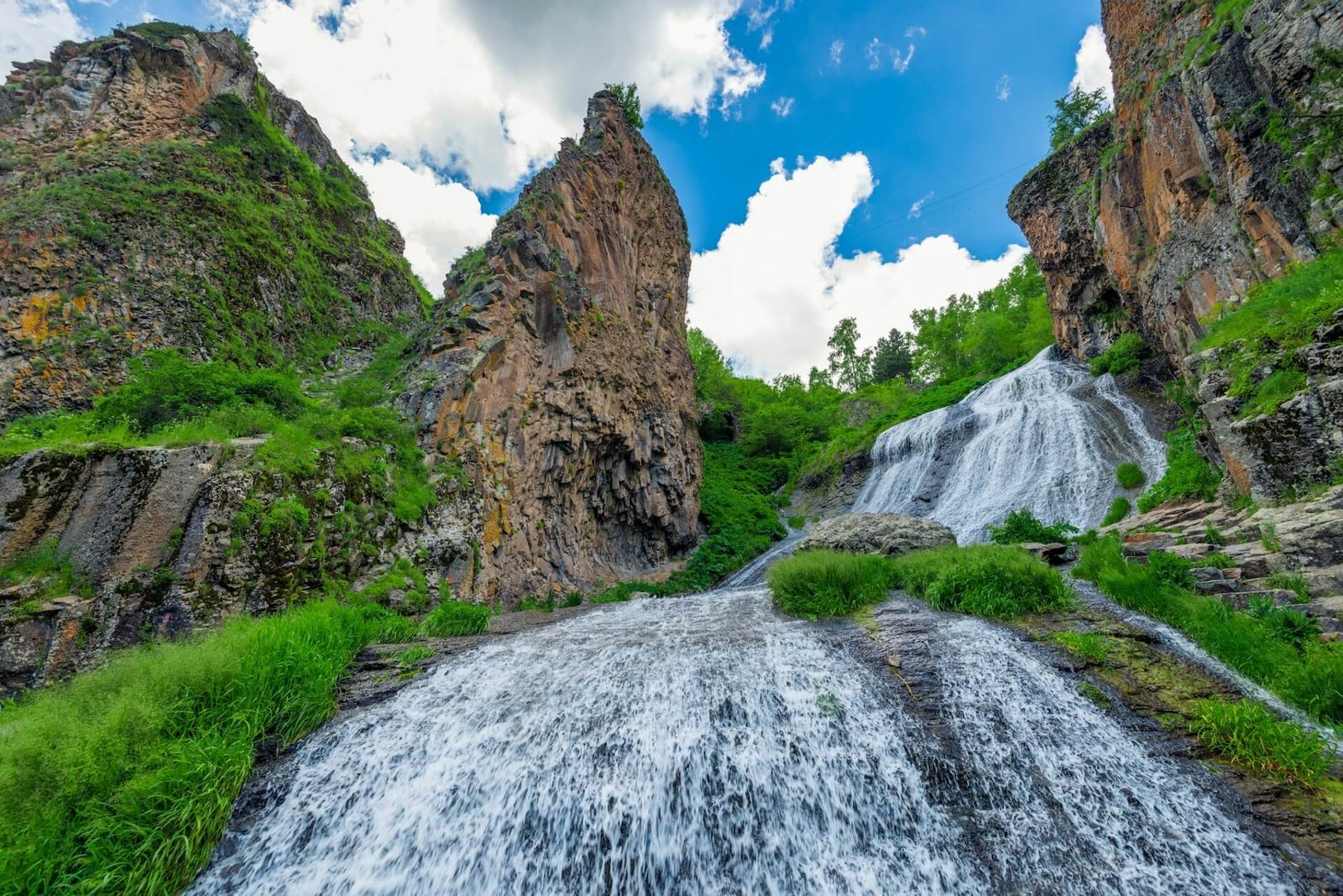
At 68 metres, this ranks among Armenia’s tallest waterfalls. Higher is the Kasakh cascade (70 m), but after the construction of the hydroelectric power station, it operates only during the forced release of water from the reservoir. This natural landmark lies near Jermuk, about 2,000 metres above sea level.
Thanks to various sources, the Jermuk waterfall carries high-quality Jermuk mineral water. Cascading from a height, the water forms three dome-shaped terraces before flowing into the Arpa River.
Here, the waterfall spans about 50 metres between two high cliffs. This presents a grandiose spectacle that brings visitors awe and admiration. Indeed, the cascade looks like falling silver yarn, consisting of foamy streams of water.
Locals call the waterfall “Maiden Hair.” According to a beautiful legend, once upon a time a powerful prince’s castle stood on the top of the cliff, where he had a beautiful daughter.
Many noble suitors sought her hand, but her heart was taken by a handsome young man – the son of a shepherd. The enraged father imprisoned his daughter in the castle, prophesying that if she disobeyed, she would turn into a mermaid.
However, the girl tried to descend into the valley on her long hair. This is when the prophecy came true. As a result, the girl turned into a mermaid, and her hair became the streams of water descending from the cliff.
Near the waterfall, there is a paid parking lot where you can leave your car and walk to the famous cascade.
Shaki Waterfall
One of the most beautiful natural attractions in Armenia is Shaki Waterfall. It lies roughly 200 km from Yerevan, near Sisian. Shaki Waterfall is one of the most beautiful in Armenia. The waterfall got its name from the eponymous river, which flows into the Vorotan River.
Here, water flows into the gorge from an 18-metre cliff. In addition, the slopes contain niches, grottoes, caves and tunnels. This place is called an “archaeological treasure trove.” Archaeologists found traces of ancient settlements here. At the confluence of the Shaki and Vorotan rivers, archaeologists found numerous household items and tools of primitive people in the grottoes.
After the launch of the Shaki Hydroelectric Power Station, the waterfall became manageable. The power plant regulates the water flow according to its schedule. Therefore, before going to the waterfall, you need to find out about its “working” days. Local tour guides can tell you about this.
Khndzoresk Cave Town

Khndzoresk is a historic cave settlement east of Goris. Defer visits while travel advisories recommend avoiding the area. A 12th-century tax list first mentions the cave village, where it is obliged to pay a tithe to Tatev Monastery.
In 1738, Catholicos Abraham Kretatsi first described the village after his visit. According to him, the residents of the town used the caves not only as dwellings but also as shelters from enemies. Residents arranged their homes so that the roof of one served as the floor of another. In the caves at a height of 20-30 meters from the houses, the inhabitants climbed up using ropes.
Before the start of World War I, Khndzoresk was the largest village in Eastern Armenia. There were 27 shops and 7 schools here. About 1,300 villagers took part in the Great Patriotic War, 480 of whom died. One of the villagers became a general, 8 became colonels, 80 officers, and more than 200 were awarded combat decorations.
The historic village contains the ancient fortress, the old Church of Saint Hripsime (1663) with lime walls, a bell tower, an external system of arches, the Church of Saint Thaddeus from the 17th century, and the ruins of the “Anapat” church school. In addition, the cemetery contains the grave of Mkhitar Sparapet.
In 2012, a suspension bridge opened in Khndzoresk, connecting the two parts of the cave town. Crossing it is comparable to a breathtaking attraction when the ladder swings from side to side as you walk, making it feel like the ground is leaving under your feet, and a glance into the abyss chills your spine.
Gyumri
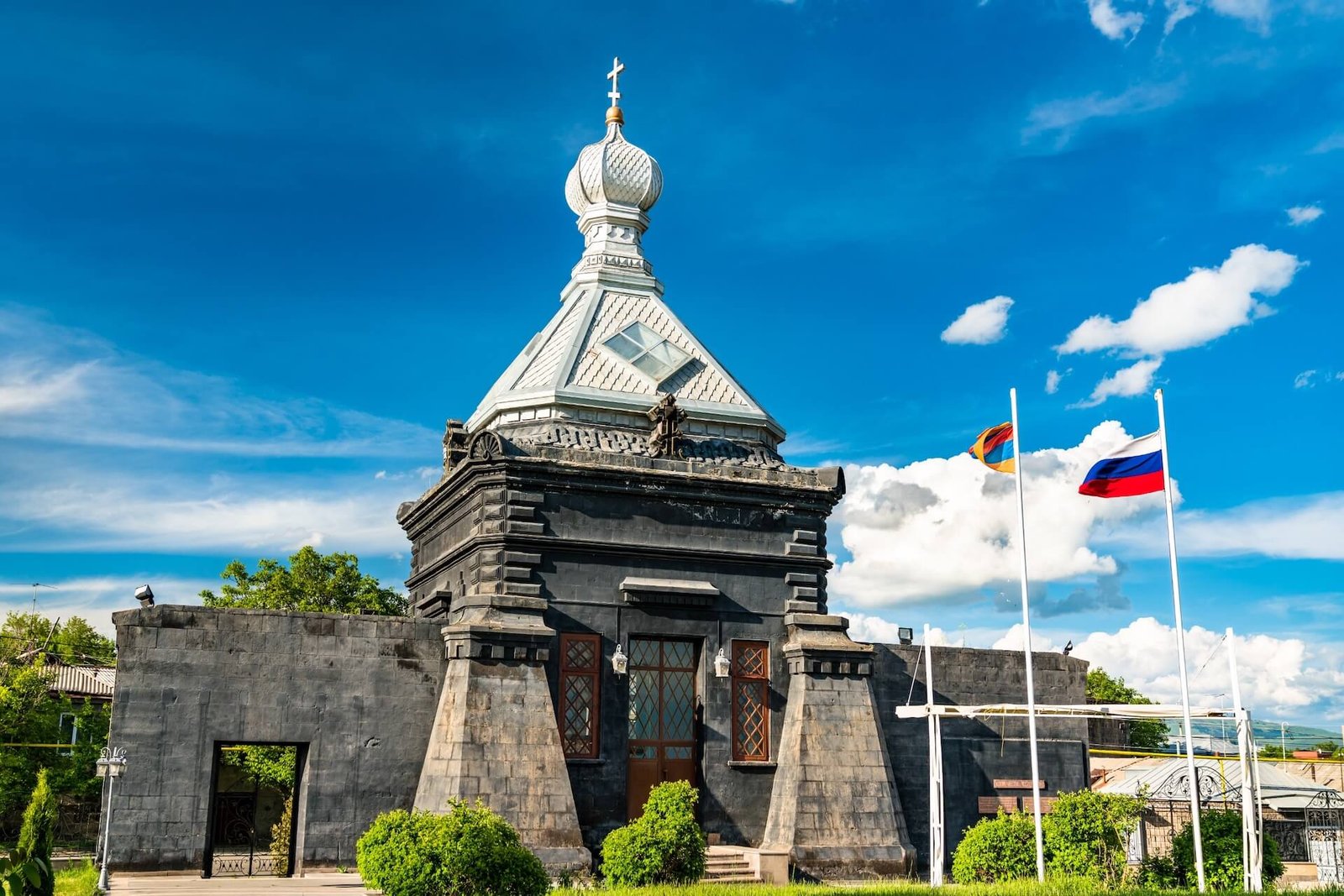
Over time, the historical city has changed its name several times throughout its history. Initially, it was known as Kumayri. From 1837 to 1924, Armenia’s second-largest city bore the name Alexandropol. Later, from 1924 to 1990, it went by Leninakan. Around independence, the city regained a version of its historical name, Gyumri.
Gyumri lies about 125 km from Yerevan in the Shirak Valley. The Shirak and Pambak ranges and the spurs of Mount Aragats surround it. Depending on the time available, car travelers can devote a day or several days to exploring the city.
For those with limited time, local experts advise paying attention to the city’s significant attractions, such as:
- Vardanants Square: The historical center of Gyumri, surrounded by the churches of Amenaprkich (All Savior), Astvatsatsin (Holy Mother of God), the buildings of the October cinema (built in 1926), and the city hall.
- Historical District: Here tourists can walk among houses made of red and black tuff with arches, pointed windows, carved balconies with traditional Armenian patterns, built 100, 200, and more years ago.
- Black Fortress: Located on a hill in the western part of the city, it was built in 1829 during the Russian Empire.
- Museum of Folk Architecture and Urban Life: Arranged in the mansion (built in 1872) of a wealthy merchant Dzithokhtsyan, it presents a rich collection of pre-revolutionary architecture and household items of that time.
What to see in Gyumri
It is worth visiting the Central Park, Alexandropol Brewery, Khachkar Square, Russian Chapel, and Marmashen Monastery. Those who remember the talented Armenian actor and Soviet films with his participation will be interested in visiting the Frunzik Mkrtchyan Museum.
What to Bring Back from Armenia: Unique Gifts and Traditional Souvenirs
Armenia by car: where to stay
For short trips, Yerevan works well and rental pickup. For a longer journey, compare accommodation in Yerevan, Dilijan and Gyumri on Trip.com. For the southern sights, plan overnight stops based on current route conditions.
Armenia by car: frequently asked questions
How many days do you need for an Armenia road trip?
Allow three or four days for Yerevan, nearby monasteries and Lake Sevan. For a broader road trip, plan seven to ten days, subject to road conditions and travel advice.
Do you need a four-wheel-drive vehicle in Armenia?
For regular paved roads, an ordinary car is often sufficient. However, mountain routes can be rough or affected by snow. Therefore, ask your rental company about permitted roads and suitable tyres.
Can you visit Mount Ararat from Armenia by car?
Mount Ararat lies in Turkey and the land border is closed. Visit viewpoints in Armenia, such as Charents Arch or Khor Virap, for mountain views.
How much does the Wings of Tatev cable car cost?
The published return fare is 9,000 AMD in March–November and 5,500 AMD in December–February. Therefore, verify prices and the operating schedule before travelling.

Konstantin is an acclaimed travel writer, celebrated for transforming ordinary journeys into extraordinary narratives. With years of experience exploring diverse destinations across the globe, his work blends vivid storytelling, cultural insights, and practical advice to inspire wanderlust and guide readers toward unforgettable adventures.
As a key contributor to enjoythetrip.org website, Konstantin has built a loyal readership through their expertise in uncovering both iconic landmarks and off-the-beaten-path treasures. He specializes in providing travelers with honest, actionable tips, whether it’s finding the best resorts in Maldives, exploring cultural hubs like Paris, or diving into the natural wonders of Croatia.