
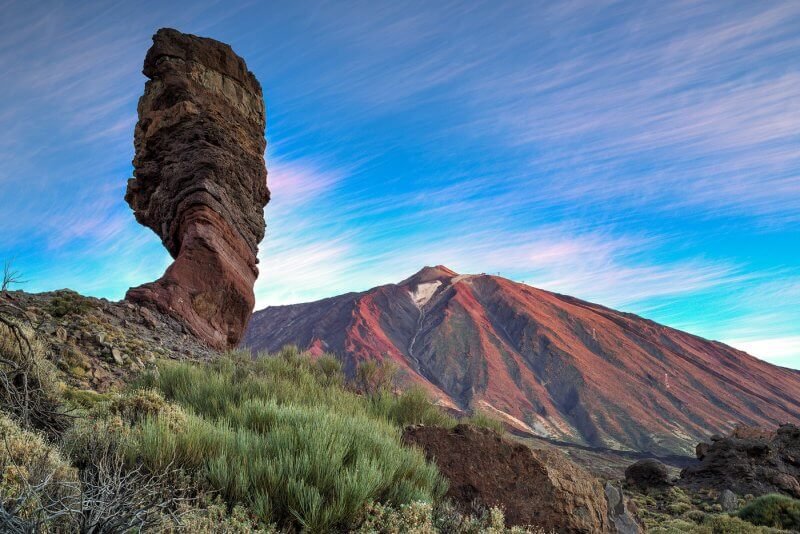
Teide Volcano is Tenerife’s highest peak and the centre of a national park, with a cable car, climbing permits and practical tips for your visit.
The Teide volcano on the Spanish island of Tenerife is one of the amazing wonders of nature. Climb to the top and see the park of the same name every year attracts thousands of tourists.
Teide Volcano: General information
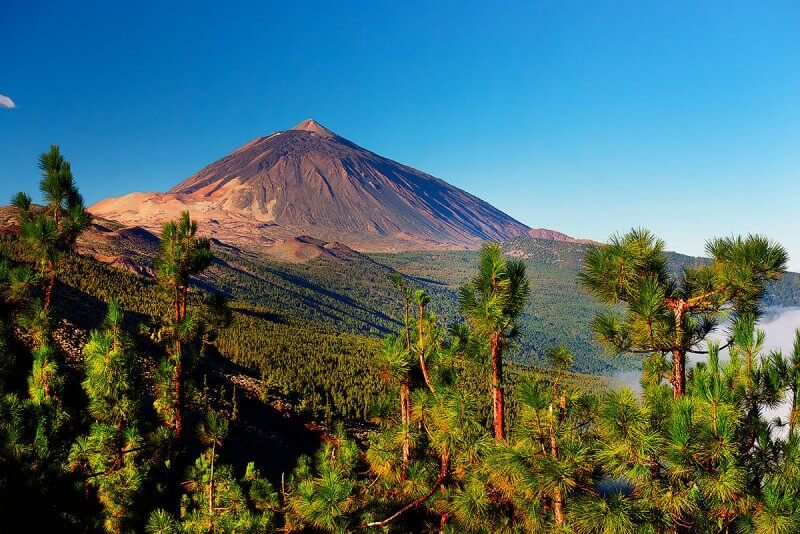
The Spanish island of Tenerife is the largest in the Canary Archipelago and Teide is the world’s third-tallest volcano measured from the ocean floor. The main part of it is occupied by Mount Teide (height 3718 m), which is the highest point in Spain.
Satellite photos of the Teide volcano clearly show that it is two-tiered. Initially, about 150,000 years ago, as a result of a powerful eruption, the Las Cañadas caldera (“cauldron”) was formed. The approximate size of the caldera is (16 x 9) km, its northern walls have completely collapsed, and the southern walls rise almost vertically to a height of up to 2715 m. Teide Peak and its daughter volcano Pico Viejo (3,134 m) were formed inside the Las Cañadas caldera, on its northern side, after later eruptions.
Now the Teide volcano is dormant. The island’s last eruption was in 1909 (Chinyero), and there were eruptions elsewhere on Tenerife in 1704 and 1705. The eruption of 1706 was very powerful – then the port city of Garachico and nearby villages were completely destroyed.
Currently, this volcano is part of the Teide National Park on the island of Tenerife and is protected by UNESCO.
Teide National Park
Teide National Park covers an area of 189 km2, and it is interesting not only for the famous mountain of the same name.
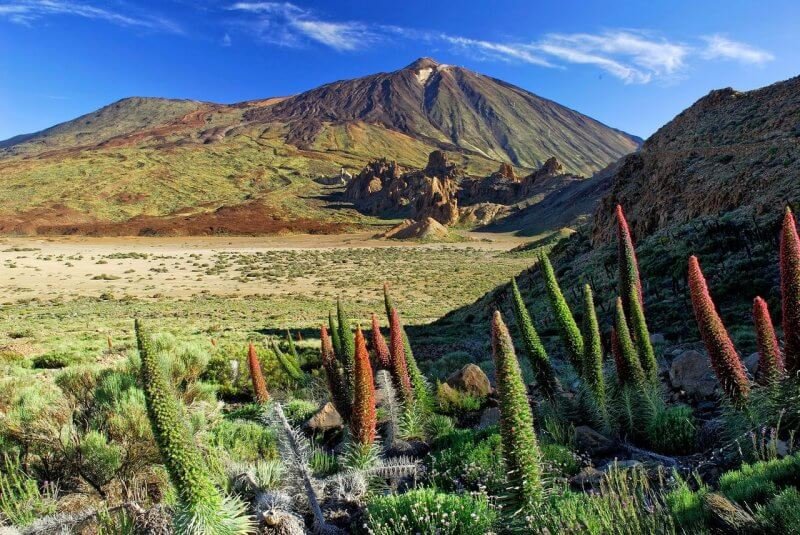
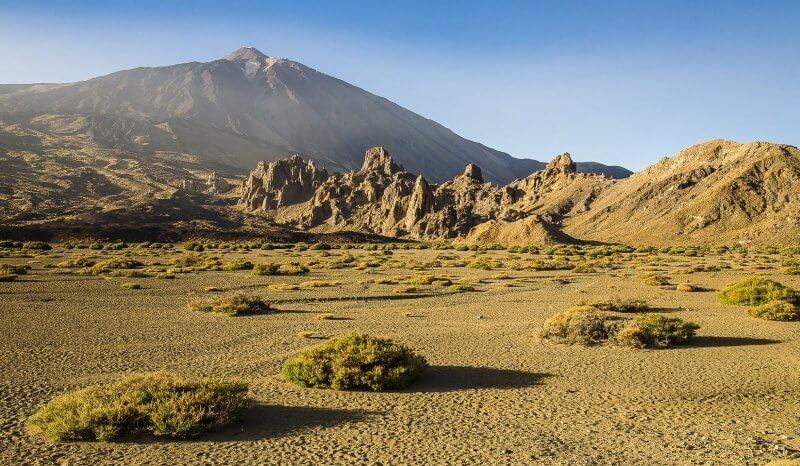
The park attracts visitors with its fantastic lunar landscape, formed from volcanic tuff – a porous rock ejected by a volcano during an eruption. Under the influence of wind and rain, completely unusual natural sculptures and rocks are created from tuff, the names of which speak for themselves: “Queen’s Shoe”, “God’s Finger”. Numerous fragments of rocks and rivers of petrified lava, hydrogen sulfide steam breaking through cracks in the ground – this is what the slopes of the largest active volcano in the Canary Islands, Teide, look like.
Teide Park and the Las Cañadas Caldera are characterized by a very diverse fauna. Snakes and dangerous animals are not here, however, as in all of Tenerife. There are small lizards, rabbits, hedgehogs, feral cats.
From April to June, the entire Teide Park in Tenerife is transformed: all the local vegetation blooms with colorful colors and is fragrant.
Climbing Mount Teide
Entry to the National Park is allowed at any time of the day and absolutely free of charge.
At an altitude of 2356 m, where the lower station of the cable car to the top of the volcano is equipped, you can get by car or bus yourself, or buy a tourist tour at the hotel. The cable car can be reached via four routes – the choice depends on which side of Tenerife you will have to reach (from the north, south, west or east).
A tip! The number of parking spaces is limited, so you need to arrange a trip by car earlier. The schedule of regular buses can be viewed on the website http://www.titsa.com In particular, bus # 342 runs from the station in Playa de las Americas, and from the station in Puerto de la Cruz # 348 Puerto de la Cruz.
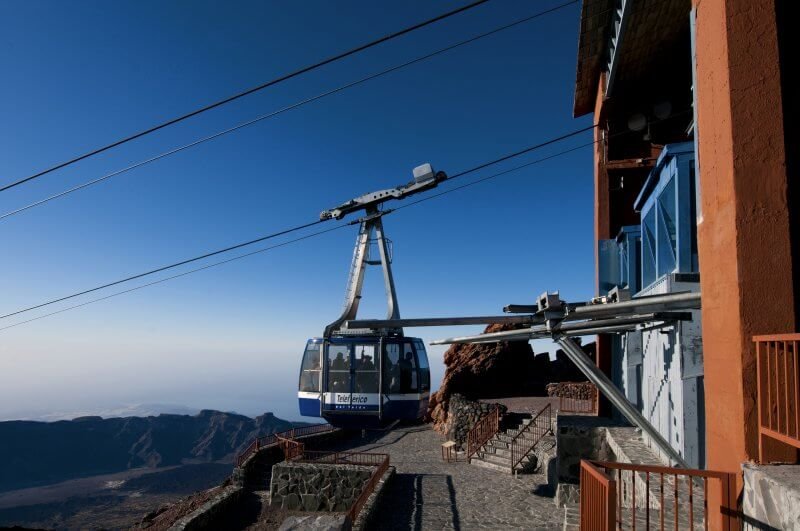
Further access to the Teide volcano crater in Tenerife can be made by cable car, which takes only 8 minutes. The best time to take the cable car is right after opening or after lunch, when there are fewer tourists and there are no queues.
Important! Any tourist can go up to the upper station of the cable car, just buy a ticket for travel. You can only climb to the top of the mountain higher up from the station if you have a special permit – How to get it is described below.
From the platform at the top station of the cable car, you can enjoy stunning views of Teide Park, and in good weather, the spectacle is completely breathtaking: the ocean and sky converge on a barely noticeable horizon, and the Canary Islands seem to float in the air.
The time spent at the top station of the cable car is limited. Tourists who have permission to climb to the crater can stay there for 2 hours, and those who do not have such permission – 1 hour. The time is checked during the descent.
From the upper station there are several routes in the Teide Park:
- to the La Fortaleza viewpoint;
- to the Pico Viejo viewpoint;
- Telesforo Bravo Trail-to Teide crater.
Advice from mountain climbers! You only need to walk 163 m to the crater, but due to the pressure drop and rarefied air, some tourists get mountain sickness and get dizzy. To improve your well-being, you do not need to rush during the ascent, it is advisable to stop and catch your breath as often as possible.
How to get permission to climb the Teide
There are 3 ways to visit the very top of the volcano and look into its crater.
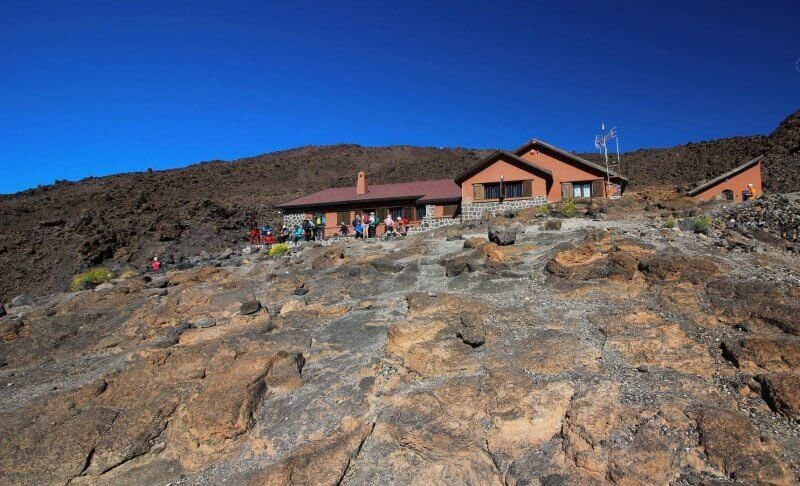
- On the mountainside, at an altitude of 3260 m, the Altavista shelter is located. Tourists who book an overnight stay in Altavista do not need a permit – they automatically get permission to meet the dawn at the crater. An overnight stay can be booked at the shelter. Prices change, so check current rates.
- You can get a permit online on the Cabildo’s Tenerife ON platform; non-residents of the Canary Islands pay an eco-fee (the permit used to be booked at www.reservasparquesnacionales.es). Prices change, so check current rates. You need to fill out a form with the date and time of your visit and passport details. The permit must be printed out and checked together with the passport. Since the number of places is very limited, you need to sign up for a permit at least 2-3 months before the planned date.
- On the site www.volcanoteide.com you can buy a guided tour to the top of the volcano. A typical package includes a cable car ticket, an English-Spanish speaking guide and a climbing permit. Prices change, so check current rates.
Interesting! Another reason to stay overnight at a tourist base is the meteor shower. Hundreds of shooting stars can be seen in the night sky in late July and early August.
Teide Park Cable Car
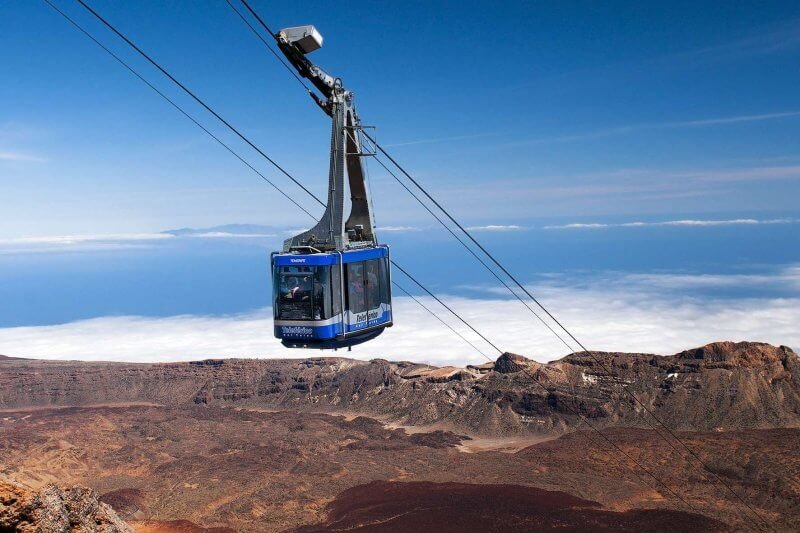
The lower station of the cable car is located at an altitude of 2356 m, the upper one at an altitude of 3555 m. This distance is covered by the cable car in 8 minutes.
Cable car opening hours
| Month | Opening hours | Last ascent | Last descent |
|---|---|---|---|
| January 1 – March 27, April 13 – June 30, October 25 – December 31 | 9:00-17:00 | 16:00 | 16:50 |
| March 28 – April 12, July – September | 9:00-18:40 | 17:40 | 18:30 |
| October 1–13 / October 14–24 | 9:00-18:00 / 9:00-17:30 | 17:00 / 16:30 | 17:50 / 17:20 |
For children under 3 years of age, the cable car is free of charge. There are also audio guides. Prices change, so check current rates.
Cable car tickets are sold online only, on the website www.volcanoteide.com/. You don’t need to print out the ticket, just download it to your phone.
Due to bad weather conditions (strong wind, snowfall), the lift may not work. Information about the cable car and the state of walking routes is always published on the above website in real time. If you don’t have access to the site, you can call by phone +34 922 010 445 and listen to an answering machine message.
Climatic conditions: when is the best time to climb the Teide
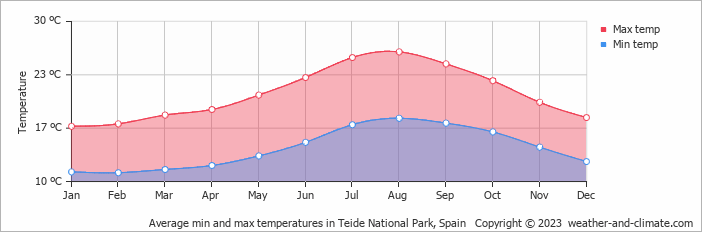
The weather on Teide is very capricious, changeable and in most cases unpredictable. One day it can be quite warm and comfortable, and literally the next morning the temperature may drop significantly or the wind will play out so strongly that the ascent will become unsafe.
Winter is the most unpredictable season on the summit. Snowfall, which causes the cables to become icy, often leads to an unexpected stop of the cable car.
And even in summer, it’s cool on top of the mountain. If the beach is sunny and warm up to +25°C, then it may well rain or even snow on the Teide. Depending on the time of day, the temperature difference can reach up to 20°C.
A tip! For climbing, it is necessary to take warm clothes with you, and it is better to wear closed shoes or trekking boots immediately on the trip. Since there is a risk of getting sunstroke due to the high altitude, you need to bring a hat and sunscreen SPF 50.
What is important for tourists to know
Teide Volcano is part of the National Park of the same Name in Tenerife, which is protected by law. It is forbidden in the park (you have to pay quite large fines for violations):
- build bonfires;
- pluck any plants;
- pick up and take away stones with you;
- move away from tourist routes.
A tip! There are several restaurants near Teide, but if you are going to conquer this mountain, it is advisable to bring some food and a couple of bottles of 1.5 liters of water.
On the territory of the park there are many so-called “volcanic bombs” – stones that were thrown out by the Teide volcano during the eruption. The black caked shell of the “bombs” hides inside a shiny olive-colored mineral-olivine. Tenerife’s souvenir shops sell a variety of crafts made from this semiprecious stone and jewelry made with it. It is legal to export processed olivine from Tenerife.
Tenerife, Spain: A Guide to the Best Places to See and Things to Do
Teide Volcano: frequently asked questions
Do you need a permit to climb Teide Volcano?
Yes, if you want to go beyond the cable-car upper station to the crater. You apply online, and places are limited, so book well ahead.
How does the Teide cable car work?
It takes visitors up the mountain during opening hours, with a last ascent and last descent that change with the season. Children under 3 travel free.
When is the best time to visit Teide Volcano?
Clear, calm days are best, and conditions at the summit are much colder than on the coast. Check the forecast and the cable-car hours before you go.
Related guides on Enjoy The Trip: Masca Gorge, Tenerife weather, Los Gigantes, Santa Cruz de Tenerife.

Konstantin is an acclaimed travel writer, celebrated for transforming ordinary journeys into extraordinary narratives. With years of experience exploring diverse destinations across the globe, his work blends vivid storytelling, cultural insights, and practical advice to inspire wanderlust and guide readers toward unforgettable adventures.
As a key contributor to enjoythetrip.org website, Konstantin has built a loyal readership through their expertise in uncovering both iconic landmarks and off-the-beaten-path treasures. He specializes in providing travelers with honest, actionable tips, whether it’s finding the best resorts in Maldives, exploring cultural hubs like Paris, or diving into the natural wonders of Croatia.