
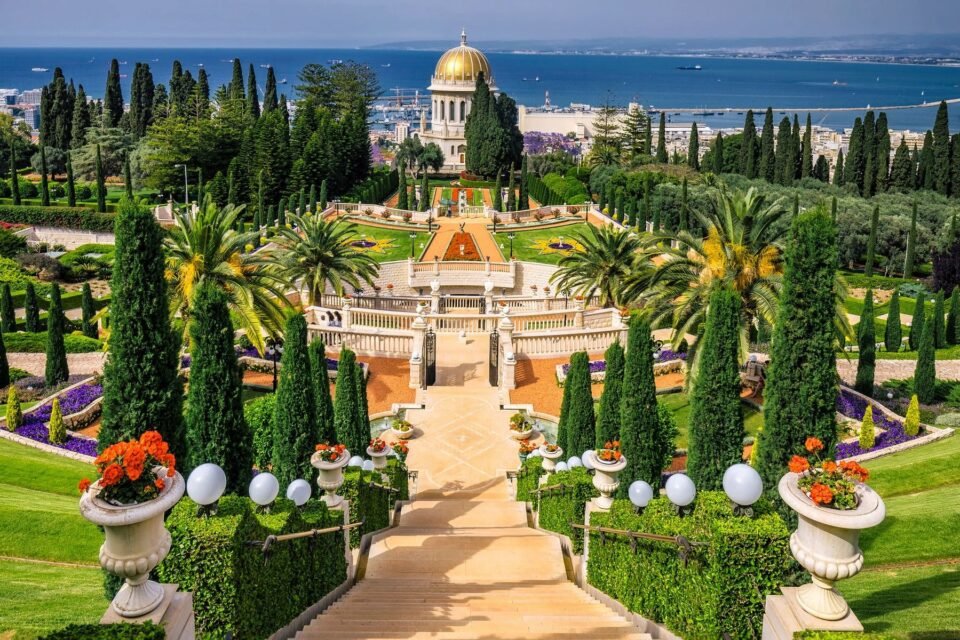
This Baha’i Gardens guide covers the terraced gardens on Mount Carmel in Haifa: their history, what to see, opening hours, tours, visiting rules and useful tips.
The Baha’i Gardens are a special place for every follower of the Baha’i religion. The sacred books say that the cleanliness of gardens determines a person’s spirituality and reflects his inner world. This is probably why the Baha’i gardens are so large, well-kept and clean.
General information
Baha’i Gardens in Israel is a huge park with tropical plants, located on Mount Carmel. The gardens are considered the eighth wonder of the world, and are located on the territory of the city of Haifa. This is one of the most grandiose and famous sights of Israel, which in 2008 was included in the UNESCO World Heritage List.
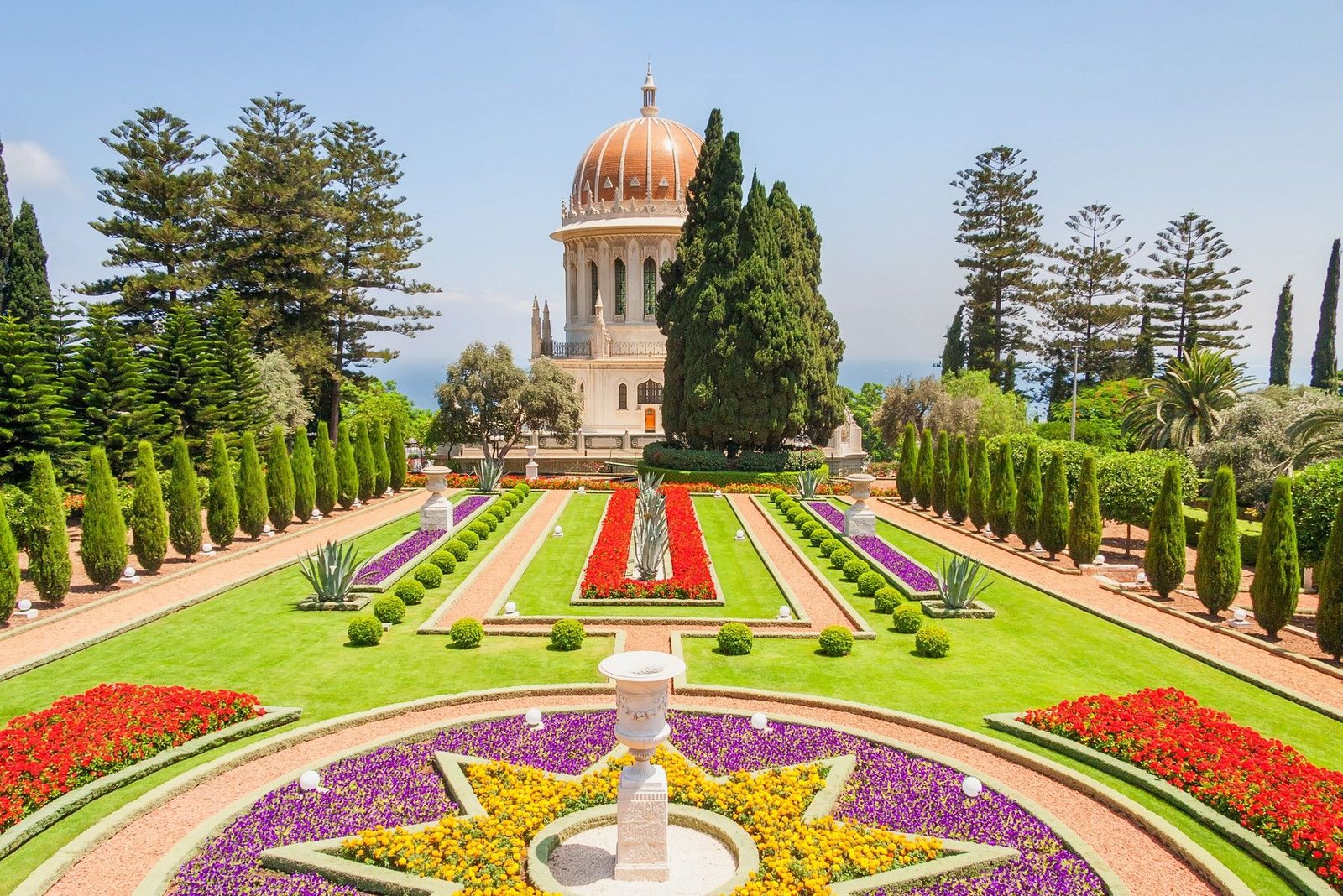
The Baha’i Gardens in Haifa cover an area of almost 20 hectares. The garden is served by about 90 employees and volunteers who create beautiful flower arrangements, monitor the operation of fountains and clean up garbage. About $ 250 million was spent on the construction of the gardens, which were donated exclusively by followers of the Baha’i faith. An interesting fact is that money and any help from representatives of other religions is not accepted.
Historical background
Despite its worldwide fame and the title of “The Eighth Wonder of the World”, the Baha’i Gardens in Israel are a relatively new attraction created in the 20th century. The Baha’i Gardens in Haifa are named after the monotheistic religion of Baha’i, whose forerunner was the Persian prophet known as the Báb. In 1844, he began to preach a new religion, and six years later, in 1850, he was executed. He was succeeded by the aristocrat Baha’u’llah, who today is considered the founder of Baha’iism. In 1925, an Egyptian religious court recognized Baha’iism as a separate religion from Islam.
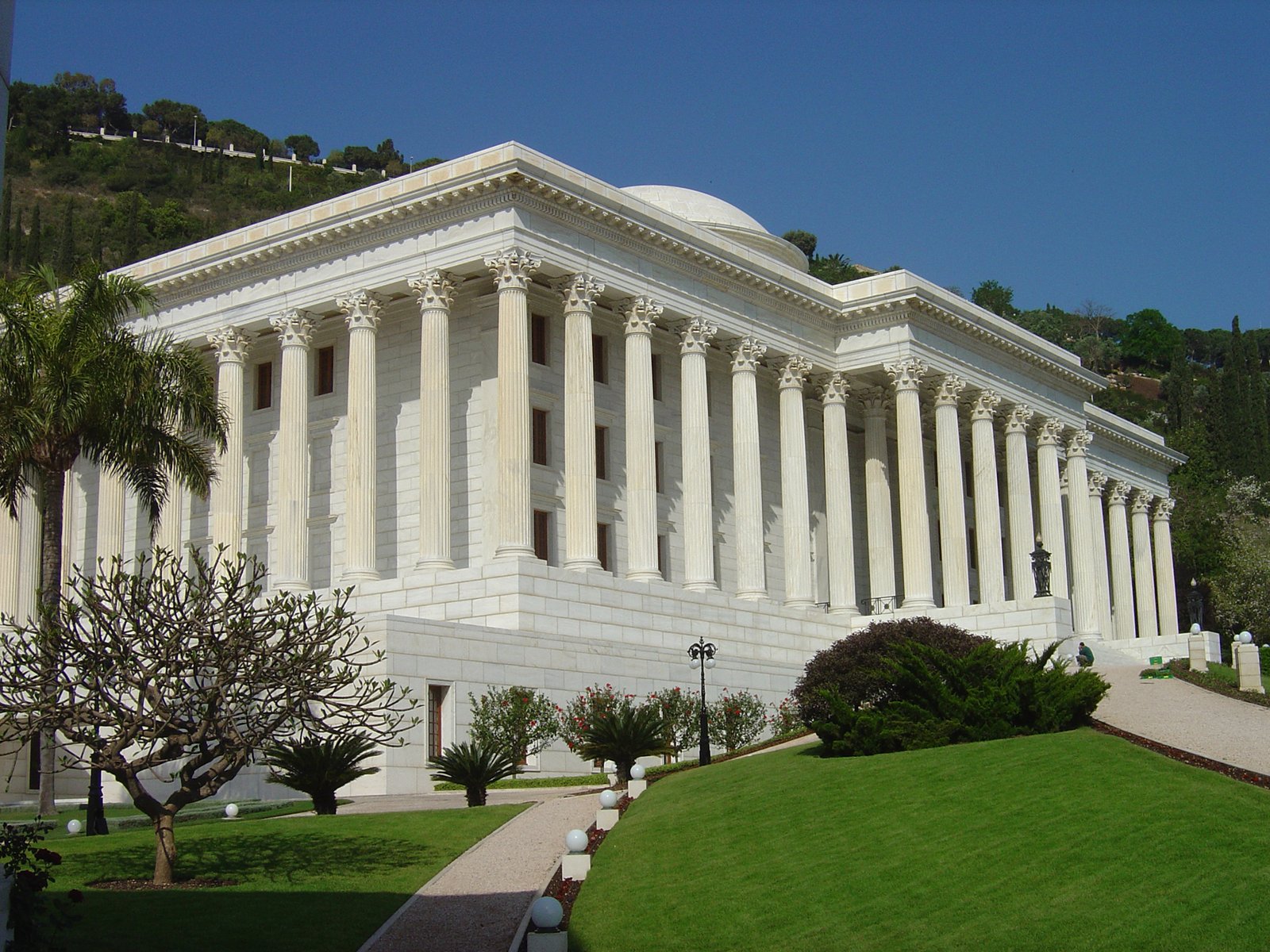
In 1909, the remains of the Báb were reburied on the slope of Mount Carmel in Israel. Initially, a small mausoleum was built for him, but over time more and more buildings appeared next to the grave. The culmination was the construction of the Seat of the Universal House of Justice, a neoclassical building with marble columns. The logical continuation was the planting of trees and the appearance of gravel paths for leisurely walks. Officially, the construction of the Baha’i Gardens in Haifa started in 1987. The work lasted more than 15 years, and the grand opening took place at the beginning of the third millennium. The terraces opened in 2001, and since then the gardens have been Haifa’s main attraction and one of the most popular holiday destinations in Israel.
By the way, on very many buildings in Israel you can see the Baha’i sign – three features that are united by one feature (means the unity of peoples) and a five-pointed star (the sign of a man in the East). Interestingly, the Baha’i faith is one of the religious communities officially recognized in Israel.
What to see
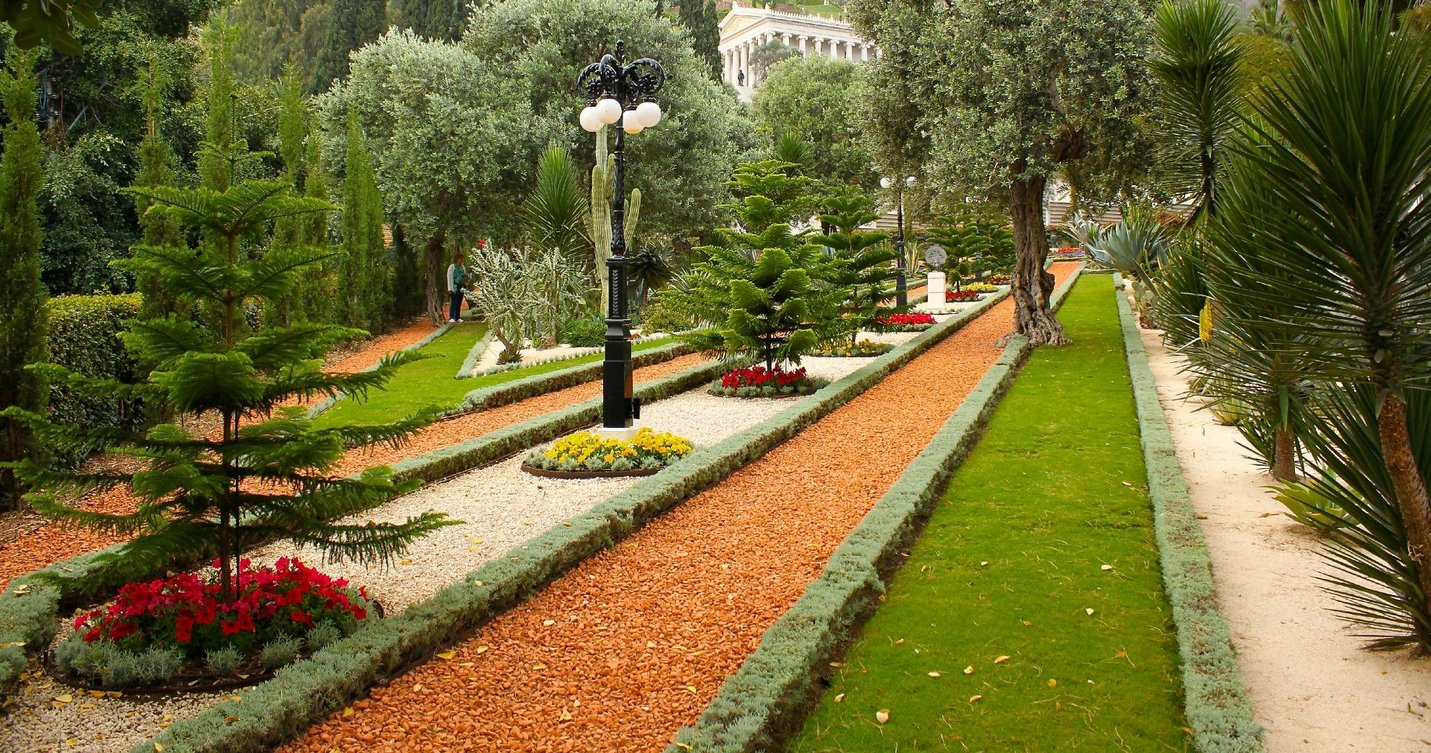
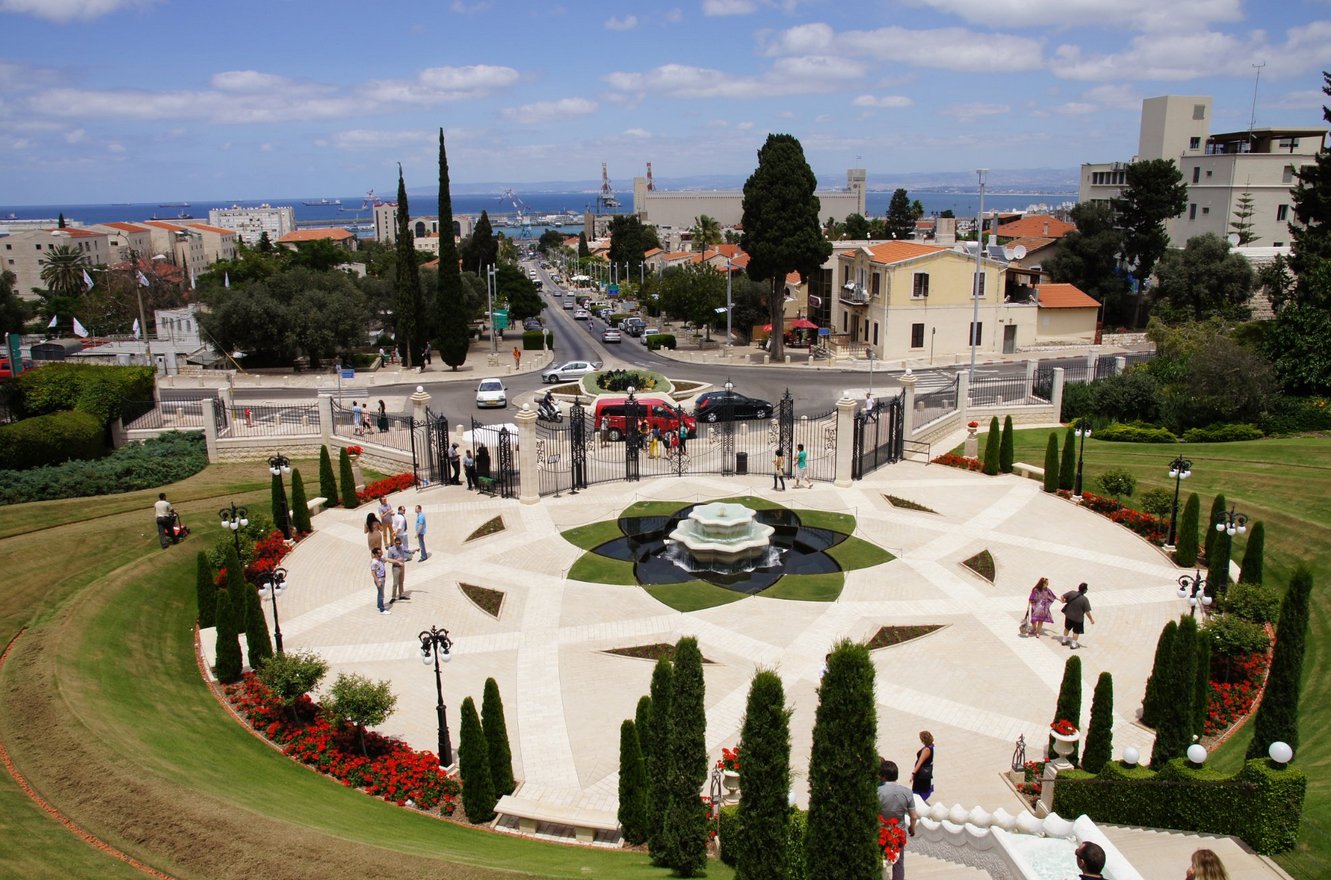
From the point of view of architecture, the Baha’i Gardens in Haifa (Israel) are made in the form of terraces, which are located on both sides of the temple. Their total length is about 1 km, and their width is from 50 to 390 m. On the terraces grow about 400 species of plants, each of which carries a secret meaning, and is planted in a strictly designated place.
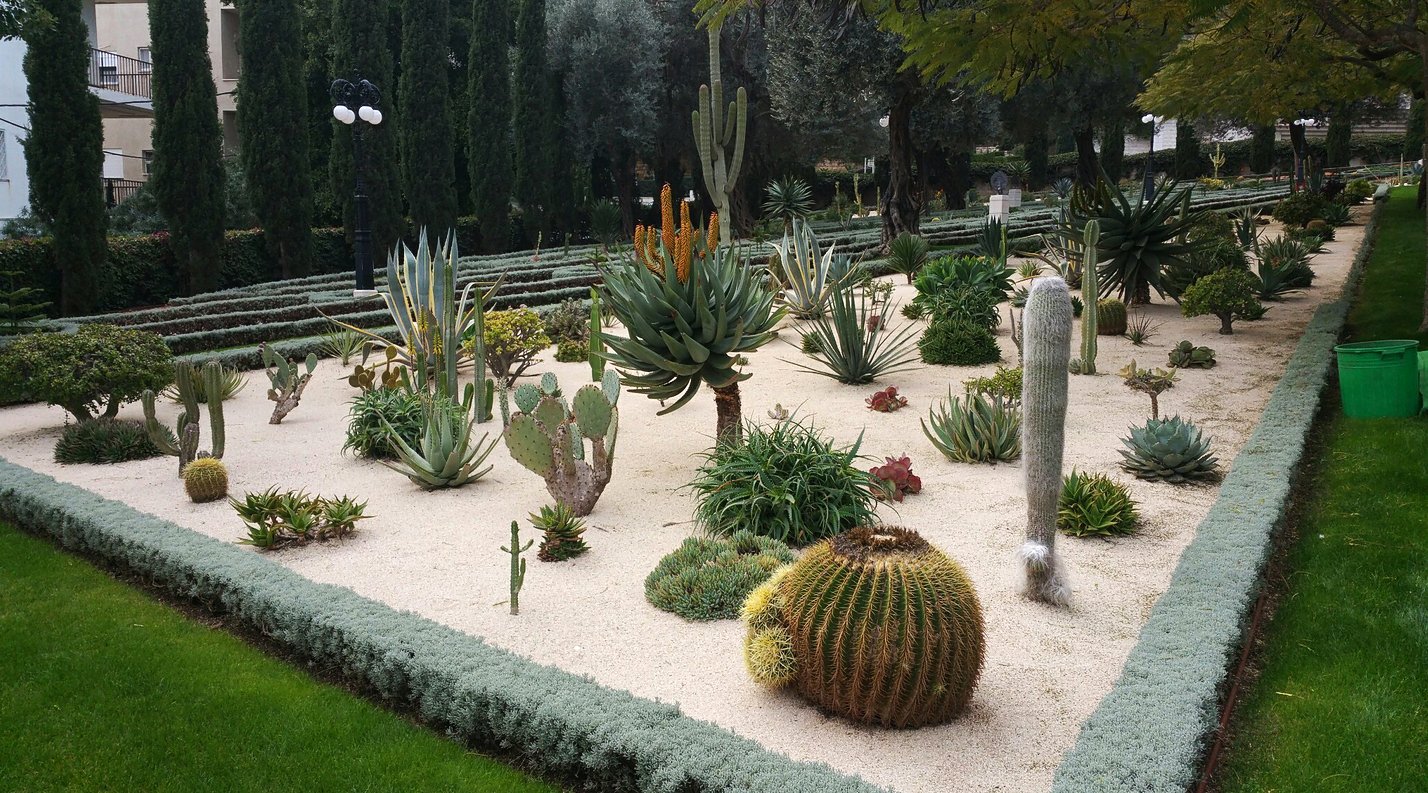
Not far from the tomb is a cactus garden. In this place you can see more than 100 species of cacti, some of which bloom in spring or autumn. Cacti grow on white sand, and are sheltered from the sun by orange trees.
Special attention should be paid to individual parts of this grandiose garden. Thus, the Jerusalem pine, which is common in Israel, is known for its medicinal properties. The gardens also have olive trees, evergreen trees from which olive oil has been extracted for centuries.
The small oak grove located in the western part of the Baha’i Gardens in Haifa is also worth a visit. In Israel, an oak tree is called an ever-growing tree, because when an old and sick plant dries up, a new one necessarily appears in its place. It is worth paying attention to the carob tree, the fruits of which are called St. John’s Bread: they were used to make bread, wine, and feed domestic animals. Another interesting tree is the fig tree, under which tourists like to gather on a hot day. Also in the Baha’i gardens in Israel, there are many palm trees, eucalyptus and almond trees.
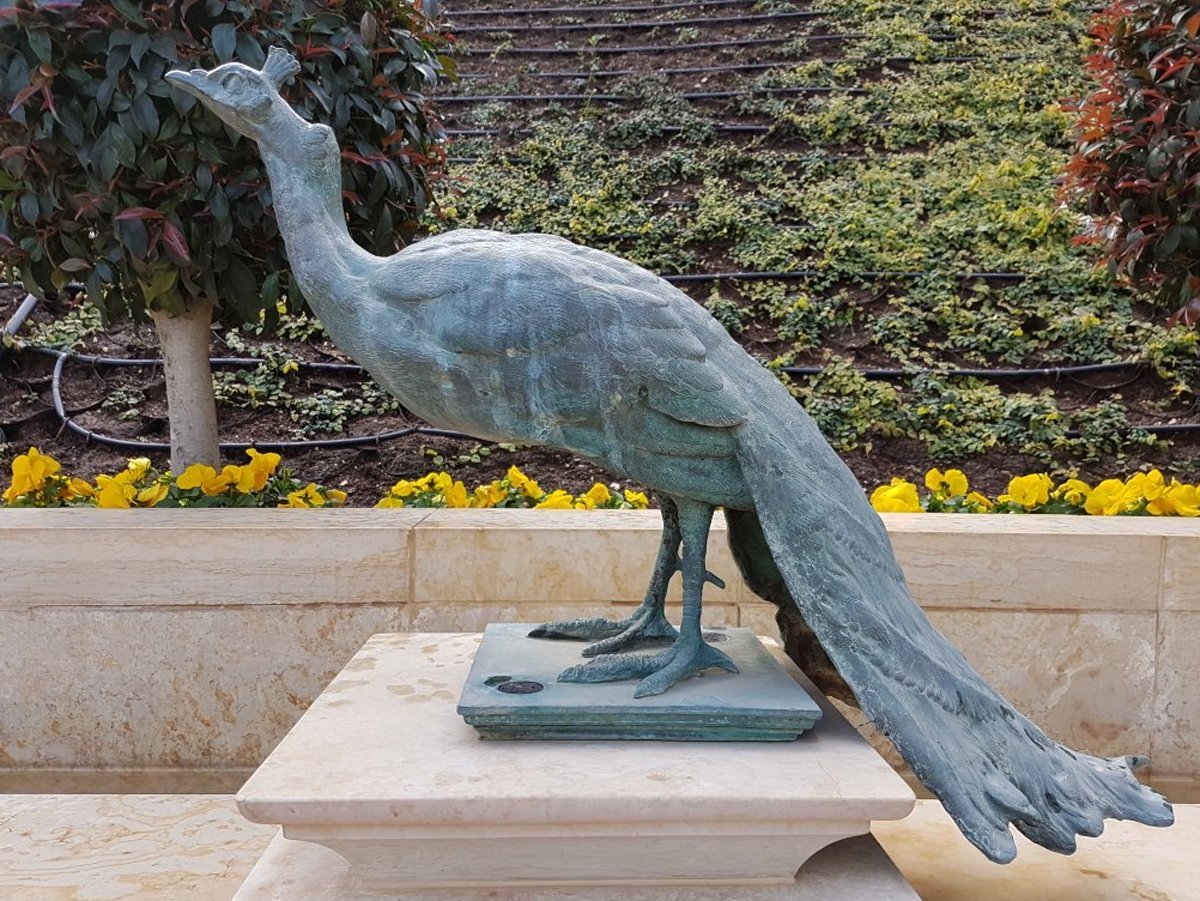
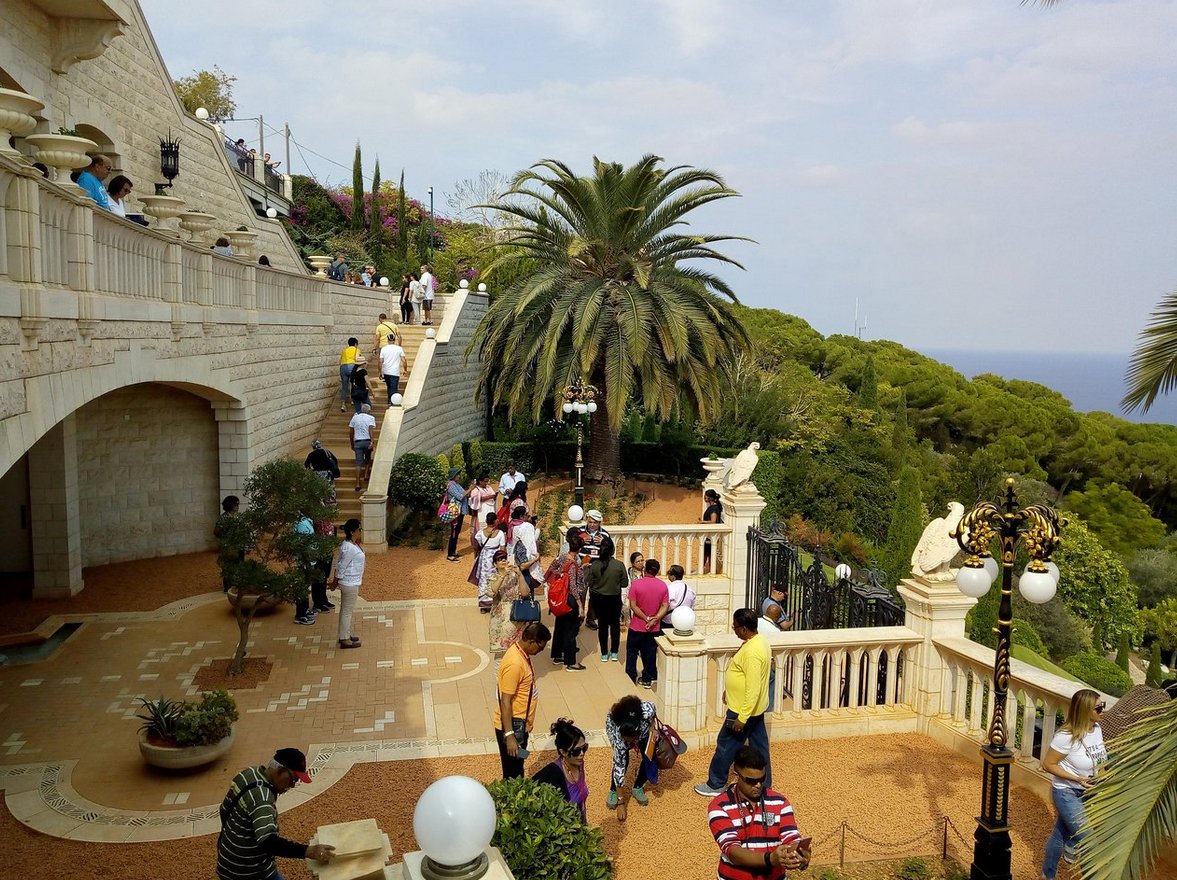
Perhaps one of the most striking sights in Haifa are the statues of birds, arranged in a chaotic order throughout the park. So, here you can meet a stone eagle, a marble hawk, a bronze griffin and a peacock. Also in the gardens there is a network of interconnected fountains with drinking water. The water in them “goes in a circle”, and after passing all the stages of cleaning gets into the fountain.
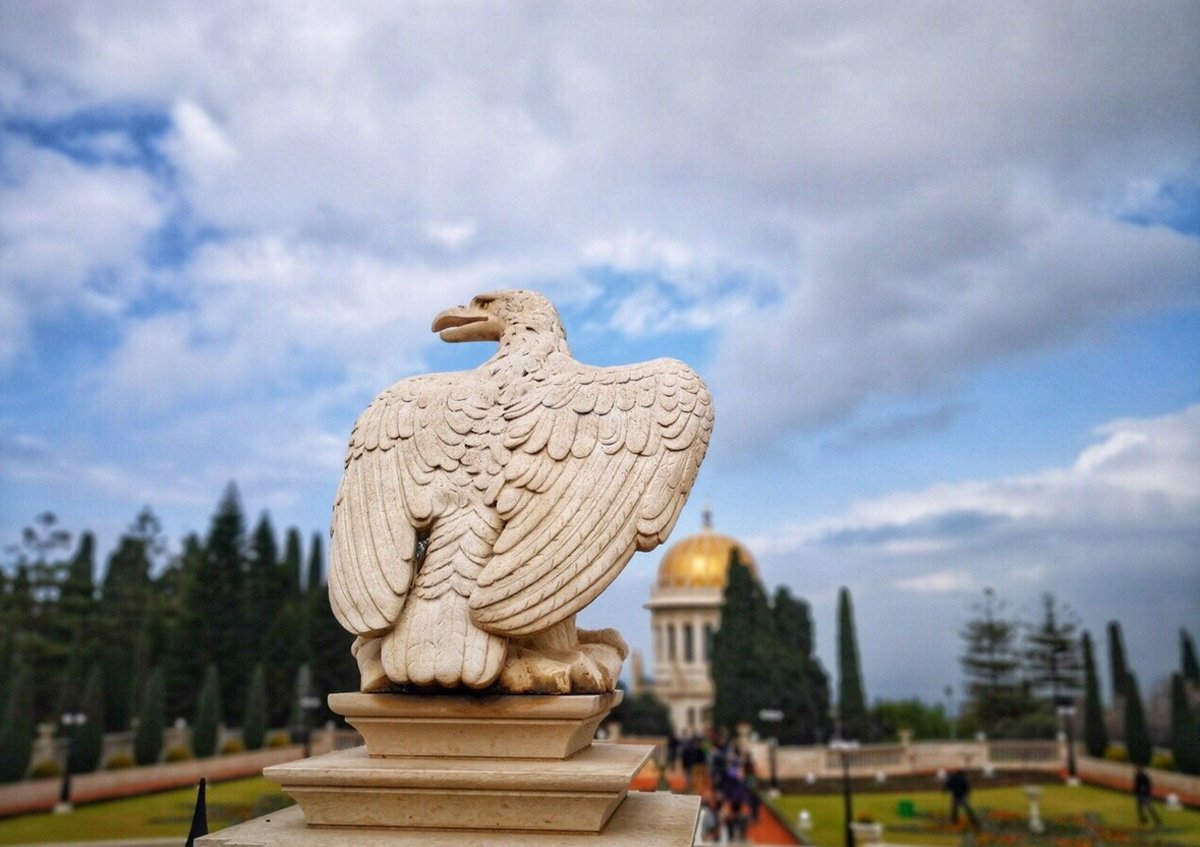
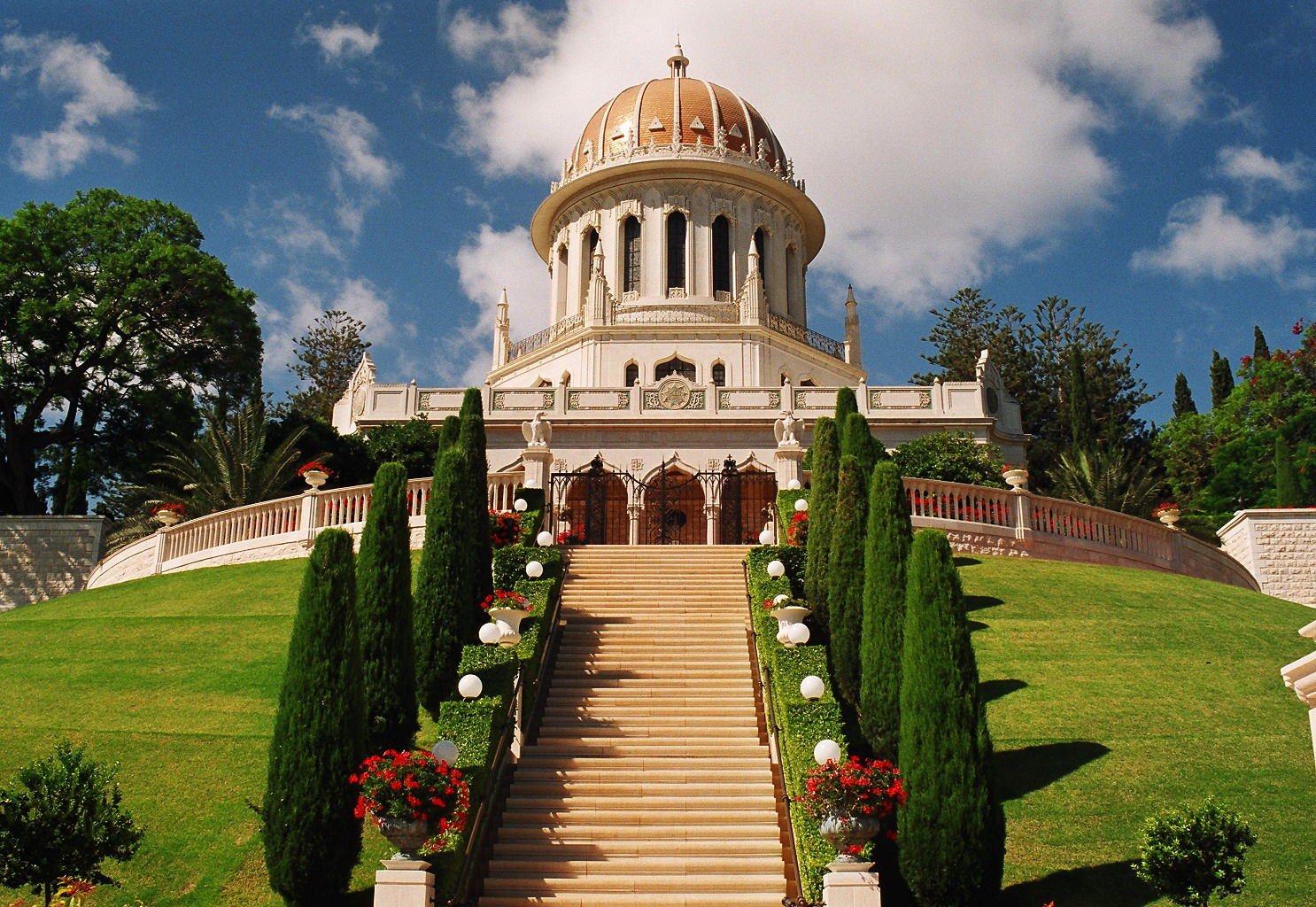
A separate attraction is the Baha’i World Center. The dome of the Shrine of the Báb is covered with gilded tiles. The lower, thirty-meter part of the building has the shape of an octagon, decorated with purple and emerald mosaics. The Baha’i World Center in Haifa is divided into several parts:
- Government rooms. There are 9 main representatives of the Baha’i religion, who are elected every 5 years by secret ballot.
- International Archive. The archive contains the most valuable documents related to the emergence of religion. For example, the original Scriptures.
- Research center. In this part of the building, historians study the Baha’i Scriptures and engage in translation activities.
- An educational center. In this place, so-called Councilors work who develop community development programs.
- Library. This building has not yet been built, but it is planned that the library will become the main symbol and center of the Baha’i religion.
- International Organization for Development. The committee consists of 5 people who will be engaged in the promotion and dissemination of religion outside of Israel.
- Memorial gardens. 4 gardens on the top of Mount Carmel in Haifa are considered memorial gardens. You can find them on 4 monuments made of Carrara marble, which are installed on the graves of close relatives of Baha’u’llah.
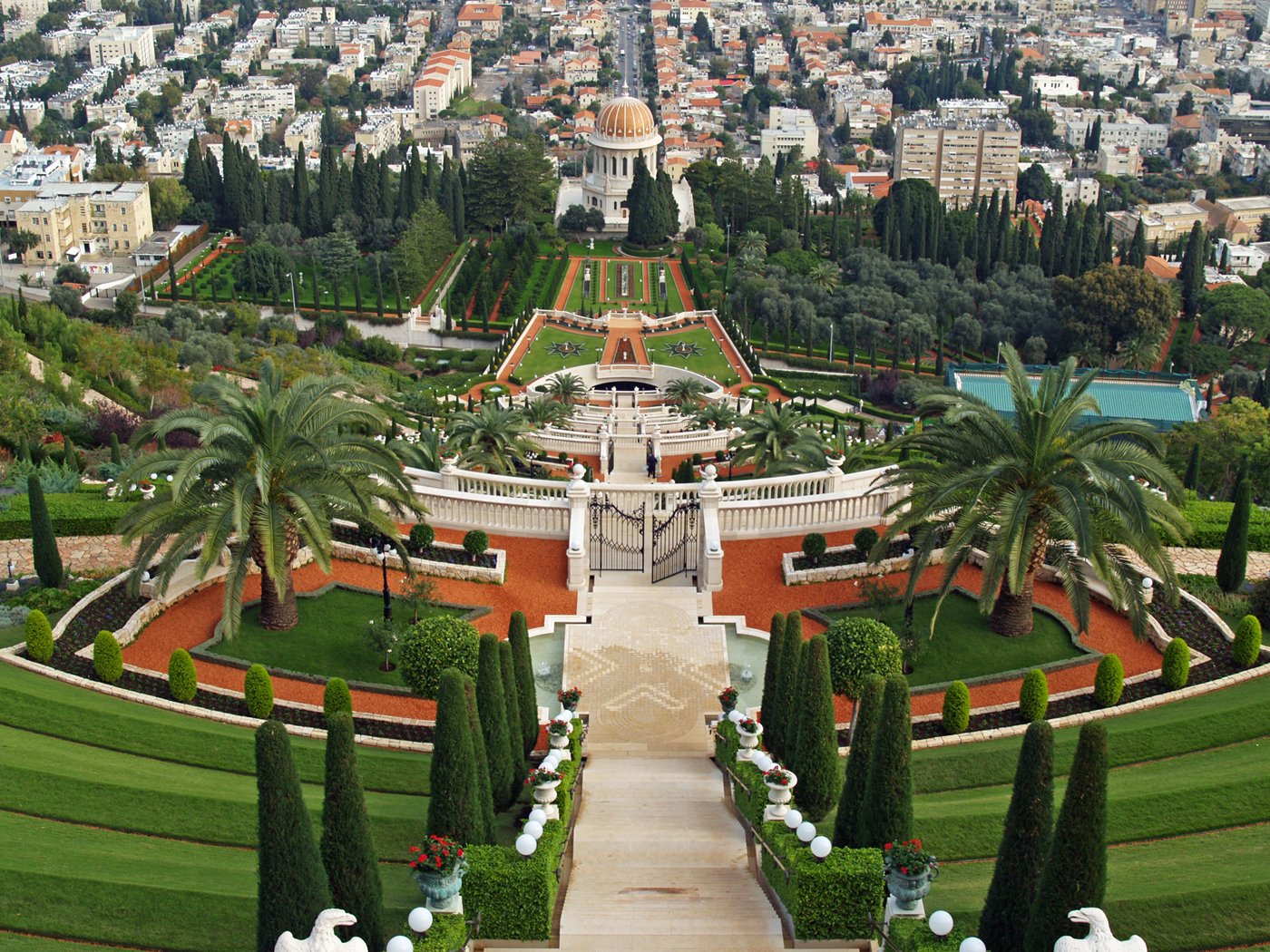
Followers of all religions can visit the parts of the temple that are open to tourists and residents of the city: several times a day, volunteers (there are no priests here) conduct prayer programs and chants. Unfortunately, it is not possible to take a photo inside the World Center, located in the depths of the Baha’i Gardens in Haifa.
Practical information
Address: Sderot Hatsiyonut 80, Haifa.
Opening hours: inner gardens (middle tier) – 9.00-12.00, outer gardens-09.00-17.00.
Tour schedule (times may have changed; check the official website before your visit):
| 10.00 | in English | Thursday-Tuesday |
| 11.00 | in Russian | Monday, Tuesday, Friday, Saturday |
| 11.30 | in Hebrew | Thursday-Tuesday |
| 12.00 | in English | Thursday-Tuesday |
| 13.30 | in Arabic | Monday-Tuesday, Thursday-Saturday |
Admission fee: free of charge, but donations are accepted.
Official website: www.ganbahai.org.il/en/.
Session rules
- Like followers of any other religion, Baha’is adhere to certain rules, including the obligation to wear closed clothing. You will NOT be allowed to enter the park with bare shoulders and knees, uncovered head.
- Be prepared for the fact that at the entrance and exit to the Baha’i Gardens, all visitors are searched with metal detectors.
- Please note that it is forbidden to use telephones or any other equipment on the territory of the Baha’i Gardens. An exception is the camera.
- You can’t bring food with you. You can only take a small bottle of water.
- Try to keep up with the group. If you go too far, vigilant security guards will ask you to leave the garden.
- In any case, do not go on the lawn!
- Do not take your pets with you.
- Try to keep your voice low and not make too much noise. Baha’is do not favor loud-speaking tourists.
Useful tips
- If you want to visit not only the Baha’i Gardens in Haifa, but also the tomb, you should come here in the morning – the shrine is usually open only until noon.
- You should come to excursions in advance, because there are so many people who want to, and there is always a risk of not being part of the excursion group.
- Oddly enough, there are no benches in the Baha’i gardens. This is done so that visitors do not stay away too long and free up space for new tourists.
- The best photos of Baha’i Gardens in Haifa can be obtained by climbing to the very top of the mountain. It offers stunning views of the port and surrounding area.
Baha’i Gardens in Israel is a place of peace, quiet and beauty in the bustling city of Haifa. Every year this place is visited by hundreds of thousands of tourists, and everyone is amazed by the scale and grandeur of the construction.
Eilat’s Timna Park: A Guide to Israel’s Most Unique Natural Phenomenon
Baha’i Gardens at a glance
- Where: on Mount Carmel in Haifa, Israel
- Admission: free of charge, donations accepted
- Dress code: shoulders and knees covered
- Best photos: from the top of the mountain
Note: prices in this article were collected when it was written and may have changed. Please confirm current prices on the official websites before your trip.
Baha’i Gardens: frequently asked questions
Are the Baha’i Gardens free to visit?
Yes, admission is free of charge, but donations are accepted.
What should you wear to the Baha’i Gardens?
Closed clothing: you will not be allowed in with bare shoulders or knees.
When is the best time to visit the Baha’i Gardens?
Come in the morning if you also want to see the tomb, and arrive early for tours.
Related guides on Enjoy The Trip: Israel: 15 Amazing All-Inclusive Hotels From Eilat to the Dead Sea, Eilat: 15 Great Red Sea Hotels for a Relaxing Holiday, Ramat Gan: A Fascinating Israeli City of Towers and Parks.

Konstantin is an acclaimed travel writer, celebrated for transforming ordinary journeys into extraordinary narratives. With years of experience exploring diverse destinations across the globe, his work blends vivid storytelling, cultural insights, and practical advice to inspire wanderlust and guide readers toward unforgettable adventures.
As a key contributor to enjoythetrip.org website, Konstantin has built a loyal readership through their expertise in uncovering both iconic landmarks and off-the-beaten-path treasures. He specializes in providing travelers with honest, actionable tips, whether it’s finding the best resorts in Maldives, exploring cultural hubs like Paris, or diving into the natural wonders of Croatia.