
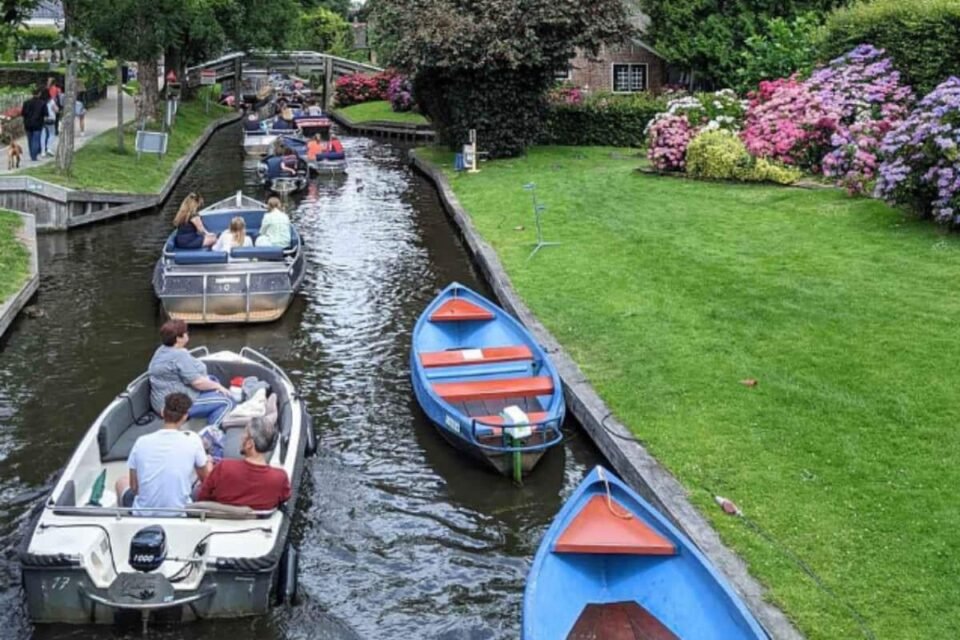
Instead of streets, there are canals with boats, and instead of parking lots, there is a wooden bridge near the house.
There are fewer and fewer places in the world where you can completely forget about the noise of cars and busy city traffic. However, travelers have found a unique European corner that completely contradicts the idea of modern infrastructure, according to Observator.
The unusual place was the Dutch village of Giethoorn, located in the province of Overijssel, about 120 kilometers from Amsterdam.
According to the article, there are no roads in the historical part of this town. Instead, there is a complex system of canals that connect residential buildings, restaurants, gardens, and other local facilities. There are more than 170 wooden bridges for pedestrians, connecting small islands with houses.
According to available data, this unusual landscape was formed many centuries ago as a result of peat extraction. Over time, the resulting ponds turned into canals, which became the main transportation routes. According to tourism experts, it is this uniqueness that has made this place one of the most interesting destinations for a relaxing vacation in the Netherlands.
The main entertainment for guests is water walks. The most popular option is to rent an electric boat, which allows you to slowly admire the old farmhouses, well-kept gardens, and weeping willows that lean over the water. Thanks to eco-friendly transportation, the village is completely silent, and the movement is almost non-harmful to the environment. For active recreation, you can also rent a kayak, canoe, or a stand-up paddleboard.
According to journalists, the village’s surroundings, located within the De Verribbene-Wieden National Park, are particularly appreciated by wildlife enthusiasts. The area is home to a diverse range of bird species, including rare ones. In addition to water-based activities, tourists can explore numerous hiking and cycling trails that traverse lakes, wetlands, and green landscapes.
The easiest way to get here is from Amsterdam: first by train to the city of Steenwijk, and then by bus to your destination. If you drive, the journey will take about an hour and a half, but you will need to leave your car in a designated parking lot. Driving is strictly prohibited.
Despite the fact that Giethoorn has a population of only about 2,800 people, it is estimated that almost a million tourists visit the city every year.
Love car-free Giethoorn? See 4 charming Dutch towns that won a local’s heart and England’s car-free “Little Venice” town. Official Netherlands planning starts at Holland.com.
Frequently asked questions
Where is Giethoorn and why are there no roads?
Giethoorn is in the province of Overijssel, about 120 km from Amsterdam. Its historic center has canals instead of roads, with more than 170 wooden footbridges. The canals formed centuries ago from ponds left by peat extraction.
What is there to do in Giethoorn?
Rent a quiet electric boat to glide past farmhouses, gardens, and willows, or take a kayak, canoe, or paddleboard. The surrounding Weerribben-Wieden National Park is great for birdwatching, hiking, and cycling.
How do you get to Giethoorn from Amsterdam?
Take the train to Steenwijk, then a bus. By car it takes about an hour and a half, but you must leave the car in a designated parking lot because driving in the village is prohibited. About 2,800 people live there, yet nearly a million tourists visit each year.

Konstantin is an acclaimed travel writer, celebrated for transforming ordinary journeys into extraordinary narratives. With years of experience exploring diverse destinations across the globe, his work blends vivid storytelling, cultural insights, and practical advice to inspire wanderlust and guide readers toward unforgettable adventures.
As a key contributor to enjoythetrip.org website, Konstantin has built a loyal readership through their expertise in uncovering both iconic landmarks and off-the-beaten-path treasures. He specializes in providing travelers with honest, actionable tips, whether it’s finding the best resorts in Maldives, exploring cultural hubs like Paris, or diving into the natural wonders of Croatia.