
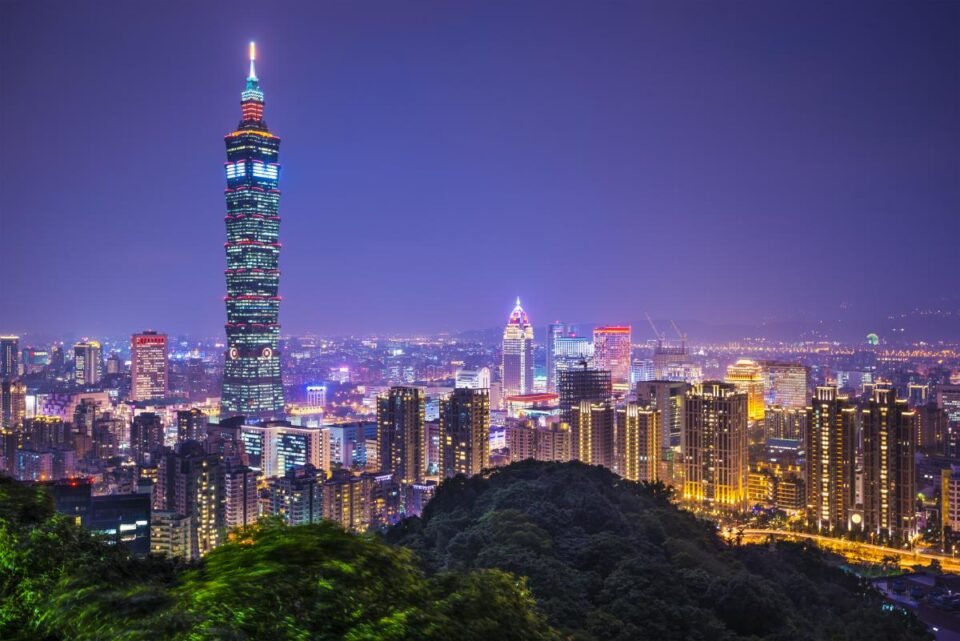
Taipei, the capital of Taiwan, has been named the world’s best city for public transport quality — according to the assessments of local residents, Time Out writes.
It says that living in a city with magnificent galleries, theaters, restaurants and cafes is a real privilege, but day-to-day quality of life is far more affected by infrastructure, in particular public transport.
Every year Time Out surveys thousands of residents of major cities about how life is for them, in particular about their impressions of local buses, trams and trains. This time 24,000 respondents rated public transport in their cities on a five-point scale, where one point meant “terrible” and five meant “excellent”. On the basis of those answers the publication compiled a ranking of the 20 best cities in the world for public transport quality.
First place went to Taipei: a full 95% of local residents rated the city’s transport network as “good” or “excellent”. Taipei beat Singapore, Hong Kong and Edinburgh by a noticeable margin.
Taipei’s transport system stands out above all for its urban metro, the MRT (Mass Rapid Transit), which compares very favorably with the metro systems of most major cities around the world.
“Thanks to the impeccable cleanliness of the stations, clearly marked lines for queues on the platforms and trains arriving exactly on schedule, the Taipei metro has received almost unanimous approval from local residents,” the Time Out author Roisin Tiling writes.
The scale of the system is also impressive. In 2025 the metro carried more than 767 million passengers — an average of about 2.1 million people daily.
In addition, Taipei has the EasyCard, whose name fully matches its purpose: it can be used to pay for travel on the metro and buses, as well as for renting bicycles from the YouBike system. This makes getting around the city even more convenient.
Second place went to Singapore, whose metro has long been considered a model of urban public transport, and 93.5% of local residents agree with that assessment. Its 146 stations handle about 3.5 million journeys daily. According to Singapore’s Land Transport Authority, in 2025 roughly 99.4% of trains ran to schedule. In July 2026, three new stations in the city — Keppel, Cantonment and Prince Edward Road — finally closed the Circle Line loop.
In 3rd place is Hong Kong, whose metro is not simply transport but an integral part of daily life. According to the MTR company’s annual report, in 2025 99.9% of journeys on the main rail network were completed on time. Over the year the system handled almost 2 billion journeys. However, the main advantage of Hong Kong’s transport is its diversity. Here you can get off a high-speed train, transfer to a century-old tram that locals call the “ding-ding”, and then cross the harbor on the Star Ferry. And all of it can be paid for with a single tap of an Octopus card.
In 4th place is Edinburgh (United Kingdom) — one of the city’s main advantages is the bus company Lothian Buses, the majority of whose shares are owned by the city council. In 2025 it handled 119 million passenger journeys, and Edinburgh’s trams also set a record, carrying 12.5 million passengers.
In 5th place is Seoul (South Korea), where the metro is extensive and clean, keeps a stable mobile signal even underground and has affordable fares, and there is also a river bus; 6th is Zurich (Switzerland), 7th is Vienna (Austria), 8th is Tallinn (Estonia), 9th is Helsinki (Finland), and 10th is Medellín (Colombia).
The second ten includes: Shanghai, Warsaw, Osaka, Stockholm, Jakarta, Riyadh, Hamburg, Amsterdam, Vancouver and Oslo.

Konstantin is an acclaimed travel writer, celebrated for transforming ordinary journeys into extraordinary narratives. With years of experience exploring diverse destinations across the globe, his work blends vivid storytelling, cultural insights, and practical advice to inspire wanderlust and guide readers toward unforgettable adventures.
As a key contributor to enjoythetrip.org website, Konstantin has built a loyal readership through their expertise in uncovering both iconic landmarks and off-the-beaten-path treasures. He specializes in providing travelers with honest, actionable tips, whether it’s finding the best resorts in Maldives, exploring cultural hubs like Paris, or diving into the natural wonders of Croatia.