
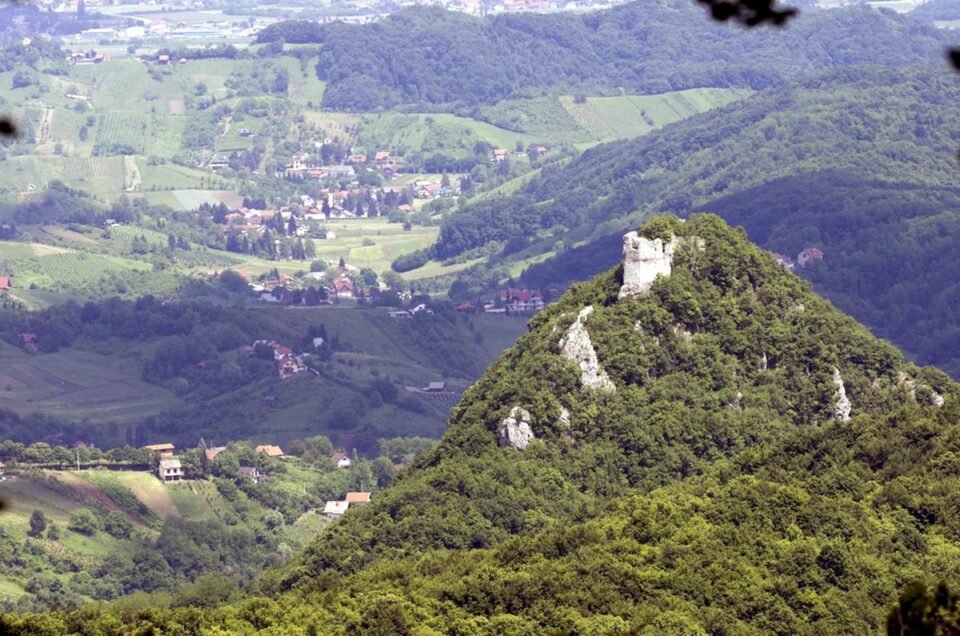
If you suddenly get tired of the beaches of the Adriatic Sea, it’s worth visiting the mountains of Croatia.
For most tourists, Croatia is about warm seas, the historic center of Dubrovnik, and that’s basically it. However, this country actually has much more to offer. This is what British journalist Mary Novakovic, who decided to thoroughly explore the surroundings of the Croatian capital, Zagreb, writes about in her piece for The Guardian.
The author began her journey in Samobor, a picturesque town located about half an hour’s drive from the capital, Zagreb. Even before the trip, friends from Dubrovnik advised her to try the local kremšnita – a dessert made with thick cream, flaky pastry, and powdered sugar. According to the journalist, the dessert truly lived up to her expectations.
Samobor, Novaković writes, has a vivid legacy from the Habsburg era. The narrow square is surrounded by baroque houses in pastel yellow, apricot, and pistachio shades, and the Gradna River flows nearby. The atmosphere is special thanks to the numerous cafes, green areas, and the former home of the composer Ferdo Livadić, now a city museum.
“Beautiful Baroque houses in pastel shades of buttery yellow, apricot, and pistachio lined the narrow King Tomislav Square in Samobor,” the author notes.
The route then leads to nature. In the Žumberak Nature Park, located approximately 26 kilometers from Samobor, there are forest trails for hiking and cycling. Hornbeam, oak, and beech forests grow here, and waterfalls can be found among the hills. Another attraction is the ruins of the Okich Castle, which was built at an altitude of almost 500 meters.
However, one of the main discoveries of the journey for Novaković was the region’s winemaking culture. More than three dozen wineries are located between the village of Plešivica and the town of Jastrebarsko. The vineyards grow on steep slopes among wooded hills, and the author compares this area to Tuscany in Italy.
A separate section in the material is devoted to local gastronomy. The journalist tried copanjek – a thin, salty pastry with cheese and herbs, as well as rudarska greblica – a traditional pie with cheese, walnuts, carrots, or herbs. Historically, it was prepared by the wives of miners from the village of Rude. Today, this dish has protected status in the EU and its own festival.
The gastronomic journey culminated in a dinner at the Michelin‑starred Korak restaurant in Pleschivice. The establishment is run by representatives of the fourth and fifth generations of a winemaking family. The author emphasizes the importance of using seasonal and local products: if a certain ingredient is not in season, the dish simply won’t be served.
Novaković notes that in autumn the region becomes especially interesting for food and wine connoisseurs. From September 25 to 27, an annual wine festival is planned in Jastrebarsko, and the Samobor Hills are expected to be filled with truffles, mushrooms, and seasonal dishes during this period.
“It is on the plate that they best welcome the change of seasons,” the author concludes.

Konstantin is an acclaimed travel writer, celebrated for transforming ordinary journeys into extraordinary narratives. With years of experience exploring diverse destinations across the globe, his work blends vivid storytelling, cultural insights, and practical advice to inspire wanderlust and guide readers toward unforgettable adventures.
As a key contributor to enjoythetrip.org website, Konstantin has built a loyal readership through their expertise in uncovering both iconic landmarks and off-the-beaten-path treasures. He specializes in providing travelers with honest, actionable tips, whether it’s finding the best resorts in Maldives, exploring cultural hubs like Paris, or diving into the natural wonders of Croatia.