
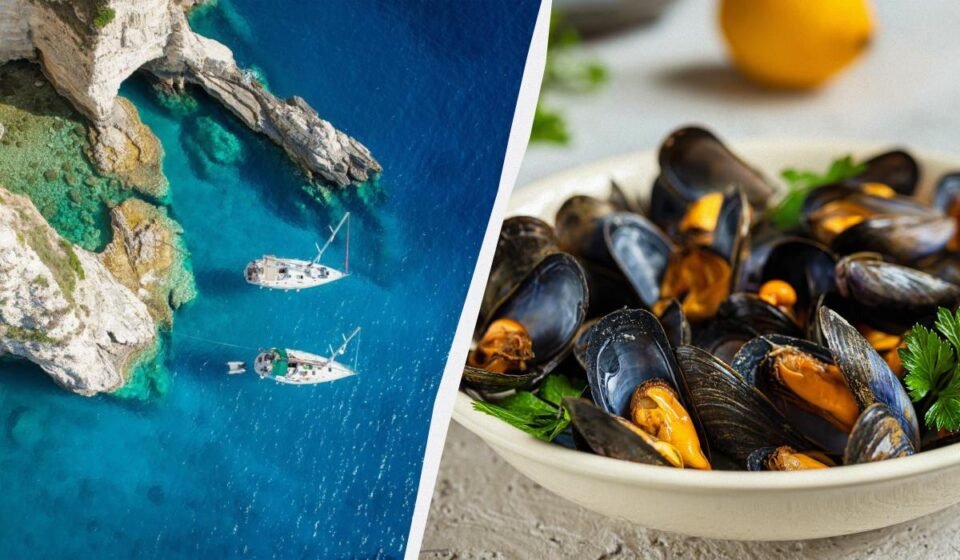
Greek mussels suffered a disastrous 2024. For the second time in three years, record sea temperatures hit the harvest in northern Greece. That is what Alexandros Avramidis reported for The Independent. As a result, farmers saw a 90% drop in their catch.
Worse still, all the seed for the 2025 season also died. So the next harvest was expected to fail too.
What Happened to Greek Mussels in 2024

Anastasios Zakalkas, 35, pulled up the ropes of his mussel farm in the Aegean in autumn 2024. Instead of heavy lines of molluscs, he found cracked, empty shells.
“The destruction we suffered (for next year) was 100%,” Zakalkas said. “We don’t know how we’ll make a living in the new year. Our main and only job is mussels.” In his view, the 2025 season would be a dud too, because the seed had perished.
Too Hot in the Thermaic Gulf
Like other Mediterranean countries, Greece is very exposed to climate change. In 2024, it saw months of above-average temperatures, punishing drought and wildfires. Crops such as chestnuts, apples and cherries were hit as well. Meanwhile, scientists warn that extreme weather could harm aquaculture too.
In July 2024, a series of heatwaves struck Greece. Sea temperatures in the Thermaic Gulf, the main mussel area, rose above 30°C (86°F) for days. That is too hot for mussels to survive.
Greece last saw mass mussel deaths in 2021. At the time, scientists predicted it would not happen again for another 10 years, said biologist Kostas Koukaras. He studies marine ecosystems.
“This shows, even to those most sceptical, that the climate crisis is here,” he said.
Why Greek Mussels Matter
In fact, aquaculture is big business in Greece. According to the Hellenic Aquaculture Producers Organization (HAPO), production was worth over €619 million in 2021. That made Greece third in Europe, after France and Spain.
Greece is also among Europe’s main producers of the Mediterranean mussel. Small family businesses farm about 20,000 tonnes a year, and nearly all of it is exported. Spain has seen mussel deaths too. However, Greece was hit hardest, because nearly all its farms sit in the same region.
Farmers Fear for the Future
Zakalkas lives in the small town of Kymina, home to about 100 mussel-farming families. Now they are seeking state compensation to pay off debts. Others are looking for work in factories.
“We’re afraid,” said Sotiris Tsaros, another mussel farmer. “If this happens again next year, we’ll all leave and everything I’ve done as a farmer for the last 30 years will be gone.”
Koukaras agrees that help is needed. “We’re very close to the collapse of mussel farming in Greece, so the state needs to support these people,” he said.
What It Means for Greek Mussels on the Menu
For travellers, the result is simple. Taverna menus may offer fewer mussels, since the harvest has collapsed. Even so, the region remains well worth a visit.
For example, start with our Thessaloniki guide, right on the Thermaic Gulf. Then find the best beaches near Thessaloniki. Finally, head south to Kassandra in Halkidiki.

Konstantin is an acclaimed travel writer, celebrated for transforming ordinary journeys into extraordinary narratives. With years of experience exploring diverse destinations across the globe, his work blends vivid storytelling, cultural insights, and practical advice to inspire wanderlust and guide readers toward unforgettable adventures.
As a key contributor to enjoythetrip.org website, Konstantin has built a loyal readership through their expertise in uncovering both iconic landmarks and off-the-beaten-path treasures. He specializes in providing travelers with honest, actionable tips, whether it’s finding the best resorts in Maldives, exploring cultural hubs like Paris, or diving into the natural wonders of Croatia.