
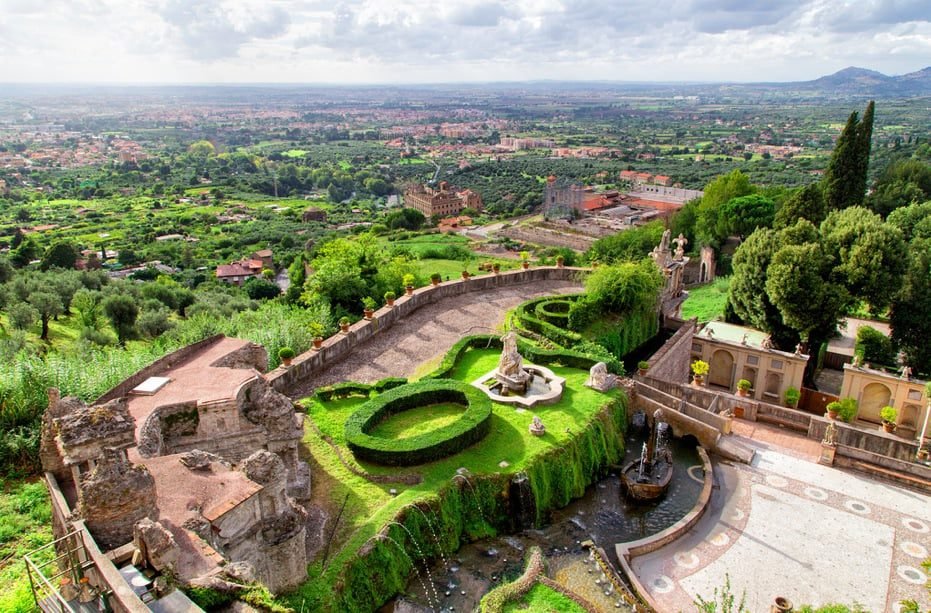
Just 24 km from Rome, in the city of Tivoli, lies one of the greatest creations of Italian architecture. Villa d’Este in Tivoli is famous for its fountains, shady alleys, whimsical grottos, unique hydraulic and musical constructions, and serves as an example of Italian Renaissance garden design.
Villa d’Este at a glance: This UNESCO World Heritage Site in Tivoli, inscribed in 2001, is famous for its Renaissance palace and terraced gardens with more than 500 water features. Plan 2–3 hours at the villa or a full day trip from Rome that includes Hadrian’s Villa. The main visitor entrance is at Piazza Trento 5.
History of Villa d’Este
This ensemble was built by Cardinal Ippolito II d’Este. Ippolito was the son of the Duke of Modena and Ferrara, Alfonso d’Este, and Lucrezia Borgia. In the mid-16th century, he was appointed governor of Tivoli. This appointment was meant to somewhat alleviate his unsuccessful attempt to become pope. The new governor’s residence was the monastery of Santa Maria Maggiore. But the dull gray building of the monastery did not meet the needs of the new governor, who was considered a great art connoisseur. He decided to build a palace on this site, and to lay out gardens on the surrounding hills.
The project of the residence was developed by the antiquarian from Naples, Pirro Ligorio, and construction began in 1560. Besides Ligorio, the cardinal engaged architects and builders under the supervision of Alberto Galvani. The construction lasted more than 10 years. Initially, the builders focused on bringing water to the villa: they built an aqueduct and dug underground tunnels through which water from the Aniene River was supplied to the construction site. Only after this did they start arranging the park and installing fountains.
The villa was officially opened in September 1572, but Ippolito himself died a few months after this event. A decade later, the villa came under the management of the Sacred College of Cardinals and gradually fell into disrepair. Only at the very end of the century, at the insistence of one of the heirs of its first owner, Alessandro d’Este, was the property returned to the d’Este family. He and his successors managed to reconstruct the water supply system, repair some fountains, and build several new ones.
Villa d’Este Palace and Interiors
The villa is a unified ensemble consisting of a magnificent palace and a picturesque garden that spans almost 4 hectares. The residence was intended for meetings with cultural figures — musicians, poets, and artists. All the palace’s interiors were created with this in mind and were meant to emphasize the high status of this place as a cultural and artistic space.
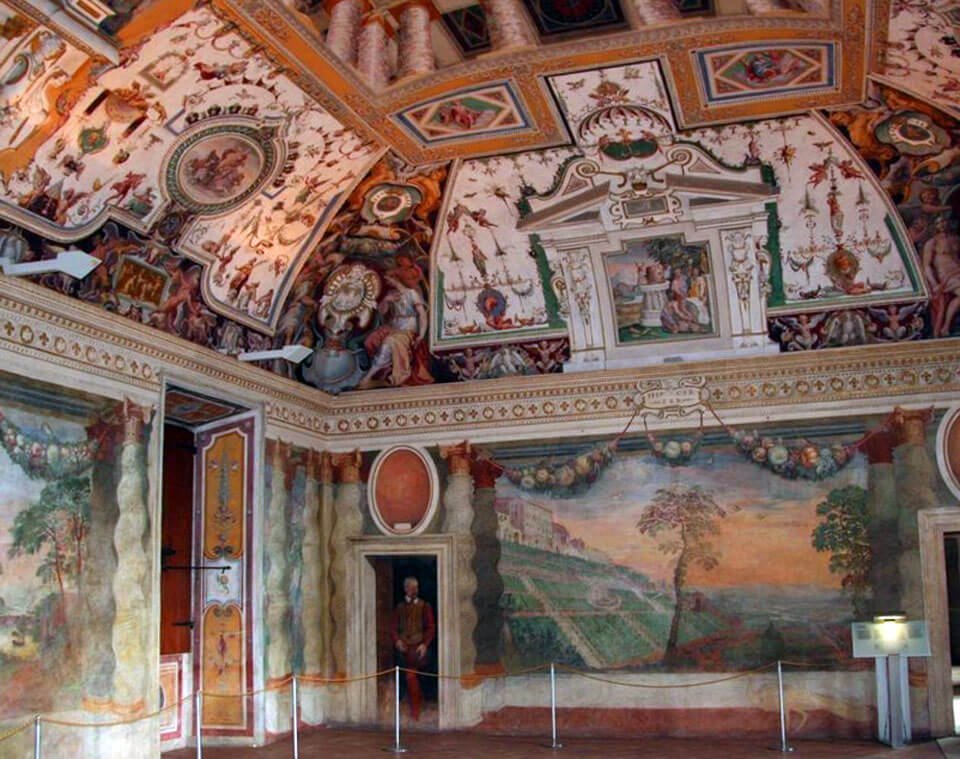
In Cardinal Ippolito’s personal apartments, traditional Renaissance frescoes and stucco work on the walls have been preserved to this day. Besides these, the halls were decorated with antique statues, many of which, unfortunately, have been lost, and Flemish tapestries hung on the walls. The entire concept of the interior decoration was developed from the very beginning of construction by the best architects and artists of that time.
The Garden of Villa d’Este
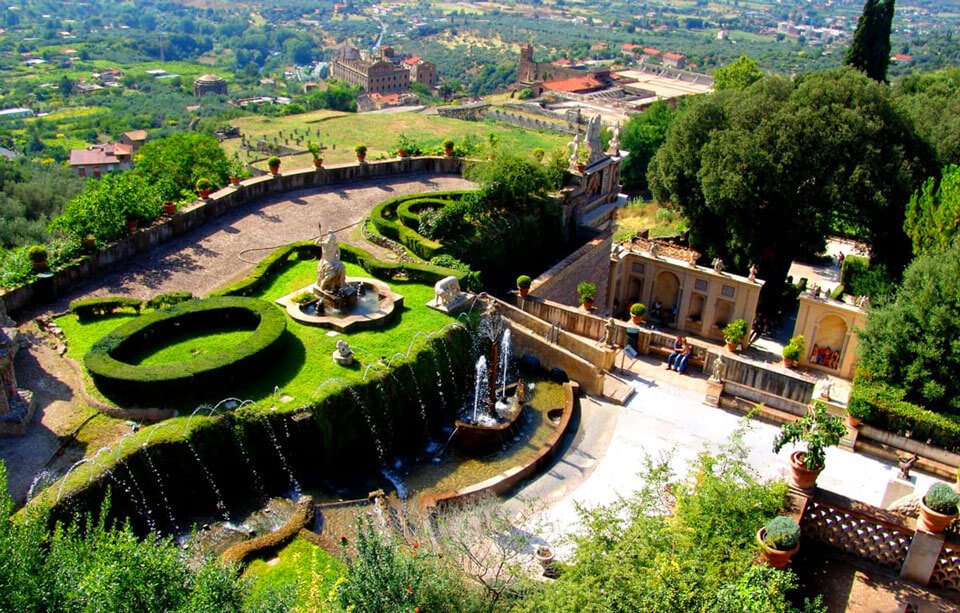
In the Renaissance era, any artistic object had to convey a unified humanistic idea. Landscape architecture also adhered to these requirements. Therefore, the concept of the garden in Tivoli expressed several philosophical and political ideas relevant to the time and the thoughts of the estate’s owners. The main entrance to the garden is a wide open terrace, with stairways on both sides. In the center of the terrace are fountains, and it ends with a whimsical grotto. The overhanging tiers of the terrace are reminiscent of one of the wonders of the world, the Hanging Gardens of Babylon.
In the garden itself, you will find numerous references to myths and legends of antiquity. The statue of Hercules, from whom the d’Este family is said to descend, is the central figure of the ideological concept. From it, two paths diverge — one leads to vice, and the other to the knowledge of truth and goodness. A similar choice is presented before the image of Venus — choosing earthly love or eternal, heavenly love. In his garden, Ippolito wished to create a small copy of the Eternal City — here you can see the most famous monuments of Rome.
Villa d’Este Fountains
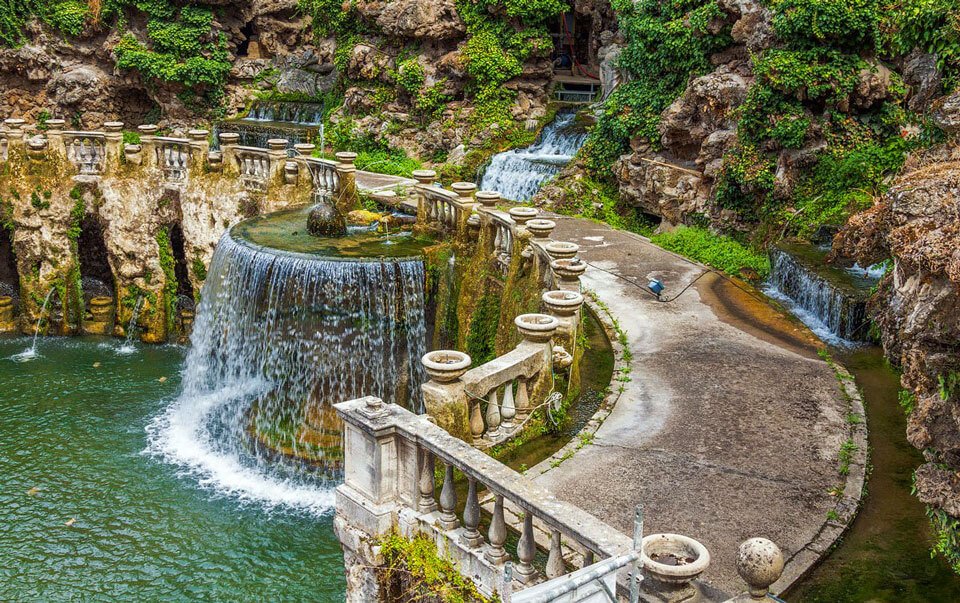
The main attraction of the villa, despite the magnificent interior decoration of the palace and the collection of decorative and applied art presented there, are its fountains. They not only served the function of water supply and irrigation of the beautiful garden but also became its best decoration. It is no coincidence that contemporaries called the garden of Villa d’Este the “Water Theatre.”
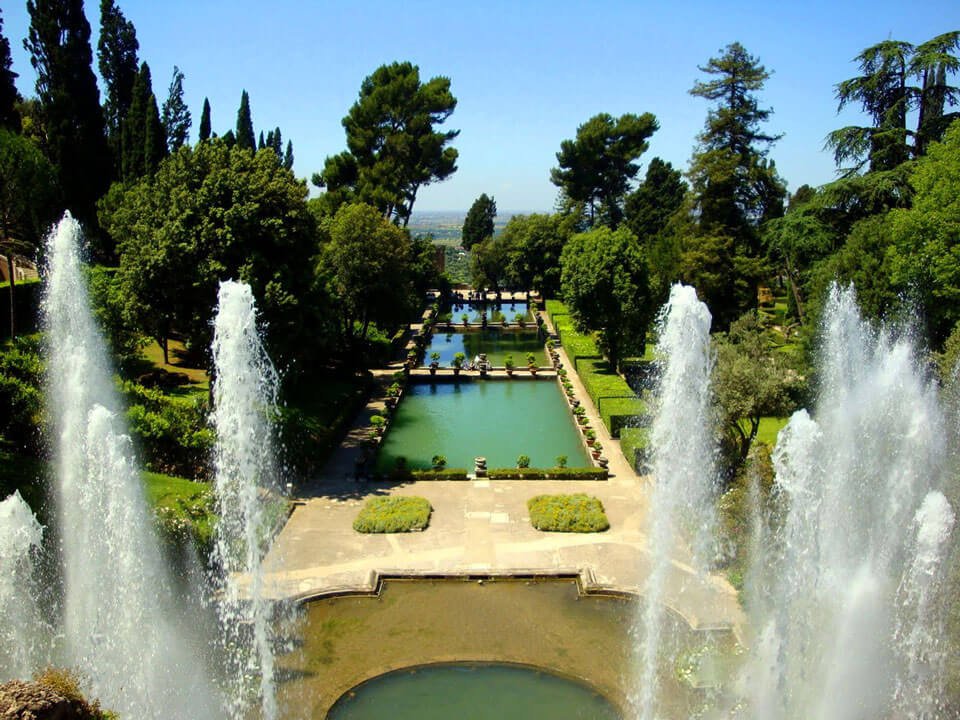
Numerous cascades, ponds, canals, and waterfalls provide coolness and relaxation on a hot summer day. Today, the garden has more than five hundred fountains. They were all designed and built at different periods in the villa’s history, but the placement of each fountain in the park was carefully thought out and serves not only aesthetic and hydrological functions but also carries deep philosophical meaning.
Fountain of Neptune
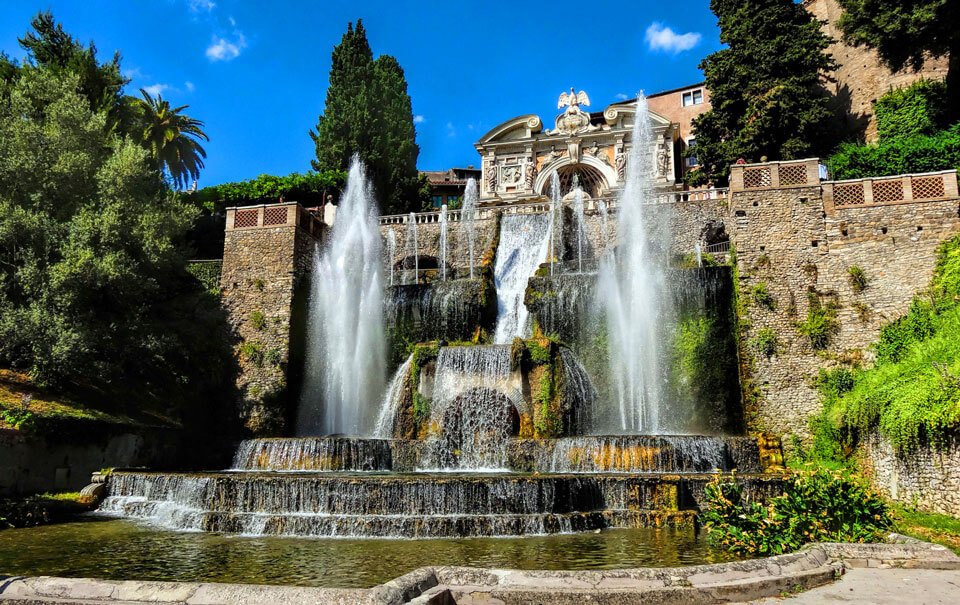
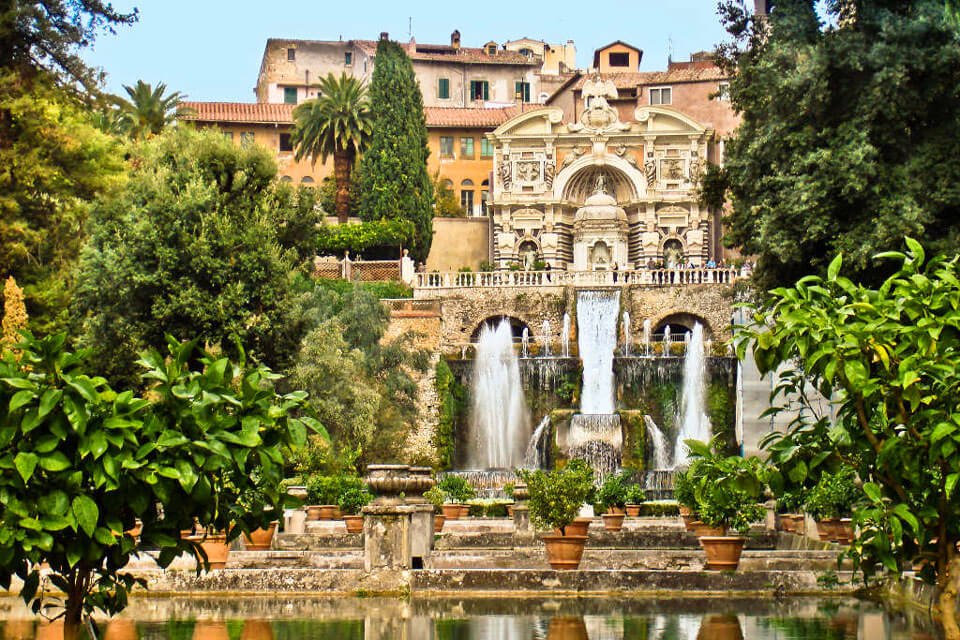
One of the latest fountains installed in the garden was built in 1927, but it fits very organically into the overall composition. It is located right in the center of the park. The majestic statue of the sea lord is visible through the waterfall that cascades down from the “Organ” fountain. In front of the Fountain of Neptune are rectangular fish ponds.
Fountain del Bicchierone
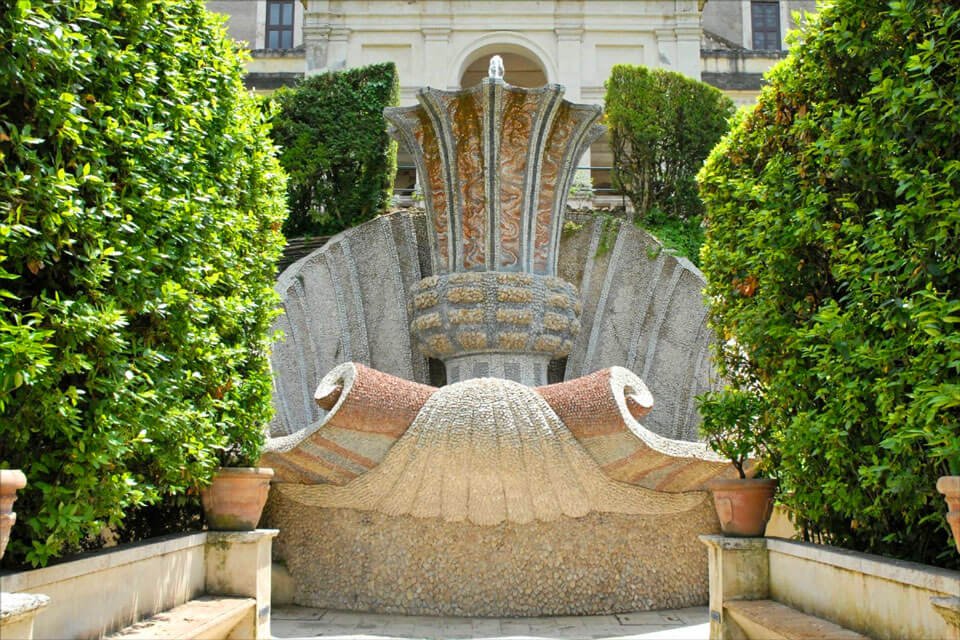
Built by the famous Italian sculptor Gian Lorenzo Bernini in the 17th century, it is also known as the “Cup of Bernini.” It resembles a giant goblet set on a large shell. Bernini personally supervised its construction and regulated the water flow and the height of the fountain’s jets so that they did not obstruct the view of the neighboring fountain.
Fountain “Rometta”
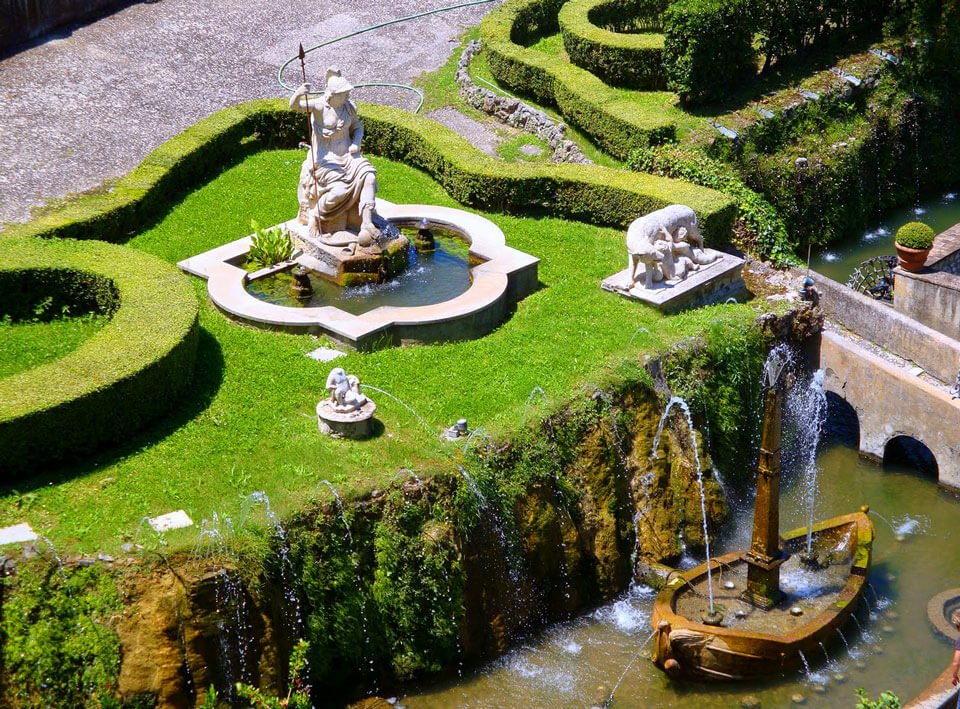
One of the realizations of the cardinal’s idea to reproduce all the Roman landmarks in miniature in his garden. The fountain is called “Little Rome.” In the center is the sculpture of Victorious Rome, followed by a statue of the she-wolf nursing Romulus and Remus. The entire composition is made using the architectural features typical of Roman architecture of that time: columns, arches, and obelisks.
Avenue of a Hundred Fountains
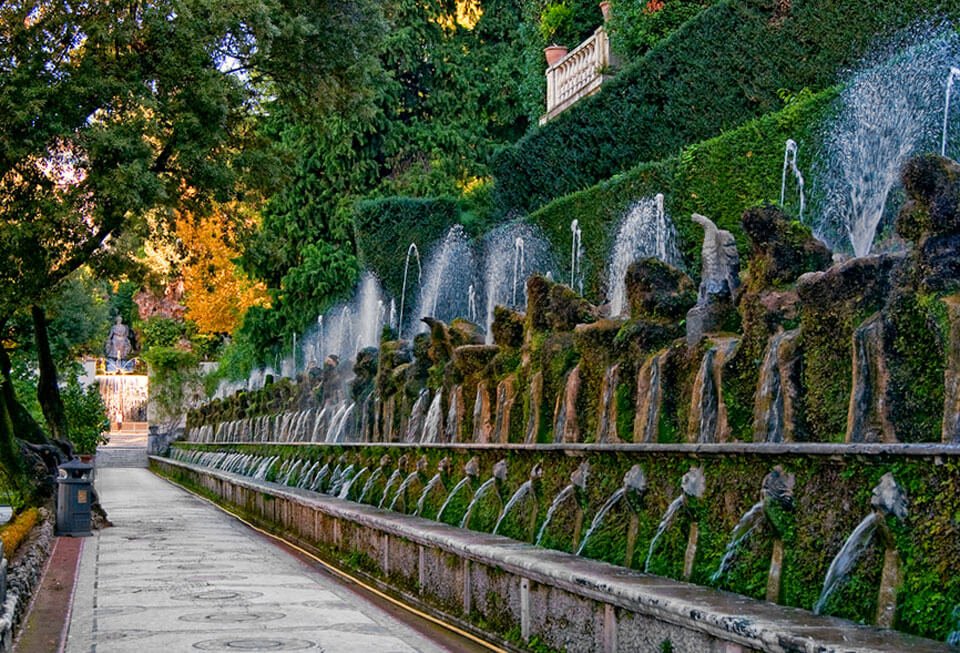
This is perhaps the most famous attraction of the villa. The avenue connects two fountains — Tivoli and Rometta (“Little Rome”). Along the entire avenue, more than 100 fountains shoot jets of water through dense greenery. According to the architects’ designs, each fountain was supposed to match its relief, echoing themes from Ovid’s “Metamorphoses.” The alternation of high cascading structures and small fan fountains creates an extraordinary effect.
Fountain of Dragons
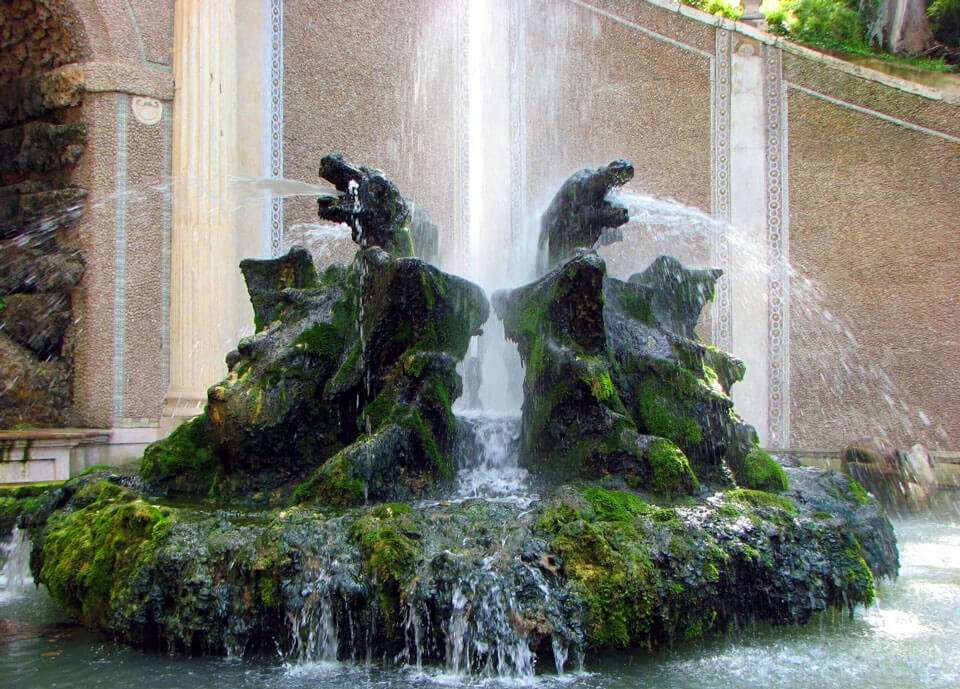
This fountain represents a composition of four dragons sitting back-to-back, with streams of water gushing from their mouths. Ligorio’s design dedicated the fountain to the theme of the struggle between good and evil, intending to place figures of Hercules and Mars with gladiators in the niches. To emphasize the drama of the idea, during the cardinal’s time, the fountain also made loud sounds imitating cannon shots or fireworks. Due to Ippolito’s death, the fountain remained unfinished and was completed only centuries later. The niches on the sides remained empty, and a statue of Jupiter was erected in the center. At that time, the single forty-headed dragon was replaced by four dragons looking in different directions.
Fountain “Organ”
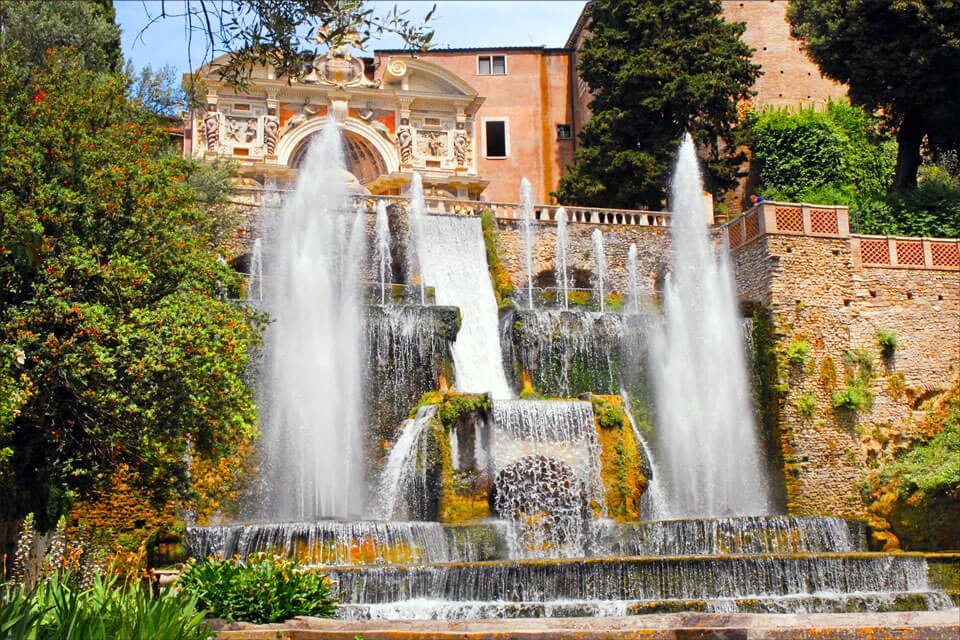
Copies of this fountain are now installed all over Europe. Its uniqueness lies in the fact that due to a special hydraulic design, water passing through special pipes produces melodic sounds. The fountain so impressed contemporaries that Pope Gregory XIII, present at the villa’s opening, checked the interior rooms to ensure that a real organ was not hidden there.
In 2003, the fountain was restored, and its musical mechanism was repaired. The hydraulic organ is normally activated every two hours starting at 10:30 AM. Fountains may be temporarily switched off during heavy rainfall or maintenance.
Hours of Operation and Ticket Prices
Villa d’Este opens at 8:30 AM Tuesday to Sunday and at 2 PM on Mondays. Closing hours vary by season: 5 PM in November, December and January, 7:45 PM from May through August. Last admission is generally one hour before closing. The usual closing days are January 1 and December 25, subject to special openings. Check the official opening hours before travelling.
As of November 2026, standard admission costs €15, reduced admission for eligible EU visitors aged 18–25 costs €2, and visitors under 18 enter free. The VILLÆ Pass costs €30 (€4 for eligible reduced-price visitors) and covers Villa d’Este, Hadrian’s Villa and the Sanctuary of Hercules Victor within 72 hours. Verify admission conditions and book via the official ticket service.
Tours
You can explore the villa independently. However, you will have a more enriching experience after an individual tour. You can choose one of the tours around the surroundings of Rome, including a visit to Tivoli.
For example, the tour “Masterpieces of Tivoli: Villa d’Este and Villa Adriana” offers an opportunity to delve deeper into ancient Roman history and the Renaissance era. A professional guide, a resident of Rome, will lead you through the shady streets of the ancient city and share the most interesting facts about its history. You will learn why Cardinal d’Este’s villa became a model of garden and park art and served as a prototype for the Versailles garden.
Tours dedicated to Villa d’Este include “Enchanting Tivoli and Luxurious Villa d’Este” and “Tivoli — City of Emperors.” You will see the magnificent decoration of the cardinal’s palace, view ancient frescoes and preserved stucco, and learn about the cardinal’s fate, who belonged to the famous Italian family.
Descending the marble steps into the garden, where fountains gush among ancient cypresses and olive trees, you will learn the history of their creation and the philosophical meaning embedded in each of them, and listen to the sounds of the “Organ” fountain. Tours are conducted individually and for groups of up to 6 people. Children can participate in all tours. Check each tour’s booking page for admission inclusions and meeting points.
Location and How to Get There
The complex is located in the historic center of Tivoli on Piazza Trento. You can get to the villa from Rome by train or bus. The bus departs from the Ponte Mammolo metro station. Check the current route and fare with Cotral. It is better to buy a return ticket immediately. It is convenient to get off at the “Piazza Garibaldi” stop. Cross the square diagonally, and you will find the way to the complex by numerous signs. Allow around 50–70 minutes depending on traffic, and check the last return departure.
If you decide to take a train to Tivoli, check the schedule in advance, as trains run approximately once an hour. They depart from Termini station or Tiburtina station. Check the current regional fare and departure station on Trenitalia. The villa is just over 1 km from the railway station.
In addition to traditional public transport, you can book a transfer to Tivoli. The advantages are obvious: an individual approach, the ability to choose the departure time, comfort, and time-saving. You can choose a car for one or two travelers, a whole group of tourists, or a large family. If you book a car, remember to do so in advance, at least a day before the planned tour.
Villa d’Este map and day trip from Rome
| Transport | Route | Practical tips |
|---|---|---|
| Regional train | Rome Tiburtina or Termini to Tivoli | Allow time for the uphill walk to Piazza Trento |
| Bus | Metro B to Ponte Mammolo, then Cotral to Tivoli | Check return departures and traffic |
| Guided tour or transfer | Rome to Villa d’Este and Hadrian’s Villa | Check ticket inclusions and pickup |
Start in the palace and descend the terraces via the Hundred Fountains toward the Oval Fountain and Rometta. Continue to the fish ponds and Neptune Fountain, timing your route for the Organ Fountain performance. Allow a lunch break in Tivoli before continuing to Hadrian’s Villa if you have a full day. The two estates are several kilometres apart; plan a local bus, taxi or organised transfer between them.
Frequently asked questions about Villa d’Este
How long does Villa d’Este take to visit? Allow two to three hours for the palace, fountains and gardens.
Is Villa d’Este worth visiting from Rome? Yes, it is a distinctive Renaissance garden and an easy day trip, especially when combined with Hadrian’s Villa.
When does the Organ Fountain play? Normally every two hours from 10:30 AM, subject to operational conditions.
Is Villa d’Este accessible? The terraced garden has many stairs and slopes. Contact the site before visiting to confirm accessible routes and arrangements.
Can I visit on Monday? Yes, regular Monday visits begin at 2 PM. Check seasonal closing times.

Konstantin is an acclaimed travel writer, celebrated for transforming ordinary journeys into extraordinary narratives. With years of experience exploring diverse destinations across the globe, his work blends vivid storytelling, cultural insights, and practical advice to inspire wanderlust and guide readers toward unforgettable adventures.
As a key contributor to enjoythetrip.org website, Konstantin has built a loyal readership through their expertise in uncovering both iconic landmarks and off-the-beaten-path treasures. He specializes in providing travelers with honest, actionable tips, whether it’s finding the best resorts in Maldives, exploring cultural hubs like Paris, or diving into the natural wonders of Croatia.