
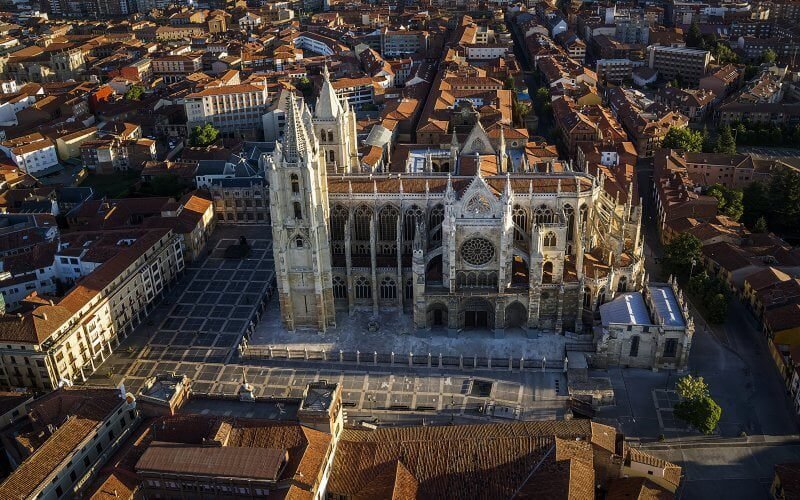
Leon, Spain, is one of the most interesting cities in the north of the country. It combines picturesque scenery, colorful Spanish cuisine and a rich historical heritage. The capital of a medieval kingdom and an important stop on the Camino de Santiago, León is famous for its Gothic cathedral, Romanesque frescoes, a house designed by Antoni Gaudí and lively tapas bars. This travel guide covers eight of the best things to do in León, admission prices, a map, hotels and an easy two-day itinerary.
Best things to do in Leon, Spain at a glance
| Attraction | Why visit | Adult ticket | Suggested time |
|---|---|---|---|
| León Cathedral | Gothic stained glass | €8 | 60–90 min |
| San Isidoro Basilica and Museum | Romanesque frescoes and royal tombs | Church free; museum €6 | 60–90 min |
| Casa Botines Gaudí | Modernist architecture and art | €10 self-guided | 45–75 min |
| San Marcos Convent | Renaissance architecture | Exterior free | 30–45 min |
| San Martín Square and Barrio Húmedo | Tapas bars and medieval lanes | Free | 1–2 hours |
| Plaza Mayor | Historic arcades and market | Free | 20–40 min |
| Roman walls | Ancient fortifications | Free outdoors | 20–40 min |
| MUSAC | Contemporary art | €3 | 60–90 min |
Ticket information reviewed in November 2026. Public holidays, religious services and temporary exhibitions can affect opening hours. Check the linked visitor information before your trip.
Where is Leon, Spain?
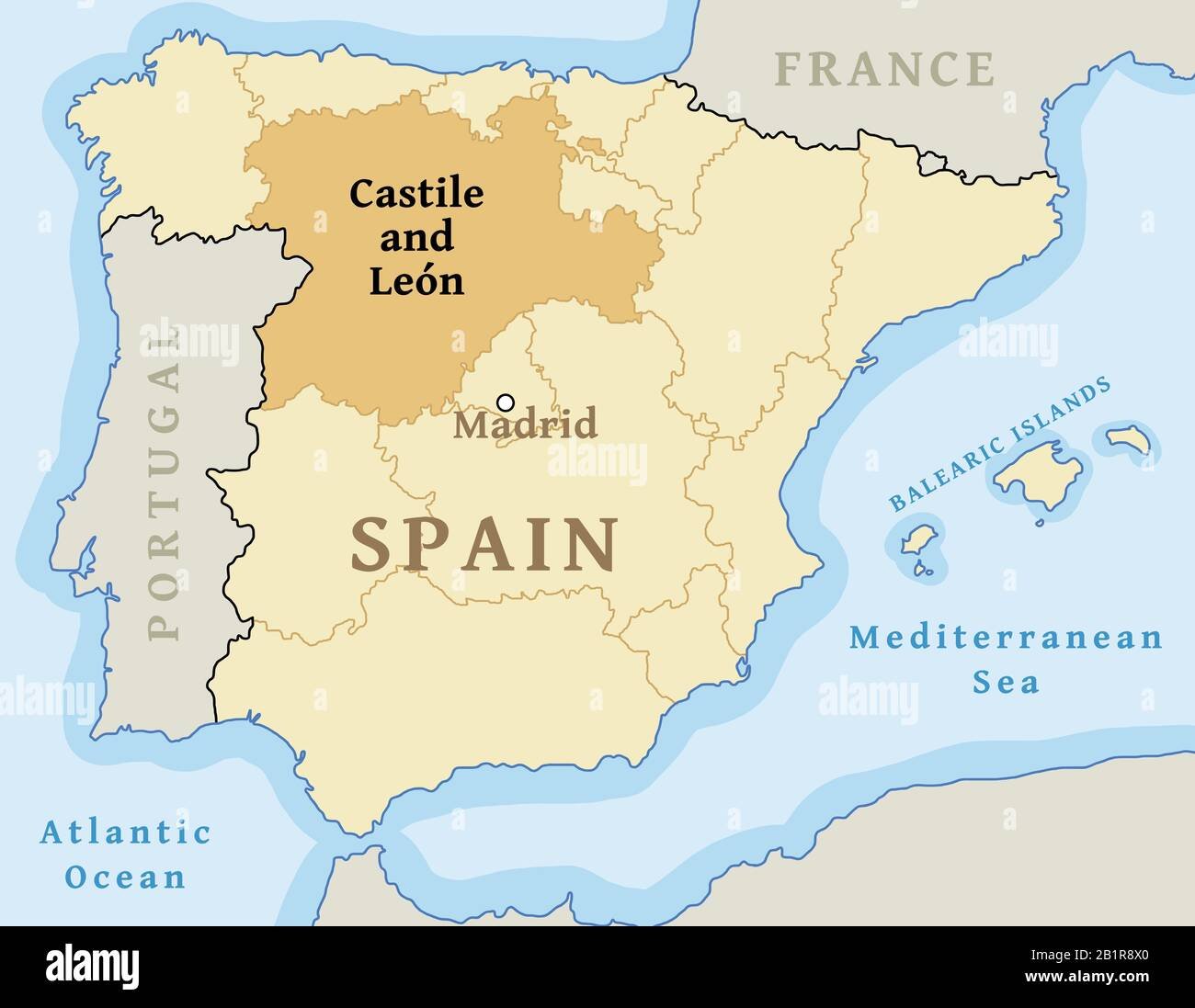
León sits in north-west Spain, in the autonomous community of Castile and León, near the Cantabrian Mountains. It is a major stop on the French Way of the Camino de Santiago pilgrimage and a good base for exploring the north of the country. The city lies along the Bernesga and Torío rivers, at roughly 800 metres above sea level, and is well connected by rail to Madrid.
A brief history of León
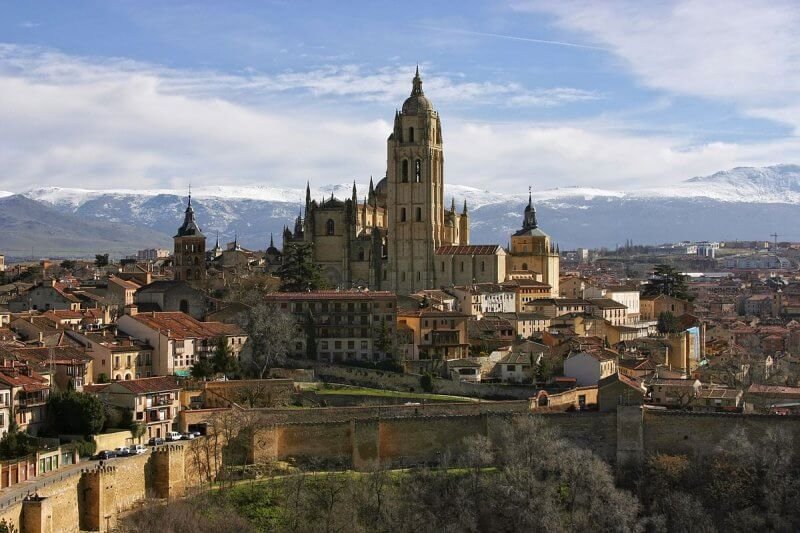
The origin of the city dates back to Roman military camps built by Legio VI Victrix and later Legio VII Gemina. The name León itself derives from the Latin word for legion. Parts of the ancient fortified enclosure are still visible near the old town.
In the Middle Ages, León became the capital of the Kingdom of León. Its importance is reflected in the cathedral and the royal pantheon of San Isidoro. The city has preserved parts of the old rectangular layout established by Roman soldiers. Modern León is also a university city, home to international chess events and the Ademar León handball club.
The historic centre lies within easy walking distance of the railway station and combines medieval lanes, plazas and later Renaissance buildings. León remains part of the UNESCO-listed Routes of Santiago de Compostela in Spain.
Map of Leon, Spain attractions
8 best attractions in Leon, Spain
1. León Cathedral
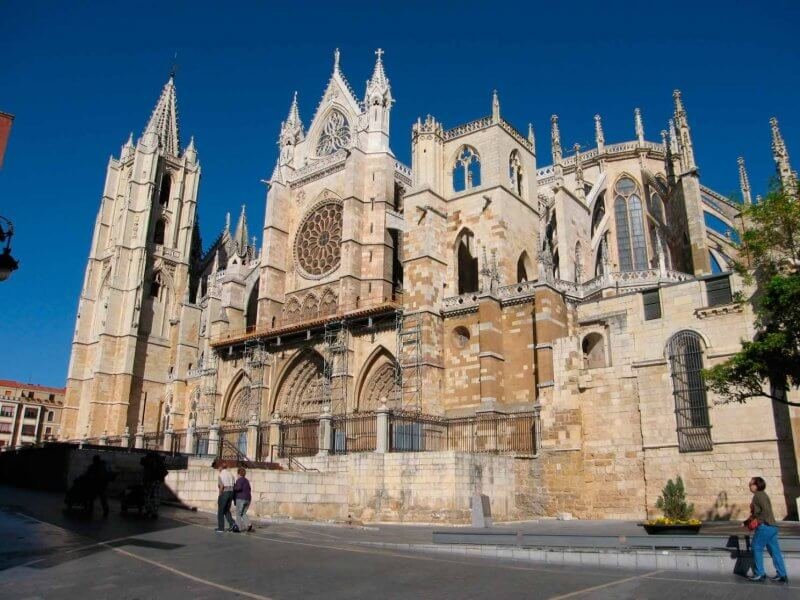
The Gothic Cathedral of Santa María de León is recognized as a pearl of architecture in northern Spain, where stone and light are harmoniously intertwined. Construction of the present building began in the 13th century, drawing inspiration from French Gothic cathedrals. Its extraordinary collection of stained-glass windows occupies approximately 1,800 square metres. The colored light changes throughout the day, casting jewel-like reflections over the soaring nave.
The western façade is flanked by two towers, and the sculpted portals feature scenes from the Last Judgment and the life of the Virgin. Inside, take time to examine the chapels, carved choir stalls and tombs, including that of King Ordoño II. Many stone elements have been restored over the centuries.
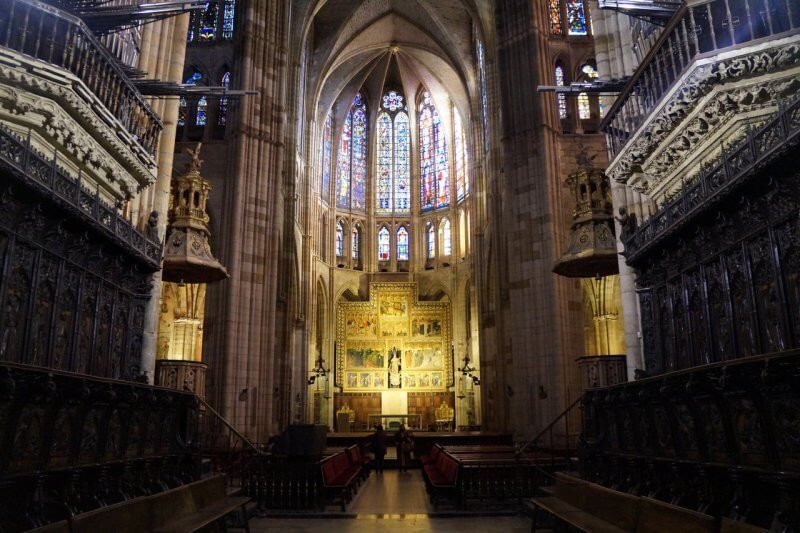
Practical information: Plaza de Regla. General cathedral and cloister admission €8, combined cathedral and museum ticket €12. Allow 60–90 minutes. Official visitor information · View on Google Maps
2. Basilica of San Isidoro and Royal Pantheon
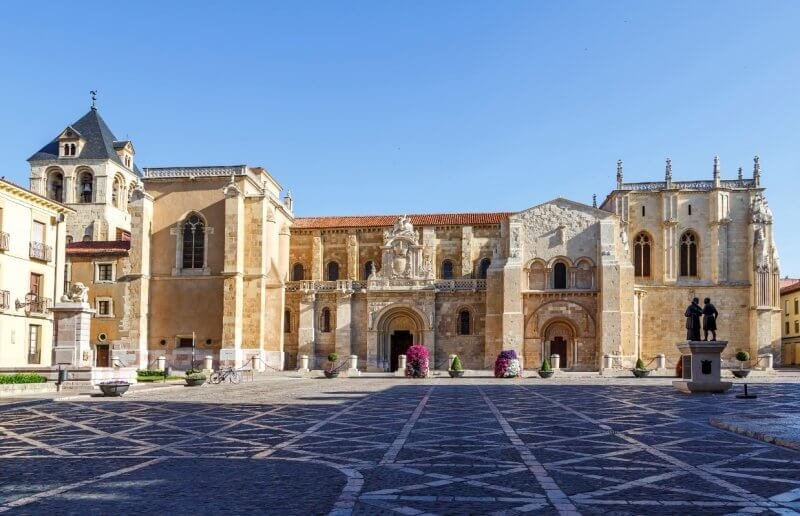
The Basilica of San Isidoro stands near the Roman walls and is one of the greatest examples of Romanesque architecture in Spain. An earlier church was dedicated to St John the Baptist; the relics of Isidore of Seville were transferred here in 1063. The building developed over centuries and contains Gothic and Renaissance additions as well as its Romanesque core.
The highlight is the Royal Pantheon, the burial place of several kings and queens of León. Its delicately painted medieval vaults depict biblical scenes, angels and agricultural activities through the months of the year. The museum also preserves medieval manuscripts, objects of worship and treasures from the royal collegiate church. The basilica itself remains an active place of worship.
Practical information: Plaza San Isidoro 4. Basilica free; museum and pantheon €6 self-guided, €8 guided. Generally open Tuesday to Sunday, with seasonal afternoon hours and Sunday mornings. Official hours · View on Google Maps
3. Casa Botines (Gaudí Museum)
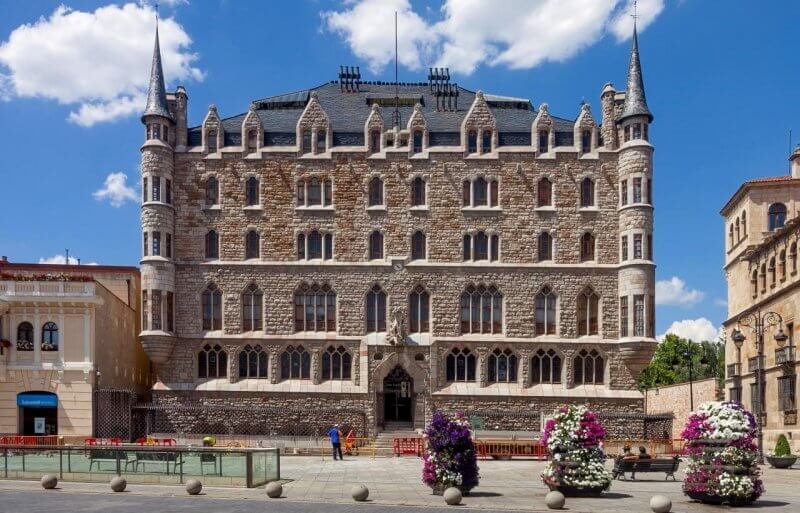
Casa Botines is an extraordinary modernist building created by Antoni Gaudí for local textile merchants in the early 1890s. Its castle-like corner towers, steep roof and neo-Gothic façade blend harmoniously into the medieval streets of León. Gaudí designed the moat to bring light and ventilation to the lower floor, and used cast-iron columns to create flexible commercial spaces.
The building originally housed a textile business and residential apartments, and later became a bank. Today the museum brings together architecture, fine art and the story of daily life in the building. The guided visit includes additional attic and tower spaces. Look for the sculpture of Saint George fighting the dragon above the entrance and the Gaudí statue on the square outside.
Practical information: Plaza de San Marcelo 5. Self-guided admission €10; guided tour €13. Closed Tuesday; Wednesday afternoon only. Official tickets and opening hours · View on Google Maps
4. Convent of San Marcos and Parador de León
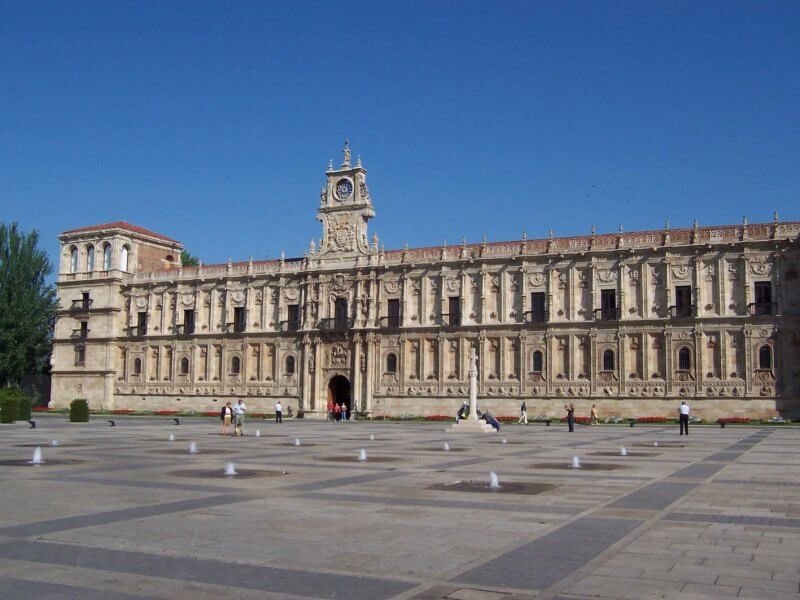
The former Convent of San Marcos is one of the most impressive Renaissance monuments in León. A shelter for pilgrims once occupied this site on the banks of the Bernesga River. The present complex was constructed in the 16th century and its long Plateresque façade resembles a royal palace, with finely carved medallions, figures and decorative stonework.
The building has had many uses over the centuries, including a monastery and a prison. During the Spanish Civil War and the early Franco period it served as a detention camp, a sobering chapter in its history. Today a luxury hotel occupies the main building. Visitors can admire the exterior and enjoy the square and riverside walks.
Practical information: Plaza de San Marcos, exterior free. Allow 30–45 minutes. View on Google Maps
Parador de León – San Marcos (5-star historic hotel)
For a memorable overnight stay, the Parador occupies the Renaissance complex itself. The historic setting is combined with contemporary rooms, spacious public areas, artworks and a restaurant serving regional Spanish cuisine. It is an especially good choice for couples looking for an atmospheric hotel near the river, or travelers looking for a luxurious stop along the Camino. The old town is an easy walk away.
Check availability and book Parador de León – San Marcos on Trip.com
5. San Martín Square and Barrio Húmedo
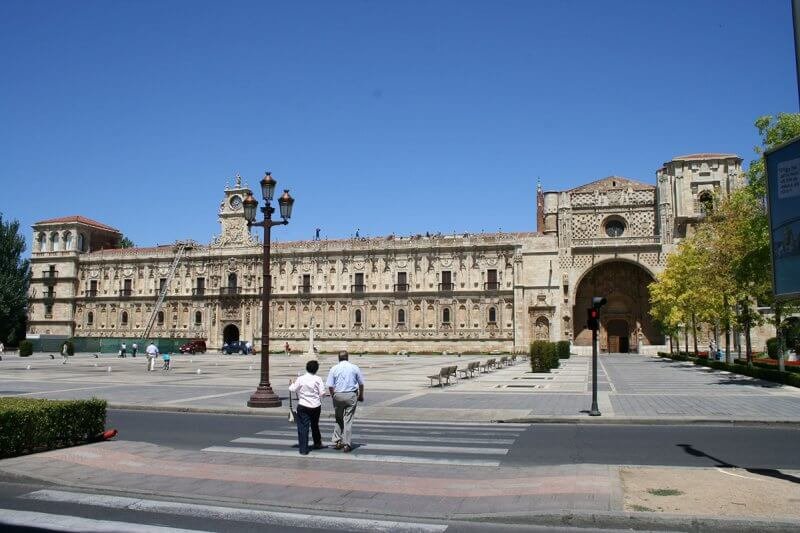
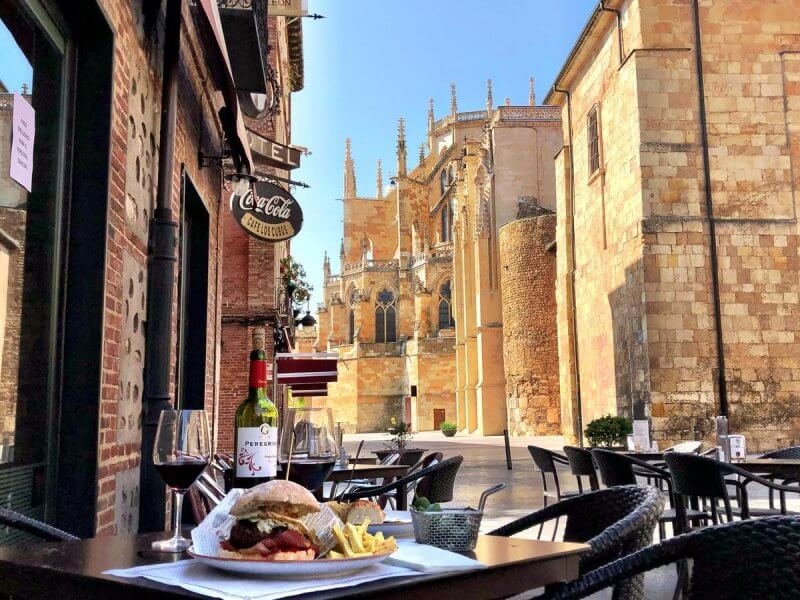
Seven narrow streets lead into the atmospheric Plaza de San Martín, at the heart of the Barrio Húmedo. Here the former medieval street layout is filled with small taverns, outdoor tables and restaurants. In the evenings the district becomes one of the liveliest parts of the city, and many bars offer a small tapa with a drink.
Sample local cecina (cured beef), morcilla (black pudding), croquetas and regional cheeses. Enjoy a glass of Bierzo or León wine and move between bars to discover different specialties. In June, the San Juan festivities add music and celebration to the streets.
Practical information: Plaza de San Martín. Best in the late afternoon or evening. View on Google Maps
6. Plaza Mayor
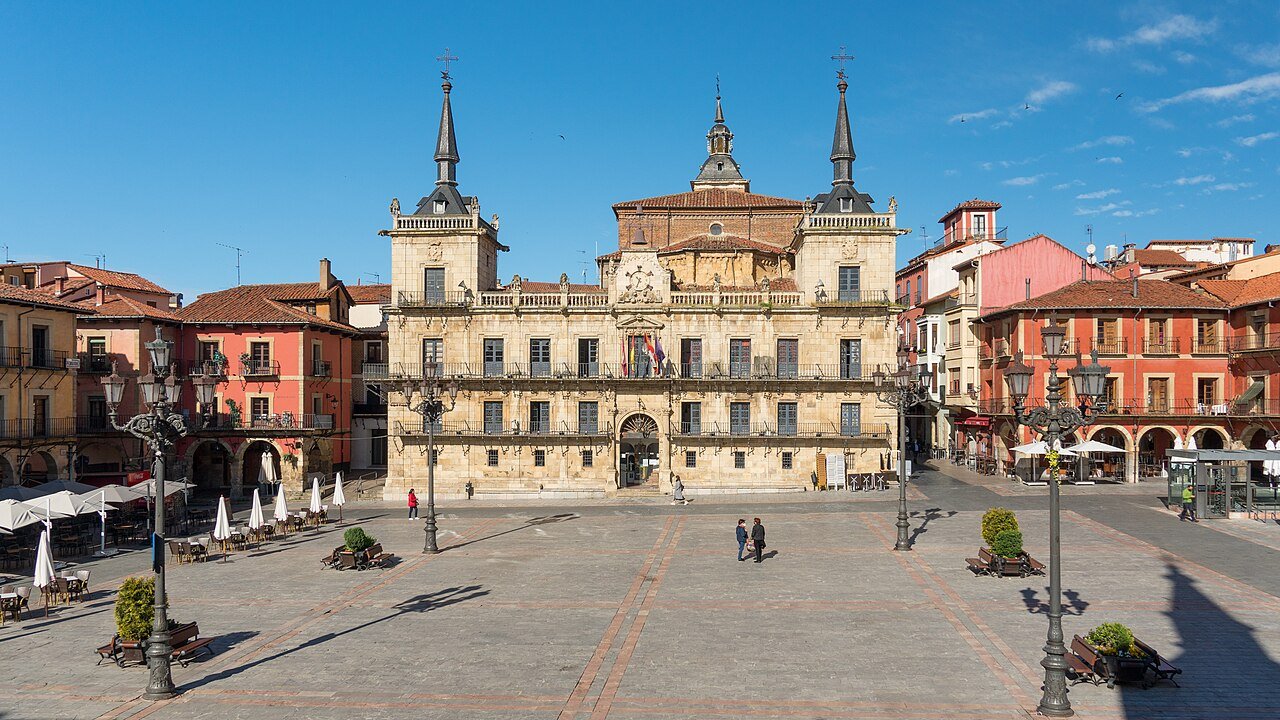
A few steps away from Barrio Húmedo, Plaza Mayor is a delightful arcaded square built over the site of a medieval market. Rebuilt in the 17th century, the square is framed by rows of balconies and the elegant former town hall, known locally as El Mirador. It is a great place to pause for coffee and photograph the historic architecture.
On Wednesdays and Saturdays, stalls sell fruit, vegetables, cheese, cured meats and other regional products. Morning is the best time to see the market, while evening is pleasant for a drink in the surrounding cafés. View on Google Maps
7. Roman walls of León
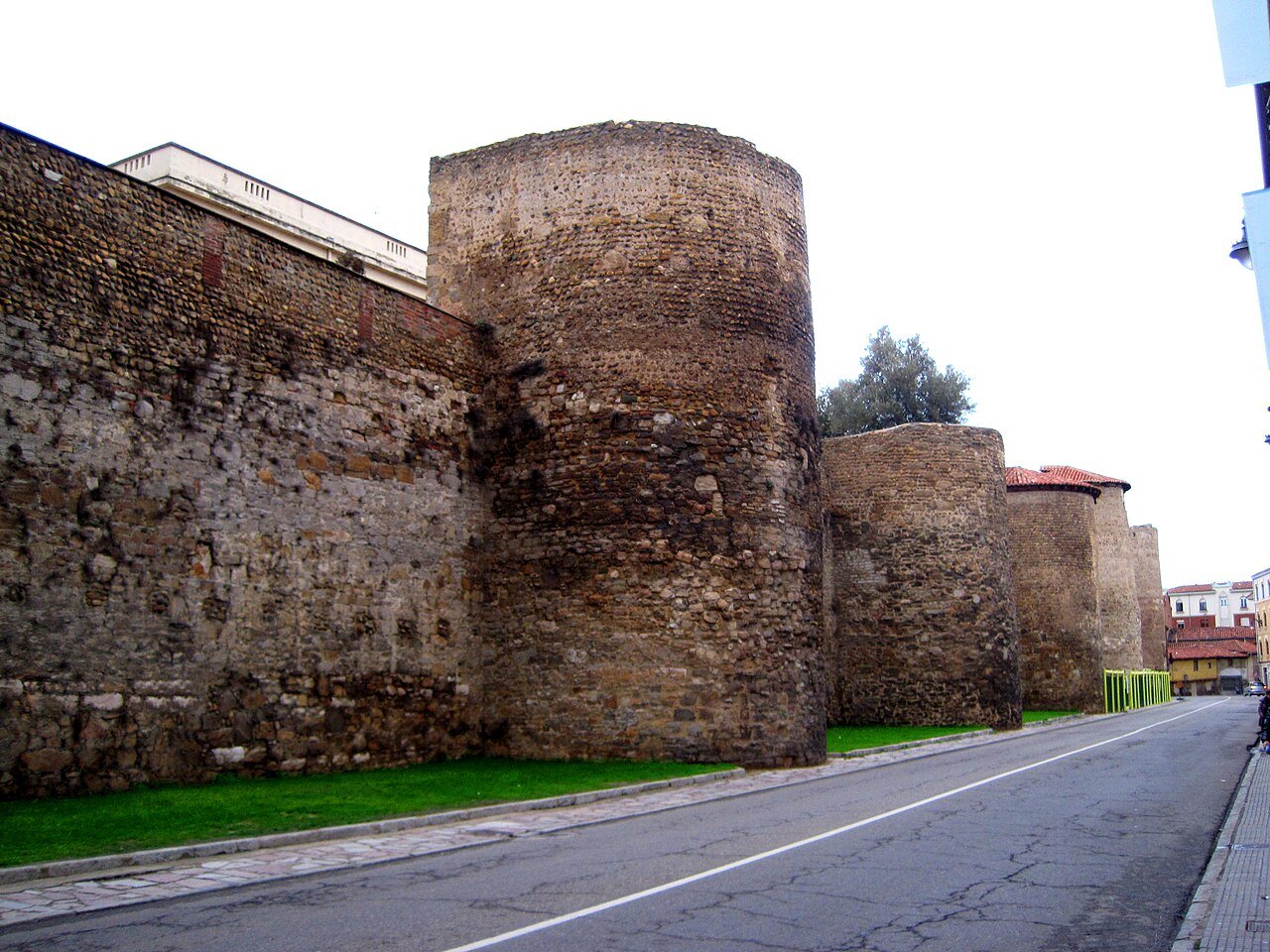
The surviving city walls recall León’s Roman origins. The Legio VII Gemina built a stone defensive circuit, and a later wall was reinforced with thick masonry and semicircular towers, known as cubos. Medieval kings also repaired and adapted the enclosure. Look for visible stretches near San Isidoro and along Avenida de los Cubos, where the towers contrast with the narrow streets and modern buildings.
Practical information: Free outdoor walk. Official city tourism information · View on Google Maps
8. MUSAC – Museum of Contemporary Art
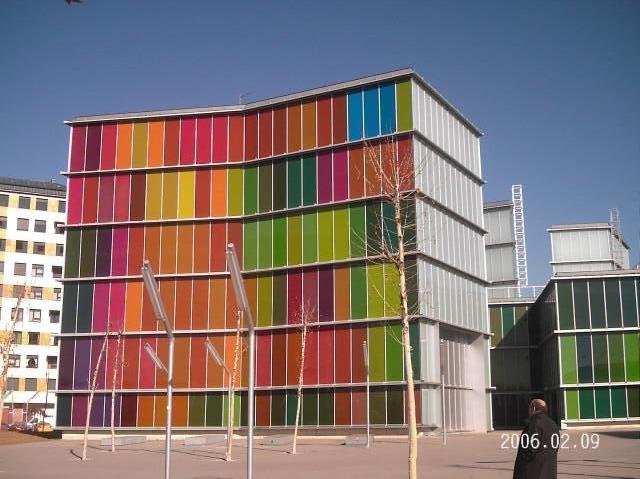
The Museum of Contemporary Art of Castile and León offers a striking contrast to the medieval monuments. Its colorful glass façade, designed by Mansilla and Tuñón, evokes the stained glass of the cathedral. Inside, temporary exhibitions bring together contemporary painting, sculpture, photography, installations and video art. The building is a short walk from San Marcos, so the two sights fit well into the second day of a visit.
Practical information: Avenida de los Reyes Leoneses 24. General admission €3; Sundays free. Closed Monday. Visitor information · View on Google Maps
León in one or two days
Day 1 – the historic centre: Begin at León Cathedral, then follow Calle Ancha to Casa Botines. Visit San Isidoro and the Royal Pantheon in the afternoon, taking time to walk along the Roman walls. Finish with Plaza Mayor and a tapas evening around Plaza de San Martín.
Day 2 – Renaissance and modern León: Walk along the Bernesga River to San Marcos, explore the square and continue to MUSAC. Spend the afternoon shopping on Avenida Ordoño II or enjoying a leisurely lunch. With a car, consider a trip to Astorga, famous for Gaudí’s Episcopal Palace, or the limestone caves of Valporquero in the province of León.
Where to stay in Leon, Spain
The railway and bus stations are west of the historic centre, across the Bernesga River. Most attractions are within walking distance of the cathedral. Stay in the old town for architecture and tapas, around San Marcos for a quiet historic setting, or near the railway station if you plan to explore the province by public transport. Book ahead around Easter, summer weekends and busy Camino pilgrimage periods.
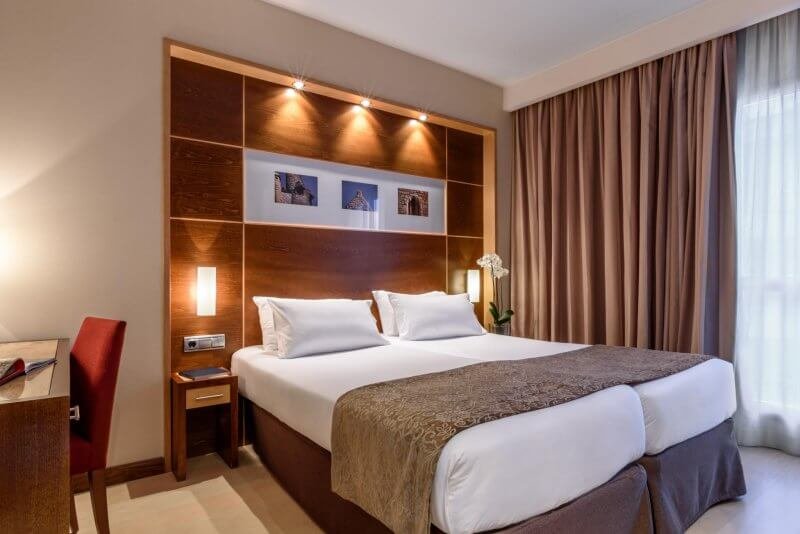
NH Collection León Plaza Mayor (4-star hotel)
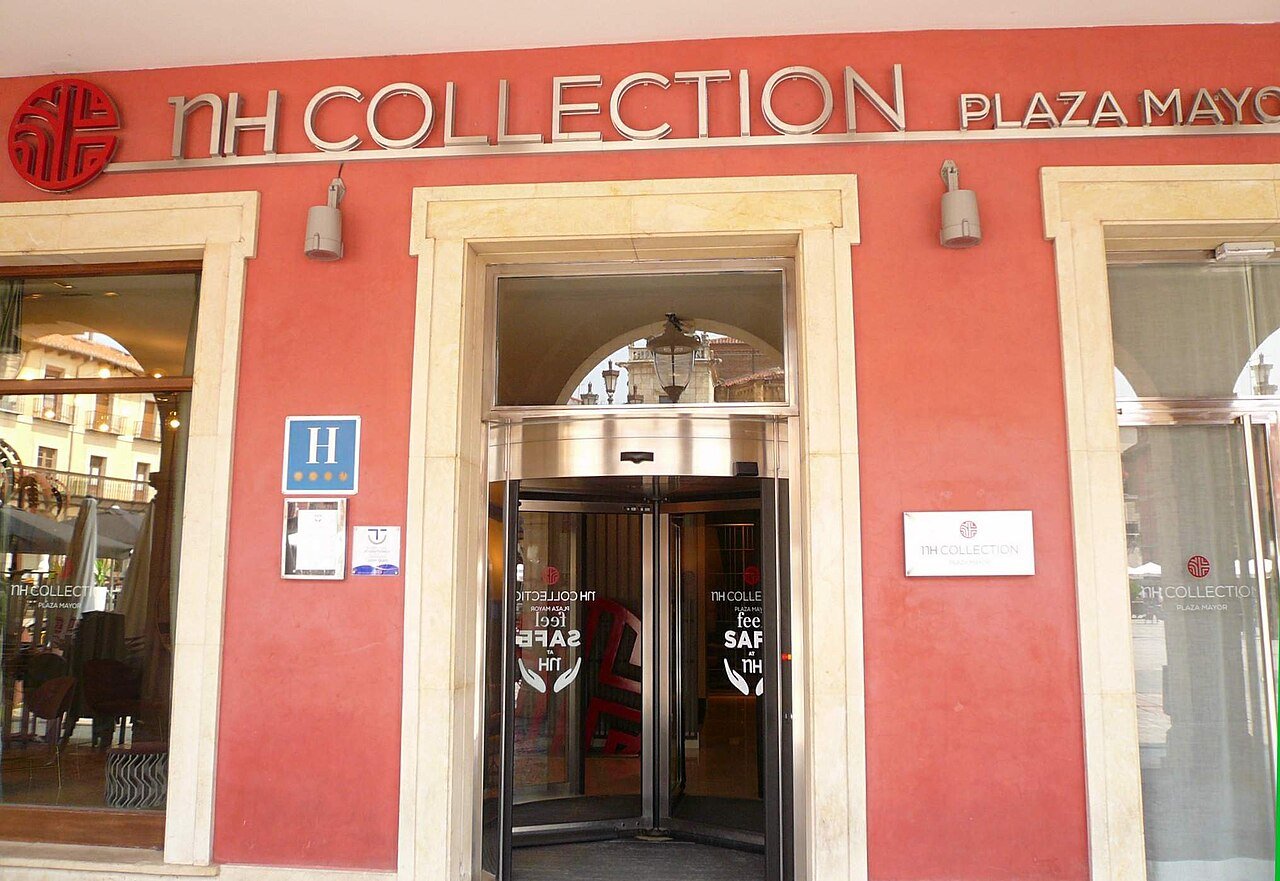
This comfortable hotel overlooks the historic Plaza Mayor and is only a few minutes on foot from León Cathedral, Casa Botines and the tapas streets of Barrio Húmedo. The rooms have contemporary interiors, and some offer views of the square. A buffet breakfast, restaurant and fitness facilities make it a convenient base for a city break. Choose a quieter room if you prefer to be away from the activity of the plaza.
Check availability and book NH Collection León Plaza Mayor on Trip.com
For a luxury historic stay, the Parador de León at San Marcos is described above. Budget travelers can find hostels, guesthouses and pilgrim accommodation close to the Camino route.
How to get to Leon, Spain
By train: High-speed trains from Madrid Chamartín connect León in about two hours on the fastest services. The station is on Avenida de Palencia, roughly a 20-minute walk from the cathedral. Check departure times and fares with Renfe.
By bus: The bus station on Avenida Ingeniero Sáenz de Miera has services to Madrid, Asturias and other Spanish cities. Check ALSA for current schedules and tickets.

By car: The A-66, A-6 and A-231 connect León with Madrid, Oviedo, Burgos and Galicia. Much of the historic centre is pedestrianized, so use designated parking outside the old town. León Airport has limited scheduled services; verify routes before planning flights.
Best time to visit and practical tips
Spring and early autumn are especially pleasant for exploring the historic centre. Summer days can be warm and evenings cool, while winter temperatures are often chilly because of the city’s altitude. Bring layers and comfortable walking shoes for the cobbled streets.
The cathedral and San Isidoro are active religious sites. Respect services and check schedules before visiting. Many restaurants serve lunch in the early afternoon and dinner later in the evening. In Barrio Húmedo, a small tapa often accompanies a drink, although the offer varies by bar.
León’s major festivals include Holy Week and the San Juan and San Pedro celebrations in June. The Leonese language, with Latin roots, is part of the region’s cultural heritage. Calle Ancha and Avenida Ordoño II are good areas for shopping and enjoying local food.
Frequently asked questions about Leon, Spain
Is León worth visiting?
Yes. The city combines the Gothic cathedral, Romanesque art, Gaudí architecture and an unusually lively tapas culture in a compact, walkable centre.
How many days do you need in León?
One full day is enough for the main historic sights. Two days allow time for San Marcos, MUSAC and a slower tapas evening, or a short excursion into the province.
Is León on the Camino de Santiago?
Yes. León is an important stop on the Camino Francés and a popular starting point for pilgrims heading west towards Santiago de Compostela.
What is León famous for?
León is best known for its medieval cathedral and stained glass, the Basilica of San Isidoro, Gaudí’s Casa Botines and its tradition of serving tapas with drinks.
Going further in Spain? Read our guides to the Camino de Santiago, Santiago de Compostela, Burgos, Madrid in two days and Fuengirola.

Konstantin is an acclaimed travel writer, celebrated for transforming ordinary journeys into extraordinary narratives. With years of experience exploring diverse destinations across the globe, his work blends vivid storytelling, cultural insights, and practical advice to inspire wanderlust and guide readers toward unforgettable adventures.
As a key contributor to enjoythetrip.org website, Konstantin has built a loyal readership through their expertise in uncovering both iconic landmarks and off-the-beaten-path treasures. He specializes in providing travelers with honest, actionable tips, whether it’s finding the best resorts in Maldives, exploring cultural hubs like Paris, or diving into the natural wonders of Croatia.