
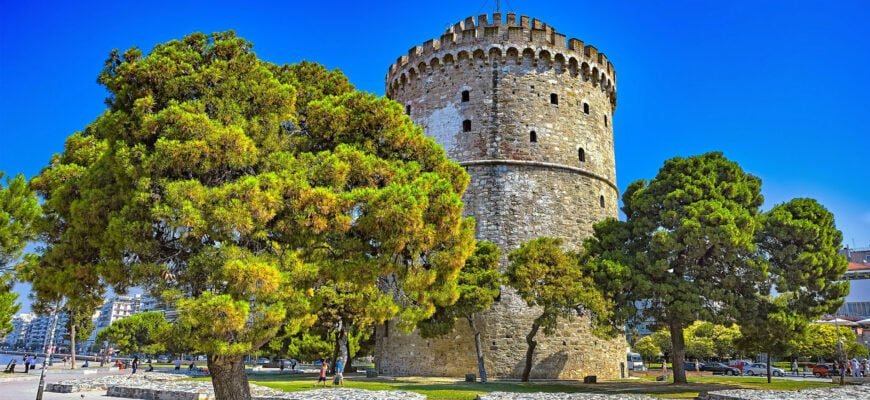
Looking for the best attractions in Thessaloniki? Greece’s second-largest city combines a lively waterfront, ancient Roman monuments, remarkable Byzantine churches and museums filled with Macedonian treasures. Thessaloniki’s historic center is compact enough to explore on foot, making it an excellent destination for a short city break or a longer holiday in northern Greece.
This guide covers nine of the best attractions in Thessaloniki, with detailed descriptions, admission prices where verified, directions and a practical walking itinerary. Discover the White Tower, Aristotelous Square, Roman-era monuments and the city’s UNESCO-listed churches.
Best attractions in Thessaloniki at a glance
| Attraction | Area | Visit time | Admission |
|---|---|---|---|
| White Tower | Waterfront | 60–90 min | €8 standard / €4 reduced |
| Aristotelous Square | City center | 30–45 min | Free |
| Basilica of Saint Demetrius | Historic center | 35–60 min | Free church entry |
| Arch of Galerius and Rotunda | Historic center | 45–75 min | Arch free; Rotunda paid |
| Monument to Alexander the Great | New Waterfront | 15–30 min | Free |
| Archaeological Museum of Thessaloniki | Museum district | 1.5–2 hours | €10 / €5 reduced |
| War Museum of Thessaloniki | Museum district | 60–90 min | Check current admission |
| Museum of the Macedonian Struggle | City center | 45–75 min | €4 / €2 reduced |
| Panagia Chalkeon Church | City center | 20–40 min | Free church entry |
Admission details were checked in November 2026. Museum schedules, reduced tickets and holiday opening times can vary. Use the official visitor links below to plan your dates.
Map of Thessaloniki attractions
The individual map links below pinpoint each attraction. Many of the central sights can be combined on foot, while the two museum districts are easily reached by public transport.
1. White Tower
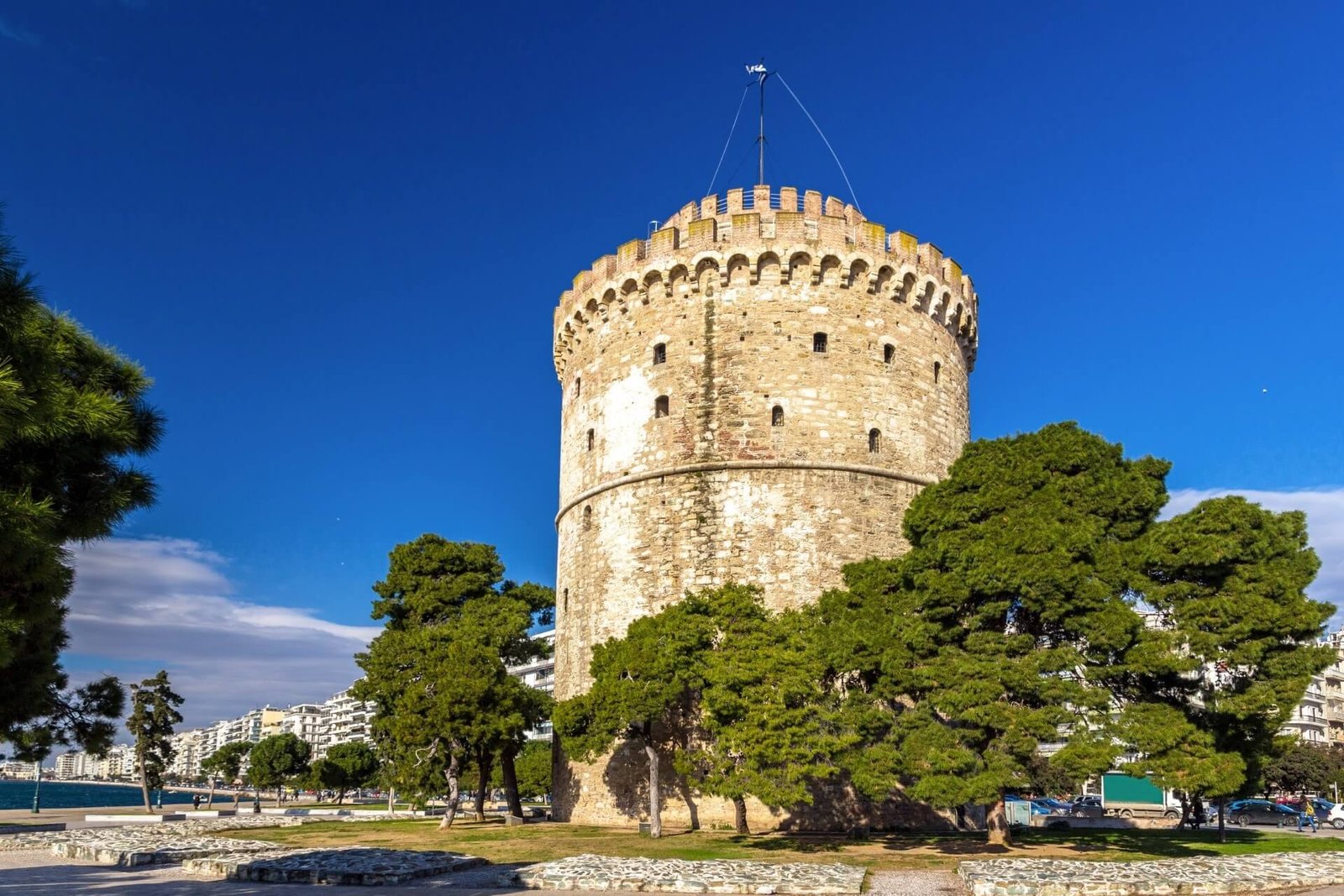
One of the most famous and striking landmarks of Thessaloniki, the White Tower stands on the waterfront. The Ottoman-era tower dates from the fifteenth century and once formed part of the city’s defensive walls. It subsequently served as a prison, earning the grim nickname Blood Tower. Today, it houses a museum devoted to Thessaloniki’s long and fascinating history.
The exhibition uses multimedia displays, objects and historical images to explore the city from its ancient foundation to the present. Follow the spiral staircase through the different levels. At the top, the rooftop terrace offers an outstanding panorama of the Thermaic Gulf, the waterfront promenade and the city’s streets.
Allow time for the stairs and exhibition. In winter, the museum lists daily hours of 08:30–15:30. Summer hours are longer, and the museum operator publishes seasonal updates. General admission is listed at €8, or €4 for eligible reduced tickets. The rooftop is reached by stairs.
Location: Nikis Avenue. View on Google Maps | Visitor information.
2. Aristotelous Square
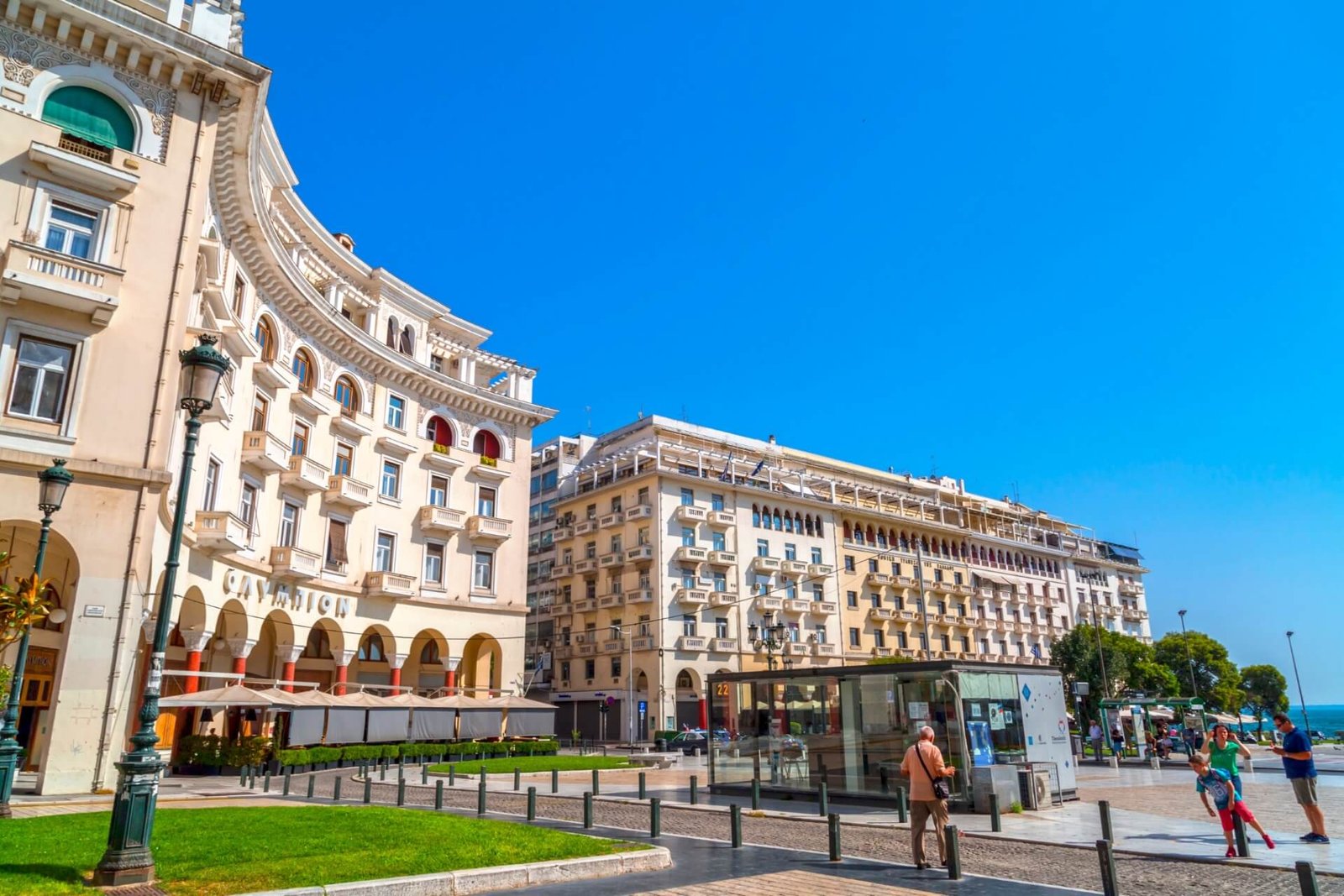
One of the most popular places for tourists and locals is Aristotelous Square. Architect Ernest Hébrard designed the area as part of the rebuilding plan following the disastrous fire of 1917. The square opens toward the waterfront, framed by elegant buildings with archways, carved balconies and a distinctive architectural rhythm.
Today, cafés and restaurants line the square, making it a wonderful meeting place or a stop for a leisurely Greek coffee. The statue of Aristotle is a familiar sight. Local tradition suggests that touching the philosopher’s polished toe brings wisdom, an amusing ritual for visitors.
Visit in the morning for a coffee or in the evening to experience the lively atmosphere. Walk north along Aristotelous Street to the Modiano and Kapani markets or south to the seafront, where you can follow the promenade to the White Tower.
Location: Aristotelous Square. View on Google Maps.
3. Basilica of Saint Demetrius
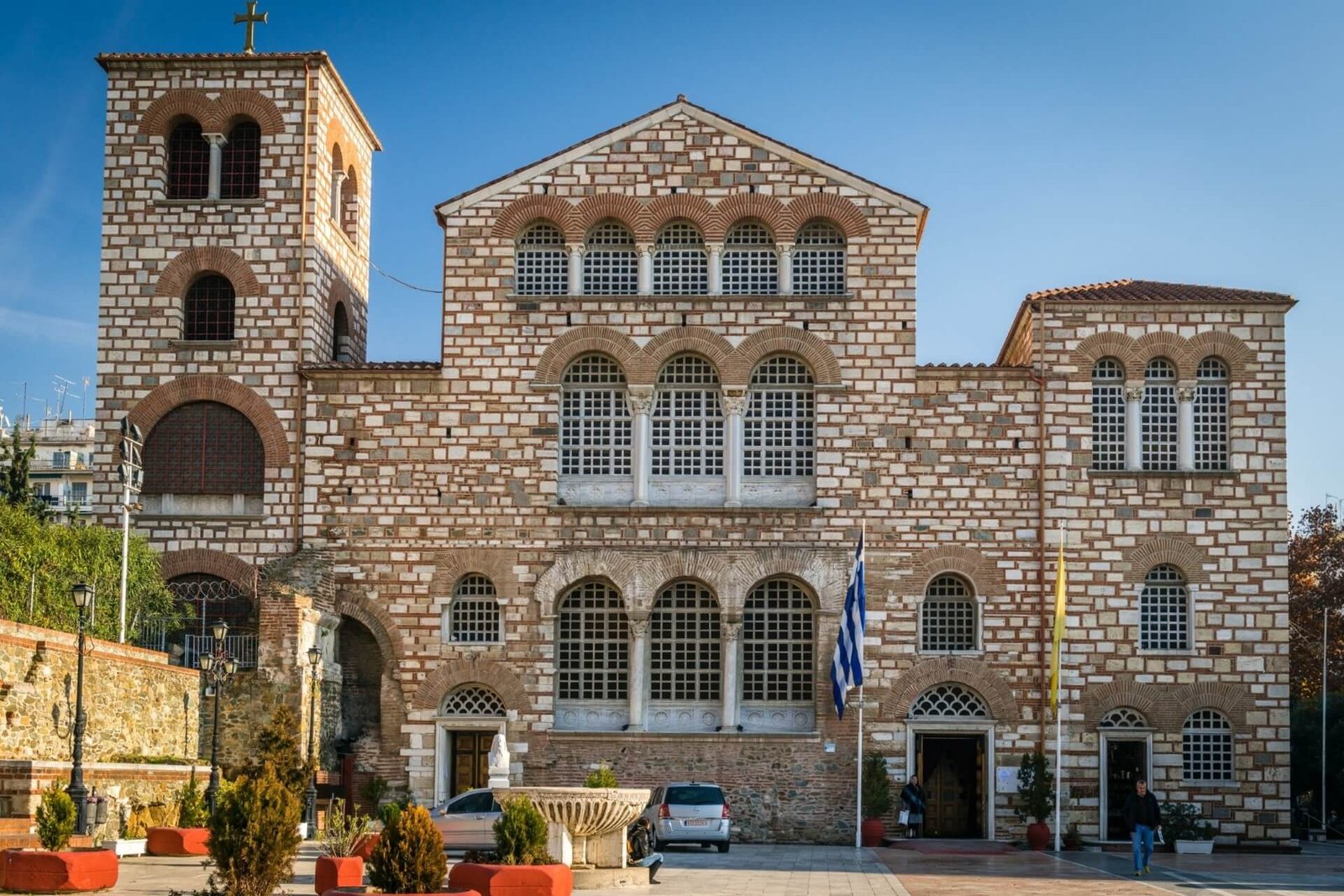
The basilica dedicated to Saint Demetrius, the patron saint of Thessaloniki, is one of the city’s most important religious monuments. Tradition associates the saint with a Christian martyrdom in the early fourth century. A series of churches were built over the site, and the present five-aisled basilica preserves a remarkable legacy of early Christian architecture.
The catastrophic fire of 1917 badly damaged the building. Extensive restoration made it possible to reopen the church in the twentieth century. Inside, look for the surviving early Byzantine mosaics, marble columns and the shrine of Saint Demetrius. Beneath the church lies a historic crypt, traditionally associated with the saint.
The basilica is an active place of worship and forms part of Thessaloniki’s UNESCO-listed early Christian and Byzantine monuments. Entrance to the church is free. Wear respectful clothing, keep your voice low and check locally whether the crypt is open during your visit.
Location: Agiou Dimitriou. View on Google Maps | Visitor information.
4. Arch of Galerius and Rotunda
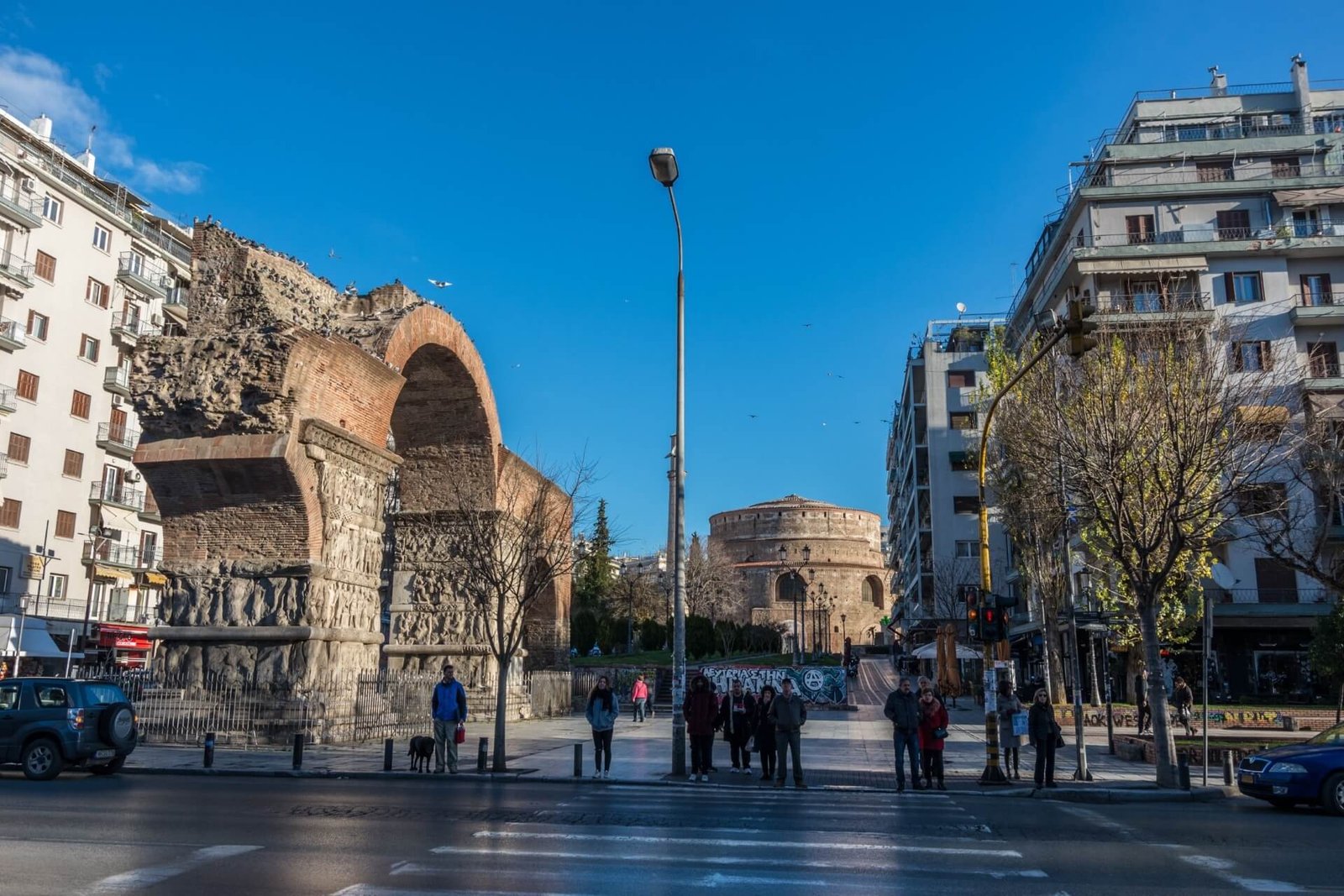
Thessaloniki has many attractions dedicated to historical figures, and the Triumphal Arch of Galerius is among the finest Roman monuments. Known locally as Kamara, it commemorates Emperor Galerius’s victory over the Sassanid Persians. The surviving pillars feature detailed marble reliefs showing military campaigns, ceremonies and imperial authority.
A short walk north leads to the impressive Rotunda. Built in the early fourth century as part of the imperial complex, its original purpose remains debated. It subsequently served as a Christian church and a mosque. The huge circular interior is known for its surviving early Christian mosaics, which form part of the city’s UNESCO World Heritage listing.
The arch can be viewed freely from the public street. The Rotunda has a separate admission ticket and opening schedule. Check the current archaeological-site ticket information before visiting. Combine both monuments with the remains of Galerius’s palace near Navarinou Square.
Location: Egnatia / Rotonda. View on Google Maps | Visitor information.
5. Monument to Alexander the Great
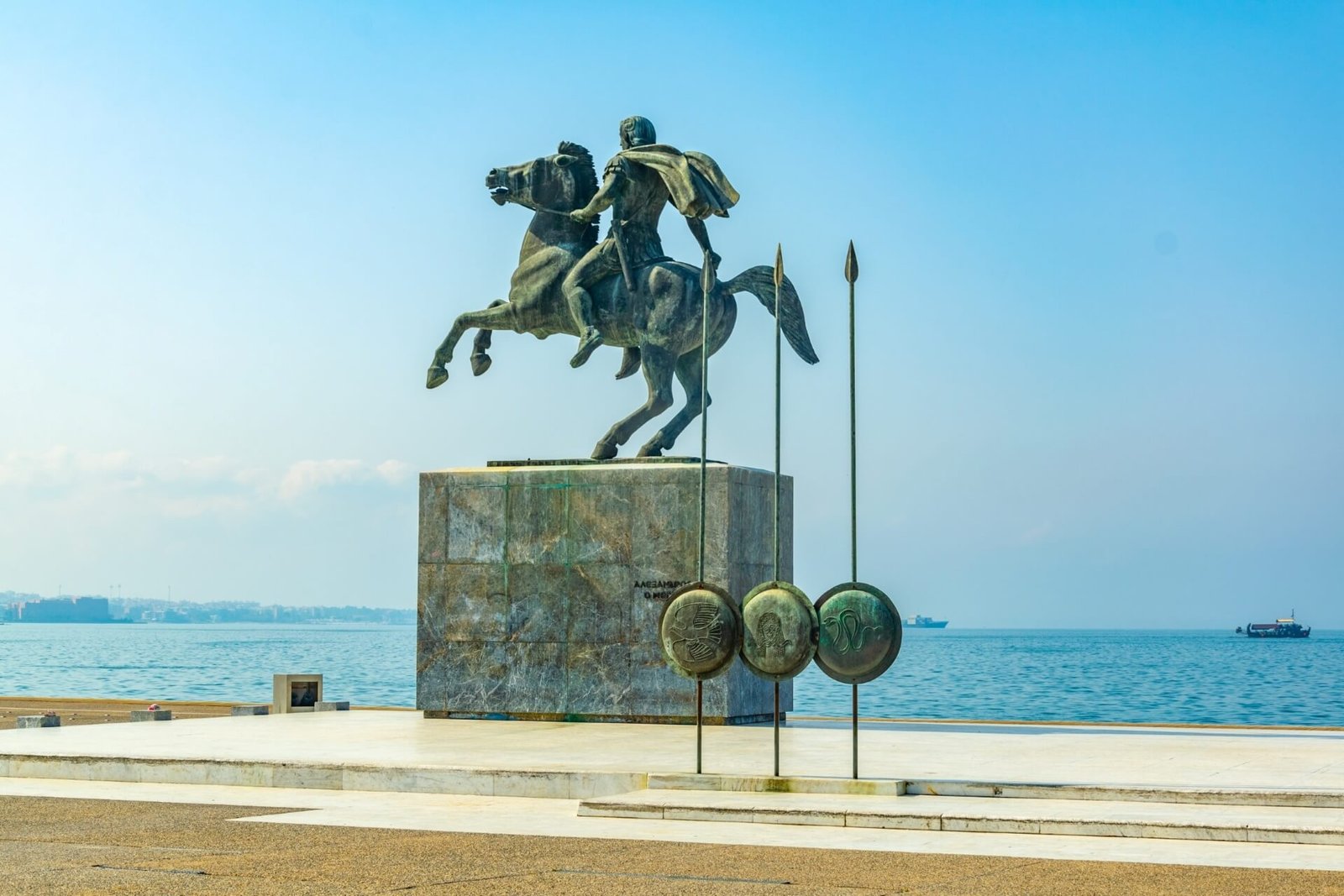
Another Thessaloniki landmark on the waterfront is the imposing equestrian statue of Alexander the Great. The monument depicts the ancient Macedonian ruler riding his famous horse Bucephalus. A group of sculpted shields and spears stands behind the statue, creating a striking silhouette against the sea.
The monument is especially photogenic at sunrise or in the late afternoon, when the waterfront opens onto broad views of the Thermaic Gulf. Although Thessaloniki was founded after Alexander’s death, the city celebrates its deep connections with the history of ancient Macedonia.
From the White Tower, walk along the New Waterfront promenade toward the statue and the nearby Umbrellas sculpture. The flat pedestrian route is well suited to a relaxed stroll, cycling or a family outing. There is no admission charge.
Location: Nea Paralia. View on Google Maps.
6. Archaeological Museum of Thessaloniki
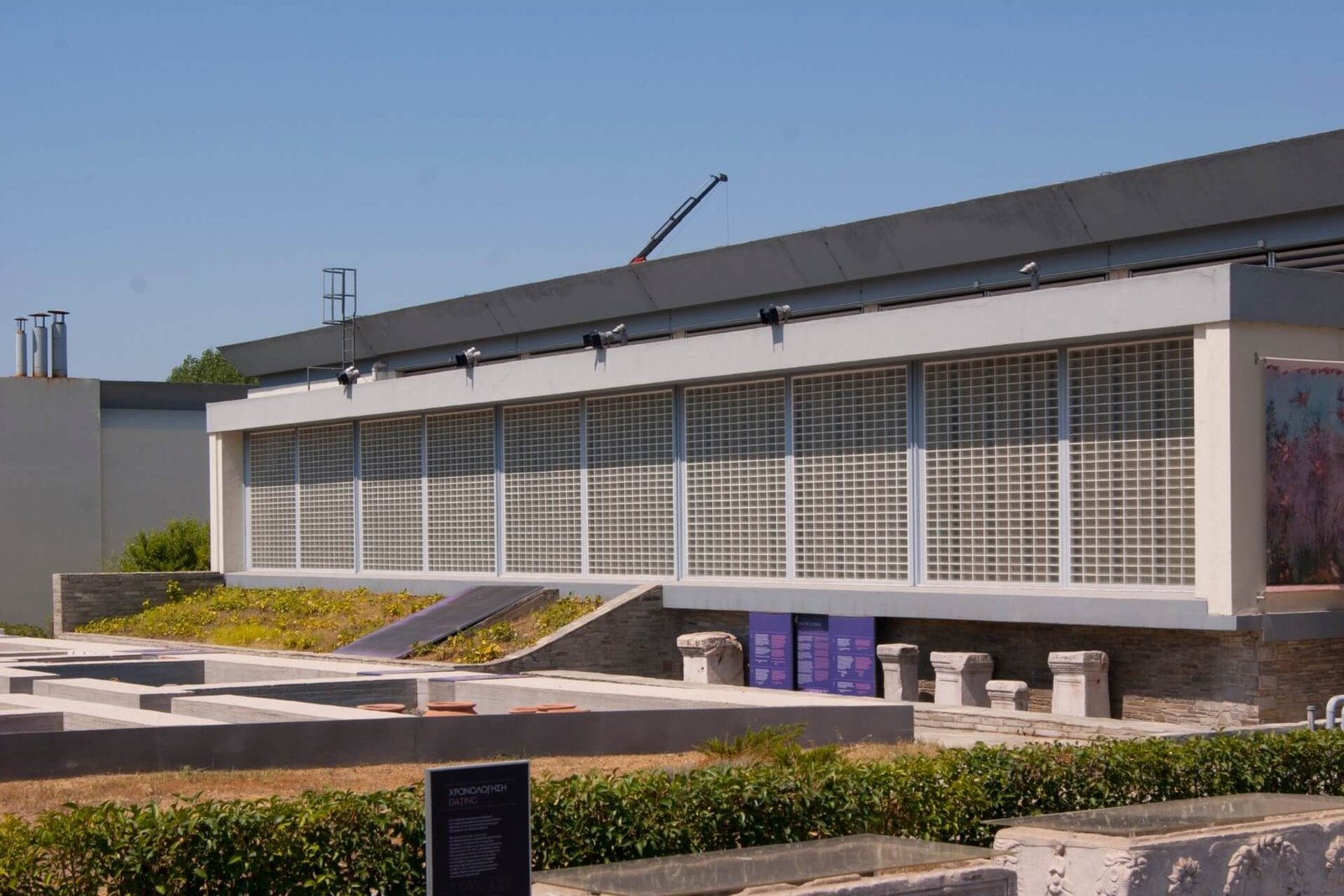
A visit to the Archaeological Museum is a must for travelers interested in the ancient history of Macedonia. Its collection brings together finds from prehistoric communities, ancient cities, cemeteries and the Roman period. The museum occupies a central location close to the waterfront and the White Tower.
Among the most remarkable displays are the Gold of Macedon exhibition, elaborate jewelry, funerary objects, painted pottery, marble sculptures and the celebrated Derveni Krater. The exhibits explain the everyday lives, beliefs and artistic traditions of people who inhabited northern Greece over thousands of years.
The museum lists a general ticket of €10 and a reduced rate of €5. Regular hours are 09:00–17:00, daily from April through October and closed on Tuesdays during the winter season. Check the museum’s official calendar for special openings. Allow at least 90 minutes to explore the permanent displays.
Location: 6 Manoli Andronikou Street. View on Google Maps | Visitor information.
7. War Museum of Thessaloniki
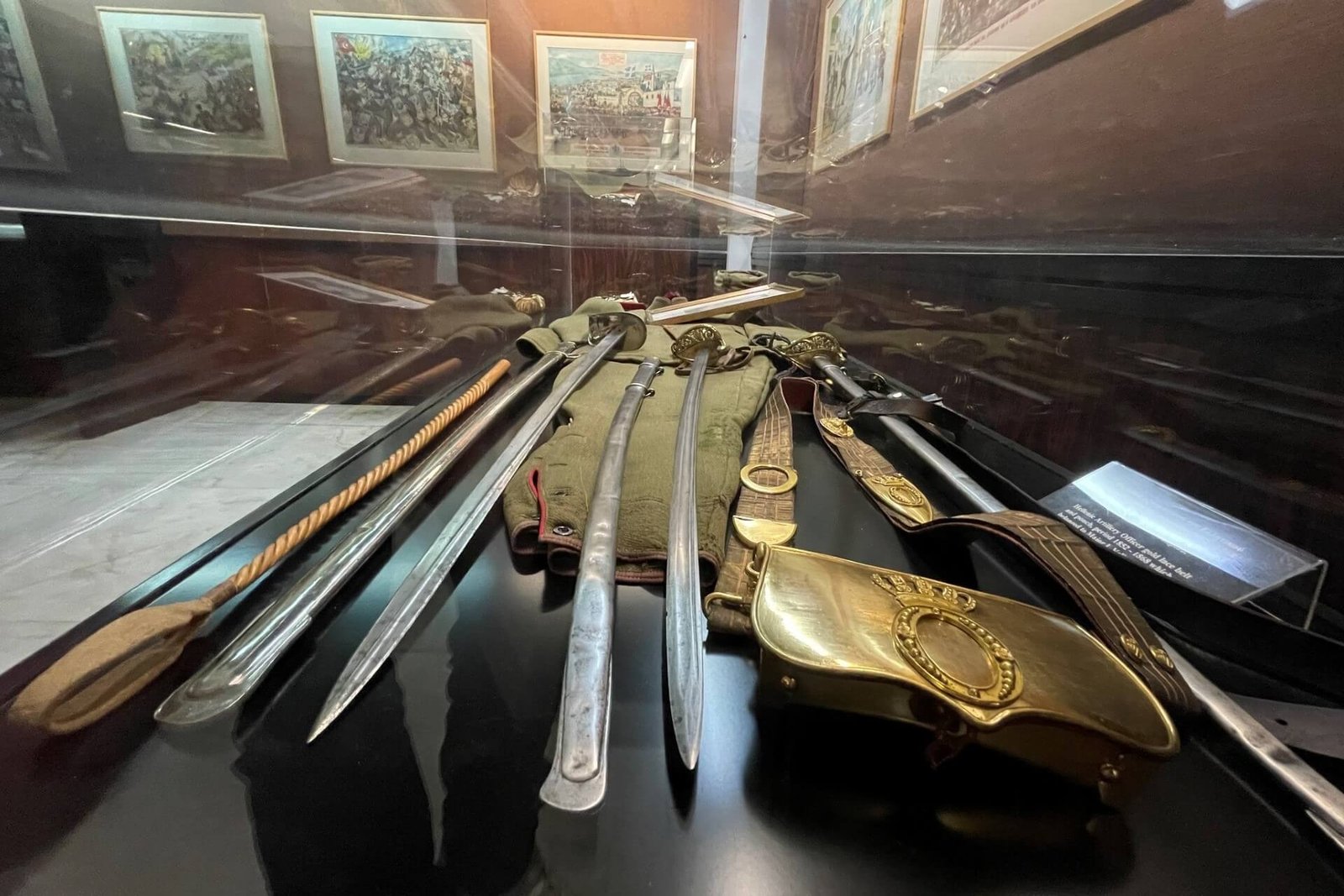
The War Museum of Thessaloniki houses objects related to the modern military history of Greece and Macedonia. Opened to visitors in 2000, it occupies a historic building dating from the early twentieth century. Its exhibits trace major events that shaped the region, including the struggle for independence and the two world wars.
The collection features historic uniforms, photographs, medals, documents, military models and period equipment. Outside, visitors can see a collection of larger military exhibits. The museum is a useful complement to the ancient and Byzantine history covered elsewhere in the city.
Set aside roughly an hour or more if you are interested in modern history. The museum is located east of the central historic district, not far from the Archaeological Museum. Consult the visitor information for current hours and admission details, as they can vary.
Location: 4 Grigoriou Lampraki Street. View on Google Maps | Visitor information.
8. Museum of the Macedonian Struggle
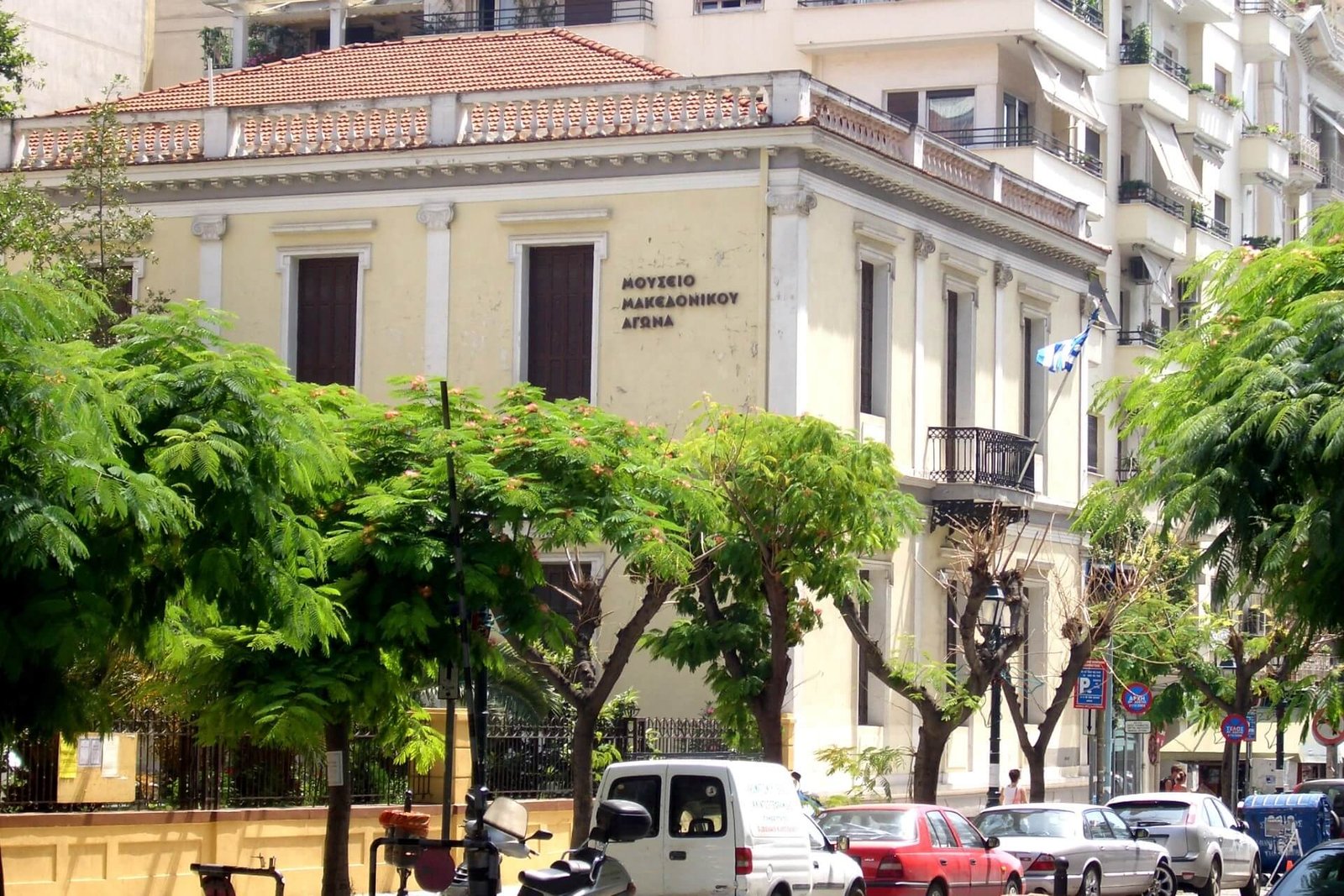
Another notable museum occupies the former Greek consulate in the center of Thessaloniki, a historic building closely connected with the Macedonian Struggle of the early twentieth century. The museum explores the political, social and historical developments of the region during the late Ottoman period.
Its exhibits include photographs, personal belongings, historical documents, books and objects associated with people who took part in the struggle. Models and contextual displays help visitors understand the complicated history of Macedonia and Thessaloniki’s changing role in the region.
The museum lists admission at €4, or €2 reduced. It opens Monday–Friday 09:00–14:00, with extended Wednesday hours until 20:00, and Saturday 10:00–14:00. It closes on Sunday. Last entry is 30 minutes before closing. The museum is within walking distance of Aristotelous Square.
Location: 23 Proxenou Koromila Street. View on Google Maps | Visitor information.
9. Panagia Chalkeon Church
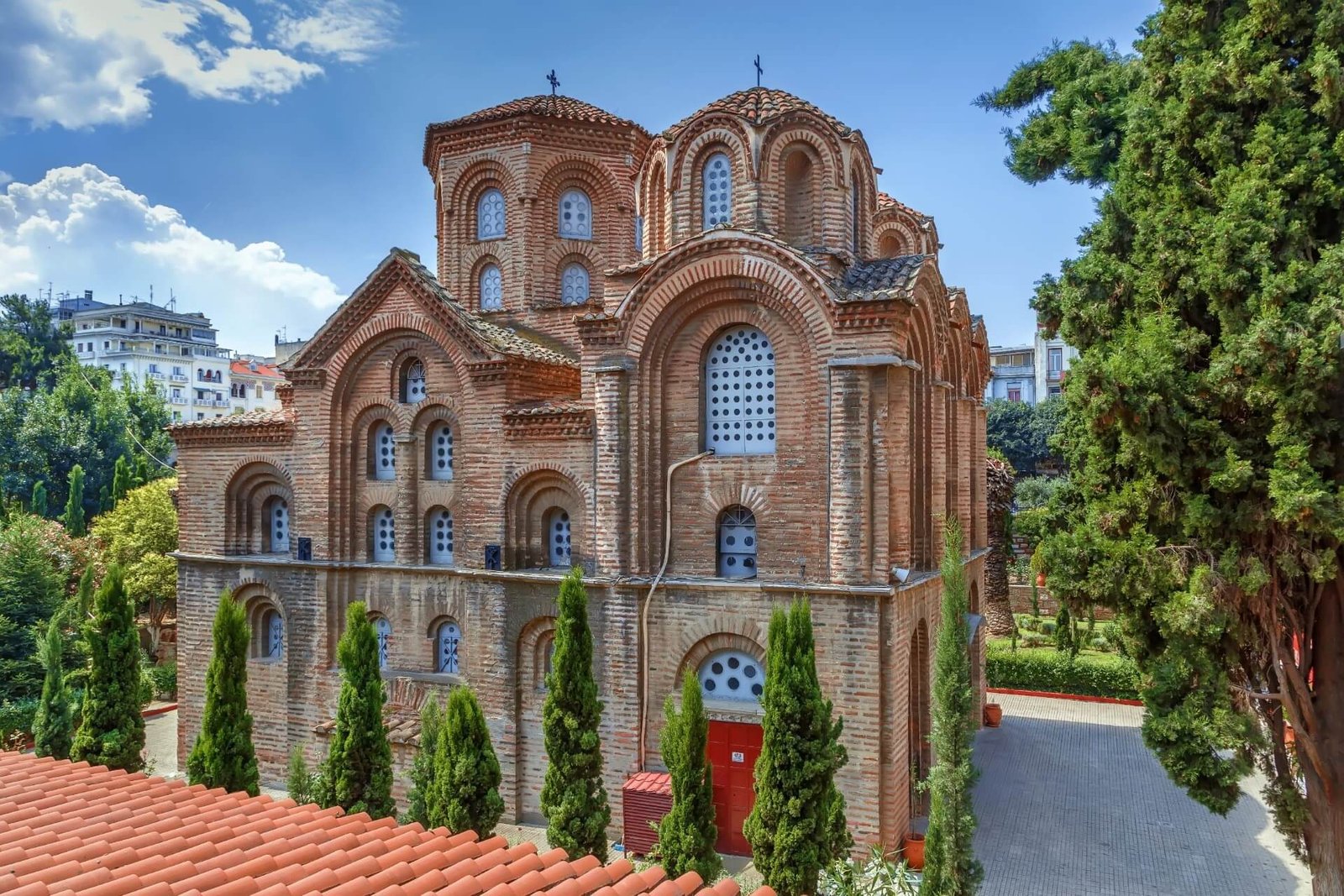
Panagia Chalkeon is another significant attraction in Thessaloniki. This cross-in-square Byzantine church, built in 1028, was founded by Christophoros and his family. Its name refers to the coppersmiths who historically worked nearby. The striking red brick exterior gave it the nickname Red Church.
The three domes, patterned brickwork and compact scale make the church a beautiful example of middle Byzantine architecture. Surviving frescoes offer a glimpse of its original decorative scheme. During Ottoman rule, the building was converted into a mosque before returning to Christian worship. It is now included in the UNESCO-listed Byzantine monuments of Thessaloniki.
The church is close to Aristotelous Street and the central markets. It makes an excellent short stop during a walking tour of the city center. As it remains a place of worship, visit respectfully and check whether the interior is open.
Location: Chalkeon Street. View on Google Maps | Visitor information.
What to see in Thessaloniki in two days
Day 1: begin at Aristotelous Square and the central markets, then visit Panagia Chalkeon and the Basilica of Saint Demetrius. Continue to the Arch of Galerius and Rotunda. Finish the day at the waterfront and admire the White Tower.
Day 2: explore the Archaeological Museum and, if time permits, the War Museum. Walk along the New Waterfront to the Alexander the Great monument. In the afternoon, visit the Museum of the Macedonian Struggle or relax in the cafés of the historic center.
For a longer stay, consider a coastal excursion to Halkidiki. Explore our guide to beaches and coastal resorts near Thessaloniki for ideas.
Practical tips for visiting Thessaloniki
Wear comfortable shoes for the historic streets and waterfront. Many outdoor attractions are free, and the main paid museums are within walking distance of each other. Visit churches outside services, and plan museum visits around seasonal closure days.
For a pleasant city break, spring and autumn offer comfortable temperatures for sightseeing. Summer is ideal for combining the city with nearby beaches. In winter, museums may close earlier, so check their schedules in advance.
Tours and day trips from Thessaloniki
Discover the coast of Halkidiki or explore northern Greece on a day trip. Book a Sithonia beaches and villages tour or Explore Kavala and ancient Philippi on a guided day trip.
Frequently asked questions about Thessaloniki attractions
What are the top things to see in Thessaloniki?
The White Tower, Aristotelous Square, Saint Demetrius Basilica, Arch of Galerius and Rotunda, and the Archaeological Museum are excellent starting points for a first visit.
How much does the White Tower cost?
The museum operator lists €8 for general admission and €4 for eligible reduced tickets. Check the official visitor page for the current schedule and ticket rules.
How many days do you need in Thessaloniki?
Two full days are enough for the major central sights. Three or four days allow more museums, the upper town and an excursion to the nearby coast.
Why do people touch the Aristotle statue?
Local tradition suggests that touching the philosopher’s polished toe brings wisdom. It is a playful custom among visitors to Aristotelous Square.
More travel ideas: places in Greece to visit at least once and budget-friendly European city breaks.

Konstantin is an acclaimed travel writer, celebrated for transforming ordinary journeys into extraordinary narratives. With years of experience exploring diverse destinations across the globe, his work blends vivid storytelling, cultural insights, and practical advice to inspire wanderlust and guide readers toward unforgettable adventures.
As a key contributor to enjoythetrip.org website, Konstantin has built a loyal readership through their expertise in uncovering both iconic landmarks and off-the-beaten-path treasures. He specializes in providing travelers with honest, actionable tips, whether it’s finding the best resorts in Maldives, exploring cultural hubs like Paris, or diving into the natural wonders of Croatia.