
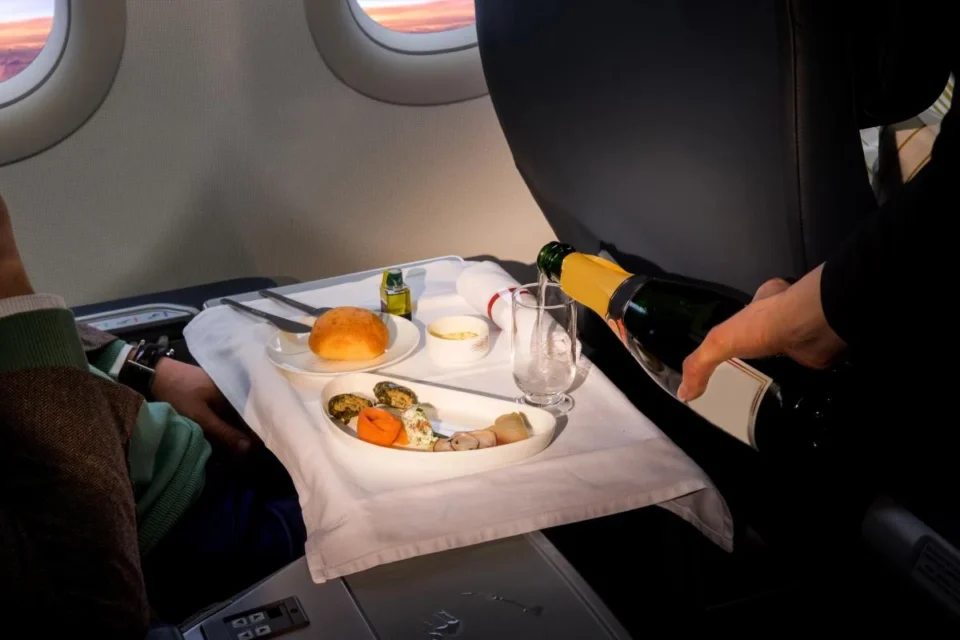
The first dish served during the flight was a pre‑prepared lunch box with sandwiches and fruit.
When the so-called “golden era” of aviation began in the 1950s, five‑course dinners that included lobster were a regular part of flights. According to the Daily Mail, this is strikingly different from the budget sandwiches that are now associated with airlines such as Ryanair and easyJet.
It is said that in the past, passengers were served according to the rules of restaurant service: food was served on white tablecloths, and champagne was poured at an altitude of about 9,000 meters.
Passengers, who, of course, had to be more affluent to afford air travel in those days, traveled through the sky in considerable comfort.
This is how on‑board dining has changed over the past century – from the first flights to the much more modest offerings of modern airlines.
The 1920s–1930s
The first meal that, according to the Guinness Book of World Records, was served to passengers during the flight was a pre-prepared lunch box with sandwiches and fruit. On October 11, 1919, it was distributed to passengers on a flight from London to Paris by the so – called “cabin boys” – crew members of the British airline Handley Page Transport.
Passengers had to wait until 1928 for hot meals to arrive. It was then that hot food began to be served on board Lufthansa aircraft. For that time, simple food was quite understandable, because air travel was just beginning to develop. Planes were smaller and turbulence was more frequent, so regular picnic lunch boxes remained the norm.
The 1940s–1950s
When the “golden age” of air travel was gaining momentum, tickets could cost as much as a month’s salary. For example, a one‑way flight from the UK to Rome during that period would cost today the equivalent of approximately £1,000 (more than $1,900), writes Key Aero.
In 1948, Pan American World Airways, or Pan Am, introduced tourist class – and passengers began to travel through the sky with an unprecedented level of comfort. Onboard meals could consist of five courses, and steak and lobster were far from uncommon. A so‑called silver service was a common sight: food was served on white linen tablecloths, using real silver cutlery.
Passengers in the sleeping cabins could also count on breakfast in bed. On board Trans World Airlines, in particular, they offered stuffed guinea fowl, caviar, and eggs prepared to order. And in the aisle of the aircraft, passengers could have their roast beef sliced right from the cart.
The 1960s–1970s
With the advent of the turbulent 1960s, the “golden era” of air travel was in full swing.
During this period, the ship often had its own chef, and meat feasts were a common part of the journey.
The 1980s–1990s
It was then that the situation began to change for the worse. One of the main reasons for the deterioration of onboard food was the deregulation of the aviation industry, which allowed airlines to independently determine prices and routes. In particular, in the United States, after the 1978 deregulation, new airlines were able to enter the market, which contributed to lower ticket prices.
In the UK, this era began with the Civil Aviation Act 1980, culminating in the privatisation of British Airways in 1987. As a result, air travel became more affordable, planes began to fill up with a large number of passengers, and later low-cost airlines appeared.
At the same time, the quality of on‑board food also deteriorated. Airlines realized that passengers were willing to give up free food and drinks in exchange for cheaper tickets.
2000s
In recent years, this trend has become even more pronounced. In 2017, British Airways discontinued free economy class meals on short flights. Other airlines also gradually began to abandon free additional services.
This year, Delta Air Lines announced that it would stop serving food and drinks on hundreds of flights in order to cut costs.
Ryanair passengers, for example, don’t get free drinks or snacks. However, this is one of the ways in which the airline reduces costs and keeps ticket prices low, and most passengers don’t seem particularly outraged.
The 2010s – present time
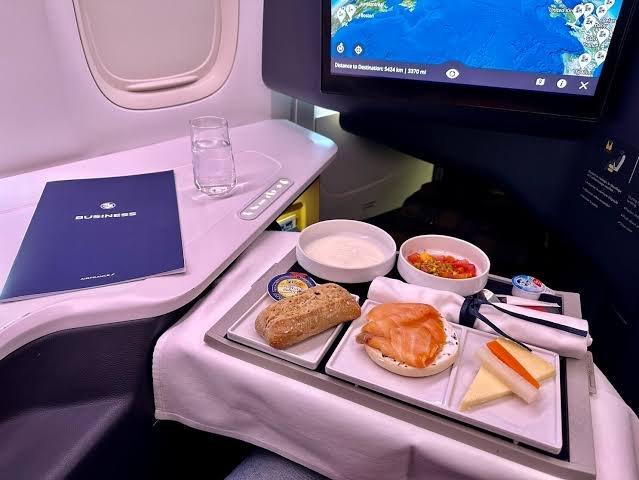
Today, the quality of food on board can vary dramatically depending on the airline – from simple sandwiches to real culinary masterpieces.
While food on planes is often disappointing for passengers, some airlines offer truly impressive meals at altitudes of several kilometers. These include a gourmet hot dog in SWISS First Class, 13-course Japan Airlines menus, and Shake Shack dishes on Delta Air Lines flights. This week alone, Singapore Airlines introduced more than 100 new and updated dishes in various service classes. Among them are braised Maine lobster with champagne sauce and baked chicken breast with black pepper sauce.
However, not everything is always as appetizing. It all depends on the budget. Complaints that Ryanair serves “the worst food on the plane” have been appearing more and more often lately. One disgruntled passenger said he was shocked when he was served an unappetizing panini with ham and cheese during the flight.
And this is far from the first time passengers have been dissatisfied with the food on board, the authors note. For example, earlier this year, an angry vegan passenger criticized Virgin Atlantic after he was served what he described as “the worst food” he had ever tried. The complaint concerned a “pitiful” sandwich with three pieces of vegetables, which allegedly had mold on them.
“It’s clear that over the past 100 years, the situation with onboard food has changed significantly for the worse. But a ray of hope still remains — if you’re willing to pay for it…” the tabloid states.

Konstantin is an acclaimed travel writer, celebrated for transforming ordinary journeys into extraordinary narratives. With years of experience exploring diverse destinations across the globe, his work blends vivid storytelling, cultural insights, and practical advice to inspire wanderlust and guide readers toward unforgettable adventures.
As a key contributor to enjoythetrip.org website, Konstantin has built a loyal readership through their expertise in uncovering both iconic landmarks and off-the-beaten-path treasures. He specializes in providing travelers with honest, actionable tips, whether it’s finding the best resorts in Maldives, exploring cultural hubs like Paris, or diving into the natural wonders of Croatia.