
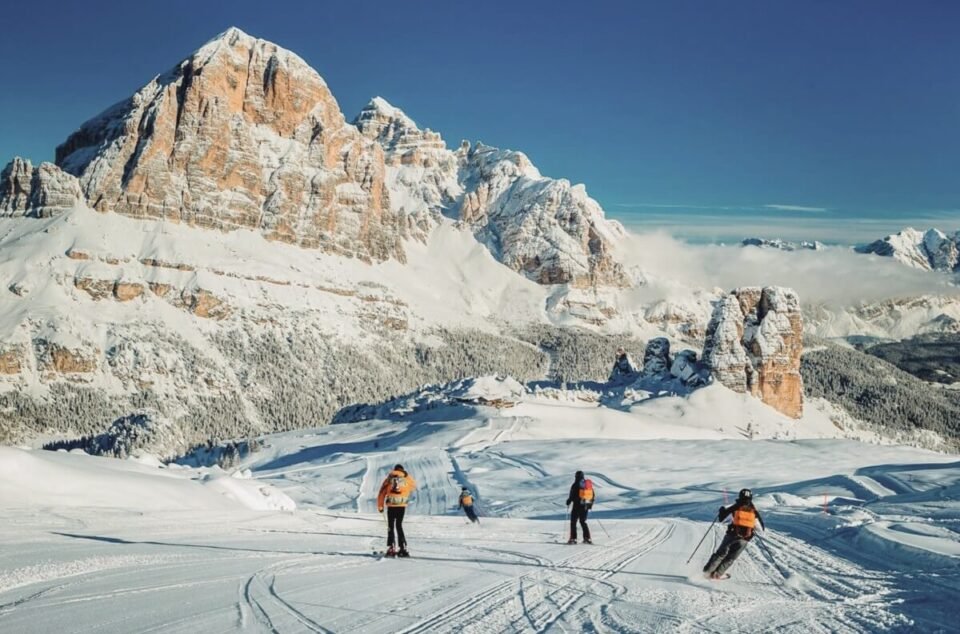
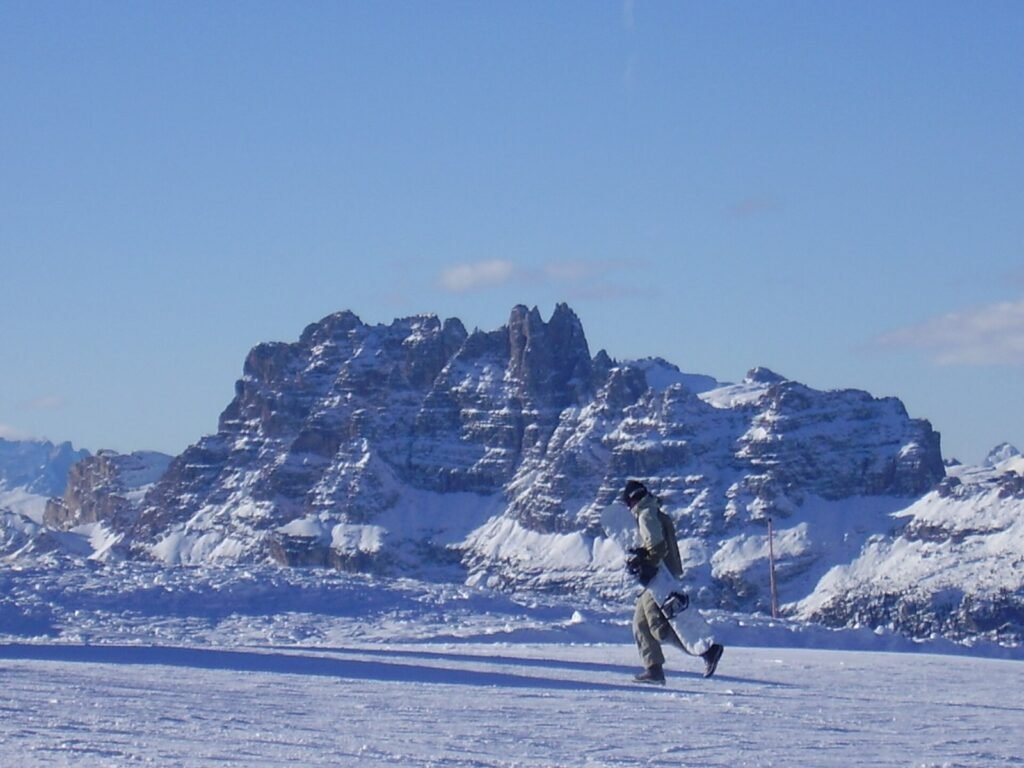
Cortina d’Ampezzo has been called the Queen of the Dolomites for more than a century, and in winter it is easy to see why. The town sits in a wide, sunny bowl at about 1,224 metres, ringed by pale limestone walls that turn pink at sunset: Tofana to the west, Cristallo to the north, Faloria and Sorapiss to the east, and the Cinque Torri towers to the southwest. It hosted the Winter Olympics in 1956, and in February 2026 its famous Olimpia delle Tofane course was the stage for the women’s alpine events of the Milano Cortina Games.
What Cortina is not is a giant interconnected ski circus. Its slopes are spread over several separate areas that you link by cable car, ski bus or car rather than on skis. Come with that in mind and you will find superb scenery, well-groomed runs, excellent mountain huts and one of the most stylish ski towns in the Alps. Here is how the ski areas work, what each level should ski, what passes cost for 2026/27, and how and when to go.
Cortina d’Ampezzo skiing at a glance
- Altitude of the town: about 1,224 m
- Local ski area: roughly 120 km of pistes shared between Cortina, San Vito di Cadore, Auronzo and Misurina, all on one valley pass
- Main areas: Tofana–Pocol–Socrepes, Faloria–Cristallo, and Cinque Torri–Lagazuoi–Passo Falzarego
- Part of Dolomiti Superski: 12 ski regions and around 1,200 km of slopes on a single pass
- Best for: intermediate skiers who care about views, food and atmosphere as much as mileage
Cortina skiing by the numbers
The lift companies of Cortina, San Vito di Cadore, Auronzo and Misurina run around 35 lifts serving roughly 120 km of pistes spread over more than 70 runs. The mix leans clearly towards intermediates: about 45 km are blue (roughly 38%), 59 km are red (about 49%) and 16 km are black (about 13%), with 13 runs graded black in total. Around 95% of the pistes are covered by snowmaking. Lift-served skiing stretches from about 1,224 m in town to roughly 2,750 m at the top of the Lagazuoi, a maximum vertical span of about 1,500 m, and the Armentarola run alone loses more than 1,000 m of height on its way down towards San Cassiano.
The ski areas of Cortina d’Ampezzo
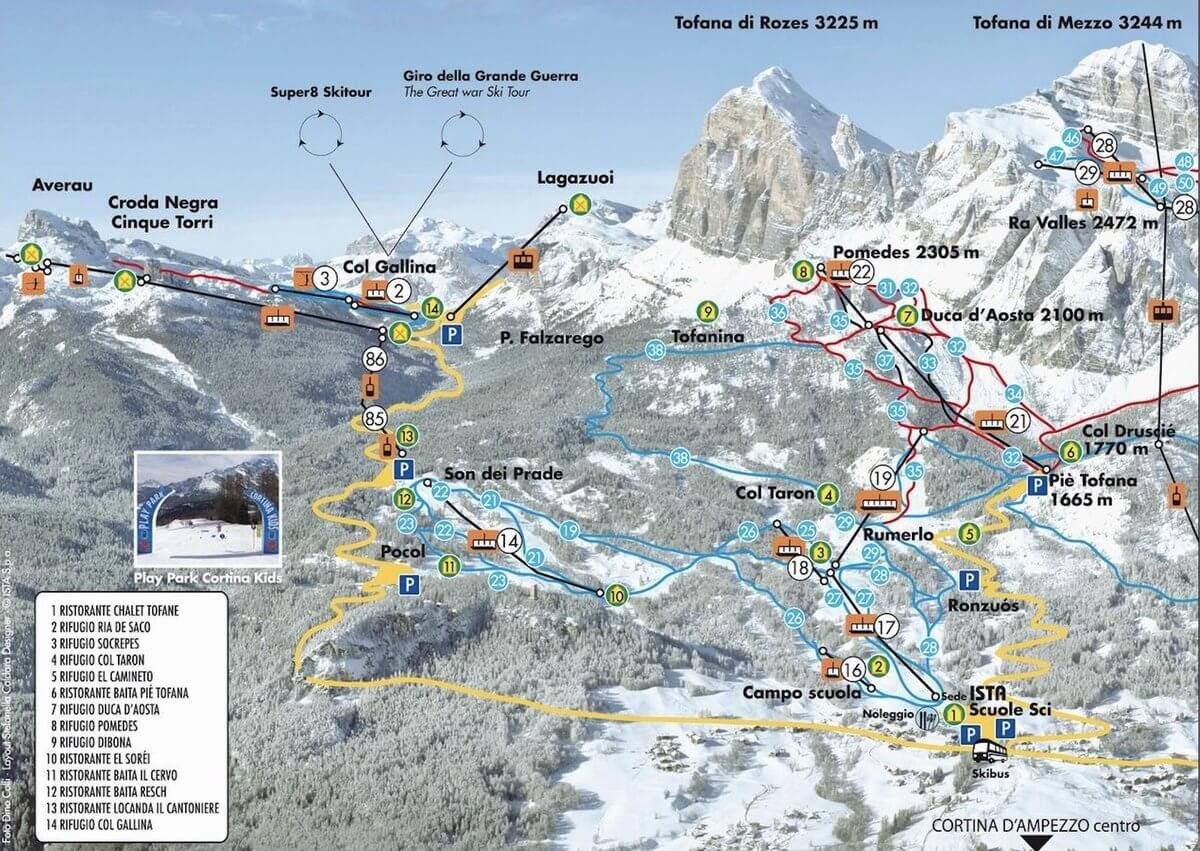
Tofana, Pocol and Socrepes: the main area
The Tofana side of the valley is where most people spend most of their days. The Freccia nel Cielo cable car leaves from near the Olympic Ice Stadium and climbs to Col Drusciè, and its second section continues to Ra Valles, a high, open bowl beneath the Tofana di Mezzo with a handful of short chairlifts, easy blue and red runs above the tree line and reliable snow late into the season.
Below Ra Valles the terrain gets more serious. The Duca d’Aosta and Pomedes chairlifts serve the slopes used for women’s World Cup speed races, including the Olimpia delle Tofane, which squeezes between two rock walls before opening out lower down. Its most dramatic section, the narrow and steep Schuss, is worth watching from the chairlift before you commit. In February 2026 this was the venue for the Olympic women’s downhill, won by Breezy Johnson of the USA ahead of Emma Aicher and home favourite Sofia Goggia.
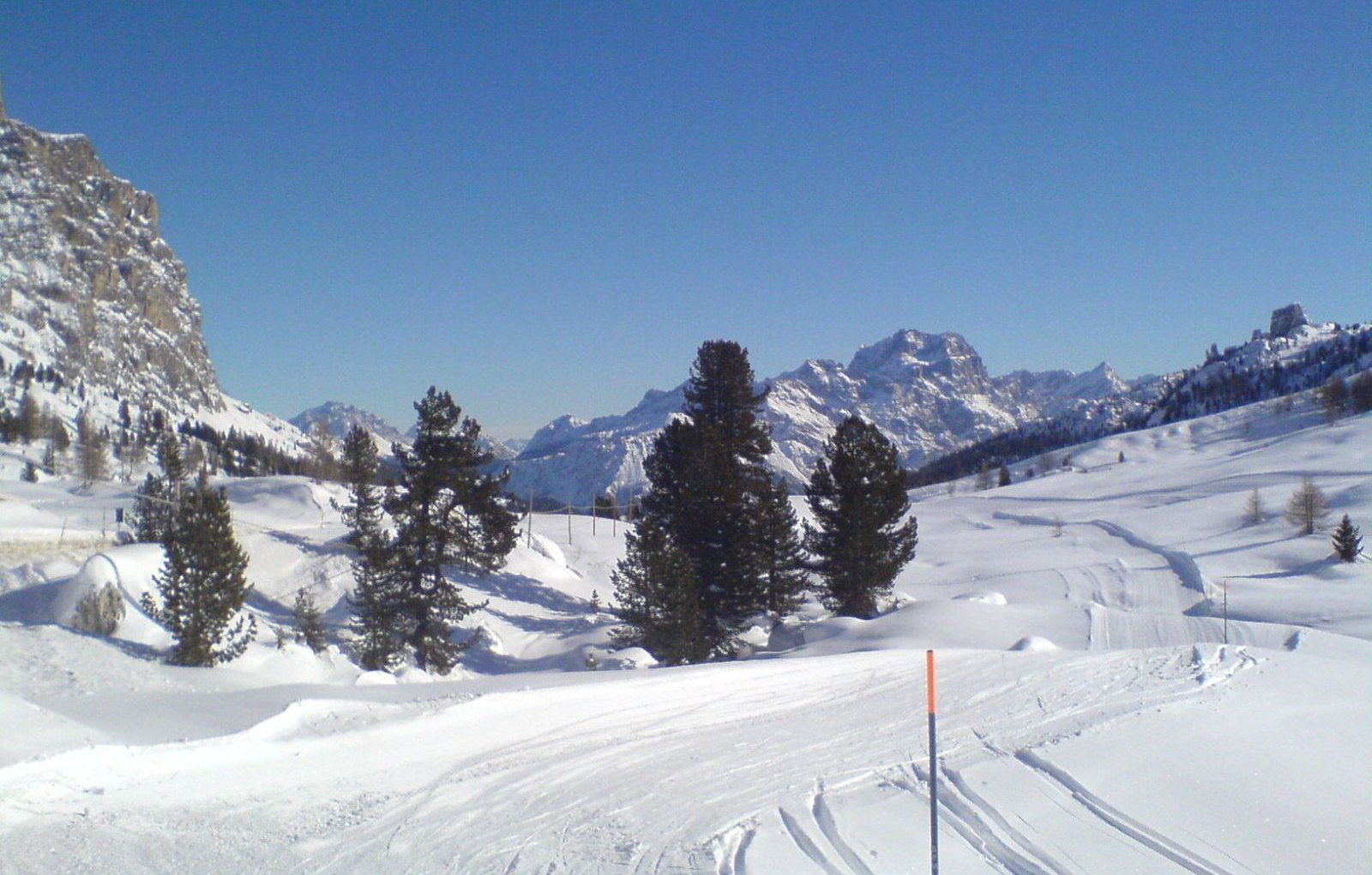
Further south, the Pocol and Socrepes sectors are a different world: wide, gentle, tree-lined slopes served by several chairlifts and easily reached by road. This is where many ski schools hold their lessons and where nervous skiers can build confidence without fast traffic around them.
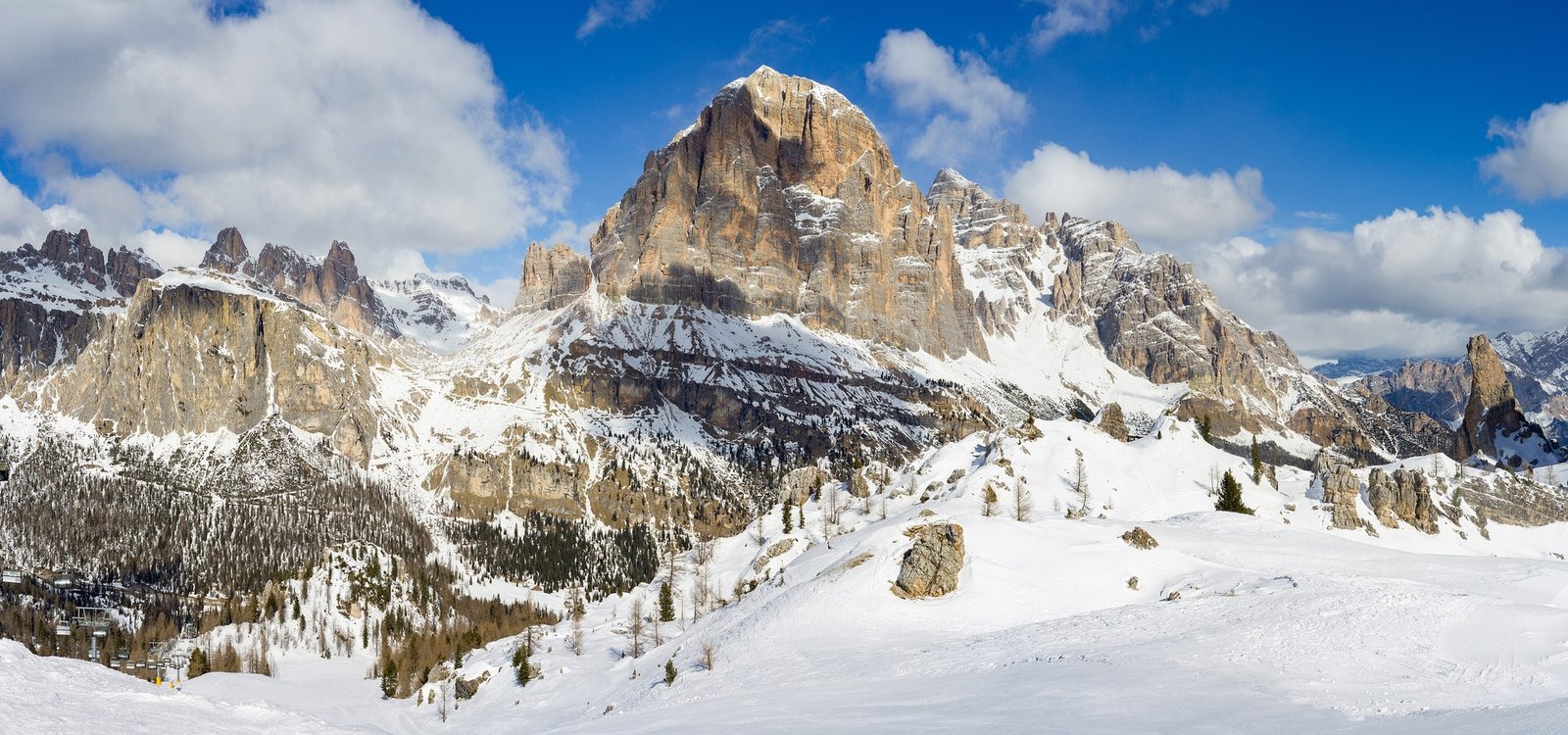

Faloria and Cristallo: shade, steep pitches and views
On the opposite side of town, the Faloria cable car rises in two stages from near the bus station to the plateau below Monte Faloria. Faloria is the shadier side of the valley, so it tends to hold its snow well, and it has a reputation for steeper reds and some genuinely testing black runs, such as the Franchetti. On a clear day the views across the valley to the Tofane and Croda da Lago are superb.
From the eastern edge of Faloria, long reds lead down to Rio Gere on the road towards Passo Tre Croci and Misurina. From there the Son Forca chairlift takes you into the small Cristallo sector, a quieter corner with lovely runs through rock and forest. Conditions permitting, the Staunies chairlift climbs into a narrow gully between rock walls with a short, steep black descent. Most people return to town by skiing back to the top of the Faloria cable car or catching the ski bus from Rio Gere.
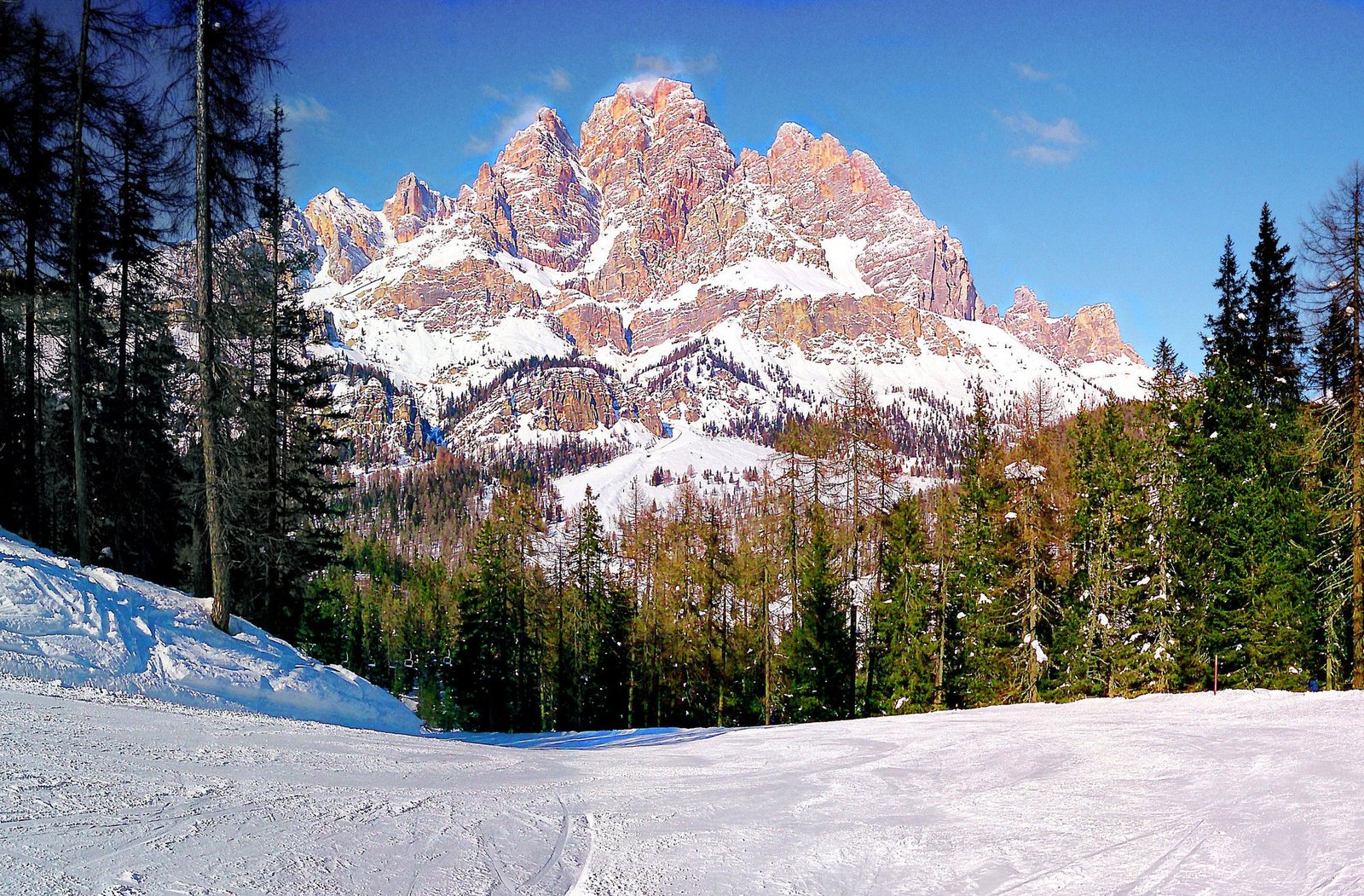


Cinque Torri, Lagazuoi and Passo Falzarego: the scenic heart
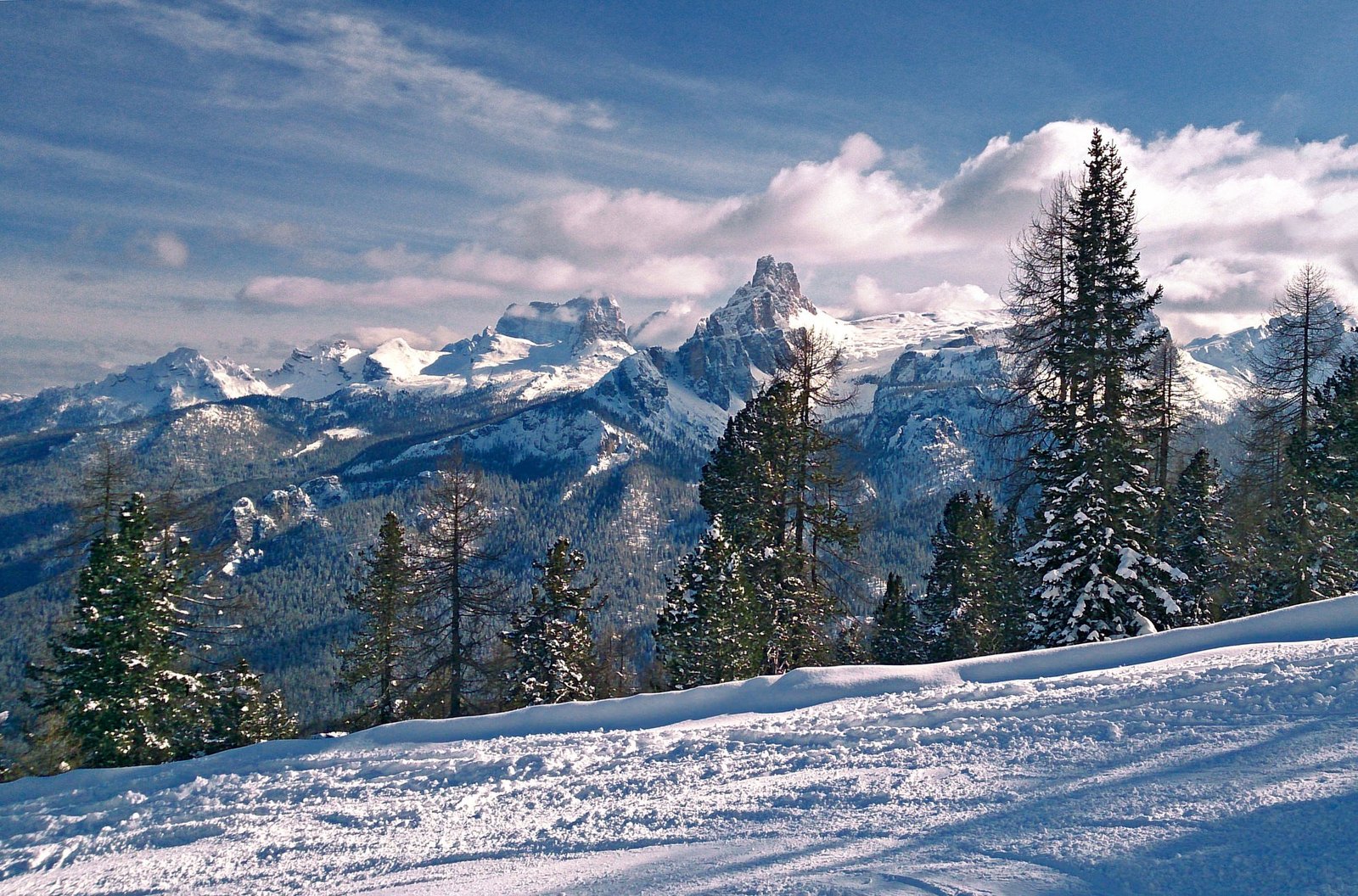
West of town, along the road that climbs just under 20 km to Passo Falzarego, lies the area many visitors end up loving most. The Cinque Torri chairlift starts at Bai de Dones and carries you up beside the five rock towers that give the area its name. From here you can ride up to the Averau hut for long red runs, and continue towards Col Gallina and the pass itself. The slopes are mostly blue and red, but the blues here tend to be a little more demanding than those at Pocol.
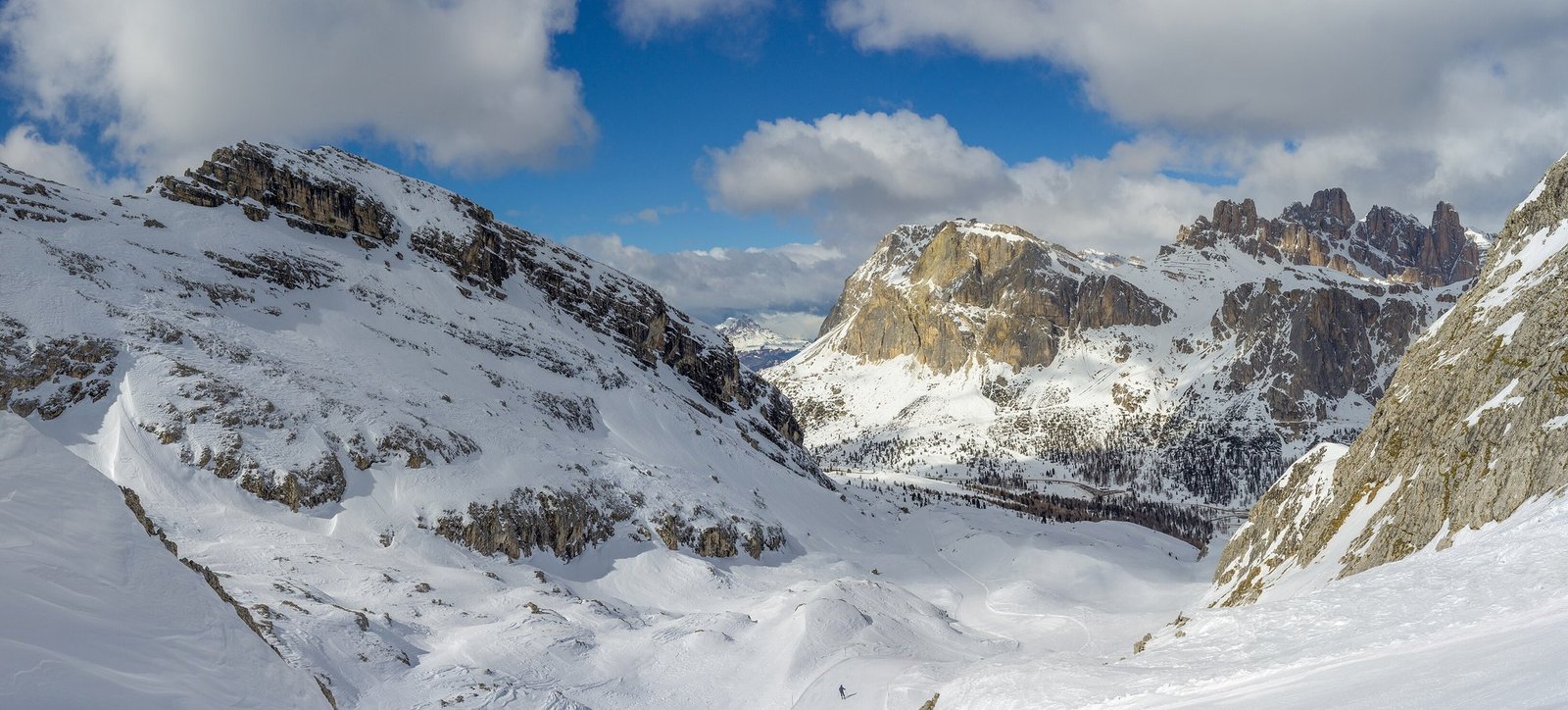
At Passo Falzarego, the Lagazuoi cable car makes a breathtaking climb up a sheer rock face to around 2,750 m, where Rifugio Lagazuoi has one of the best sun terraces in the Alps. This was the front line between Italy and Austria-Hungary in the First World War, and wartime tunnels and trenches are still visible.
From the top you have two options. A red run drops back down to the pass, or you can take the famous Armentarola run, an 8.5 km descent through the so-called Hidden Valley below the cliffs of the Fanes group. It is not difficult, but it is long and spectacularly beautiful. At the bottom, a team of horses tows skiers along a flat stretch of about 1.5 km to the Sarè bridge near San Cassiano, where you enter the Alta Badia ski area. Note that the horse tow, and the buses or taxis back up to Falzarego, are paid separately and are not included in your ski pass.

_-_panoramio.jpg)
Smaller areas: Misurina, San Vito di Cadore and Auronzo
The Cortina valley pass also covers a few small ski areas nearby: Col de Varda above Lake Misurina, the Tambres chairlift at San Vito di Cadore and the slopes above Auronzo. They make a quiet change when the main areas are busy.
Cortina’s ski areas compared
Each sector has its own character, so it pays to match the area to the day, the weather and the people you are skiing with. Since the Cortina Skyline gondola opened in December 2021, the Tofana side (from Son dei Prade near Pocol) and the Cinque Torri area (Bai de Dones) are linked by a 15-minute lift ride, while Faloria–Cristallo is reached on foot or by ski bus from the town centre.
| Ski area | Slopes (approx.) | Difficulty | Best for |
|---|---|---|---|
| Tofana–Pocol–Socrepes | 50 km | All levels: gentle blues at Socrepes and Pocol, reds at Ra Valles, blacks on the Olimpia, Canalone and Schuss | Mixed groups, ski school, the Olympic downhill course |
| Cinque Torri–Lagazuoi–Falzarego | 20 km | Mostly red, with some fairly demanding blues | Scenery, mountain huts, the Armentarola run and the Great War Ski Tour |
| Faloria–Cristallo | 20 km | Mainly red and black, few easy runs | Confident skiers, shaded snow that keeps well, quieter slopes |
| San Vito di Cadore, Auronzo and Misurina | 30 km (combined) | Mostly easy and intermediate | Families, quiet days away from the crowds |
Which slopes suit which skiers
- Beginners: start at Socrepes and Pocol, where the slopes are wide and gentle. Cortina is not the easiest resort for complete novices, because the easy terrain is not all in one place, but the ski schools here are very experienced.
- Intermediates: this is Cortina’s sweet spot. The Tofana reds, the Cinque Torri and Falzarego slopes and the long Armentarola run will keep you happy for a week.
- Advanced skiers: head for the Olimpia delle Tofane and the blacks below Ra Valles, the steeper runs on Faloria and, when it is open, the Staunies gully. With a mountain guide, the Dolomites around Cortina also offer serious off-piste and ski touring.
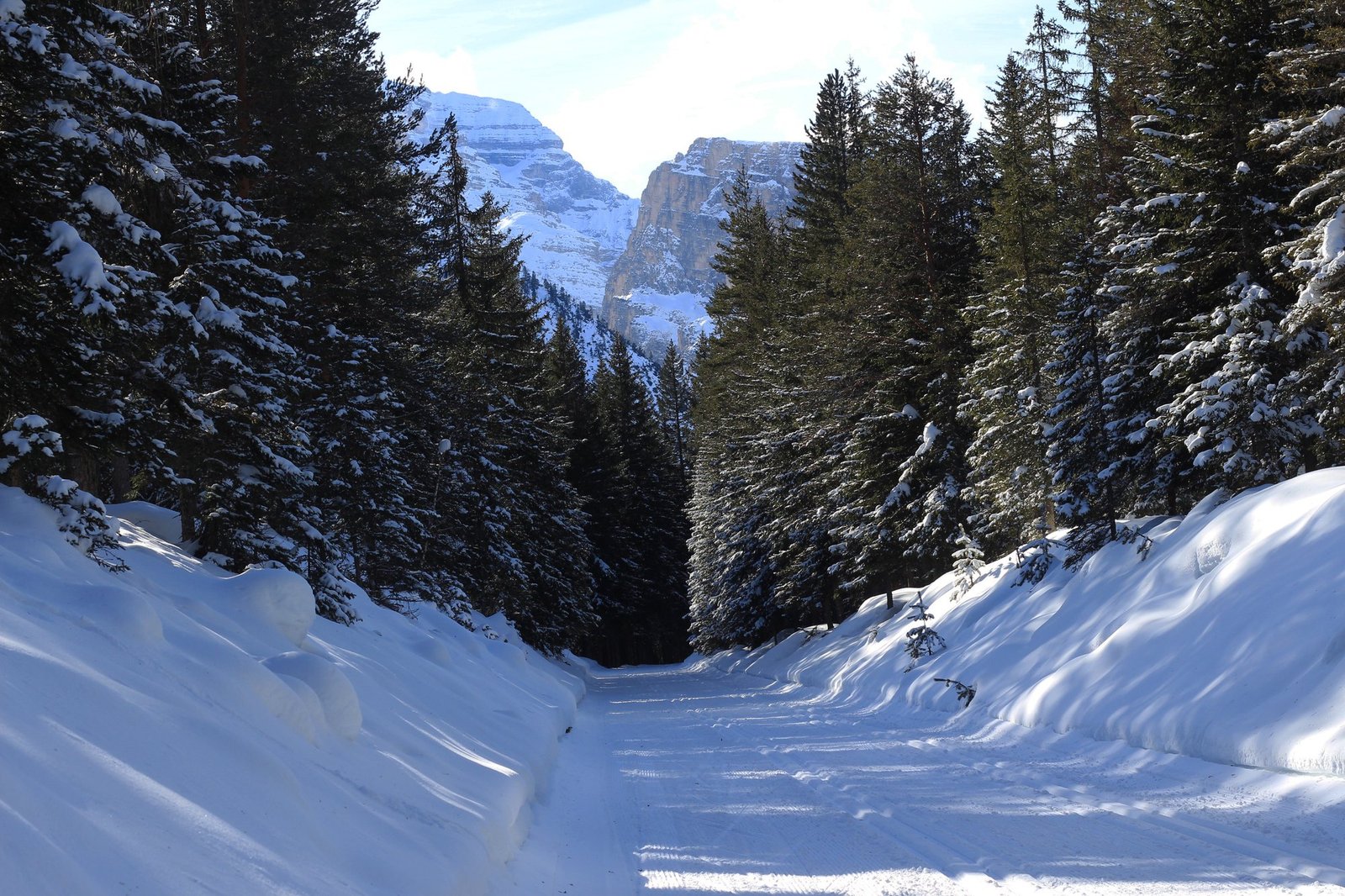
- Cross-country skiers: the valley has an excellent network of trails, especially around Fiames and along the old railway line towards Dobbiaco.

Cortina and the Dolomiti Superski
Cortina is one of the 12 regions of Dolomiti Superski, the largest ski pass network in the Alps, with around 1,200 km of slopes. You do not need the Superski pass to ski Cortina itself: the cheaper local Cortina pass covers all the lifts in the valley. The bigger pass becomes worthwhile if you plan to ski further afield on at least a couple of days.
The most popular way to use it is via Lagazuoi. After the Armentarola run you can carry on into Alta Badia and towards Arabba, and with an early start you can complete the Great War Ski Tour, a loop of roughly 80 km (counting slopes, lifts and ski buses) that follows the old front line around Col di Lana. Cortina is not on the Sella Ronda itself, so you cannot ski directly onto the circuit from town, but Alta Badia and Arabba are within reach by car or bus.
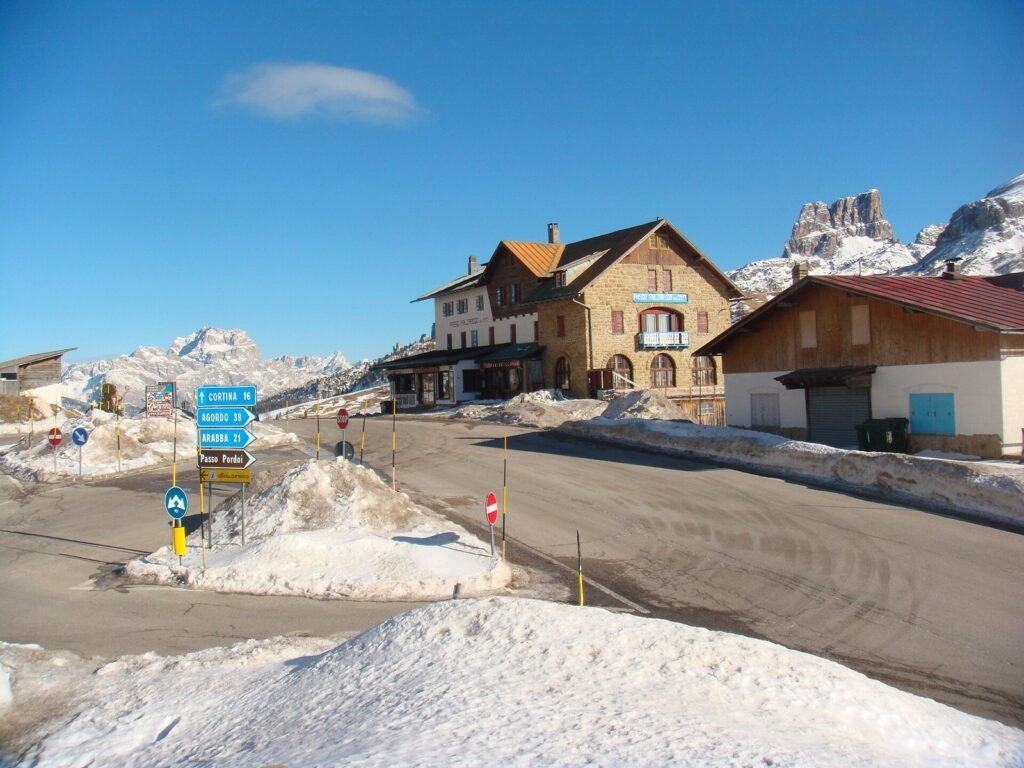
If you would rather start the Sella Ronda early with fresh legs, drive or take the bus. Arabba, where the circuit passes, is about 38 km from Cortina over Passo Falzarego, roughly 45 minutes by car in good winter conditions; public buses to Arabba are limited, so a car or taxi is the practical choice. San Cassiano in Alta Badia is about 30 km away via the Falzarego and Valparola passes, around 45 minutes to an hour by car, and in winter the Cortina Express bus runs from Cortina over the passes to San Cassiano (about 50 minutes) and on to Corvara, another Sella Ronda village. Mountain pass roads can close briefly after heavy snow, so check conditions before setting off, and remember that the Alta Badia and Arabba lifts need the Dolomiti Superski pass, not the local Cortina pass.

Ski pass prices for 2026/27
Dolomiti Superski published its 2026/27 prices on 30 September 2026. The local Cortina pass for 2026/27 had not been announced when this guide was written, so the figures below are the 2025/26 prices for reference. Expect a small increase, and check the official sites before you buy.
| Ski pass (adult) | 1 day | 3 days | 6 days |
|---|---|---|---|
| Dolomiti Superski 2026/27, high season | €89 | €257 | €453 |
| Dolomiti Superski 2026/27, low season | €80 | €231 | €407 |
| Cortina valley pass 2025/26, high season | €80 | €230 | €404 |
| Cortina valley pass 2025/26, low season | €72 | €207 | €364 |
- For Dolomiti Superski in 2026/27, high season runs from 20 December 2026 to 9 January 2027 and from 31 January to 20 March 2027. The pass is valid from 28 November 2026, although each area sets its own opening and closing dates.
- A Dolomiti Superski season pass costs €990 if bought in the pre-sale.
- Children born between 2019 and 2023 ski free on a daily or multi-day Dolomiti Superski pass when bought together with a paying adult of the same type and duration. Junior and senior discounts also apply.
- Buying online at least two days before your first ski day saves 5% (on Dolomiti Superski passes the online discount drops to 3% if you don’t reload an existing MyDolomiti card).
- Passes are sold online at dolomitisuperski.com and skipasscortina.com, at the ski pass office on Via Marconi in Cortina and at the main lift stations.
How to get to Cortina d’Ampezzo
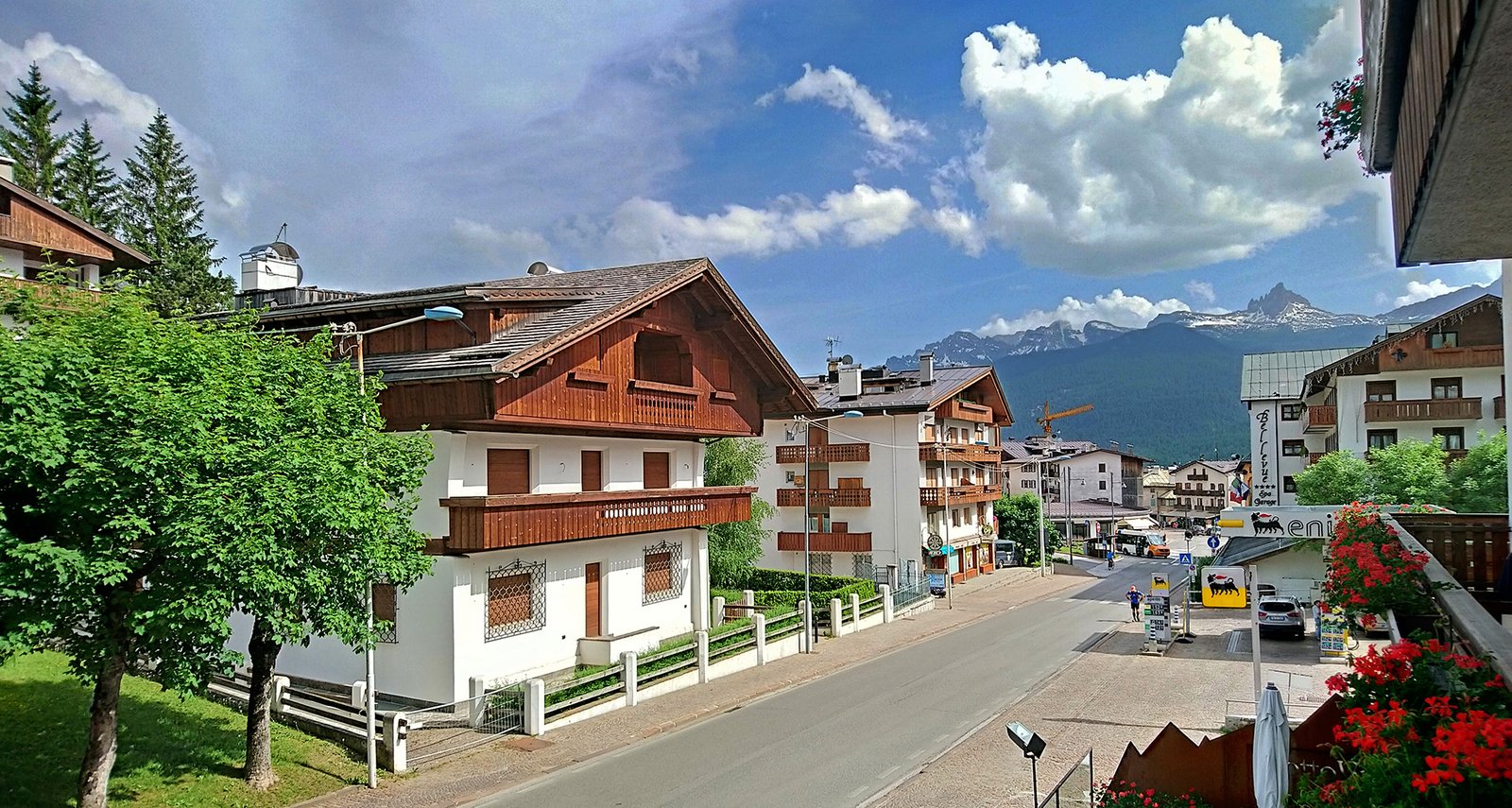

Cortina has no railway station, but it is well served by road and bus.
- By air: the closest major airports are Venice Marco Polo (about 150 km away) and Treviso (about 137 km), roughly two to two and a half hours by road. Innsbruck (about 165 km) is a good option from the north. Cortina Express runs coaches from both Venice airports.
- By train: the nearest stations are Calalzo di Cadore to the south and Dobbiaco (Toblach) to the north, each about 35 km away, with connecting buses run by Dolomiti Bus and SAD.
- By car: from the south, take the A27 motorway from Venice towards Belluno and then the SS51 Alemagna road. From the north, leave the Brenner motorway for the Puster Valley, then cross the Cimabanche pass from Dobbiaco. In winter you need winter tyres or snow chains on board.
When to go
The Dolomiti Superski season starts at the end of November, and Cortina usually opens its main lifts in early December and keeps the high-altitude slopes running into spring. Snowmaking covers most of the pistes, so early-season skiing is generally reliable.
The quietest and cheapest weeks are in January, after the holiday rush and before the February school holidays; for 2026/27 that low-season window is 10 to 30 January 2027. For the best balance of good snow, sunshine and longer days, aim for March. The Christmas and New Year period and the February school holidays are the busiest and most expensive times in town.

Practical tips for skiing in Cortina
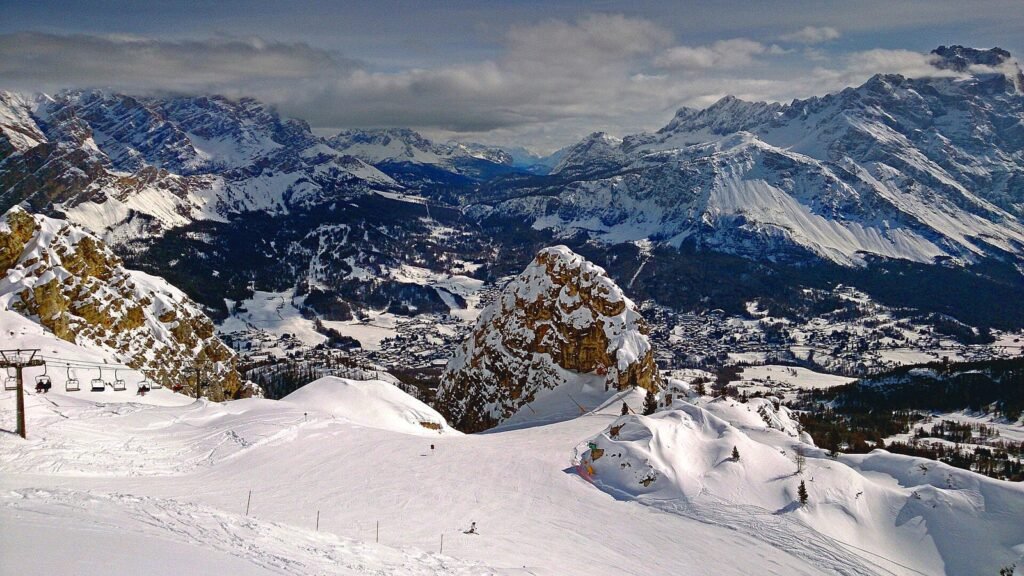
- Plan your days by area. The Cortina Skyline gondola (open since December 2021) now links the Tofana side with Cinque Torri, but most other sectors still need a car or ski bus — so it still pays to pick one area per day rather than trying to see everything at once.
- Use the ski buses. They link the town, the main lifts and the road to Passo Falzarego, and save you hunting for parking.
- Start early at Falzarego. The Lagazuoi cable car gets busy on sunny days, and the Armentarola run is best enjoyed without crowds. Bring cash or a card for the horse tow and the ride back to the pass.
- Download the Dolomiti Superski app to check which lifts and slopes are open in real time.
- Leave time for lunch. Cortina’s mountain huts are half the fun; book a table in high season.

Pros and cons of skiing in Cortina
Pros
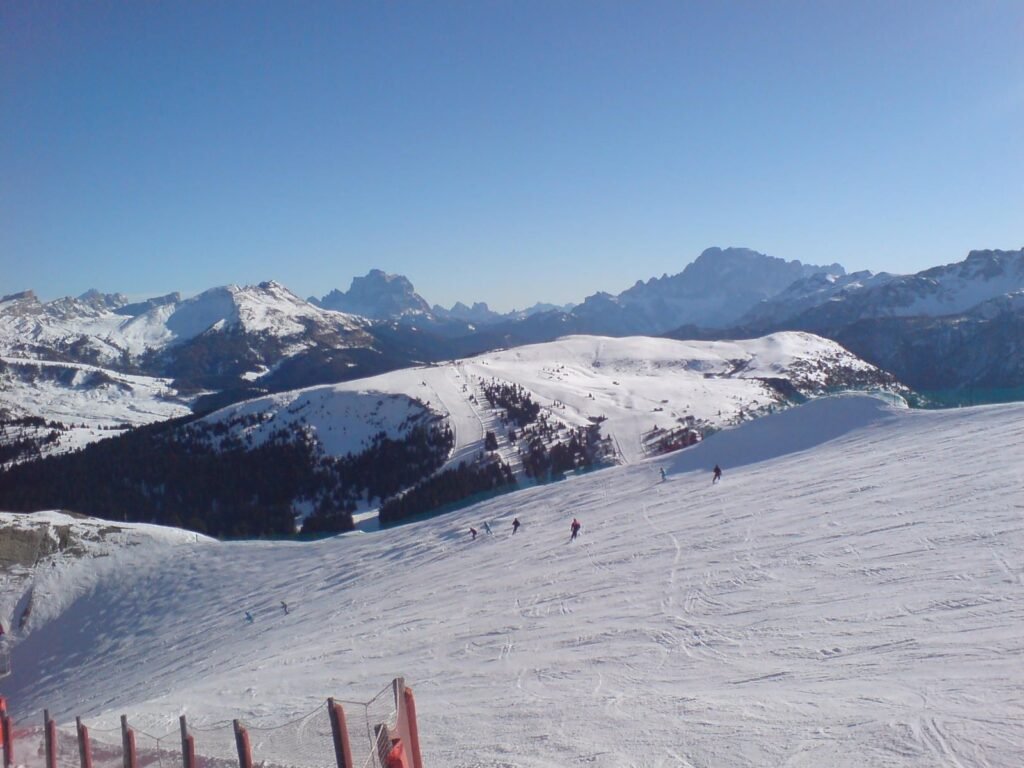
- World-class scenery. Few resorts can match the setting, with UNESCO-listed Dolomite walls on every side of the valley.
- Olympic pedigree. You can ski the same Tofana slopes used for the 1956 and 2026 Winter Games and the women’s World Cup.
- Ideal for intermediates. Almost half the pistes are red, and the long cruising runs at Cinque Torri, Falzarego and Ra Valles are a joy.
- Reliable snow. Snowmaking covers around 95% of the slopes, and the high Tofana and Lagazuoi sectors keep good snow late into the season.
- Gateway to Dolomiti Superski. With the bigger pass, the Armentarola run, Alta Badia and the Great War Ski Tour are all within reach.
- Food and après. Excellent mountain huts on the slopes and a lively, elegant town to come back to in the evening.
Cons
- Not one connected ski area. Faloria–Cristallo is separate from the Tofana and Cinque Torri side, so you will rely on ski buses, cable cars or the car.
- Limited expert terrain. Only about 16 km of pistes are graded black, which strong skiers can cover in a couple of days.
- Scattered beginner slopes. The easy runs are spread across different sectors rather than gathered at one base.
- No direct Sella Ronda link. Reaching the circuit means a long journey on skis via Lagazuoi or a drive to Arabba or Alta Badia.
- Expensive in peak weeks. Hotels, restaurants and lessons in Cortina cost more than in most Dolomite resorts, especially at Christmas and in February.
- No railway station. The last part of the journey is always by road.

Cortina d’Ampezzo skiing FAQ
How many kilometres of slopes does Cortina d’Ampezzo have?
Around 120 km, served by about 35 lifts, counting the main Cortina areas plus the smaller ski areas of San Vito di Cadore, Auronzo and Misurina that share the local valley pass. Cortina’s own slopes account for roughly 100 km of that total. With a Dolomiti Superski pass you can add the other 11 regions, for around 1,200 km in all.
Is Cortina d’Ampezzo good for beginners?
Yes, with some planning. About 38% of the pistes are blue, and the wide, gentle slopes at Socrepes and Pocol are well suited to first-timers and lessons. Because the easy terrain is spread across several sectors rather than concentrated in one spot, beginners usually do best by booking a ski school and sticking to Socrepes for the first few days.
Can you ski the Sella Ronda from Cortina?
Not directly, as Cortina is not on the circuit. You can reach it on skis by taking the Lagazuoi cable car, skiing the Armentarola run into Alta Badia and continuing to Corvara, but that makes for a long day. The easier option is to drive to Arabba (about 38 km, roughly 45 minutes) or take the bus over the passes to Alta Badia. Either way you need a Dolomiti Superski pass.
Which ski pass do I need for Cortina?
If you plan to ski only in the Cortina valley, including the Cortina Skyline gondola and the smaller areas at San Vito, Auronzo and Misurina, the local Cortina valley pass is enough and costs less. Cortina is one of the 12 regions of Dolomiti Superski, so if you want to spend a day or two in Alta Badia, Arabba or on the Sella Ronda, buy the Dolomiti Superski pass instead.
How much does it cost to ski in Cortina?
For 2026/27 an adult Dolomiti Superski pass costs €89 for one day and €453 for six days in high season. The local Cortina valley pass cost €80 a day and €404 for six days in high season in 2025/26; its 2026/27 prices had not been published when we wrote this guide. Skiing in the January low-season window saves around 10%.
Which is the best ski area in Cortina?
It depends on your level. Tofana has the most variety and the biggest share of the slopes, so it suits mixed groups. Cinque Torri, Lagazuoi and Passo Falzarego are the most scenic and best for relaxed intermediate cruising, while Faloria–Cristallo is the pick for confident skiers looking for steeper pitches and quieter runs.
Is Cortina d’Ampezzo worth it for a ski holiday?
If you value spectacular scenery, great food, a lively town and the chance to ski Olympic slopes, absolutely. If your priority is skiing as many connected kilometres as possible straight from your door, larger linked areas such as Alta Badia or Val Gardena may suit you better, although with a Dolomiti Superski pass you can combine both.
Is Cortina d’Ampezzo right for you?
If your perfect ski holiday means clocking up as many kilometres as possible on interconnected slopes, Val Gardena, Alta Badia or the Sella Ronda will suit you better. But if you want spectacular mountains, varied runs for every level, a lively town to come back to in the evening and the chance to ski on an Olympic course, Cortina d’Ampezzo is hard to beat.
Konstantin is an acclaimed travel writer, celebrated for transforming ordinary journeys into extraordinary narratives. With years of experience exploring diverse destinations across the globe, his work blends vivid storytelling, cultural insights, and practical advice to inspire wanderlust and guide readers toward unforgettable adventures.
As a key contributor to enjoythetrip.org website, Konstantin has built a loyal readership through their expertise in uncovering both iconic landmarks and off-the-beaten-path treasures. He specializes in providing travelers with honest, actionable tips, whether it’s finding the best resorts in Maldives, exploring cultural hubs like Paris, or diving into the natural wonders of Croatia.