
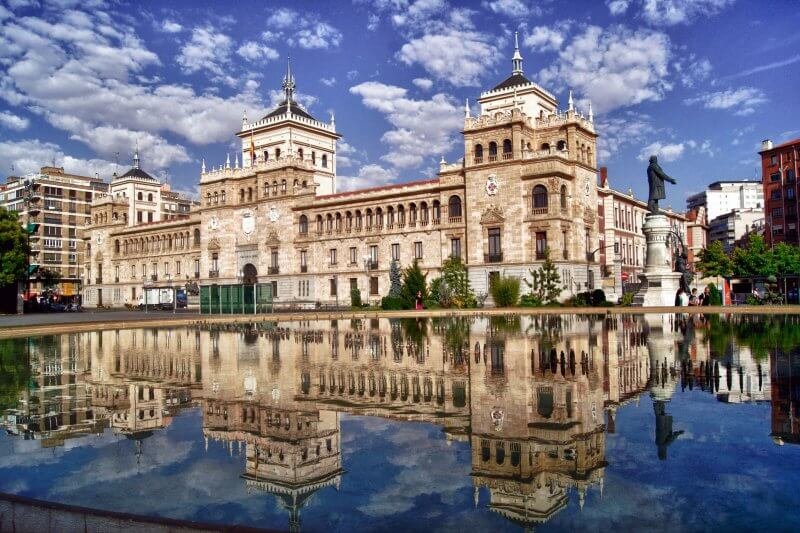
Valladolid, Spain, is a historic city in Castile and León, famous for its royal past, remarkable sculpture museum, Renaissance squares, tapas and nearby wine regions. It served as Spain’s capital from 1601 to 1606. With a walkable centre and high-speed trains from Madrid, Valladolid makes an excellent day trip or weekend destination.
Best things to do in Valladolid at a glance
| Attraction | What to see |
|---|---|
| National Sculpture Museum | Historic religious sculpture and Colegio de San Gregorio |
| Campo Grande | Gardens, fountains and peacocks |
| Plaza Mayor | Historic square, cafés and arcades |
| San Pablo Church | Intricate stone façade |
| University of Valladolid | Historic university architecture |
| Santa María la Antigua | Romanesque tower and Gothic church |
Map of Valladolid attractions
What to see in Valladolid in one day
From Valladolid Campo Grande railway station, walk through Campo Grande Park to Plaza Mayor. Continue to the university and Santa María la Antigua, then visit San Pablo Church and the National Sculpture Museum. Finish with tapas near Plaza Mayor. Allow a second day for the Cervantes House museum and a winery excursion.
Valladolid, Spain – one of the oldest cities in the country, its former capital. Famous for a large number of unique architectural monuments, unusual museums and other interesting sights, attracting tourists from all over Europe.
General information
Valladolid is a major city located in the northwestern part of Spain, the administrative center of the province of the same name, which is part of the autonomous community of Castile and León, and is an important historical, cultural, industrial, and economic region of the country. The city was founded in 1072. The population is slightly less than 300,000 people.
At the beginning of its foundation, Valladolid was just an ordinary university town, but after a while it became not only the main royal residence, but also the capital of the Spanish Empire.
And these are just a few of the many facts that this ancient and beautiful city has to offer. There are also several interesting moments in its history that are associated with famous cultural and political figures from around the world. For example, Miguel de Cervantes Saavedra lived and worked in this city, Spanish King Philip II was born here, and the explorer Christopher Columbus died here in 1506. Valladolid was also an important centre of Castilian royal and political life.
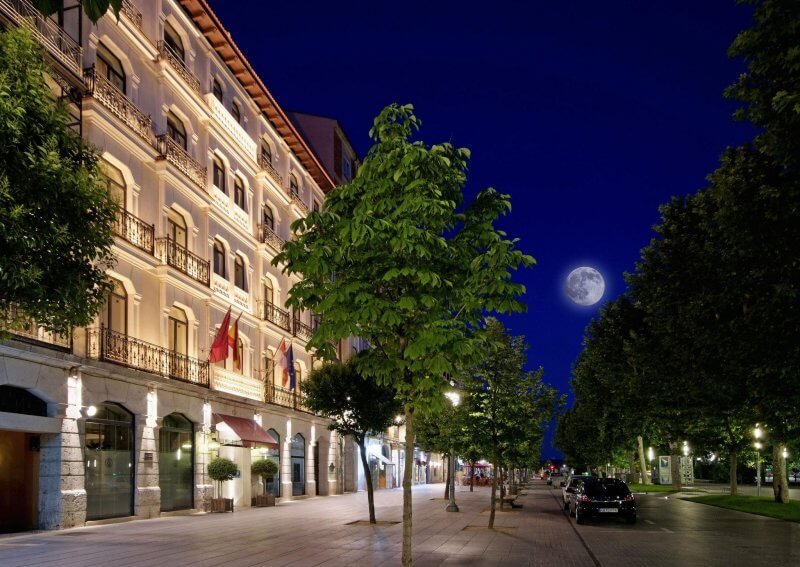
Having gone through a long and very interesting path, Valladolid carefully preserves everything that is somehow connected with its history. On its streets, the breath of the imperial past is still felt, sharply contrasting with modern jewelry factories and wineries producing famous Castilian wines.
Attractions
Despite the fact that many of the attractions in Valladolid, Spain, were completely destroyed during the war with France, there are still many interesting places that are part of the mandatory tourist program. Let’s take a look at the main ones.
National Sculpture Museum
The Museo Nacional de Escultura, which was known as the Museum of Fine Arts until 1933, is considered one of the oldest panopticums in the country. Since its opening in 1842, it has amassed a unique collection of sculptures made from marble, stone, metal, wood, and other materials. The total number of items in the collection exceeds 1,500. The oldest pieces date back to the mid-13th century, while the most recent ones were created in the second half of the 19th century.
The main part of the museum’s collection is dedicated to religious themes. It features statues of saints, beautiful altars, intricate retablos, and entire sculptural compositions depicting famous biblical scenes. Additionally, one of the museum’s halls houses an invaluable exhibition of paintings, with over 1,000 pieces on display.
The National Museum of Sculpture, one of the most original museums in Europe, occupies several luxurious buildings: the Casa del Sol Palace, the Villena Castle, the College of San Gregorio, built in the late 15th century, and the Church of San Benito el Viejo, which has an equally long history.
Location: Calle Cadenas de San Gregorio 1, 47011.
Opening hours:
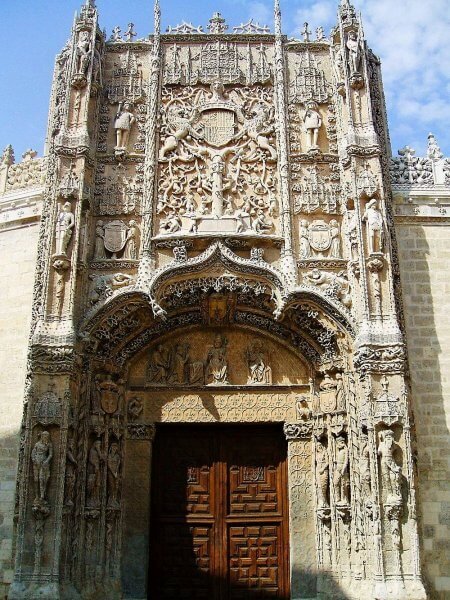
St. Gregory’s College (permanent collection):
- Tue. – Sat.: from 10:00 to 14:00 and from 16:00 to 19:30;
- Sundays and holidays: from 10:00 to 14:00.
Villena Palace (Neapolitan Bethlehem and a temporary exhibition):
- Tue. – Sat.: from 10:00 to 14:00 and from 16:00 to 19:30;
- Sundays and holidays: from 10:00 to 14:00.
The House of the Sun (artistic reproductions):
- Tue.-Sat.: from 11:00 to 14:00 and from 16:30 to 19:30;
- Sundays and holidays: from 10:00 to 14:00.
Closed Mondays and on 1 and 6 January, 1 May, 8 September, 24, 25 and 31 December. Last entry is 15 minutes before closing.
Cost of the session:
- General ticket – 3€;
- Reduced ticket – €1.50;
- Free admission: Saturday afternoon and Sunday morning. See official museum opening hours and prices for other free-entry dates.
Campo Grande Park
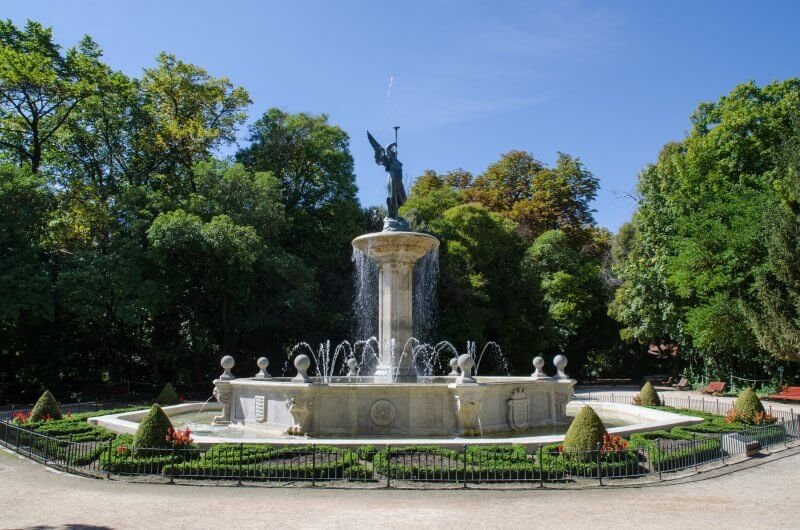
Campo Grande is a picturesque green area located in the heart of the city. Being the main park of the city of Valladolid and occupying a truly huge area (more than 100 thousand square meters), it is perfect for leisurely walks and a pleasant pastime. The quiet atmosphere of the Campo Grande allows you to relax from the hustle and bustle, while dense green spaces and many fountains provide comfort even in the intense Spanish heat. In addition, beautiful royal peacocks roam freely throughout the park, which is a pleasure to watch not only for children but also for adults.
Location: Paseo Zorrilla S/N, 47006.
Main Square of Valladolid
Other important landmarks in Valladolid include the Plaza Mayor, a central square located in the historic center of the city and dominated by a statue of Count Pedro Ansúrez, one of the founders of Valladolid and its first lord. In the Middle Ages, this area served as the entrance gate, the municipal building, and the main market of the city. In addition, it was the place where all the “amusing” events were held, such as executions, bullfights, public festivals, national holidays, and even the auto-da-fé, a traditional religious ceremony that included processions, worship services, and sermons.
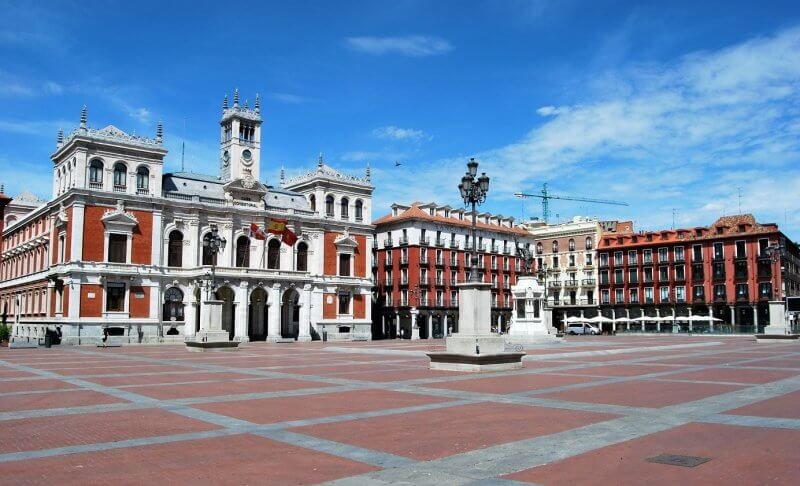
The habitual way of life of the townspeople was disrupted by a strong fire in 1561, which damaged not only the forum itself and the surrounding buildings, but also half of the city streets. The new Plaza Mayor was built under Philip II. At that time, it was the only square in the country that had a regular square shape and was surrounded by adjacent buildings. Soon this model was distributed all over Spain and became the main prototype for other squares (including the one in Madrid).
Since its last reconstruction, the appearance of Plaza Mayor has remained virtually unchanged. It still features the facades of historic buildings adorned with small balconies, wide arcades, and elegant marble columns (the Casa Consistorial, the Sorolla Theater, and others). Among these buildings, visitors can find cozy restaurants, boutiques, nightclubs, discos, and cafes. Additionally, the central square hosts traditional Christmas markets and other seasonal events.
Location: Plaza Mayor s/n, 47001.
San Pablo Church
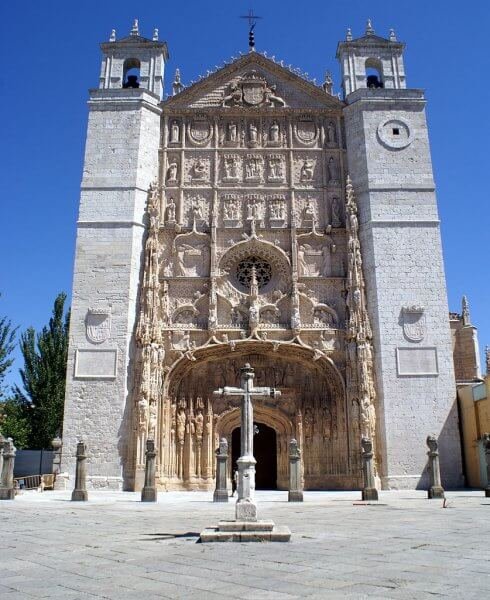
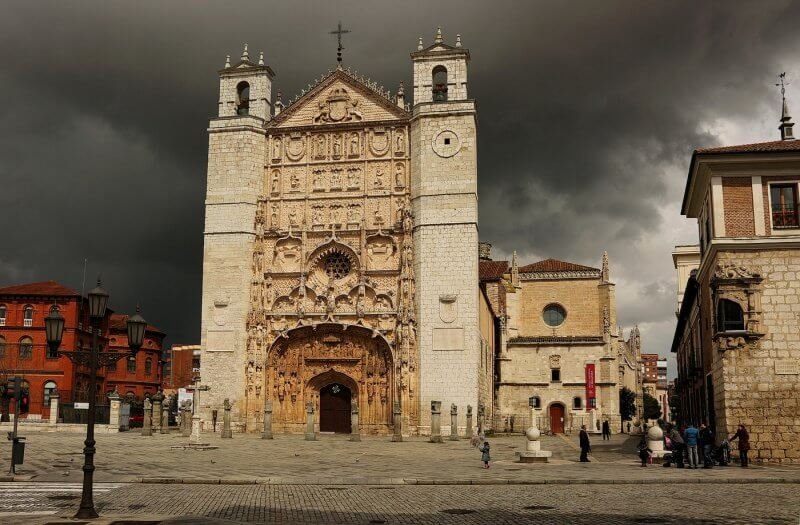
One of the most iconic landmarks in Valladolid, Spain, is the Church of St. Paul, which stands tall in the center of the square of the same name and is considered one of the most beautiful religious buildings in the country. This church is the only remaining structure from a medieval Dominican monastery, and locals believe it holds a special sacred significance.
The façade of the Iglesia de San Pablo, built in the late Renaissance style, is adorned with delicate light stone ornamentation and numerous sculptural elements that are both beautiful and skillfully executed. The interior of the church, which is designed in the Elizabethan Gothic style, features a central nave with several open chapels and high ribbed vaults that divide the interior spaces. The main pride of this church is the stone altar, which was moved here from the same ruined monastery.
Location: Plaza San Pablo 4, 47011.
University of Valladolid
Universidad de Valladolid, founded in 1241 as a branch of the University of Palencia, is one of Spain’s oldest universities. It has seven campuses located in four cities in the province of Castilla y León: Valladolid, Segovia, Soria, and Palencia. Today, the university has approximately 30,000 students and 2,000 faculty members. At the time of its founding, the UVA campus occupied several rooms in the Collegiate, but in the late 15th century it was moved to a grand Gothic mansion with a baroque facade adorned with sculptural elements representing the sciences studied at the university.
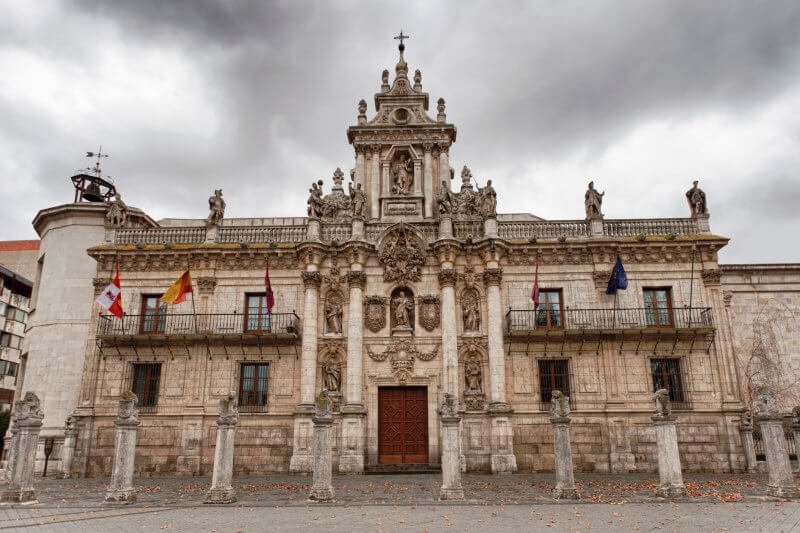
However, in 1909, after lengthy discussions, the building was demolished and replaced with a new structure in an unusual eclectic style for Spain. Despite the concerns of the management, the architect who designed the project managed to combine the seemingly incompatible: an old facade with a modern building, featuring a staircase and lobby in the historicist style.
Location: Plaza Universidad 1a, 47002.
Church of Santa Maria la Antigua
The Church of Saint Mary the Ancient can be described as one of the most beautiful cathedrals in Valladolid. Built in 1095 on the site of an even older Roman structure, the church is a three-nave structure with a cross-aisle, three polygonal apses, and ribbed vaults supported by cylindrical columns.
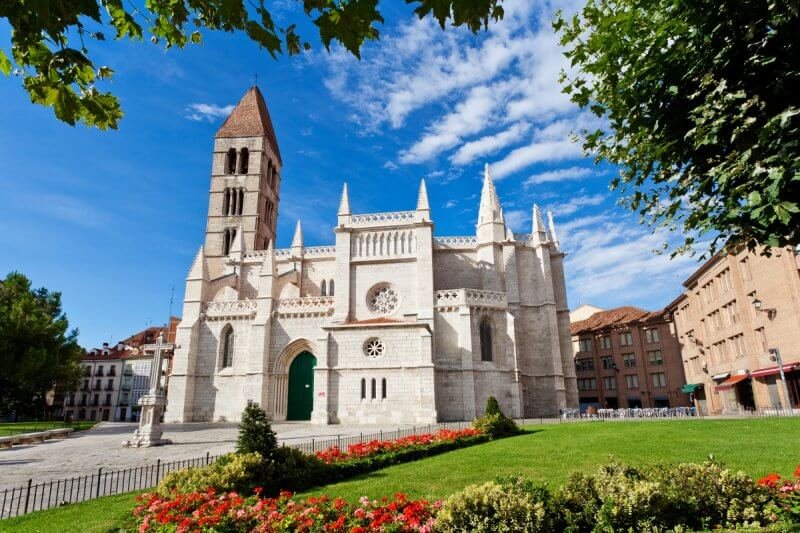
In the middle of the 16th century, the Church of Santa Maria la Antigua underwent a major reconstruction. This resulted in the addition of numerous windows, a dozen stone buttresses, and several Baroque altars located in different naves. Around the same time, the church’s bell tower was also rebuilt, with the design created by a renowned Spanish architect. The bell tower resembles a massive four-story tower with a graceful cross atop its pyramidal structure.
Location: Plaza Portugalete s/n, 47002.
Accommodation
The city of Valladolid (Spain) will delight you not only with a lot of interesting sights, but also with a large number of comfortable hotels, most of which are located in the historical part of the city. This type of accommodation has several distinctive features. On the one hand, it is beautiful, colorful, and very convenient, as you don’t have to travel anywhere. However, many of these hotels are located in historic buildings, which means that they don’t have elevators and the rooms are quite small.
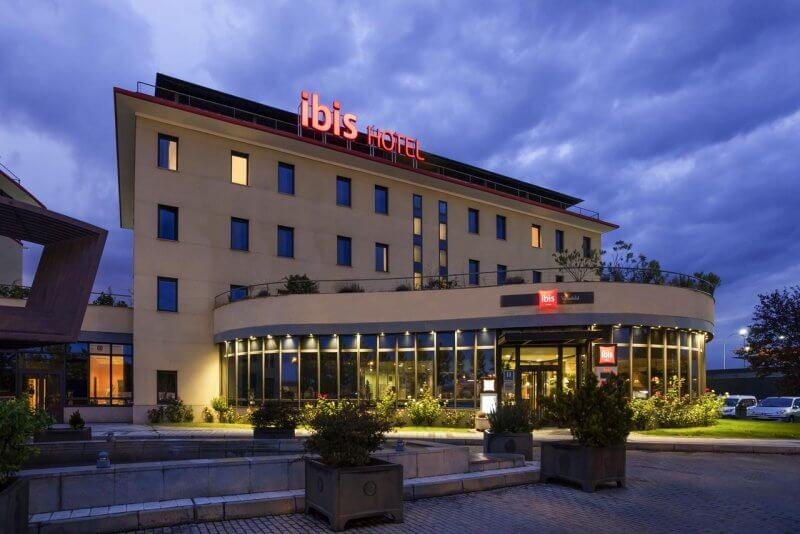
Room rates vary by dates and events. Choose accommodation near Plaza Mayor for sightseeing or near Campo Grande for easy train connections.
How to get there?
Despite the fact that you can get to Valladolid from almost anywhere in Spain, the most popular and convenient option is to travel from Madrid. The distance between these cities is just under 200 km. It can be easily covered not only by car, but also by regular public transport – comfortable intercity buses and high-speed trains departing from the Chamartín railway station.
It should also be noted that there is a small airport 10 km from Valladolid, which serves only domestic flights, so if you wish, you can use both land and air transportation. The city centre can be reached by taxi or airport bus. Check Aena transport information.
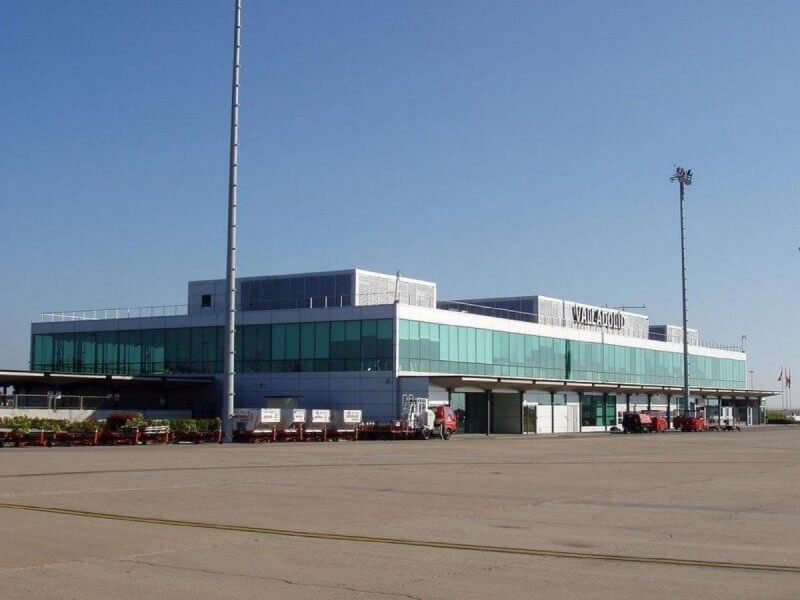
Check Renfe for Madrid–Valladolid rail services, ALSA for buses and Aena for current airport routes. Direct high-speed trains from Madrid Chamartín can take around an hour.
Note! Valladolid is well connected to the Spanish railway network.
Useful tips
If you decide to explore the sights of Valladolid (Spain), take note of some useful recommendations:
- When going for a walk, put a copy of your passport in your bag, certified by the hotel administration. This will not only help you avoid losing an important document, but also quickly resolve any problems that may arise.
- It is not recommended to travel to the outskirts of the city alone, especially at night. Instead, opt for the central part of Valladolid, as it is home to most of the city’s entertainment venues.
- When walking on the sidewalk, try to stay away from the roadway, as this will protect you from motorcycle robbers.
- If you don’t know which cafe or restaurant to choose, just look through the windows. Is there hardly anyone in the hall? Feel free to go further – this institution is not in great demand among visitors.
- Use your mobile phone, roaming plan or local SIM for calls and maps.
- Respect photography restrictions in museums and churches and ask permission before photographing people.
- Tipping is optional; leave a small amount if you are pleased with the service.
- Public facilities are available at the railway station, museums and other visitor venues.
- To save money on car rental, try to rent a car from a location that is further away from the city center. Or even better, use the public buses. Thanks to the well-developed transportation system, you can easily get to any place you want to visit.
- Also, keep in mind that there are large fines for traffic violations in the city. These fines apply not only to drivers, but also to pedestrians.
Frequently asked questions about Valladolid
Was Valladolid the capital of Spain?
Yes. The royal court moved to Valladolid in 1601, and it remained the capital until 1606, when the court returned to Madrid.
What is Valladolid famous for?
Its royal history, the National Sculpture Museum, Plaza Mayor, historic churches, Castilian cuisine and nearby vineyards.
Is Valladolid worth a day trip from Madrid?
Yes. High-speed rail makes it practical to visit the compact historic centre in one day.
What can you see for free?
Plaza Mayor, Campo Grande, historic streets and church exteriors are free to explore. The National Sculpture Museum also has regular free admission periods.

Konstantin is an acclaimed travel writer, celebrated for transforming ordinary journeys into extraordinary narratives. With years of experience exploring diverse destinations across the globe, his work blends vivid storytelling, cultural insights, and practical advice to inspire wanderlust and guide readers toward unforgettable adventures.
As a key contributor to enjoythetrip.org website, Konstantin has built a loyal readership through their expertise in uncovering both iconic landmarks and off-the-beaten-path treasures. He specializes in providing travelers with honest, actionable tips, whether it’s finding the best resorts in Maldives, exploring cultural hubs like Paris, or diving into the natural wonders of Croatia.