

Wat Pho in Bangkok is one of Thailand’s oldest and most remarkable Buddhist temples. This beautiful monastery is home to the golden Reclining Buddha, famous for its immense size, delicate mother-of-pearl decorations and peaceful expression. It is also renowned as a center of traditional Thai massage.
Even for experienced travelers, Wat Pho is impressive. Its courtyards, patterned stupas and galleries of gilded Buddha images offer a fascinating introduction to the history and culture of Thailand. This guide explains the temple’s history, what to see, opening hours, admission, massage prices and how to get there.
Wat Pho Bangkok: essential visitor information
| What to know | Details |
|---|---|
| Opening hours | Daily, 08:00–19:30 |
| Entrance fee | 300 THB for foreign visitors |
| Children | Free for children under 120 cm |
| Address | 2 Sanam Chai Road, Phra Nakhon, Bangkok |
| Nearest MRT | Sanam Chai (Blue Line) |
| Recommended visit | 90 minutes to 2 hours; longer for a massage |
| Dress code | Cover shoulders and knees; remove shoes in prayer halls |
| Official website | Wat Pho visitor information |
Prices and opening hours were checked against the official temple visitor information in November 2026. Bring small Thai baht notes for entrance and optional donations. Religious ceremonies can occasionally affect access to individual buildings.
Where is Wat Pho? Map and directions
The temple complex is located in the historic center of Bangkok on Rattanakosin Island, immediately south of the Grand Palace. Open Wat Pho in Google Maps for walking directions.
The history of Wat Pho
Wat Pho’s official name is Wat Phra Chetuphon Wimon Mangkhalaram Rajwaramahawihan. The monastery dates back to the Ayutthaya period and existed before Bangkok became the capital in 1782. King Rama I ordered a major restoration in 1788. The neighboring Grand Palace became the royal residence and the temple gained special importance as a royal monastery.

In the nineteenth century, King Rama III initiated a further extensive reconstruction. The redesigned complex included the huge golden Reclining Buddha, new halls, gardens and spaces dedicated to teaching. Religious texts, medicine, poetry and other knowledge were recorded in stone so that visitors could learn from them.
Wat Pho is one of the best places to explore the origins of traditional Thai massage. Its 1,431 stone inscriptions, created between 1831 and 1841, are part of UNESCO’s Memory of the World Register. They preserve information on religious and secular subjects, and some include illustrations explaining traditional massage techniques.
What to see at Wat Pho Temple
The Wat Pho temple complex extends over about 80,000 square meters and includes many unique historical and cultural monuments. The northern sacred area is where visitors can explore the prayer halls, galleries and chedis. The southern part is largely reserved for the monastery’s residents and daily religious life.
1. The Reclining Buddha
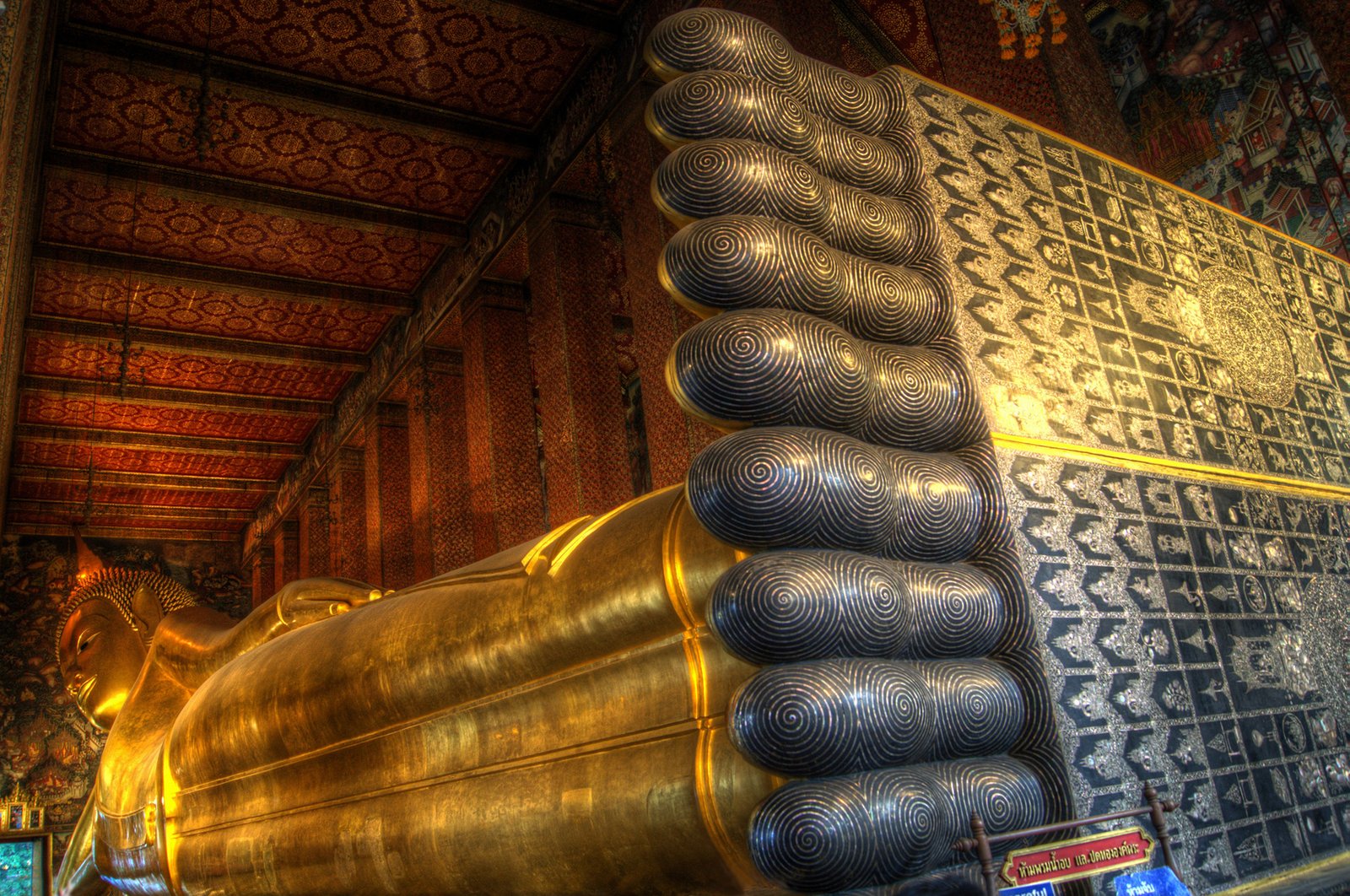
The pearl of the temple complex is the viharn, a hall housing the renowned Reclining Buddha. The gilded statue is 46 meters long and 15 meters high. It represents the Buddha reclining peacefully in the posture associated with his final passing into nirvana. Even the largest hall feels surprisingly intimate beside this extraordinary image.
The statue’s brick and stucco body is covered in gold leaf. Its immense soles are decorated with intricate mother-of-pearl inlay depicting 108 auspicious symbols. These include animals, flowers, royal emblems and elements of Buddhist cosmology. Take time to walk around the statue and admire both the figure and the richly decorated surrounding walls.
The temple’s interior features murals and ornamentation that illustrate Thai religious traditions. To appreciate the scale of the Reclining Buddha, begin near its head and follow the designated path toward the feet. Photography is generally permitted in visitor areas, provided you respect posted signs and avoid interrupting worshippers.
2. The 108 bronze bowls

When visiting the Buddha hall, the gentle sound of falling coins can often be heard. Along the wall behind the golden statue is a long row of 108 bronze bowls. People can make small offerings by placing a coin in each bowl. The number 108 has religious significance and the practice is associated with generosity, mindfulness and good fortune.
You can usually obtain small coins for an optional donation inside the hall. Take part respectfully if you wish, or simply listen and enjoy the peaceful atmosphere as you follow the path around the statue.
3. The ordination hall and Buddha galleries
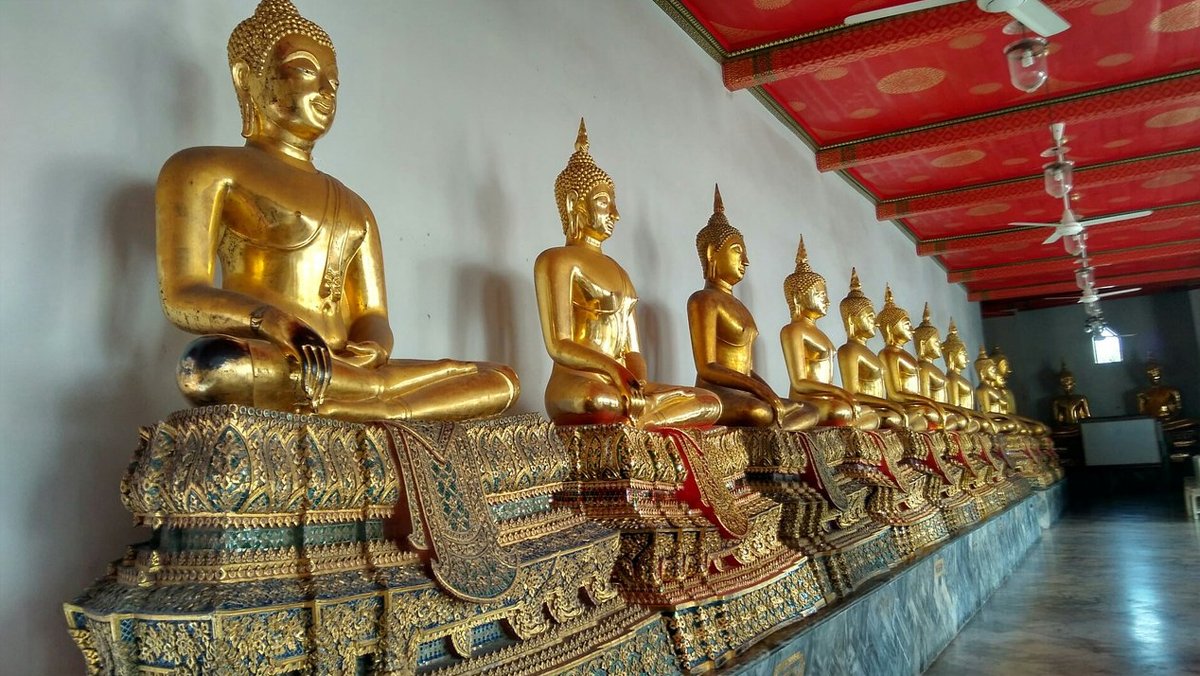
Phra Ubosot is the principal ordination hall of Wat Pho, set within galleries containing numerous gilded seated Buddha images. The sacred hall holds Phra Buddha Theva Patimakorn, a seated image on an ornate pedestal. Some of the ashes of King Rama I are enshrined beneath it.
The surrounding cloisters are an excellent place to pause and appreciate the fine craftsmanship of the temple. Their repeated rows of gold-colored figures create a striking rhythm, while the quieter courtyards allow you to explore at a gentler pace. The buildings remain sacred spaces, so give worshippers room and follow directions from staff.
4. The royal chedis and decorated courtyards
Four patterned royal chedis, each approximately 42 meters high, rise above the temple grounds. Known collectively as Phra Maha Chedi Si Rajakarn, they commemorate the first four kings of the Chakri dynasty. Elaborate mosaics and colorful ceramic designs cover the structures. Their spires are among the most photogenic features of Wat Pho.
Smaller stupas are scattered through the walled grounds, alongside Chinese stone guardians, ornamental pavilions, rock gardens and the library hall. The porcelain tiles, carved roof decorations and guardian figures are especially beautiful in the softer morning light. Set aside at least half an hour for these courtyards after the Reclining Buddha.
5. Wat Pho traditional Thai massage
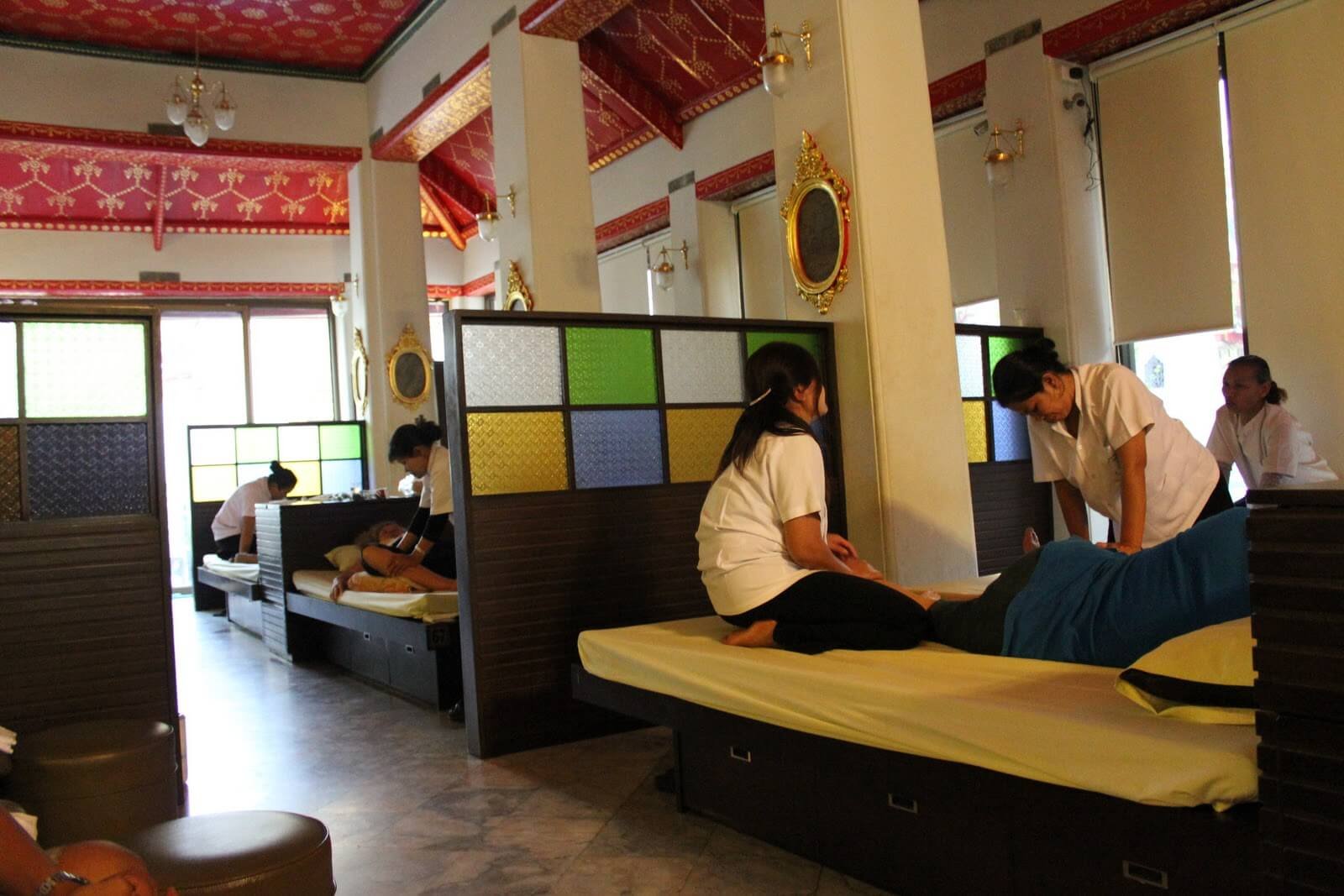
The traditional medicine school is an important part of the monastery’s cultural heritage. Visitors can enjoy a traditional Thai massage or a foot massage at the temple pavilion. The school also runs courses in several areas of Thai traditional medicine, including massage, pharmacy and medical practice.
Wat Pho has a long association with the teaching and transmission of Nuad Thai, traditional Thai massage. The massage pavilions are a popular way to rest after exploring the expansive complex. A session is optional and costs extra beyond the temple entrance fee. Allow extra time for a massage, particularly during the busiest hours.
Wat Pho massage prices and opening hours

| Treatment | 30 minutes | 60 minutes | 120 minutes |
|---|---|---|---|
| Traditional Thai massage | 340 THB | 520 THB | 1,040 THB |
| Foot massage | 340 THB | 520 THB | 1,040 THB |
| Thai massage with balm | — | 680 THB | 1,360 THB |
| Thai massage with plai oil | — | 620 THB | 1,240 THB |
The temple lists massage services from 08:00 to 19:30. Last bookings can finish earlier depending on demand. The rates above are from the official visitor information. For course schedules and other massage branches, see the Wat Pho massage school website.
How to get to Wat Pho in Bangkok
By MRT: The easiest option from many parts of Bangkok is the Blue Line to Sanam Chai station. From the station, walk a few minutes along Sanam Chai Road toward the temple. This avoids the city’s traffic jams.
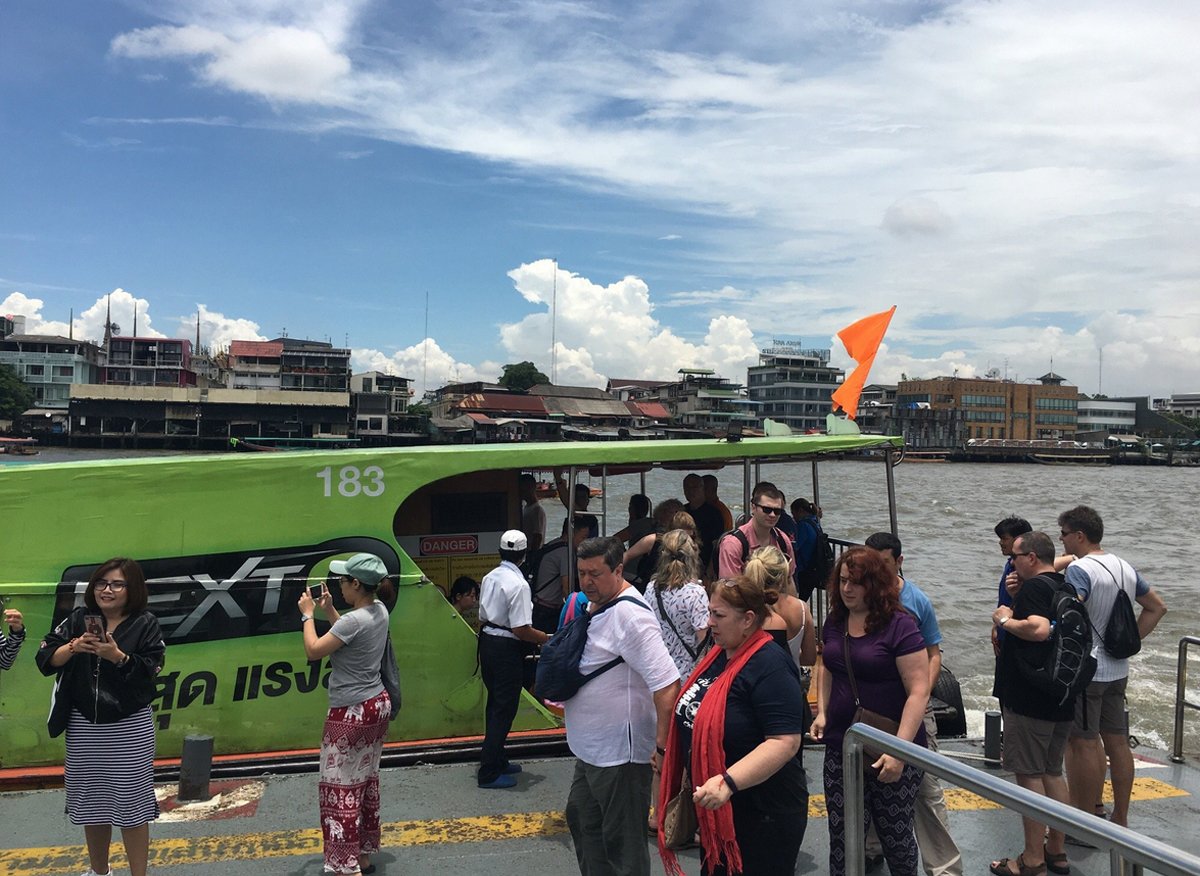
By boat: Take the BTS Silom Line to Saphan Taksin, then walk to Sathorn Pier for a river boat. Depending on the service and current pier stops, get off near Tha Tien or Tha Chang. From Tha Chang it is a short walk south past the Grand Palace. The small Tha Tien ferry also connects the temple district with Wat Arun across the river.
By taxi or tuk-tuk: A metered taxi or Grab is comfortable, but travel time depends on traffic. Agree on a tuk-tuk fare before starting your journey. Bus travelers can use a local route planner such as ViaBus. The MRT is often more predictable at rush hour.
Wat Pho dress code and temple etiquette
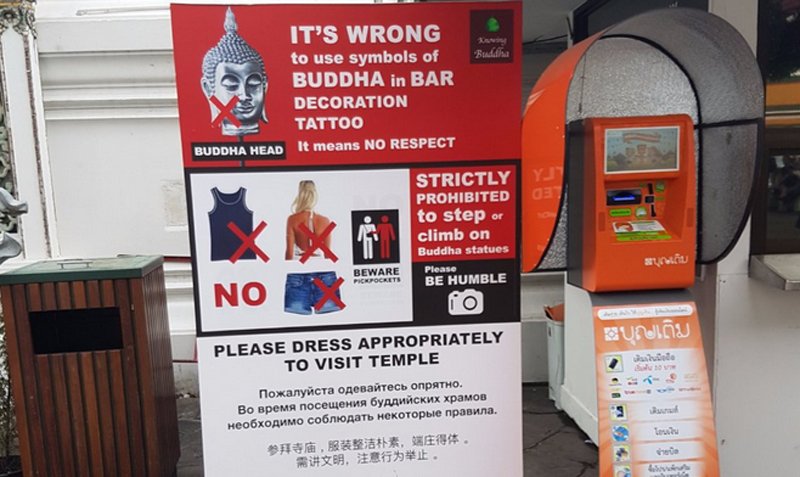
Wat Pho is an active religious site. When visiting, wear respectful clothing that covers your shoulders and knees. Long, lightweight trousers or a below-knee skirt are especially practical in the tropical heat. Both men and women should avoid sleeveless tops, short shorts and revealing clothes.
Remove your shoes before entering religious buildings and follow signs about where to leave them. Avoid touching Buddha images or climbing on temple monuments. Sit with your feet pointing away from sacred images, keep your voice low and allow people who are praying to continue undisturbed.
Women should avoid physical contact with monks and novices. Take care when crossing raised thresholds and respect any areas reserved for religious ceremonies. Ask a staff member if you are uncertain whether a hall is open to visitors.
Practical tips for visiting Wat Pho

Arrive early. The extensive temple grounds can become crowded from late morning. Arriving around opening time gives you cooler weather and more room to admire the statue. A late afternoon visit is another pleasant option.
Allow enough time. Plan 90 minutes to two hours for the Reclining Buddha, the royal chedis, the galleries and the courtyards. Add 30–60 minutes or more if you want a massage. You can request a temple map at the entrance or consult the official visitor page.
Prepare for the heat. Bring drinking water, sun protection, comfortable shoes and a small shoe bag. Much of the complex is outdoors, so use the shaded galleries for breaks. Keep bags and valuables secure, particularly in crowded areas.
Combine Wat Pho, the Grand Palace and Wat Arun
Wat Pho sits in Bangkok’s historic temple district. Spend the morning at the Grand Palace and the Temple of the Emerald Buddha, then walk south to the Reclining Buddha. After lunch near Tha Tien, cross the river to Wat Arun, the Temple of Dawn, with its richly decorated central prang. Each attraction has a separate admission arrangement.
A guided tour can help explain the symbolism of the buildings, the history of the Chakri dynasty and Buddhist traditions. If you book a combined tour, check which entry tickets are included in the selected option.
Book a guided tour of the Grand Palace, Wat Pho and Wat Arun
For a longer visit, see our two-day Bangkok itinerary with more sights and ideas for exploring the capital.
Frequently asked questions about Wat Pho
How much is the entrance fee at Wat Pho?
The standard ticket for foreign visitors is 300 THB. Children under 120 cm enter free. Traditional Thai massage and optional tours are separate charges.
What time does Wat Pho open and close?
Wat Pho’s official visitor information lists daily opening hours from 08:00 to 19:30. The temple may adjust access for special religious events.
How long should I spend at Wat Pho?
Allow about 90 minutes to two hours. If you want a traditional massage, plan for at least another half-hour to an hour, plus any waiting time.
Can I visit Wat Pho and Wat Arun on the same day?
Yes. They are on opposite banks of the Chao Phraya River and are linked by a short ferry crossing. You can also include the nearby Grand Palace in a full-day cultural itinerary.
Is Wat Pho worth visiting?
Absolutely. The Temple of the Reclining Buddha is a real gem among Bangkok’s attractions. Its golden image, remarkable royal chedis, historic inscriptions and peaceful courtyards make it one of the most memorable places to discover Thai culture.

Konstantin is an acclaimed travel writer, celebrated for transforming ordinary journeys into extraordinary narratives. With years of experience exploring diverse destinations across the globe, his work blends vivid storytelling, cultural insights, and practical advice to inspire wanderlust and guide readers toward unforgettable adventures.
As a key contributor to enjoythetrip.org website, Konstantin has built a loyal readership through their expertise in uncovering both iconic landmarks and off-the-beaten-path treasures. He specializes in providing travelers with honest, actionable tips, whether it’s finding the best resorts in Maldives, exploring cultural hubs like Paris, or diving into the natural wonders of Croatia.