
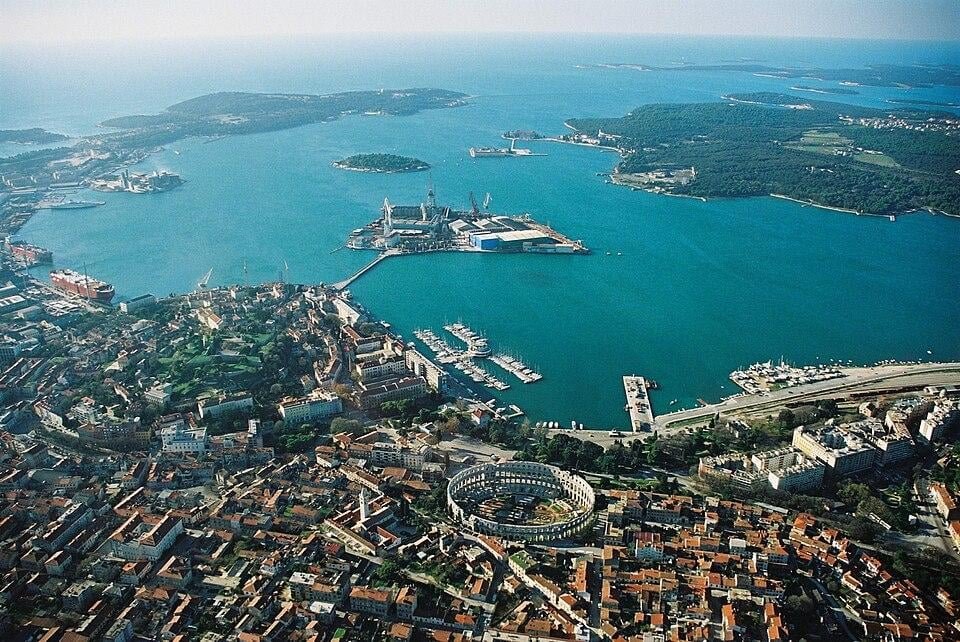
This region seems like a completely different world compared to the Dalmatian resorts and islands to the south.
Croatia has a hidden gem known only to locals, the perfect place to avoid the crowds of tourists visiting the country. This is reported by the Daily Express.
It is noted that Istria is the largest peninsula in the Adriatic Sea. Located in the northern part of the Adriatic, between the Gulf of Trieste and the Gulf of Kvarner, it is divided between three countries: Croatia, Slovenia, and Italy.
Three hours from Vienna and only 90 minutes from Trieste, this region feels like a completely different world from the Dalmatian resorts and islands to the south.
Interestingly, Pula is the largest coastal city in Istria, known for its 2,000-year-old Roman amphitheater, the Sergius Arch, and the Temple of Augustus. Further along the coast, the picturesque medieval city of Rovinj is located, with its cobblestone streets and colorful Venetian houses right at the water’s edge. Inland, the Venetian city of Motovun is situated on a hilltop, with its historic fortifications, galleries, boutiques, gastronomic shops, and restaurants. The article states:
“Further south, there are beautiful pebble beaches. Zlatni Rat, known as the Golden Cape, is the most famous, but there are many hidden gems scattered along the coast.”
Not far from the southern coast of Istria is the Brioni National Park, a group of islands with striking natural beauty. Originally a Roman settlement, the islands later served as an Austro-Hungarian fortress, a Viennese resort, and the summer residence of President Tito.
It is noted that the country is home to hilly fields and green plains, where there are wineries, olive groves, orchards, truffle forests, and medieval towns on the tops of hills.
The cuisine of Istria is reminiscent of Italian cuisine, although there is influence from both sides: Italian cuisine includes some dishes that the Istrian Italians brought with them after their exodus from Istria to Dalmatia. These include shrimp bouillabaisse, bruschetta, cured ham, and Istrian iota. Dishes such as gnocchi or risotto are likely of Italian origin, while the focaccia bread is a shared Mediterranean heritage.

Konstantin is an acclaimed travel writer, celebrated for transforming ordinary journeys into extraordinary narratives. With years of experience exploring diverse destinations across the globe, his work blends vivid storytelling, cultural insights, and practical advice to inspire wanderlust and guide readers toward unforgettable adventures.
As a key contributor to enjoythetrip.org website, Konstantin has built a loyal readership through their expertise in uncovering both iconic landmarks and off-the-beaten-path treasures. He specializes in providing travelers with honest, actionable tips, whether it’s finding the best resorts in Maldives, exploring cultural hubs like Paris, or diving into the natural wonders of Croatia.